Quick Verdict: A Stylish City EV With a Hard Range Ceiling
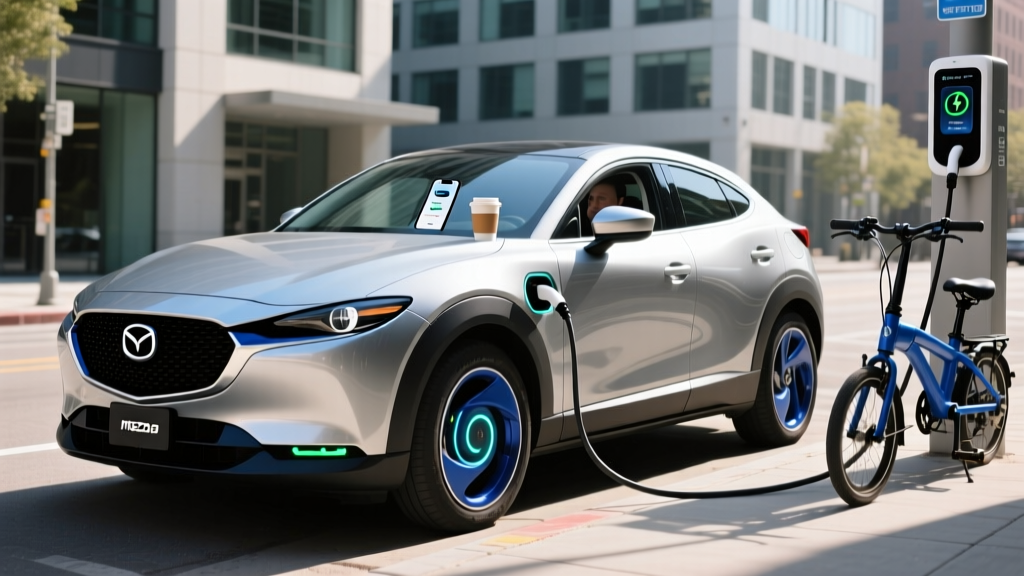
The 2023 Mazda MX-30 is an exercise in restraint — and frustration. Mazda deliberately equipped this subcompact crossover with a 35.5 kWh battery, yielding an EPA-estimated 100 miles of range. That figure places it at the bottom of the modern EV market, behind even the base Nissan Leaf. Yet the MX-30 delivers where Mazda always does: interior material quality, chassis tuning, and design that punches well above its price class.
For 2023, Mazda limited sales exclusively to California, making this a niche play for urban commuters who can charge at home and rarely exceed 60 miles round-trip. If that describes your daily drive, the MX-30 is a genuinely pleasant, well-built electric car. If you need highway road-trip capability or live in a cold climate, look elsewhere.
EPA Estimate: 100 miles (combined)
Real-World Expectation: 80–90 miles highway at 70 mph; 70–85 miles in cold weather (below 40°F); 95–105 miles city driving with regenerative braking.
Usable Buffer: Mazda reserves approximately 3.5 kWh as a buffer, meaning you'll see a low-battery warning around 10–12 miles of displayed range remaining.
Battery, Efficiency, and What 35.5 kWh Actually Means
The MX-30 uses a 35.5 kWh lithium-ion battery pack with NMC (nickel-manganese-cobalt) chemistry, manufactured by Panasonic. Mazda chose this smaller capacity intentionally, citing lifecycle emissions and resource-use reduction. The result is a lighter vehicle — roughly 3,650 lbs curb weight — but one that demands frequent charging.
| Spec | Value |
|---|---|
| EPA Range | 100 miles (combined) |
| Battery Capacity | 35.5 kWh total / ~32 kWh usable (NMC) |
| EPA Efficiency | 92 MPGe combined / 36 kWh per 100 mi |
| Motor Output | 143 hp / 200 lb-ft torque |
| 0–60 mph | 8.7 seconds |
| Drivetrain | FWD (front-wheel drive, single motor) |
| Max DC Fast Charge | 50 kW (CCS1) |
| 10–80% DC Time | ~36 minutes |
| Level 2 Home Charge Rate | 6.6 kW onboard charger (~22 mi/hr) |
| Cargo Volume | 21.0 cu ft (rear seats up) / 45.2 cu ft (folded) |
| Base MSRP | $33,470 (Base) / $36,480 (Premium Plus) |
| Battery Warranty | 8 years / 100,000 miles |
Efficiency is respectable at 92 MPGe combined (36 kWh/100 mi), per fueleconomy.gov. That translates to roughly $0.04–$0.05 per mile on residential electricity at $0.15/kWh — competitive with any EV. The problem isn't efficiency; it's capacity.
Charging Speed: The 50 kW Bottleneck
The MX-30's DC fast-charging capability peaks at 50 kW via its CCS1 connector. In 2023, that figure is painfully slow — most competitors accept 150–250 kW. On a 50 kW station, the MX-30 charges from 10% to 80% in approximately 36 minutes. The charge curve is relatively flat because the small battery doesn't generate excessive heat, but the low ceiling means you'll spend more time at chargers than rivals on longer trips.
| Level | Power | Speed | Notes |
|---|---|---|---|
| Level 1 (120V) | ~1.4 kW | ~4 mi/hr | Emergency only; full charge in ~24 hrs |
| Level 2 (240V) | 6.6 kW | ~22 mi/hr | Full charge in ~5 hrs; ideal daily use |
| DC Fast (CCS) | 50 kW peak | ~120 mi/hr (peak) | 10–80% in ~36 min; tapers above 80% |
At home on a Level 2 charger (240V, 30A circuit minimum), the MX-30's 6.6 kW onboard charger replenishes the battery in roughly 5 hours. This is perfectly adequate for overnight charging and the primary use case Mazda envisions. However, the 50 kW DC cap makes road trips impractical — you'd need 2–3 stops on a 250-mile journey, each lasting 30+ minutes.
Performance and Driving Impressions
The MX-30's single front-mounted motor produces 143 horsepower and 200 lb-ft of torque. The 0–60 mph time of 8.7 seconds is leisurely by EV standards — a Tesla Model Y does it in 5.0 seconds — but adequate for city merging and suburban driving. The instant torque delivery makes it feel quicker than the numbers suggest at lower speeds.
Where the MX-30 genuinely impresses is ride and handling. Mazda tuned the suspension for compliance without floatiness, and the steering is weighted better than most crossovers at this price. The G-Vectoring Control Plus system subtly modulates torque to improve cornering feel. It's the best-driving subcompact electric crossover available, even if it isn't the quickest.
Interior, Cargo, and Technology
Step inside and the MX-30 feels a class above its price point. Mazda uses sustainable materials — door trim made from recycled plastic bottles, cork accents in the center console (a nod to Mazda's origins as a cork manufacturer), and vegan leather on Premium Plus trims. The 8.8-inch infotainment display is controlled by a rotary knob, not touch, which some prefer for reduced distraction.
Cargo space measures 21.0 cubic feet behind the rear seats and 45.2 cubic feet with them folded — competitive with the Hyundai Kona Electric (25.8/45.8 cu ft) but smaller than the Kia Niro EV (18.5/53.0 cu ft with a lower load floor). Rear-seat legroom is tight at 33.4 inches; taller adults will find it cramped on longer rides.
Notable tech features:
- i-Activsense safety suite: adaptive cruise control, lane-keeping assist, blind-spot monitoring, rear cross-traffic alert
- Wireless Apple CarPlay (wired Android Auto)
- Head-up display (Premium Plus trim)
- 12-speaker Bose audio system (Premium Plus trim)
- Freestyle doors (rear-hinged back doors, similar to BMW i3) — stylish but require the front door to open first
Pricing, Trims, and Federal Tax Credit Eligibility
The 2023 MX-30 launched in two trims, sold exclusively in California:
- Base: $33,470 MSRP (including $1,175 destination)
- Premium Plus: $36,480 MSRP (adds Bose audio, head-up display, heated steering wheel, power moonroof)
The 2023 Mazda MX-30 does not qualify for the full $7,500 federal EV tax credit under IRS §30D rules. The battery cells and critical minerals do not meet the North American sourcing thresholds established by the Inflation Reduction Act. Buyers may be eligible for a reduced credit (up to $3,750 depending on mineral sourcing percentages), but you must verify current-year eligibility on irs.gov before purchasing. Income caps also apply: $150,000 single / $300,000 joint filers. The vehicle MSRP must be under $55,000 (SUV/crossover threshold: $80,000). Always consult a tax professional — credit rules change frequently.
Mazda offered a $500 California Clean Vehicle Rebate (CVRP) at launch, and some utilities provided additional incentives for home charger installation. Check current state and local programs before purchase.
Who Should Buy the MX-30 (and Who Shouldn't)
This EV suits you if:
- Your daily round-trip commute is under 60 miles
- You have reliable home Level 2 charging
- You prioritize interior quality and driving dynamics over range
- You live in a mild climate (California coastal, for instance)
- This is a second vehicle in a multi-car household
Look elsewhere if:
- You need 200+ miles of range for road trips
- You live in a region with harsh winters (cold reduces range by 20–30%)
- You rely on public DC fast charging
- You regularly carry rear-seat passengers (tight legroom and freestyle doors are inconvenient)
- You want to maximize federal tax credit value
MX-30 vs. the Competition
The MX-30's closest rivals are the Hyundai Kona Electric (258-mile range, $33,550), Chevrolet Bolt EUV (247 miles, $28,800 before credits), and Nissan Leaf (149–212 miles, $28,140). All three offer significantly more range and faster DC charging. The Bolt EUV, in particular, qualifies for the full $7,500 credit (subject to sourcing verification), bringing its effective price below $22,000 — a value the MX-30 cannot match.
Where the MX-30 wins: material quality, chassis refinement, and exterior design. If those matter more to you than range-per-dollar, it has no direct peer. But from a pure value standpoint, it's the weakest option in the segment.
Pros and Cons
✓ Pros
- Premium interior materials at a mainstream price
- Engaging ride and handling for the segment
- Low running costs (~$0.04/mi on home electricity)
- Quiet cabin with minimal road noise
- Comprehensive i-Activsense driver assists standard
✗ Cons
- 100-mile EPA range is the lowest in the modern EV market
- 50 kW DC fast-charge cap makes road trips impractical
- Limited to California only (2023 model year)
- Freestyle rear doors are inconvenient in tight parking
- Does not qualify for the full $7,500 federal tax credit
- Tight rear-seat legroom (33.4 in)
Frequently Asked Questions
What is the real-world range of the 2023 Mazda MX-30?
Expect 80–90 miles on the highway at 70 mph, and 70–85 miles in cold weather (below 40°F). In mild city driving with frequent regenerative braking, you may achieve 95–105 miles. The EPA combined estimate is 100 miles, but real-world conditions — especially speed, temperature, and terrain — significantly impact a battery this small.
How fast does the MX-30 charge at home and on DC fast chargers?
At home on a 240V Level 2 charger, the 6.6 kW onboard charger adds roughly 22 miles of range per hour, fully recharging the battery in about 5 hours. On DC fast chargers, the MX-30 peaks at 50 kW, reaching 10–80% in approximately 36 minutes. This is slow compared to rivals that accept 150–250 kW.
Does the 2023 MX-30 qualify for the $7,500 federal EV tax credit?
No — the MX-30 does not meet the battery-sourcing and critical-minerals requirements under IRS §30D for the full $7,500 credit. A reduced credit of up to $3,750 may be available depending on the sourcing percentage, but you must verify current eligibility on irs.gov. Income caps ($150K single / $300K joint) and MSRP limits also apply.
Is the MX-30 worth buying over the Chevrolet Bolt EUV or Hyundai Kona Electric?
From a value and practicality standpoint, no — both competitors offer 2.5x the range, faster charging, and (in the Bolt's case) a significantly lower effective price after tax credits. The MX-30 makes sense only if interior quality, driving dynamics, and design matter more to you than range-per-dollar, and if your daily driving stays well under 60 miles.
Why did Mazda only sell the MX-30 in California?
Mazda positioned the MX-30 as a compliance-oriented vehicle for California's ZEV (Zero Emission Vehicle) credit requirements. The limited range and charging infrastructure outside California made a broader launch impractical. Mazda has since introduced the CX-70 and CX-90 plug-in hybrids as its primary electrified offerings for the U.S. market.
What is the battery warranty on the 2023 MX-30?
Mazda covers the high-voltage battery for 8 years or 100,000 miles (whichever comes first), with a capacity retention threshold of 70%. If the battery degrades below that level within the warranty period, Mazda will repair or replace it. The powertrain (motor, inverter) carries the same coverage.
Sources: EPA fueleconomy.gov, IRS §30D Clean Vehicle Credits, Mazda USA official specifications.