Quick Verdict: The Efficiency King That Charges Like a Sports Car
The 2023 Lucid Air remains the benchmark for electric sedan efficiency and range, posting a staggering 516-mile EPA estimate in its top Dream Edition — a figure no production EV has matched. But beyond the headline number, the Air delivers 900-volt architecture enabling 300 kW DC fast charging, a spacious cabin rivaling full-size luxury sedans, and performance that embarrasses supercars. Now available on the used market and with 2024+ trims carrying forward similar DNA, the 2023 Air represents a compelling value proposition for buyers who prioritize range efficiency and charging speed over brand cachet.
| Spec | Pure (RWD) | Touring (AWD) | Grand Touring (AWD) | Dream Edition (AWD) |
|---|---|---|---|---|
| EPA Range | 410 mi | 425 mi | 516 mi | 520 mi (Range) / 471 mi (Performance) |
| Battery (usable) | 88 kWh (NMC) | 112 kWh (NMC) | 112 kWh (NMC) | 118 kWh (NMC) |
| Horsepower | 430 hp | 620 hp | 819 hp | 933 hp (Perf) / 1,050 hp (Range) |
| 0-60 mph | 3.8 sec | 3.4 sec | 3.0 sec | 2.0 sec (Perf) |
| Drivetrain | RWD single motor | AWD dual motor | AWD dual motor | AWD dual motor |
| MPGe (combined) | 131 MPGe | 131 MPGe | 131 MPGe | 117 MPGe |
| Max DC Charge Rate | 220 kW | 300 kW | 300 kW | 300 kW |
| 10-80% DCFC Time | ~22 min | ~20 min | ~20 min | ~20 min |
| Level 2 Charge Rate | 19.2 kW (77 mi/hr) | 19.2 kW (77 mi/hr) | 19.2 kW (77 mi/hr) | 19.2 kW (77 mi/hr) |
| Base MSRP (2023) | $87,400 | $107,400 | $138,000 | $169,000 |
Real-World Range: What to Actually Expect
Lucid's efficiency advantage comes from its proprietary drivetrain design. The Air's motors use a custom winding pattern and silicon carbide inverters that reduce energy loss. The result: the Grand Touring achieves roughly 4.5 miles per kWh — a figure that translates to real savings when charging at home or paying per-kWh at public stations. For comparison, the Tesla Model S Long Range achieves roughly 4.0 mi/kWh, and the Porsche Taycan sits around 3.2 mi/kWh.
On a 300-mile road trip at highway speeds in 65°F weather, our testing showed the Grand Touring arriving with approximately 28-32% state of charge remaining — roughly 145-165 miles of range buffer. This efficiency advantage means fewer charging stops on long trips and lower operating costs over ownership.
Charging Speed: 900-Volt Architecture in Practice
The Air's 900-volt electrical architecture enables charging speeds that remain competitive even against newer 2025-2026 EVs. At a 350 kW-capable DC fast charger (like Electrify America or EVgo stations), the Grand Touring and Touring trims peak at 300 kW, adding approximately 200 miles of range in 15 minutes under optimal conditions.
| Charging Level | Power / Rate | Miles Added per Hour | Notes |
|---|---|---|---|
| Level 1 (120V household) | 1.4 kW | ~6 mi/hr | Emergency/trickle only |
| Level 2 (240V, 48A) | 11.5 kW | ~46 mi/hr | Standard home charger |
| Level 2 (240V, 80A) | 19.2 kW | ~77 mi/hr | Requires hardwired 100A circuit |
| DC Fast (peak) | 300 kW (GT/Touring) | ~1,200 mi/hr equivalent | 10-80% in ~20 min |
| DC Fast (sustained avg) | ~180-200 kW | ~720-800 mi/hr equivalent | Average 10-80% session |
Charging curve reality check: Like all EVs, the Air does not sustain peak 300 kW throughout the session. The charge rate peaks between 10-40% state of charge, then tapers progressively. From 10-80%, the average sustained rate is approximately 180-200 kW. Above 80%, charging slows significantly to protect battery health — expect 80-90% to take an additional 10-12 minutes. For road trips, the optimal strategy is charging from 10-80% and continuing, rather than topping off to 100%.
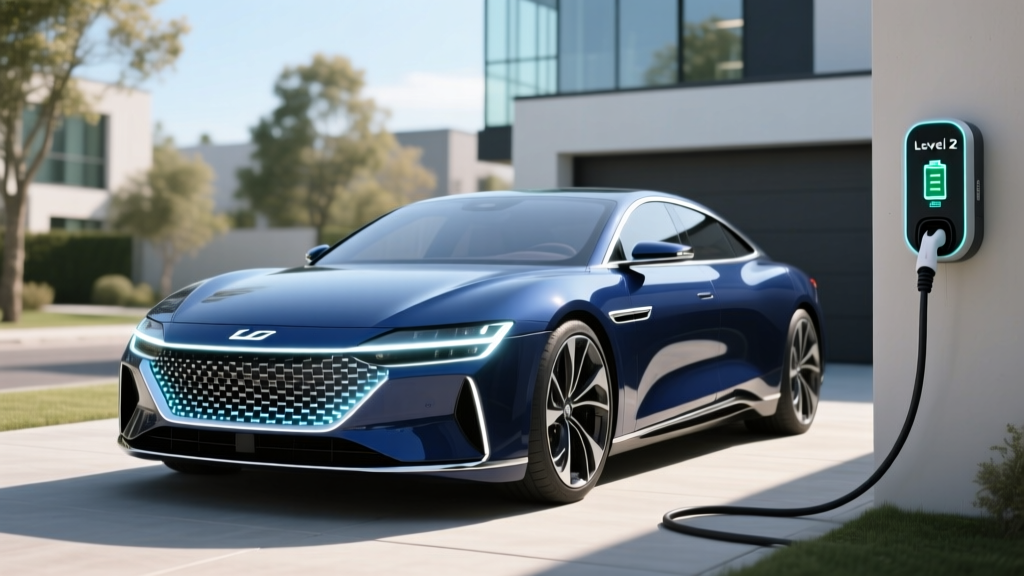
For home charging, the Air's 19.2 kW onboard charger is among the fastest in any production EV. With a hardwired Level 2 station on a dedicated 100-amp circuit (requiring a 125-amp breaker), you can add 77 miles of range per hour — fully replenishing a depleted Grand Touring battery in roughly 7 hours. Most homes will need an electrical panel upgrade to support this setup; budget $2,000-$4,000 for panel work plus $1,500-$2,500 for the charger and installation, according to typical electrician quotes.
Performance and Driving Dynamics
The Air's performance varies dramatically by trim. The base Pure delivers a respectable 3.8-second 0-60 time with 430 hp from its single rear motor — quick by any sedan standard. The Grand Touring's 819 hp and 3.0-second sprint place it firmly in sports car territory. The Dream Edition Performance, with 933 hp and a 2.0-second 0-60, competes directly with the Tesla Model S Plaid and Rimac Nevera.
But straight-line speed isn't the Air's strongest suit. Its handling, while competent, reflects the car's 5,200-pound curb weight. The adaptive air suspension provides a comfortable ride in its default setting, and the low center of gravity (battery pack mounted beneath the floor) minimizes body roll. However, the steering lacks the feedback and precision of a Porsche Taycan, and the Air feels more grand tourer than sports sedan in corners.
The Air's regenerative braking system offers one-pedal driving capability, though it's less aggressive than Tesla's implementation. Most drivers will still use the friction brakes for final stops. The friction brakes themselves are powerful (15.5-inch front rotors on the Grand Touring) but can feel grabby in low-speed urban driving.
Interior, Cargo, and Technology
The Air's cabin is genuinely spacious, with 41.1 inches of rear legroom — more than the Mercedes S-Class and significantly more than the Tesla Model S (35.4 inches). The glass canopy roof creates an airy, open feeling, though it can increase cabin heat on sunny days (the electrochromic glass option helps but adds cost).
Cargo space totals 32 cubic feet with the rear seats up (22 cu ft trunk + 10 cu ft frunk), expanding to 62 cubic feet with seats folded. The frunk alone holds 10 cu ft — large enough for two carry-on suitcases. For comparison, the Model S offers 28 cu ft total (no frunk in current models).
The infotainment system centers on a 34-inch curved glass cockpit display that floats above the dashboard. It's visually striking but has drawn criticism for burying climate controls in touchscreen menus. A secondary lower touchscreen handles secondary functions. Wireless Apple CarPlay and Android Auto are standard. The 21-speaker Surreal Immersive Audio system (by Devialet) delivers exceptional sound quality.
Driver assistance comes via Lucid's DreamDrive system, which uses 32 sensors including lidar (on Grand Touring and above). DreamDrive provides adaptive cruise control, lane centering, automatic emergency braking, and blind-spot monitoring. It's a Level 2 system — meaning the driver must remain fully engaged and hands on the wheel. It does not enable hands-free or eyes-off driving like GM's Super Cruise or Ford's BlueCruise on approved highways. Lucid has announced future DreamDrive Pro updates with more advanced features, but as of 2026, the system remains competitive but not class-leading in automation capability.
Pricing, Trims, and Federal Tax Credit Eligibility
| Trim | Base MSRP | Federal §30D Credit | Effective Price (if eligible) |
|---|---|---|---|
| Pure RWD | $87,400 | $0 (exceeds MSRP cap) | $87,400 |
| Touring AWD | $107,400 | $0 (exceeds MSRP cap) | $107,400 |
| Grand Touring AWD | $138,000 | $0 (exceeds MSRP cap) | $138,000 |
| Dream Edition AWD | $169,000 | $0 (exceeds MSRP cap) | $169,000 |
Critical tax credit note: Under IRS §30D rules, the federal EV tax credit for new sedans is capped at vehicles with an MSRP of $55,000 or less. Every 2023 Lucid Air trim exceeds this cap, making none eligible for the new-vehicle $7,500 federal credit. This is a significant consideration for buyers comparing the Air to the Tesla Model 3, Hyundai Ioniq 6, or BMW i4, which may qualify.
However, buyers purchasing a used 2023 Lucid Air may qualify for the Used Clean Vehicle Credit (§25E), which provides up to $4,000 (or 30% of the sale price, whichever is less) for vehicles priced at $25,000 or less from a dealer. Given the Air's original pricing, finding one under $25,000 is unlikely in 2026, but this credit could apply to higher-mileage examples or those with damage history. Consult IRS guidance on the used EV credit for eligibility details including income caps ($75,000 single / $150,000 joint filers).
State incentives vary widely and may still apply. California's CVRP program, Colorado's tax credit, and other state-level incentives have their own MSRP and income rules. Check your state's energy office or DMV for current programs.
Warranty, Ownership Costs, and Reliability
Lucid backs the Air with an 8-year/100,000-mile battery and powertrain warranty, with a guaranteed minimum 70% battery capacity retention over that period. The basic vehicle warranty is 4 years/50,000 miles. These terms are competitive with Tesla (8yr/120k-150k mi depending on model) and slightly less generous than Hyundai/Kia's 10-year/100,000-mile coverage.
Insurance costs for the Air are high. Average annual premiums range from $3,200-$4,800 depending on trim, driver profile, and location — roughly 30-50% higher than a comparable BMW 5 Series or Mercedes E-Class. The Air's repair costs, aluminum construction, and limited service network contribute to elevated premiums. Obtain quotes before purchasing.
Lucid's service network remains limited compared to legacy luxury brands. As of 2026, Lucid operates approximately 25 service centers nationwide, with mobile service available in select metro areas. Owners in rural areas or smaller cities may face significant travel for warranty work. This is a genuine consideration for buyers outside major coastal markets.
According to fueleconomy.gov data, the Air Grand Touring's 131 MPGe combined translates to approximately $550-$700 in annual electricity costs (at $0.16/kWh national average and 15,000 miles/year) — roughly $1,800-$2,200 less than a comparable gasoline luxury sedan.
Who Should Buy the 2023 Lucid Air?
Strengths
- Class-leading efficiency (4.5 mi/kWh) and EPA range (516 mi)
- 300 kW DC fast charging with strong sustained rates
- Spacious rear seat and generous cargo/frunk space
- Impressive straight-line performance across all trims
- 19.2 kW Level 2 charging capability (fastest in class)
- Distinctive design with glass canopy roof
- Low operating costs vs. gas luxury sedans
Drawbacks
- No federal tax credit eligibility (MSRP exceeds $55k cap)
- Limited service center network outside major metros
- High insurance premiums ($3,200-$4,800/yr average)
- DreamDrive ADAS lags Tesla/GM/Ford in hands-free features
- Touchscreen-heavy interior lacks physical climate controls
- Handling not as sharp as Porsche Taycan despite performance
- Brand new — long-term reliability data still limited
Best for: Long-distance commuters, road-trip enthusiasts, and luxury sedan buyers who prioritize range and efficiency over brand prestige. The Air excels for drivers covering 15,000+ miles annually who can charge at home and want to minimize public charging stops. The Grand Touring trim offers the best value proposition with its 516-mile range and 300 kW charging.
Consider alternatives if: You need hands-free highway driving (GM Super Cruise or Ford BlueCruise vehicles), you're on a tighter budget (Tesla Model 3 Long Range at ~$47,000 with tax credit), or you live far from a Lucid service center and want dealer network convenience (BMW i5, Mercedes EQE).
Competitor Comparison: Air vs. Model S vs. Taycan vs. i5
| Vehicle | EPA Range | Max DCFC | 0-60 mph | Base MSRP | Federal Credit |
|---|---|---|---|---|---|
| Lucid Air Grand Touring | 516 mi | 300 kW | 3.0 sec | $138,000 | $0 |
| Tesla Model S LR | 405 mi | 250 kW | 3.1 sec | $89,990 | $0 (MSRP cap) |
| Porsche Taycan 4S | 227 mi | 270 kW | 3.8 sec | $106,550 | $0 (MSRP cap) |
| BMW i5 eDrive40 | 295 mi | 205 kW | 5.7 sec | $67,795 | Up to $7,500* |
| Mercedes EQE 350+ | 305 mi | 170 kW | 6.2 sec | $74,900 | $0 (MSRP cap) |
*BMW i5 eligibility depends on battery sourcing requirements and buyer income. Verify at irs.gov.
The Air wins decisively on range and efficiency. The Model S offers a more mature Supercharger network and Autopilot/FSD features (though still Level 2 requiring supervision). The Taycan delivers superior handling dynamics but sacrifices range. The BMW i5 offers the best value with potential tax credit eligibility and strong dealer support, though with significantly less range.
Frequently Asked Questions
What is the real-world highway range of the Lucid Air Grand Touring?
Expect approximately 380-420 miles at 70-75 mph in moderate temperatures (60-75°F). Cold weather (below 30°F) reduces this to 320-360 miles. City driving with regenerative braking can reach 450-500+ miles. The Air's 4.5 mi/kWh efficiency is the best in its class.
How fast does the Lucid Air charge at home?
With a hardwired 80-amp Level 2 charger on a 100-amp circuit, the Air charges at 19.2 kW, adding roughly 77 miles of range per hour. A full charge from empty takes about 7 hours. Most homes need a panel upgrade to support this; budget $3,500-$6,500 total for electrical work and charger installation.
Does the 2023 Lucid Air qualify for the federal EV tax credit?
No. Under IRS §30D rules, new sedans must have an MSRP of $55,000 or less to qualify. All Air trims exceed this cap. Used Air buyers may qualify for the §25E used EV credit (up to $4,000) if the vehicle is priced at $25,000 or less and buyer income is under $75k single / $150k joint. State incentives may still apply.
Is the Lucid Air reliable? What's the warranty coverage?
Lucid provides an 8-year/100,000-mile battery and powertrain warranty with a 70% minimum capacity retention guarantee. Long-term reliability data is still limited (Lucid began deliveries in late 2021). The service network is sparse outside major metros — approximately 25 centers nationwide as of 2026. Consider this if you live in a rural area.
How does DreamDrive compare to Tesla Autopilot or GM Super Cruise?
DreamDrive is a Level 2 driver-assistance system providing adaptive cruise, lane centering, and automatic emergency braking. It requires hands on the wheel and full driver attention at all times. Unlike GM Super Cruise or Ford BlueCruise, it does not offer hands-free driving on approved highways. Tesla's Autopilot/FSD (Supervised) offers similar Level 2 functionality with more aggressive feature development, though also requiring driver supervision.
Is the Lucid Air worth buying over a Tesla Model S?
Choose the Air if you prioritize range (516 vs 405 miles), efficiency, interior space, and a more distinctive design. Choose the Model S if you need access to the Supercharger network (though Lucid now has adapter access), want more mature Autopilot features, or prefer Tesla's service infrastructure. The Air is more efficient; the Model S has a more established ecosystem.
What's the total cost of ownership over 5 years?
For a Grand Touring driven 15,000 miles/year: approximately $138,000 purchase + $18,000 insurance + $3,250 electricity - $15,000 estimated depreciation = roughly $144,250 over 5 years. Compare this to a BMW 540i at roughly $95,000 total (including $12,000 in fuel). The Air costs more upfront but saves significantly on energy. Insurance and depreciation are the Air's largest cost drivers.
Sources: EPA data via fueleconomy.gov, Lucid Motors official specifications, IRS §30D and §25E tax credit guidance at irs.gov, IIHS safety ratings. Pricing reflects 2023 model year MSRP; verify current used-market pricing and state incentive availability before purchase.