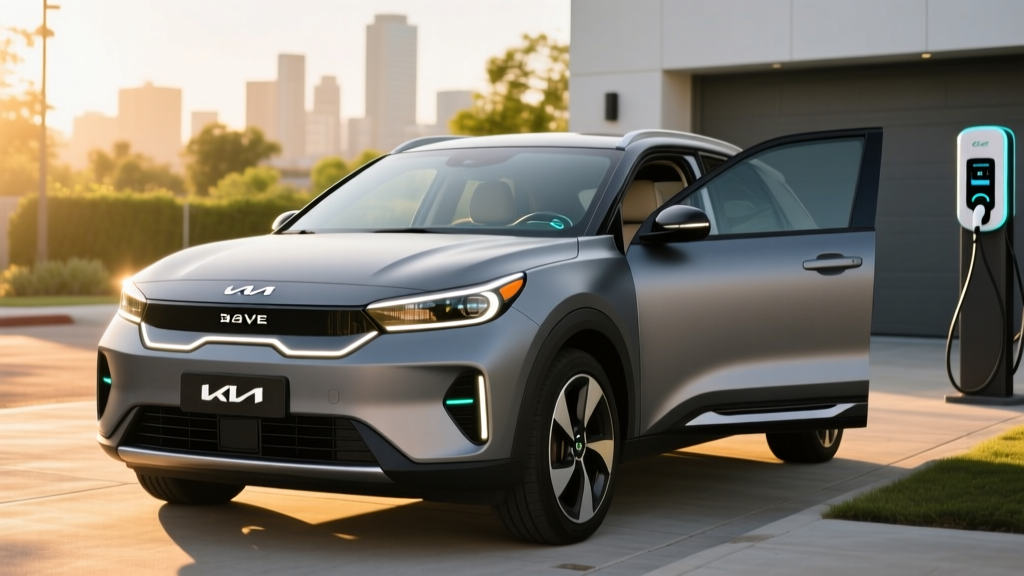
Quick Verdict: Is the 2023 Kia Niro EV Wave Worth Buying in 2026?
The 2023 Kia Niro EV Wave (base trim) delivers an EPA-estimated 239 miles of range, 113 MPGe combined, and DC fast charging at up to 85 kW — all in a practical crossover with 20.2 cu ft of cargo space. On the used market in 2026, expect to pay between $22,000 and $27,000 depending on mileage and condition. Federal used-EV tax credits (up to $4,000 under §25E) may apply if you meet income and dealer requirements. It's one of the most affordable entry points into a modern, liquid-cooled EV with a proven 64.8 kWh NMC battery — but DC charging speed and cold-weather range loss are real trade-offs you need to understand before buying.
2023 Kia Niro EV Wave: Core Specs at a Glance
The Wave is the base trim of the second-generation Niro EV. Here's what you're working with:
| Specification | 2023 Kia Niro EV Wave |
|---|---|
| EPA Range | 239 miles |
| Battery Capacity | 64.8 kWh usable (NMC, liquid-cooled) |
| Motor Output | 201 hp / 188 lb-ft torque |
| 0–60 mph | ~7.0 seconds |
| EPA Efficiency | 113 MPGe combined (28 kWh/100 mi) |
| DC Fast Charge (Peak) | 85 kW (CCS1) |
| 10–80% DC Charge Time | ~44 minutes |
| Level 2 AC Charge Rate | 10.9 kW (onboard charger) |
| Level 2 Full Charge Time | ~7 hours |
| Cargo Volume | 20.2 cu ft (rear seats up) / 51.4 cu ft (folded) |
| Drivetrain | FWD single-speed |
| Battery Warranty (Original) | 10 years / 100,000 miles (8 yrs remaining if bought in 2026) |
| Original MSRP (Wave) | $39,550 (before incentives) |
Real-World Range: What to Actually Expect
The EPA sticker says 239 miles, but real-world conditions change that number significantly:
- Moderate weather, mixed driving (city + suburban): 220–245 miles — many owners report matching or slightly exceeding EPA in city-heavy driving thanks to regen braking.
- Highway-dominant driving at 70–75 mph: 185–210 miles. The Niro EV's boxy crossover shape creates more drag than a sedan like the Tesla Model 3 or Hyundai Ioniq 6.
- Cold weather (below 32°F), cabin heat on: 155–185 miles. NMC batteries lose efficiency in cold, and the Niro EV uses a resistive PTC heater (not a heat pump), which draws significant energy. Expect 25–35% range loss in sustained sub-freezing conditions.
Charging Reality: Home Setup and Public DC Speeds
The Niro EV Wave uses a CCS1 connector for DC fast charging and a J1772 inlet for Level 1/Level 2 AC charging. Here's what each level means for your daily life:
| Charging Level | Power (kW) | Miles Added per Hour | Use Case |
|---|---|---|---|
| Level 1 (120V household outlet) | ~1.4 kW | ~4–5 miles/hr | Overnight top-up, emergencies only |
| Level 2 (240V, home wall connector) | Up to 10.9 kW | ~33–38 miles/hr | Daily home charging, full overnight charge |
| DC Fast Charging (CCS1) | Peak 85 kW | ~190 miles/hr at peak | Road trips, but taper slows things down |
The Charging Curve Reality
Kia advertises "85 kW peak" DC fast charging — but that's the maximum, not the sustained rate. In real-world testing at Electrify America and similar CCS networks, the Niro EV typically sustains 75–85 kW between 10–40% state of charge (SoC), then tapers to 50–60 kW through 60%, and drops further to 30–40 kW approaching 80%. The full 10–80% session takes approximately 44 minutes.
This is notably slower than competitors like the Hyundai Ioniq 5 (which peaks at 230+ kW on its 800V architecture and does 10–80% in ~18 minutes). For road trips, plan for 40–50 minute charging stops rather than 20-minute ones.
Home Charging Installation Costs
If you're buying a used Niro EV and need a Level 2 home charger installed, budget for the following:
| Item | Estimated Cost Range |
|---|---|
| Level 2 EVSE (ChargePoint Home Flex, Emporia, Wallbox) | $350–$700 |
| Electrician labor (240V/50A circuit run) | $500–$2,000 |
| Permit and inspection | $50–$250 |
| Electrical panel upgrade (if needed for 200A service) | $1,500–$3,500 |
| Total (no panel upgrade) | $900–$2,950 |
| Total (with panel upgrade) | $2,400–$6,450 |
Have a licensed electrician evaluate your panel before purchasing. Most homes with existing 200-amp service and a nearby garage or driveway outlet can install Level 2 without a panel upgrade.
2023 Niro EV Wave vs. Gas and Hybrid: The Numbers
Many buyers cross-shop the Niro EV against the Niro Hybrid and Niro Plug-in Hybrid — or against compact gas crossovers. Here's how the costs compare over 5 years and 75,000 miles (assuming 15,000 miles/year):
| Factor | 2023 Niro EV Wave | 2023 Niro Hybrid (EX) | 2023 Honda CR-V (Gas AWD) |
|---|---|---|---|
| Used Price (2026 est.) | $22,000–$27,000 | $22,000–$26,000 | $24,000–$29,000 |
| EPA Efficiency | 113 MPGe (28 kWh/100mi) | 53 MPG combined | 30 MPG combined |
| Fuel/Energy Cost (5 yr) | $3,150–$4,200 | $4,250–$5,300 | $7,500–$9,400 |
| Maintenance (5 yr) | $600–$1,000 | $1,800–$2,500 | $2,500–$3,500 |
| Insurance (5 yr avg) | $7,500–$9,500 | $6,500–$8,000 | $6,000–$7,500 |
| Total 5-Yr Operating Cost | $11,250–$14,700 | $12,550–$15,800 | $16,000–$20,400 |
Energy cost assumptions: electricity at $0.14/kWh (national average) for EV; gasoline at $3.40/gallon. Your local utility rate and gas prices will shift these numbers. Source: fueleconomy.gov and AAA maintenance cost data.
Key Takeaways From the Comparison
- The Niro EV saves $1,300–$5,700 in operating costs over 5 years compared to the hybrid and gas alternatives, primarily from lower fuel and maintenance costs.
- EV insurance premiums run 15–25% higher on average due to battery replacement cost exposure and specialized repair requirements. Get quotes before buying.
- Maintenance savings are real: no oil changes, no transmission fluid, no spark plugs, no exhaust system. Brake pads last 80,000+ miles thanks to regenerative braking.
- The break-even point vs. the Niro Hybrid is roughly 3–4 years if you charge at home at average utility rates. If you rely exclusively on paid public DC fast charging, savings narrow significantly.
Used EV Tax Credits and Incentives (2026 Rules)
When buying a used 2023 Niro EV Wave from a licensed dealer in 2026, you may qualify for the Previously-Owned Clean Vehicle Credit (§25E), which provides up to $4,000 or 30% of the sale price (whichever is lower). Here's the eligibility checklist:
§25E Used EV Credit Requirements
- Sale price: Must be $25,000 or less (the Niro EV Wave often qualifies at current used prices)
- Buyer income caps (MAGI): $75,000 single / $112,500 head of household / $150,000 married filing jointly
- Purchase from a licensed dealer (private-party sales do not qualify)
- Vehicle age: Must be at least 2 model years old (2023 model qualifies in 2026)
- Battery capacity: At least 7 kWh (Niro EV's 64.8 kWh easily meets this)
- Point-of-sale transfer: You can transfer the credit to the dealer for an immediate price reduction
- First use: You cannot have claimed this credit for another vehicle in the prior 3 years
Source: IRS — Used Clean Vehicle Credit
Important: Some states offer additional used-EV rebates (California's CVRP, Colorado's state credit, etc.). Check your state's energy office or DMV for current programs — these stack with the federal credit in many cases.
Common Misconceptions About the Niro EV — Addressed
| Myth | Fact |
|---|---|
| "The battery will need replacing soon and cost $20,000." | Kia's NMC battery is liquid-cooled and backed by a 10-year/100,000-mile warranty (8 years remaining on a 2023 model). Real-world NMC degradation averages 10–15% over 100,000 miles based on fleet data. A 2023 Niro EV with 30,000 miles likely retains 94–97% of original capacity. Full replacement (if ever needed) runs $8,000–$12,000 at a dealer, not $20,000+. |
| "You can't road-trip an EV — charging takes forever." | 10–80% takes ~44 minutes at a DC fast charger. That's longer than a gas stop, but pairs well with meal and rest breaks. The CCS1 network (Electrify America, EVgo, ChargePoint) covers most major US highway corridors. Plan with PlugShare or A Better Routeplanner. |
| "EVs are worse in winter." | Range drops 25–35% in sustained cold — this is real. But the Niro EV starts instantly, has no cold-start emissions, and heated seats/steering wheel (standard on Wave) use far less energy than cabin air heating. Preconditioning while plugged in recovers much of the loss. |
| "I need a Tesla to have a good EV experience." | The Niro EV lacks Tesla's Supercharger network (though NACS adapters are expanding access). But Kia's build quality, physical buttons, straightforward infotainment, and dealer service network are advantages many buyers prefer over Tesla's minimalist approach. |
Who Should Buy the 2023 Niro EV Wave in 2026?
Decision Framework: Is This the Right EV for You?
Choose the 2023 Niro EV Wave if:
- You have access to Level 2 home or workplace charging (this is the single biggest factor in EV satisfaction)
- Your daily commute is under 80 miles round-trip, leaving ample range buffer
- You want a used EV under $27,000 with remaining factory battery warranty
- You prioritize cargo practicality and easy ingress over sporty performance
- You live in a mild-to-moderate climate, or you accept cold-weather range reduction and plan accordingly
Look elsewhere if:
- You frequently drive 300+ mile highway trips and don't want 40-minute charging stops (consider the Ioniq 5 or Tesla Model Y for faster DC charging)
- You live in a region with extreme cold (below 0°F regularly) and lack a garage — the PTC heater and NMC chemistry mean significant winter range loss
- You have no access to home or workplace charging and would rely entirely on public infrastructure — the 85 kW peak charge rate makes this frustrating
- You need AWD — the Niro EV is front-wheel drive only (consider the Kia EV6 or Hyundai Ioniq 5 AWD)
What First-Time EV Buyers Need to Know Before Purchase
1. Check the Battery State of Health (SoH)
Before buying any used Niro EV, ask the dealer for a battery health report. Kia dealerships can pull the SoH percentage from the BMS (Battery Management System). Look for 90%+ SoH on a 2023 model with under 40,000 miles. Third-party tools like OBDeleven or a ScanGauge can also read SoH via the OBD-II port.
2. Verify Charging Port Condition
Inspect the CCS1/J1772 inlet for corrosion, bent pins, or loose connections. A damaged charge port is a $500–$1,200 repair.
3. Confirm Software Update Status
Kia issued several OTA and dealer-applied software updates for the 2023 Niro EV addressing charging handshake issues and BMS calibration. Confirm the vehicle has the latest firmware at a Kia dealer before or immediately after purchase.
4. Test Drive in Your Actual Conditions
Drive the car on your actual commute route. Monitor the energy consumption display (kWh/100mi). If your commute is hilly or highway-heavy, confirm that 239 EPA miles leaves enough buffer for your worst-case day.
5. Get Insurance Quotes First
EV insurance premiums can surprise first-time buyers. Get quotes from at least three insurers before finalizing your purchase. Some insurers (like Progressive and GEICO) have become more competitive on EV rates, while others still price EVs at a significant premium.
Frequently Asked Questions
Does the 2023 Niro EV Wave qualify for the $7,500 federal new-EV tax credit?
No — the §30D new clean vehicle credit applies only to new purchases. However, as a used vehicle in 2026, it may qualify for the §25E Previously-Owned Clean Vehicle Credit of up to $4,000 if you meet income requirements and purchase from a licensed dealer for $25,000 or less.
Can I charge the Niro EV at Tesla Superchargers?
The 2023 Niro EV ships with a CCS1 port. Kia has not released an official NACS adapter for the Niro EV as of early 2026. Third-party CCS-to-NACS adapters exist (such as those from Lectron or A2Z), but verify compatibility and safety certification before using one. Access to Tesla Superchargers with CCS connectors varies by station.
How long does the Niro EV battery actually last?
Based on fleet data from similar Hyundai/Kia 64 kWh NMC packs, expect 10–15% total degradation over 100,000 miles or 8–10 years under normal use. The battery warranty guarantees 70% capacity retention for 10 years/100,000 miles — meaning a catastrophic failure is covered, and gradual degradation below 70% would trigger a warranty claim. Most owners report the battery outlasting the vehicle's economic life.
What happens if I can only charge on a standard 120V outlet?
Level 1 charging at ~1.4 kW adds about 4–5 miles of range per hour. An overnight charge (10 hours) adds roughly 40–50 miles. This works if your daily driving is under 40 miles, but it's frustrating as a primary charging method. Strongly consider installing a 240V Level 2 circuit for daily usability.
Is the Niro EV Wave missing important features compared to higher trims?
The Wave trim includes 8-inch touchscreen, wireless Apple CarPlay/Android Auto, heated front seats, heated steering wheel, adaptive cruise control, lane-keeping assist, and blind-spot monitoring. You give up the larger 10.25-inch screen, navigation, ventilated seats, power liftgate, and Harman Kardon audio found on the Wind and Wave trims. For most buyers, the Wave's equipment list is comprehensive.
How does the Niro EV compare to the Kia EV6?
The EV6 offers faster DC charging (up to 239 kW on its 800V architecture), available AWD, more interior space, and a longer-range option (310 miles EPA). However, used EV6 prices in 2026 typically start at $30,000–$35,000, making the Niro EV Wave a more budget-friendly entry point if you don't need the extra charging speed or performance.
Editor's note: Pricing, tax credit eligibility, and incentive availability change frequently. Always verify current used-EV pricing through sources like Kelley Blue Book or Edmunds, and confirm tax credit eligibility with a qualified tax professional or the IRS §25E guidance page before purchase.