Quick Answer: Is the 2023 Kia Niro EV Worth It in 2026?
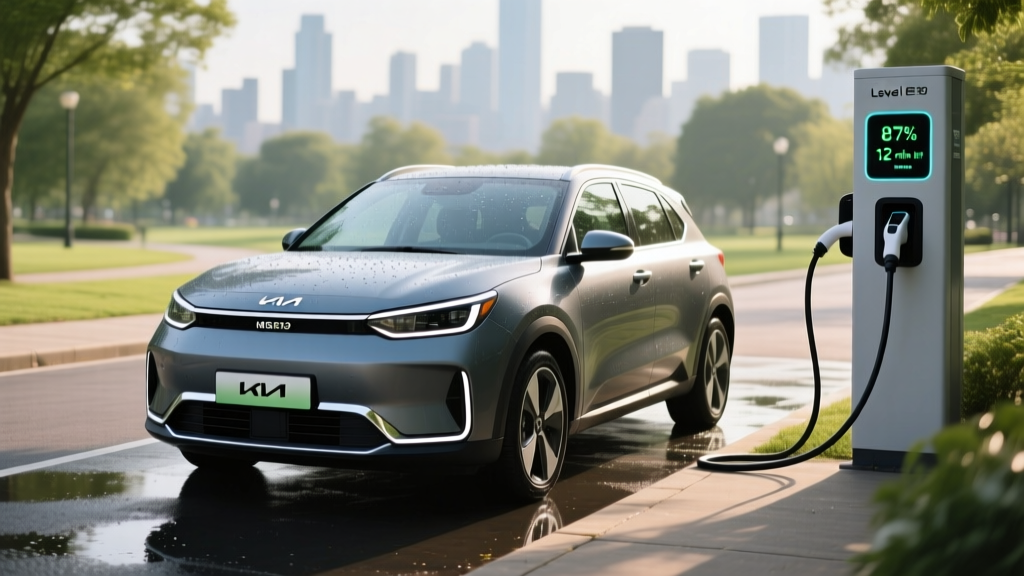
The 2023 Kia Niro EV delivers an EPA-estimated 239 miles of range from its 64.8 kWh battery, with DC fast charging that peaks at roughly 77 kW (10–80% in about 45 minutes). On the used market in 2026, expect to pay between $18,000 and $26,000 depending on mileage and condition. It qualifies for up to $4,000 under the federal used-EV tax credit (§25E) if income and dealer requirements are met. It's a practical commuter EV for drivers with home Level 2 charging who want low running costs, but its relatively slow DC charging makes it less ideal for frequent road-trippers.
Range and Efficiency: EPA Sticker vs. Real-World Miles
The 2023 Niro EV carries a 64.8 kWh usable battery pack using NMC (nickel manganese cobalt) chemistry. The EPA rates it at 239 miles of combined range with an efficiency of 113 MPGe (29 kWh per 100 miles). Those numbers place it in the middle of the compact EV crossover segment — behind the Hyundai Ioniq 5 and Tesla Model Y, but competitive with the Chevrolet Bolt EUV.
Real-World Range Expectations
EPA Combined: 239 miles
Highway (70 mph, mild weather): ~210–220 miles
City / suburban commuting: ~245–260 miles (regen braking helps)
Cold weather (below 30°F, highway): ~165–185 miles
The Niro EV lacks a heat pump, which means cabin heating in winter draws directly from the traction battery. Expect 20–30% range loss in sustained freezing temperatures, consistent with other EVs using resistive heating. Preconditioning the battery while plugged in mitigates some of this loss.
| Spec | Value |
|---|---|
| EPA Range | 239 miles |
| Battery (usable) | 64.8 kWh, NMC |
| Efficiency | 113 MPGe / 29 kWh/100 mi |
| Motor Output | 201 hp / 188 lb-ft torque |
| 0–60 mph | ~7.2 seconds |
| DC Fast Charge (peak) | ~77 kW (CCS1) |
| 10–80% DC Charge | ~45 minutes |
| Level 2 Charge Rate | 10.9 kW (onboard charger) |
| Level 2 (0–100%) | ~7 hours |
| Drivetrain | FWD |
| Cargo Volume | 18.7 cu ft (rear seats up) |
| Battery Warranty | 10 yr / 100,000 mi |
| Original MSRP (Wind trim) | $39,600 |
| Original MSRP (Wind Plus) | $44,600 |
Charging: What to Expect at Home and on the Road
The Niro EV uses the CCS1 connector for DC fast charging and J1772 for Level 2 AC. With the industry's 2025–2026 shift to NACS (Tesla's connector), CCS1 vehicles like the Niro EV can access Tesla Supercharger networks using a CCS-to-NACS adapter — though charge speeds remain limited by the car's onboard hardware, not the station's capacity.
| Level | Power (kW) | Miles Added per Hour | Typical Use |
|---|---|---|---|
| Level 1 (120V outlet) | ~1.4 kW | ~4–5 mi/hr | Overnight top-up, emergencies |
| Level 2 (240V, 48A) | 10.9 kW | ~36 mi/hr | Home daily charging |
| DC Fast (CCS1) | Peak 77 kW | ~150 mi/hr (at peak) | Road trips, public stations |
Charging curve reality: The 77 kW peak only holds between roughly 10–40% state of charge. Beyond 50%, the rate tapers significantly — dropping to around 40 kW by 70% and below 20 kW past 85%. This is why the 10–80% charge takes 45 minutes rather than the ~25 minutes you'd get in an Ioniq 5 or Model Y with 200+ kW peak capability. For daily commuting with home charging, this taper is irrelevant. For road trips, plan longer stops.
Home charging cost: At the US average residential electricity rate of ~$0.16/kWh (EIA data), a full 64.8 kWh charge costs about $10.37. That's roughly $0.043 per mile — compared to $0.12–$0.15 per mile in a 30 MPG gas car at $3.50/gallon.
Cost of Ownership: Niro EV vs. Gas Niro vs. Niro Hybrid
Kia sells the Niro in three flavors: fully electric (EV), plug-in hybrid (PHEV), and conventional hybrid (HEV). Here's how the 2023 EV stacks up against the hybrid variant for a buyer weighing the options in 2026.
| Factor | Niro EV (Wind) | Niro HEV (EX) |
|---|---|---|
| Used Price (2026 est.) | $20,000–$24,000 | $22,000–$26,000 |
| EPA Efficiency | 113 MPGe (29 kWh/100mi) | 53 MPG combined |
| Fuel/Energy Cost per Mile | ~$0.043 (home charging) | ~$0.067 ($3.50/gal gas) |
| Annual Fuel (12,000 mi) | ~$516 | ~$793 |
| Annual Maintenance Est. | ~$300 | ~$550 |
| Federal Tax Credit (used, §25E) | Up to $4,000 (income limits) | None |
| 5-Year Fuel + Maint. Total | ~$4,080 | ~$6,715 |
Over five years and 60,000 miles, the Niro EV saves roughly $2,600 in fuel and maintenance compared to the hybrid — and the gap widens if you have access to cheap overnight electricity or workplace charging. The EV also eliminates oil changes, spark plugs, and transmission fluid. Brake pad life extends significantly thanks to regenerative braking.
Insurance note: EV insurance premiums tend to run 10–20% higher than comparable gas models due to battery replacement costs in collision claims. Budget an extra $150–$300/year depending on your state and driving record. Get quotes before purchasing.
Federal Tax Credits and Incentives in 2026
The 2023 Niro EV did not qualify for the $7,500 new-vehicle federal tax credit (§30D) when sold new, because its battery components and critical minerals did not meet the US-sourcing thresholds that took effect in 2023. However, as a used vehicle in 2026, it may qualify under a different provision.
- §25E Used Clean Vehicle Credit: Up to $4,000 (30% of sale price, capped at $4,000)
- Sale price cap: Vehicle must sell for $25,000 or less
- Buyer income limits (MAGI): $75,000 single / $112,500 head of household / $150,000 joint
- Dealer requirement: Must be purchased from a licensed dealer (private sales excluded)
- Vehicle age: Must be at least 2 model years old (2023 Niro qualifies in 2026)
- Point-of-sale transfer: Credit can be applied at purchase, reducing out-of-pocket cost
Verify current rules at IRS.gov §25E, as income thresholds and sourcing requirements are subject to legislative changes.
Real-World Ownership: Who the Niro EV Works For
Not every EV suits every driver. The 2023 Niro EV has specific strengths and limitations that make it a great fit for some buyers and a poor fit for others.
Decision Framework: Is the Niro EV Right for You?
Choose the Niro EV if:
- Your daily commute is under 80 miles round-trip
- You have access to Level 2 home charging (garage, driveway, or workplace)
- You live in a mild-to-moderate climate (or accept winter range loss)
- You take road trips of 200+ miles fewer than 4–5 times per year
- You want low operating costs and minimal maintenance
- Your used-EV budget is $20,000–$25,000
Look elsewhere if:
- You rely exclusively on public DC fast charging (the 77 kW peak is slow for daily public use)
- You frequently drive 300+ mile trips and want sub-20-minute charge stops
- You live in a region with extreme cold and no garage (consider a heat-pump-equipped EV like the Ioniq 5)
- You need AWD — the Niro EV is FWD only
- You need to tow — the Niro EV is not rated for towing
Common Misconceptions About the 2023 Niro EV
| Myth | Fact |
|---|---|
| "The battery will need replacing in 5 years" | Kia's battery warranty covers 10 years/100,000 miles for capacity below 70%. NMC batteries in modern EVs typically degrade 1–2% per year. At that rate, expect ~85–90% capacity at 100,000 miles. |
| "It qualifies for the full $7,500 tax credit" | It did not qualify for §30D as a new vehicle. The used §25E credit offers up to $4,000, subject to income and price caps. |
| "EV charging takes too long" | Home Level 2 charging (7 hours, overnight) means you start every day "full." Road-trip DC charging is slower than gas fill-ups, but most owners charge at home 90%+ of the time. |
| "The Niro EV is the same as the Niro Hybrid" | Completely different powertrains. The EV has no engine, no gas tank, no transmission. The EV also has a dedicated platform with a flat floor and more cargo space than the hybrid. |
| "I can't charge in the rain" | EV connectors and charge ports are weather-sealed (IP-rated). Charging in rain, snow, or at a car wash is safe per SAE J1772 and CCS standards. |
What First-Time EV Buyers Should Know
If the 2023 Niro EV is your first electric vehicle, a few ownership realities differ sharply from gas cars:
Home charging is non-negotiable for convenience. Relying solely on public charging adds cost, time, and unpredictability. A Level 2 home charger installation (240V, 48A circuit) typically runs $800–$2,000 including equipment and electrician labor, depending on panel proximity. If your electrical panel needs a 200-amp upgrade, add $1,500–$3,000. Confirm requirements with a licensed electrician before purchase.
kW vs. kWh — know the difference. kW (kilowatts) measures power — how fast energy flows, like water pressure. kWh (kilowatt-hours) measures energy — how much is stored, like tank size. The Niro's 64.8 kWh battery holds the energy; its 77 kW DC charge rate determines how fast it refills. Confusing these leads to wrong expectations at public chargers.
Plan for winter. Without a heat pump, the Niro EV's resistive cabin heater can consume 3–5 kW in cold weather — equivalent to driving 10–15 mph continuously. Precondition the cabin and battery while plugged in to preserve range. Seat heaters (standard on Wind Plus) use far less energy than cabin air heating.
Maintenance is minimal but not zero. You'll still rotate tires (EVs are heavier and wear tires faster), replace cabin air filters, top off washer fluid, and eventually replace the 12V auxiliary battery (every 3–5 years, ~$200–$300). But oil changes, timing belts, and exhaust repairs are gone forever.
Frequently Asked Questions
How long does the 2023 Kia Niro EV battery last?
Kia warranties the high-voltage battery for 10 years or 100,000 miles against capacity loss below 70%. Real-world degradation data from similar NMC packs suggests 1–2% loss per year under normal use, meaning most batteries retain 80–90% capacity at the 100,000-mile mark. A full battery replacement (out of warranty) would cost approximately $8,000–$12,000 at current pricing, though this is rare.
Can I use Tesla Superchargers with the 2023 Niro EV?
Yes, with a CCS-to-NACS adapter. Kia has not issued a native NACS port retrofit for the 2023 Niro, so an adapter (typically $200–$300 from authorized suppliers) is required. Charge speeds remain limited to the Niro's ~77 kW peak regardless of the Supercharger's rated output.
What is the real highway range at 75 mph?
Expect approximately 205–220 miles at sustained 70–75 mph in mild weather (60–80°F). At 80+ mph or in headwinds, aerodynamic drag reduces this further. In winter highway conditions (below freezing with heat on), plan for 165–185 miles before needing to charge.
Does the 2023 Niro EV have one-pedal driving?
Yes. The Niro EV offers adjustable regenerative braking levels (1–3) selectable via steering wheel paddles. Level 3 provides near-one-pedal driving in city traffic, though it doesn't bring the car to a complete hold without brake application — unlike some competitors with full stop-and-hold regen.
Is the 2023 Niro EV safe?
The 2023 Niro EV earned a Top Safety Pick rating from the IIHS with Good ratings in all crashworthiness tests. Standard driver-assistance features include forward collision avoidance, lane keeping assist, blind spot monitoring, and rear cross-traffic alert. Note: these are SAE Level 0–1 assist features, not autonomous driving systems.
How does the Niro EV compare to the Chevrolet Bolt EUV?
The Bolt EUV offers slightly more EPA range (247 miles) and a lower used price ($15,000–$20,000), but charges even slower on DC (~55 kW peak). The Niro EV has a more refined interior, better rear-seat space, and Kia's longer warranty. If DC charging speed is a priority, neither is ideal — consider a Hyundai Ioniq 5 or Tesla Model Y instead.