Quick Verdict: The Performance EV Bargain of the E-GMP Era
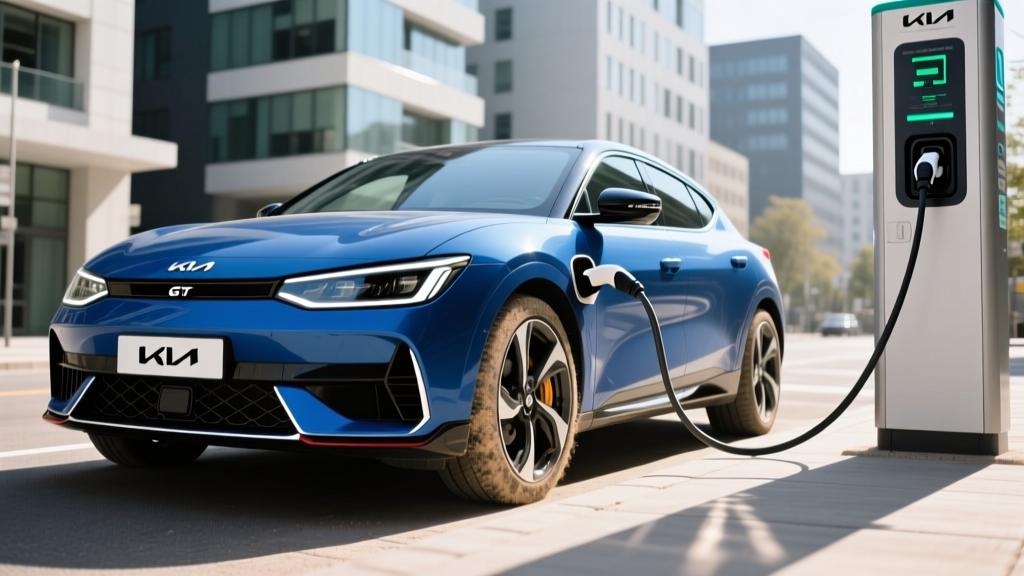
The 2023 Kia EV6 GT occupies a rare position in the electric vehicle market: a 576-horsepower dual-motor performance crossover that undercuts the Tesla Model Y Performance and Porsche Taycan on price while delivering supercar-rivaling acceleration. Built on Hyundai Motor Group's Electric-Global Modular Platform (E-GMP), the EV6 GT pairs an 800-volt architecture with a 77.4 kWh usable battery to achieve a 3.4-second 0-60 mph sprint — numbers that demand attention from anyone cross-shopping electric performance SUVs.
But raw acceleration is only half the story. With a 206-mile EPA range estimate, the EV6 GT trades distance for power, a compromise that matters depending on your driving profile. This review breaks down the exact numbers — charging curves, real-world efficiency, ownership costs, and federal tax credit eligibility — so you can decide whether the GT badge justifies the range trade-off.
Range, Battery, and Real-World Efficiency
| Spec | Value |
|---|---|
| Battery (usable capacity) | 77.4 kWh, NMC (nickel-manganese-cobalt) |
| EPA estimated range | 206 miles |
| EPA efficiency | 85 MPGe combined (40 kWh/100 mi) |
| Drivetrain | Dual-motor AWD |
| Horsepower / Torque | 576 hp / 545 lb-ft |
| 0-60 mph | 3.4 seconds |
| Top speed | 161 mph |
EPA sticker: 206 miles. Expect approximately 180–195 miles in mixed highway driving at 70 mph, and 150–170 miles in sub-freezing temperatures (below 32°F). Aggressive acceleration — which the GT tempts constantly — can push consumption above 45 kWh/100 mi, dropping range closer to 165 miles. City driving with regenerative braking set to maximum can stretch range to near the EPA figure or slightly above, around 210 miles.
The EV6 GT uses a 77.4 kWh NMC (nickel-manganese-cobalt) battery pack. Unlike the LFP (lithium iron phosphate) chemistry found in some base-trim competitors, NMC offers higher energy density — critical in a performance vehicle where weight distribution and packaging matter. The trade-off is that NMC cells degrade slightly faster over thousands of charge cycles and are best kept between 20% and 80% state of charge for daily use. Kia includes a battery management system with active thermal conditioning, which helps mitigate degradation and enables the impressive DC fast-charge speeds discussed below.
The 206-mile EPA figure places the EV6 GT behind the standard EV6 Long Range RWD (310 miles EPA) and behind the Hyundai Ioniq 5 (up to 303 miles). For context, the Tesla Model Y Performance achieves 285 miles EPA. According to fueleconomy.gov, the EV6 GT's 85 MPGe combined rating reflects the energy cost of moving 4,800+ pounds with 576 horsepower on tap.
Charging Speed: 800V Architecture Advantage
The EV6 GT's 800-volt electrical architecture is its most significant technical advantage over 400V competitors. This higher voltage allows faster DC fast charging at compatible stations without requiring excessive current that would overheat cables and connectors.
| Charging Level | Power / Rate | Time / Range Added |
|---|---|---|
| Level 1 (120V household) | ~1.4 kW | ~3–4 miles per hour |
| Level 2 (240V home, 48A) | 10.9 kW | ~30 miles per hour; full charge in ~7.5 hours |
| DC Fast Charge (350 kW station) | Peak 240 kW | 10–80% in approximately 18 minutes |
| DC Fast Charge (150 kW station) | ~130–145 kW sustained | 10–80% in approximately 28–32 minutes |
A critical nuance: the "240 kW peak" figure is not sustained across the entire charge session. Like all lithium-ion packs, the EV6 GT follows a charging curve — it pulls maximum power between roughly 10% and 45% state of charge (SoC), then tapers progressively. Between 60% and 80%, expect speeds closer to 100–120 kW. Above 80%, charging slows dramatically to protect battery health, making DC fast charging past 80% impractical for road trips.
For home charging, the EV6 GT accepts up to 10.9 kW on Level 2 (240V, 48 amps). A full 0–100% charge at home takes roughly 7.5 hours — easily achievable overnight. Most EV6 GT owners will install a 48-amp Level 2 wallbox on a 60-amp circuit. Expect home installation costs between $800 and $2,500 depending on whether your electrical panel needs upgrading, the run length from panel to garage, and local permit fees.
Kia equips the EV6 GT with both a CCS1 (Combined Charging System) port and, via an included adapter, access to NACS (Tesla Supercharger) stations. As of 2024, Kia began providing NACS adapters to EV6 owners, significantly expanding the available fast-charging network. This adapter support is a practical advantage for road-trip planning, as Tesla's Supercharger network remains the most reliable public DC fast-charging infrastructure in the US.
Performance and Driving Dynamics
The EV6 GT's dual-motor all-wheel-drive system produces 576 horsepower and 545 lb-ft of torque. The 3.4-second 0-60 mph time places it in the territory of a Porsche 911 Carrera S, though the Kia carries its mass (approximately 4,896 lbs curb weight) less gracefully through corners than a sports car.
Driving modes include Eco, Normal, Sport, and a GT-exclusive "My Mode" that allows customization of steering weight, suspension damping, motor response, and regenerative braking intensity. The electronically controlled limited-slip differential (e-LSD) and semi-active suspension are GT-exclusive hardware that noticeably improves cornering composure versus the standard EV6.
The GT mode button on the steering wheel is a standout feature — one press activates maximum power output, stiffens the dampers, and opens the simulated engine sound through the cabin speakers. Drift mode, which biases torque to the rear axle, is available but best reserved for closed courses.
Regenerative braking offers four levels selectable via steering-wheel paddles, from coasting (Level 0) to near-one-pedal driving (Level 3, which Kia calls "i-Pedal"). The i-Pedal mode can bring the EV6 GT to a complete stop without touching the brake pedal, though the transition from regen to friction braking at very low speeds is slightly less smooth than in some competitors.
Interior, Cargo, and Technology
The EV6 GT interior uses recycled materials extensively — seat fabrics incorporate recycled PET bottles — and the cabin design is driver-focused with a curved dual-screen display (two 12.3-inch panels). GT-specific touches include suede and vegan-leather sport seats with green stitching, a GT-exclusive steering wheel, and aluminum pedals.
| Measurement | Value |
|---|---|
| Front legroom | 41.7 inches |
| Rear legroom | 39.4 inches |
| Cargo volume (rear seats up) | 24.4 cu ft |
| Cargo volume (rear seats folded) | 50.2 cu ft |
| Front trunk (frunk) | 0.7 cu ft (GT-specific reduced size) |
The frunk on the GT trim is notably small — just 0.7 cubic feet — because the additional front motor and power electronics consume most of the space. This is a meaningful trade-off versus the RWD EV6, which offers a 1.8 cu ft frunk. The rear cargo area, at 24.4 cu ft, is adequate for a week's groceries or two carry-on suitcases but trails the Hyundai Ioniq 5's 27.2 cu ft and the Tesla Model Y's 30.2 cu ft (rear seats up).
Standard technology includes wireless Apple CarPlay and Android Auto (on the base infotainment system; the upgraded navigation system requires wired connection), a head-up display with augmented-reality navigation, a 360-degree surround-view camera, and remote smart parking assist (which can move the car in and out of tight spaces using the key fob).
On the driver-assistance front, the EV6 GT includes Kia's Highway Driving Assist 2 (HDA2), which combines adaptive cruise control with lane-centering steering and automatic lane-change initiation when you tap the turn signal. This is a SAE Level 2 system — the driver must remain attentive with hands on or near the wheel at all times. It is not a self-driving system.
Highway Driving Assist 2 is a Level 2 driver-assistance system per SAE International standards. It requires continuous driver supervision. It will not navigate construction zones, respond to all stopped vehicles, or handle adverse weather. The driver is legally and physically responsible for the vehicle at all times.
Pricing, Trims, and Federal Tax Credit Eligibility
The 2023 Kia EV6 GT was offered as a single, fully loaded trim with a base MSRP of $61,600 (destination charge included). The only extra-cost option was premium paint colors ($395 for colors like Runway Red or Yacht Blue).
| Item | Amount |
|---|---|
| Base MSRP (destination included) | $61,600 |
| Premium paint (optional) | $395 |
| As-tested price (with options) | ~$61,995 |
| Federal §30D tax credit (if eligible) | Up to $7,500 |
| Effective price after max credit | ~$54,100 |
Federal tax credit eligibility requires careful attention to IRS §30D rules. The EV6 GT, manufactured in South Korea, does not qualify for the full $7,500 new-vehicle credit when purchased new, because §30D requires final assembly in North America. However, the EV6 GT may qualify for the used EV tax credit (up to $4,000 or 30% of sale price, whichever is lower) when purchased from a dealer as a pre-owned vehicle, subject to these conditions:
- Sale price must be $25,000 or less (unlikely for a 2023 EV6 GT in the current market)
- Buyer income caps: $75,000 single / $112,500 head of household / $150,000 joint filers
- Vehicle must be at least two model years old
For the most current rules, consult the IRS clean vehicle credits page. State and local incentives may also apply — check your state's energy office or DMV for specific programs, as these vary by jurisdiction and change frequently.
Ownership Costs, Warranty, and Long-Term Value
Kia backs the EV6 GT with one of the strongest warranty packages in the EV segment:
- Battery warranty: 10 years / 100,000 miles (capacity retention threshold: 70%)
- Powertrain warranty: 10 years / 100,000 miles
- Bumper-to-bumper: 5 years / 60,000 miles
- Roadside assistance: 5 years / 60,000 miles
The 10-year battery warranty is a significant ownership advantage. Kia guarantees the battery will retain at least 70% of its original capacity during the warranty period. Based on current NMC degradation data from similar E-GMP vehicles, most owners report 3–5% capacity loss in the first year, stabilizing to roughly 1–2% per year thereafter. At that rate, a 2023 EV6 GT would retain approximately 88–92% of original capacity at the 5-year mark — well above the 70% threshold.
Insurance costs for the EV6 GT tend to run 15–25% higher than the standard EV6 Wind or Light trims due to the performance classification and higher replacement parts costs. Expect annual premiums between $2,200 and $3,400 depending on your state, driving record, and coverage level. Always get a personalized quote before purchasing.
Charging costs at home average approximately $0.13–$0.16 per kWh nationally (as of 2025 EIA data), making a full charge cost roughly $10–$12. That translates to about $0.05–$0.06 per mile — roughly one-third the per-mile fuel cost of a comparable gasoline performance SUV getting 20 mpg at $3.50/gallon.
EV6 GT vs. Key Competitors
| Spec | Kia EV6 GT | Tesla Model Y Perf. | Hyundai Ioniq 5 N | Ford Mustang Mach-E GT |
|---|---|---|---|---|
| EPA Range | 206 mi | 285 mi | 221 mi | 263 mi |
| Battery (kWh usable) | 77.4 NMC | ~75 NMC | 84 NMC | 88 NMC |
| 0-60 mph | 3.4 sec | 3.5 sec | 3.25 sec | 3.5 sec |
| Horsepower | 576 hp | ~480 hp | 641 hp (N Grin Boost) | 480 hp |
| Peak DC Charge | 240 kW | 250 kW | 240 kW | 150 kW |
| 10-80% DCFC | ~18 min | ~15 min | ~18 min | ~38 min |
| Base MSRP (2023) | $61,600 | $52,990 | $66,100 | $59,995 |
| Cargo (seats up) | 24.4 cu ft | 30.2 cu ft | 27.2 cu ft | 29.7 cu ft |
| Battery Warranty | 10 yr / 100k mi | 8 yr / 120k mi | 10 yr / 100k mi | 8 yr / 100k mi |
- You value 800V fast charging and 18-minute DCFC stops
- Long-term warranty coverage (10 years) matters to you
- You want sub-3.5s acceleration without a luxury-brand price
- You prefer traditional dealership service over mobile technicians
- Range above 280 miles is essential for your road trips
- Cargo space is a priority (Model Y or Mach-E offer ~25% more)
- You need access to the Tesla Supercharger network natively
- You want the latest over-the-air feature updates (Tesla's advantage)
Pros, Cons, and Who Should Buy the EV6 GT
- 3.4-second 0-60 mph at a $61K price point
- 800V architecture: 10-80% in ~18 min on 350 kW chargers
- Class-leading 10-year/100,000-mile battery warranty
- Well-tuned semi-active suspension balances comfort and sport
- Standard HDA2 with lane-change assist
- Distinctive GT styling without excessive flash
- 206-mile EPA range is the lowest in its class
- Tiny 0.7 cu ft frunk (essentially useless)
- Rear cargo (24.4 cu ft) trails Model Y and Mach-E
- No federal new-vehicle tax credit (assembled in South Korea)
- Touch-sensitive HVAC controls are distracting while driving
- Higher insurance premiums due to performance classification
The 2023 Kia EV6 GT is best suited for: Performance-oriented drivers who primarily commute or take shorter trips (under 150 miles round-trip), have reliable home Level 2 charging, and prioritize acceleration and charging speed over maximum range. It works well as a sporty daily driver for a household that already has a longer-range vehicle for road trips, or for urban/suburban owners who rarely drive more than 120 miles in a day.
It is not ideal for: Frequent long-distance road-trippers who need 300+ miles between stops, families requiring maximum cargo versatility, or buyers in rural areas with limited DC fast-charging infrastructure. If range is your top concern, the standard EV6 Long Range RWD (310 miles EPA) or the Tesla Model Y are better fits.
Frequently Asked Questions
What is the real-world range of the 2023 Kia EV6 GT?
The EPA estimates 206 miles, but real-world testing suggests 180–195 miles at highway speeds and 150–170 miles in cold weather below freezing. Aggressive driving can reduce range to around 165 miles. City driving with strong regenerative braking can push range slightly above the EPA figure.
How fast does the EV6 GT charge at home and on the road?
At home on a 240V Level 2 charger (48 amps), the EV6 GT charges at up to 10.9 kW, adding roughly 30 miles per hour and achieving a full charge in about 7.5 hours. On a 350 kW DC fast charger, it peaks at 240 kW and charges from 10% to 80% in approximately 18 minutes — one of the fastest times in its class thanks to the 800V architecture.
Does the 2023 Kia EV6 GT qualify for the federal EV tax credit?
When purchased new, the EV6 GT does not qualify for the §30D new clean vehicle credit because it is assembled in South Korea, not North America. As a used vehicle, it may qualify for the up-to-$4,000 used EV credit once it meets the two-model-year age requirement and is sold at or below $25,000 — a price point unlikely in the near term. Always verify current rules at irs.gov and consult a tax professional.
Is the EV6 GT worth buying over the Tesla Model Y Performance?
If charging speed and warranty coverage are your priorities, the EV6 GT is compelling — its 800V charging and 10-year battery warranty outclass the Tesla. However, the Model Y Performance offers significantly more range (285 vs. 206 miles), more cargo space, native Supercharger access, and a lower starting price. For road-trip-heavy owners, the Model Y is the pragmatic choice. For daily-driving enthusiasts who value fast pit stops, the EV6 GT delivers a more engaging experience.
How does the EV6 GT compare to the Hyundai Ioniq 5 N?
Both share the E-GMP platform and 800V charging architecture, but the Ioniq 5 N (641 hp with N Grin Boost, 221 miles EPA, $66,100 MSRP) is the more track-focused machine with simulated gear shifts, a larger 84 kWh battery, and N-specific chassis tuning. The EV6 GT is the more livable daily driver with a lower price and slightly better efficiency. Choose the Ioniq 5 N for track days; choose the EV6 GT for everyday performance.
What is the battery replacement cost if it fails out of warranty?
Full battery pack replacement for E-GMP vehicles currently ranges from $12,000 to $18,000 including parts and labor, depending on dealer pricing and regional labor rates. However, given the 10-year/100,000-mile warranty with a 70% capacity retention guarantee, most original owners will never face this cost. Module-level repairs (replacing individual cell groups rather than the full pack) can cost significantly less — typically $2,000 to $5,000.