Quick Verdict: The Efficiency King of the Midsize EV Sedan Class
The 2023 Hyundai Ioniq 6 SEL remains one of the most aerodynamically efficient electric vehicles ever sold in the United States, and on the used market in 2026, it represents a compelling value proposition for buyers who prioritize range per dollar over crossover ride height. With an EPA-estimated 361 miles of range on the rear-wheel-drive SEL trim, 800V-class DC fast charging that peaks at 239 kW, and a drag coefficient of just 0.21, this sedan punches well above its original MSRP weight class. Now that 2023 models are eligible for the used-EV federal tax credit (up to $4,000 under IRS §25E), the Ioniq 6 SEL is worth a serious look for commuters and road-trippers alike.
But the Ioniq 6's swooping roofline comes with trade-offs: rear headroom is tight, cargo space is modest for a sedan, and Hyundai's infotainment software can feel busy. Let's break down every number that matters.
Range and Efficiency: 361 EPA Miles, But What's the Reality?
Real-World Expectation: ~300–330 miles mixed highway/city in mild weather; ~240–270 miles in sub-freezing conditions or sustained 80+ mph highway driving
Efficiency: 140 MPGe combined / 24 kWh per 100 miles (RWD Long Range)
The 2023 Ioniq 6 SEL with the Long Range battery and rear-wheel drive carries an EPA-estimated 361 miles — a figure that placed it among the top three longest-range EVs available in its model year. That efficiency is no accident: Hyundai's E-GMP platform pairs a 77.4 kWh usable lithium-ion NMC (nickel-manganese-cobalt) battery pack with one of the slipperiest production car bodies ever built.
In real-world driving, owners consistently report 3.8 to 4.2 miles per kWh in mixed suburban and highway use, which translates to roughly 295–325 miles before the buffer warning. On a pure highway loop at 75 mph in 70°F weather, expect closer to 310–330 miles. Cold weather (below 32°F) without preconditioning can drop range by 20–30%, bringing the practical floor to around 250 miles. The Ioniq 6's standard heat pump helps mitigate this loss compared to EVs without one, but physics still applies.
The SEL AWD variant drops to an EPA-estimated 316 miles due to the added front motor and weight. If range is your top priority, the RWD configuration is the clear pick.
Battery, Charging Speed, and the 800V Advantage
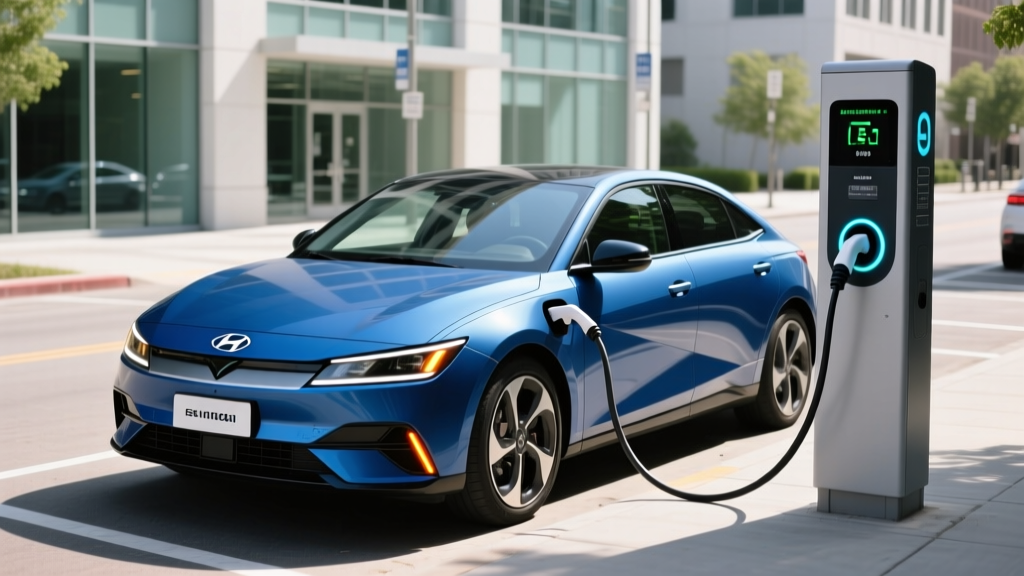
Hyundai equipped the 2023 Ioniq 6 with an 800V electrical architecture — a feature still rare in the midsize segment and one that delivers genuinely fast DC charging when paired with a capable station.
| Charging Level | Power / Rate | Time / Speed |
|---|---|---|
| DC Fast Charge (peak) | 239 kW (800V architecture) | 10–80% in ~18 minutes (on 350 kW charger) |
| DC Fast Charge (sustained avg.) | ~165–185 kW average to 80% | Curve tapers sharply above 80% SoC |
| Level 2 (Home / Public AC) | 10.9 kW (48A onboard charger) | ~36–40 miles of range per hour; 0–100% in ~7.5 hours |
| Level 1 (120V household) | ~1.4 kW | ~4–5 miles per hour (emergency/trickle only) |
The 239 kW peak is impressive, but as with all EVs, the charge curve matters more than the headline number. The Ioniq 6 sustains above 200 kW from roughly 10% to 45% SoC, then gradually tapers to ~150 kW through 65%, and drops further above 80%. On a 350 kW Electrify America or Tesla Supercharger (with NACS adapter), a 10–80% session takes approximately 18 minutes. On a 150 kW station — still common in many areas — expect 25–30 minutes for the same session.
One important note for 2026 buyers: the 2023 Ioniq 6 ships with a CCS1 connector. Hyundai has since transitioned to NACS for newer models, but CCS-to-NACS adapters are widely available, and the CCS network (Electrify America, EVgo, ChargePoint) remains robust. Hyundai provides complimentary charging credits with new purchases, though these may have expired on 2023 models — verify with the seller.
At home on a Level 2 charger (such as a 48A Wallbox or ChargePoint Home Flex on a 60A circuit), the Ioniq 6's 10.9 kW onboard charger replenishes the battery in roughly 7.5 hours from empty — easily an overnight top-up for any daily commute.
Performance and Drivetrain: Quick, Smooth, and RWD-Biased
| Specification | SEL RWD | SEL AWD |
|---|---|---|
| Powertrain | Single rear motor | Dual motor (front + rear) |
| Horsepower | 225 hp | 320 hp |
| Torque | 258 lb-ft | 446 lb-ft |
| 0–60 mph | ~7.0 seconds | ~5.1 seconds |
| Top Speed | 115 mph | 115 mph |
| Towing Capacity | Not rated | Not rated |
The SEL RWD isn't a performance EV, but 225 hp and instant electric torque make it genuinely quick off the line and confident for highway merging. The single-motor setup also delivers the best efficiency and the longest range. The AWD variant's 320 hp and 5.1-second 0–60 time make it noticeably faster, but the 45-mile range penalty is steep for buyers who don't need all-weather traction.
Ride quality is firm but well-damped — Hyundai tuned the E-GMP platform for a European-style composure rather than a floaty American-sedan feel. Road noise is low thanks to the aerodynamic body and acoustic glass. Regenerative braking offers multiple levels via steering-wheel paddles, including a true one-pedal driving mode (i-Pedal) that brings the car to a complete stop without touching the brake pedal.
Interior, Cargo, and Technology
The Ioniq 6's interior design is polarizing. Hyundai leaned hard into a "cocoon" concept with a minimalist dashboard, ambient lighting integrated into the door panels, and bridge-style center console. Material quality in the SEL is solid — cloth/H-Tex seating surfaces, soft-touch dash materials — though the Limited trim adds leather and more premium finishes.
Passenger and Cargo Dimensions:
- Front headroom: 40.2 inches
- Rear headroom: 37.5 inches (tight for occupants over 6'0")
- Front legroom: 42.3 inches
- Rear legroom: 35.1 inches
- Trunk cargo volume: 12.3 cubic feet
- Frunk (front trunk): 0.5 cubic feet (RWD) — essentially a cable storage cubby
The rear headroom and trunk space are the Ioniq 6's most significant compromises. The fastback roofline cuts into rear headroom, and the 12.3 cu-ft trunk is smaller than a Honda Civic's. If you regularly haul four adults or need serious cargo capacity, the Ioniq 5 (30.7 cu-ft behind the rear seats) or a Tesla Model 3 (23 cu-ft with the frunk) may serve you better.
Tech highlights:
- Dual 12-inch displays (digital cluster + infotainment touchscreen)
- Wireless Apple CarPlay and Android Auto
- Hyundai Digital Key (NFC-based phone-as-key)
- Bluelink connected services with remote preconditioning and charge scheduling
- Over-the-air (OTA) software updates for navigation and vehicle systems
- Highway Driving Assist 2 (HDA2) — Level 2 ADAS with lane-centering, adaptive cruise, and lane-change assist
HDA2 is a competent Level 2 driver-assistance system (SAE Level 2 — driver must remain engaged and hands on or near the wheel at all times). It handles highway lane-centering and stop-and-go traffic well, but it is not a self-driving system and does not navigate intersections or urban streets autonomously.
Pricing, Tax Credits, and Used-Market Value in 2026
| Item | Amount |
|---|---|
| Original MSRP (SEL RWD Long Range) | $47,750 (incl. $1,150 destination) |
| Original MSRP (SEL AWD Long Range) | $51,250 |
| Typical 2026 Used Market Price (SEL RWD, 25k–40k mi) | $28,000–$34,000 |
| Federal Used EV Tax Credit (§25E, max) | Up to $4,000 (30% of sale price, capped) |
| Effective Price After Max Credit | ~$24,000–$30,000 |
As a 2023 model, the Ioniq 6 SEL is no longer eligible for the new-vehicle §30D credit (up to $7,500) unless purchased as leftover new old-stock inventory from a dealer — increasingly rare in 2026. However, it does qualify for the used-EV credit under IRS §25E, which provides 30% of the sale price up to a maximum of $4,000 for eligible buyers purchasing from a licensed dealer.
Key §25E eligibility requirements (verify current rules at IRS.gov):
- Buyer adjusted gross income: ≤$75,000 single / ≤$112,500 head of household / ≤$150,000 joint
- Sale price must be $25,000 or less (some 2023 Ioniq 6 SELs may exceed this threshold — shop carefully)
- Vehicle must be at least 2 model years old (2023 models qualify starting in 2025)
- Must purchase from a licensed dealer (private-party sales do not qualify)
- Credit can be applied at point of sale as a down-payment reduction
The $25,000 sale price cap is the critical constraint. Many 2023 Ioniq 6 SELs on the used market in 2026 list between $28,000 and $34,000, which exceeds the §25E cap. To qualify, you'll need to find a higher-mileage example or negotiate aggressively. Some dealers may price select units at or below $25,000 to move inventory — it pays to search broadly.
Warranty and Long-Term Ownership
Hyundai backs the Ioniq 6 with one of the strongest warranty packages in the EV segment:
- Battery & Powertrain: 10 years / 100,000 miles (whichever comes first)
- New Vehicle Limited: 5 years / 60,000 miles
- Anti-Perforation: 7 years / unlimited miles
- Roadside Assistance: 5 years / unlimited miles
The battery warranty guarantees that the high-voltage pack will retain a minimum capacity threshold (typically 70% State of Health) over the 10-year/100,000-mile period. NMC chemistry in the E-GMP platform has shown strong degradation performance in early data — most owners report less than 5% capacity loss in the first 30,000 miles. The 10-year coverage is a significant advantage for used buyers: even a 2023 model purchased in 2026 retains factory battery warranty through 2033 or 100,000 miles.
Note: Hyundai's warranty is transferable to second owners, but the 10-year/100,000-mile powertrain warranty typically reduces to 5-year/60,000-mile for subsequent owners. The high-voltage battery warranty, however, generally remains at 10/100k regardless of ownership — confirm with your Hyundai dealer before purchase.
Pros, Cons, and Who Should Buy the Ioniq 6 SEL
- Class-leading 361-mile EPA range (RWD)
- 800V architecture with 239 kW DC fast charging (~18 min 10–80%)
- Outstanding 140 MPGe / 24 kWh/100mi efficiency
- 10-year/100,000-mile battery warranty
- Low drag coefficient (0.21 Cd) reduces highway range loss
- Standard heat pump for cold-weather efficiency
- Competent HDA2 Level 2 driver assist
- Used-EV credit eligible (up to $4,000 under §25E)
- Tight rear headroom (37.5 in) for tall passengers
- Small trunk (12.3 cu ft) and tiny frunk (0.5 cu ft)
- CCS1 connector (not native NACS — adapter needed for Superchargers)
- Infotainment can feel cluttered; no physical volume knob
- Firm ride may not suit all buyers
- AWD variant loses 45 miles of range
- Not rated for towing
- Used §25E credit requires ≤$25,000 sale price (hard to find)
- Choose the Ioniq 6 SEL RWD if: You commute 30–80 miles daily, take regular road trips, want maximum range per dollar, and rarely carry more than one passenger. This is the efficiency-optimized pick.
- Choose the Ioniq 6 SEL AWD if: You live in a snowy climate and need all-wheel-drive traction, and you're willing to trade ~45 miles of range for 320 hp and 5.1-second acceleration.
- Look elsewhere if: You need cargo space for a family (consider the Ioniq 5 or Tesla Model Y), you want native NACS charging without an adapter (2025+ Hyundai models), or you regularly seat tall adults in the rear.
Frequently Asked Questions
What is the real-world range of the 2023 Ioniq 6 SEL?
The EPA rates the RWD Long Range at 361 miles. In real-world mixed driving at moderate temperatures, expect 300–330 miles. Sustained highway speeds above 75 mph or sub-freezing weather without preconditioning can reduce range to 240–270 miles. The Ioniq 6's heat pump and low drag coefficient help it hold range better than many competitors in cold conditions.
How fast does the 2023 Ioniq 6 charge?
On a 350 kW DC fast charger, the Ioniq 6 peaks at 239 kW and charges from 10–80% in approximately 18 minutes. On a 150 kW charger, expect 25–30 minutes. At home on a Level 2 (240V, 48A) charger, the 10.9 kW onboard charger adds about 36–40 miles per hour, fully replenishing the battery in roughly 7.5 hours.
Does the 2023 Ioniq 6 qualify for a federal tax credit in 2026?
As a used vehicle, the 2023 Ioniq 6 may qualify for the IRS §25E used clean vehicle credit — up to $4,000 (30% of sale price). However, the sale price must be $25,000 or less, buyer income must fall under IRS caps, and the purchase must be from a licensed dealer. The new-vehicle §30D credit ($7,500) is generally no longer available unless you find rare new old-stock inventory. Always verify current eligibility at IRS.gov or with a tax professional.
Is the 2023 Ioniq 6 SEL worth buying vs. a Tesla Model 3 or Hyundai Ioniq 5?
If range and efficiency are your top priorities, the Ioniq 6 SEL RWD's 361 EPA miles and 140 MPGe are hard to beat at its used-market price. The Tesla Model 3 Long Range offers comparable range, a native NACS connector, and access to the Supercharger network without an adapter, plus more cargo space. The Ioniq 5 offers more interior room and a hatchback layout but sacrifices about 60 miles of range. The Ioniq 6 wins on efficiency and highway cruising; it loses on practicality and charging-network convenience.
What battery chemistry does the Ioniq 6 use?
The 2023 Ioniq 6 uses NMC (nickel-manganese-cobalt) lithium-ion cells in a 77.4 kWh usable-capacity pack. NMC offers higher energy density than LFP (lithium iron phosphate), which is how Hyundai achieves 361 miles in a relatively compact sedan. The trade-off is that NMC batteries are generally recommended to be charged to 80% for daily use (rather than 100%) to maximize long-term longevity — reserving 100% charges for road trips.
How does the Ioniq 6 handle cold weather?
The standard heat pump is a significant cold-weather advantage, reducing the energy draw of cabin heating compared to resistive heaters. Expect 20–30% range loss in sustained sub-freezing temperatures. Preconditioning the battery while plugged in (via the Bluelink app) before driving or DC fast charging is strongly recommended — a cold battery charges significantly slower and delivers less range. With preconditioning and the heat pump, the Ioniq 6 performs competitively against other EVs in winter conditions.