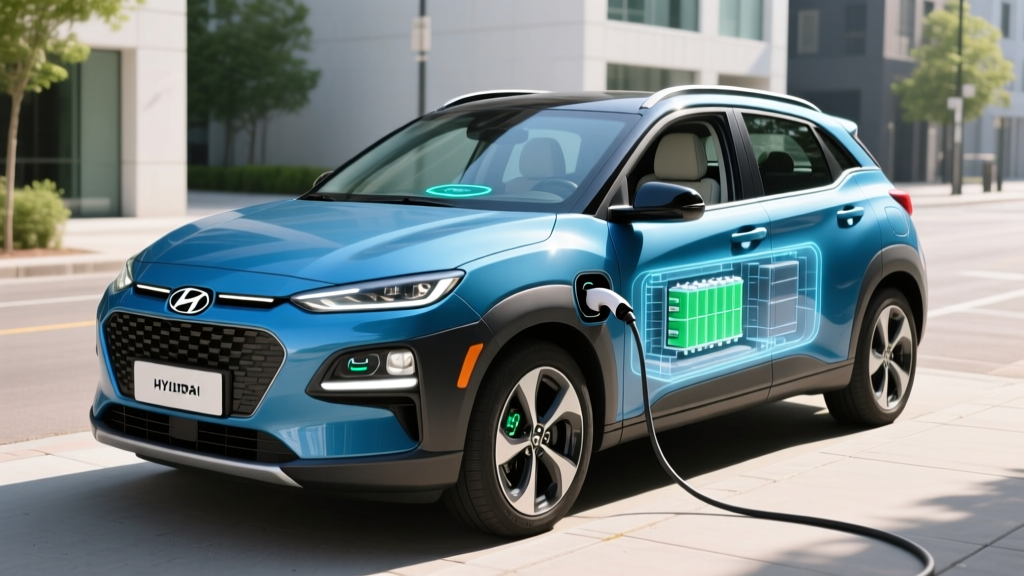
The 2023 Hyundai Kona Electric occupies a specific niche in the used EV market: a compact crossover with credible range, practical packaging, and Hyundai's strong warranty backing — all at a price point that undercuts larger competitors. Now available exclusively as a used or certified pre-owned vehicle (Hyundai redesigned the Kona Electric for 2024 with a larger platform and NACS port), the 2023 model remains a smart buy for commuters and small households who prioritize efficiency over fast-charging speed.
This review covers the final model year of the first-generation Kona Electric, including exact specs, real-world range expectations, charging behavior, tax credit eligibility on the used market, and how it stacks up against rivals like the Chevrolet Bolt EUV and Kia Niro EV.
2023 Hyundai Kona Electric Specifications at a Glance
| Specification | Value |
|---|---|
| EPA Range | 258 miles |
| Battery Capacity (Usable) | 64 kWh (NMC chemistry) |
| Efficiency | 120 MPGe combined / 28 kWh/100 mi |
| Max DC Fast Charge | ~100 kW (CCS1) |
| 10–80% DC Fast Charge | ~47 minutes |
| Level 2 AC Charge Rate | 7.2 kW (~25 mi/hr) |
| Motor Output | 201 hp / 290 lb-ft torque |
| Drivetrain | FWD (single front motor) |
| 0–60 mph | 6.4 seconds |
| Cargo Volume (rear seats up) | 19.2 cu ft |
| Cargo Volume (rear seats folded) | 45.8 cu ft |
| Battery/Powertrain Warranty | 8 years / 100,000 miles (original owner) |
| Original Base MSRP | $34,850 (SEL trim, before incentives) |
Real-World Range: What the EPA Estimate Doesn't Tell You
The EPA rates the 2023 Kona Electric at 258 miles of combined range. That number is legitimate for mixed city/highway driving in moderate temperatures, but real-world conditions shift it meaningfully.
Real-World Highway (70 mph, 75°F): ~220–235 miles
Real-World City (mixed stop-and-go, 65°F): ~255–270 miles (regen recovers energy)
Cold Weather (20°F, highway + city mix): ~170–195 miles (expect 25–35% loss without preconditioning)
Hot Weather (95°F+, AC running): ~235–245 miles
The Kona Electric's efficiency — 120 MPGe combined, or 28 kWh per 100 miles — is genuinely impressive for a crossover. It sips electrons in city driving where regenerative braking recaptures energy at every stop. On the highway, the boxy first-generation shape and lack of a heat pump (the 2023 model uses resistive cabin heating) work against it. Cold-weather drivers in northern climates should budget for significant range loss unless they precondition the battery while plugged in.
One owner-relevant detail: the Kona Electric has no frunk. The entire front compartment houses the motor and power electronics, so all storage is in the rear cargo area. The 19.2 cu ft behind the rear seats is adequate for groceries and a weekend bag but falls short of the Chevrolet Bolt EUV's 16.3 cu ft (which is smaller but paired with a longer wheelbase for more rear legroom). Fold the rear seats and you get 45.8 cu ft — enough for a bicycle with the front wheel removed.
Charging Speed and Connector Details
Charging is where the 2023 Kona Electric shows its age relative to 2024+ models. It uses a CCS1 connector and tops out at roughly 100 kW on DC fast chargers — a rate that was competitive in 2019 but trails the 150–350 kW capabilities of newer platforms.
| Charging Level | Power | Speed / Time |
|---|---|---|
| Level 1 (120V household) | ~1.4 kW | ~4 mi/hr — full charge in ~45+ hours |
| Level 2 (240V home/public) | 7.2 kW | ~25 mi/hr — full charge in ~9.5 hours |
| DC Fast Charge (CCS) | Peak ~100 kW | 10–80% in ~47 min; 80–100% tapers sharply |
The charge curve is the critical detail. The Kona Electric reaches its ~100 kW peak only between roughly 10% and 40% state of charge. From 40% to 60%, it drops to approximately 70–75 kW, and above 80%, it falls below 30 kW as the battery management system protects the cells. This means the advertised 10–80% time of ~47 minutes is accurate, but if you regularly charge from 20% to 90%, plan for closer to 60–65 minutes at the station.
For home charging, the 7.2 kW onboard charger is the practical daily solution. A full overnight charge from 10% takes roughly 9–10 hours on a Level 2 wallbox, which is standard for this class. Most owners will plug in nightly and rarely visit a DC fast charger unless road-tripping.
Home Level 2 installation typically costs $800–$2,000 for the equipment and electrician, assuming your panel has capacity for a 40-amp circuit. Older homes may require a panel upgrade ($1,500–$3,000 additional). Always have a licensed electrician evaluate your setup before purchasing a charger.
Performance and Driving Dynamics
The 2023 Kona Electric uses a single front-mounted permanent-magnet synchronous motor producing 201 horsepower and 290 lb-ft of torque. That's enough for a 6.4-second 0–60 mph time — brisk for a compact crossover and noticeably quicker than most gas-powered subcompacts.
Instant torque delivery makes the Kona Electric feel quicker than its numbers suggest in city driving. Merging onto highways is confident, and the low center of gravity (battery pack under the floor) keeps body roll reasonable through corners. The trade-off is ride firmness: the first-generation platform transmits more road imperfections than you'd expect, and the low-rolling-resistance tires prioritize efficiency over grip.
There is no AWD option. If you need all-wheel drive for snow or rough roads, you'll need to look at the Kia EV6, Hyundai Ioniq 5, or wait for the redesigned 2024+ Kona Electric (which still only offers FWD in most trims).
Pricing, Trims, and Federal Tax Credit Eligibility
The 2023 Kona Electric was sold in three trims. Since Hyundai discontinued this generation after 2023, all examples are now purchased on the used or certified pre-owned market.
| Trim | Original MSRP | Used Market Range (2026 est.) | Used EV Credit (§25E) |
|---|---|---|---|
| SEL | $34,850 | $17,000–$21,000 | Up to $4,000 (30% of sale price, capped) |
| SEL Convenience | $36,350 | $18,500–$22,500 | Up to $4,000 |
| Limited | $42,850 | $21,000–$26,000 | Up to $4,000 |
Tax credit note: Because the 2023 Kona Electric is no longer sold new, the §30D new vehicle credit no longer applies. Instead, buyers should evaluate the §25E used clean vehicle credit, which provides up to $4,000 (30% of the sale price) on qualifying used EVs purchased from a licensed dealer for $25,000 or less. Income caps apply: modified adjusted gross income must not exceed $75,000 (single), $112,500 (head of household), or $150,000 (joint). The vehicle must be at least two model years old, and the credit can only be claimed once per VIN. Consult a tax professional to confirm your eligibility.
Tech, Safety, and Interior
The 2023 Kona Electric's interior reflects its pre-redesign origins. The SEL and SEL Convenience trims feature a 10.25-inch touchscreen with wireless Apple CarPlay and Android Auto, a 10.25-inch digital instrument cluster, and Hyundai's Bluelink connected services. The Limited trim adds a head-up display, Harman Kardon premium audio, leather seats, and a sunroof.
Driver-assistance technology includes Hyundai SmartSense as standard: forward collision-avoidance assist with pedestrian detection, lane-keeping assist, blind-spot collision warning, rear cross-traffic collision-avoidance assist, and adaptive cruise control with stop-and-go. These are SAE Level 1–2 features — the driver must remain fully engaged at all times. This is not a self-driving system.
The NHTSA awarded the Kona Electric a 5-star overall safety rating. The IIHS named it a Top Safety Pick+ in its class year, the highest honor available.
Drawbacks worth noting: the rear seat is tight for adults on longer trips (33.4 inches of legroom), the infotainment system can lag compared to newer Hyundai interfaces, and the absence of a heat pump means cabin heating draws directly from the traction battery in cold weather, compounding range loss.
Who Should Buy the 2023 Kona Electric?
- 258-mile EPA range is competitive in the used subcompact EV segment
- Excellent efficiency (120 MPGe) keeps charging costs low
- Strong 8-year/100,000-mile battery warranty (check remaining coverage on used examples)
- Brisk 201 hp acceleration with instant torque
- Comprehensive standard driver-assist suite
- Low used-market pricing with potential $4,000 used-EV credit
- Slow DC fast charging (~100 kW peak, 47 min 10–80%)
- No heat pump — significant cold-weather range loss
- Tight rear seat and modest cargo space
- CCS1 connector (no native NACS; adapter required for Tesla Superchargers)
- FWD only — no AWD option
- Firm ride quality over rough pavement
Best for: Solo commuters or couples with short-to-moderate daily drives (under 60 miles round-trip) who charge primarily at home. The Kona Electric excels as a cost-efficient daily driver where its 258-mile range provides a comfortable buffer and overnight Level 2 charging covers all daily needs.
Not ideal for: Families needing rear-seat space, frequent road-trippers (the slow DC charging adds significant stop time), cold-climate drivers without access to a garage or preconditioning, or anyone who needs AWD.
2023 Kona Electric vs. Key Competitors
On the used market, the Kona Electric competes directly with the Chevrolet Bolt EUV (259-mile range, slightly more rear legroom, even lower used pricing), the Kia Niro EV (243-mile range, more cargo space, similar platform), and the Volkswagen ID.4 (275-mile range, larger but pricier). The Bolt EUV is the closest rival — it offers nearly identical range, faster DC charging (up to ~115 kW), and typically costs $1,000–$3,000 less on the used market. The Kona Electric's edge is its more refined interior materials (especially in Limited trim) and Hyundai's reputation for warranty support.
Frequently Asked Questions
What is the real-world range of the 2023 Hyundai Kona Electric?
The EPA rates it at 258 miles combined. In real-world highway driving at 70 mph in moderate temperatures, expect 220–235 miles. In cold weather (20°F), range can drop to 170–195 miles due to the lack of a heat pump and battery chemistry limitations.
How fast does the 2023 Kona Electric charge?
On a DC fast charger, it peaks at ~100 kW and charges from 10–80% in approximately 47 minutes. On a home Level 2 charger (7.2 kW), a full charge takes about 9.5 hours. Level 1 (120V) adds roughly 4 miles per hour — only suitable for emergencies or very low daily mileage.
Does the 2023 Kona Electric qualify for a federal tax credit?
Not the new-vehicle §30D credit, since it's no longer sold new. However, it may qualify for the §25E used clean vehicle credit of up to $4,000 if purchased from a dealer for $25,000 or less, and if your income falls below IRS thresholds ($75K single / $150K joint). Confirm eligibility with a tax professional and verify the VIN hasn't previously been claimed.
Is the 2023 Kona Electric worth buying in 2026?
Yes, for the right buyer. If you need an affordable used EV for commuting with strong range and low operating costs, it's a solid pick. If you need fast road-trip charging, AWD, or family-sized interior space, look at the used Hyundai Ioniq 5, VW ID.4, or Ford Mustang Mach-E instead.
What battery chemistry does the Kona Electric use?
The 2023 Kona Electric uses an NMC (nickel-manganese-cobalt) lithium-ion battery pack. NMC offers higher energy density than LFP but is more sensitive to sustained high states of charge. For longevity, Hyundai recommends keeping daily charge limits around 80–90% and using 100% only for longer trips.
How long will the battery last?
Hyundai warranties the battery for 8 years or 100,000 miles against capacity loss below 70% of original. Real-world data from first-generation Kona Electric owners (2019–2023) suggests typical degradation of 8–12% over the first 5 years / 60,000 miles, meaning most packs retain 88–92% capacity. Check the battery state of health (SoH) via the vehicle's diagnostics or a dealer scan before purchasing used.