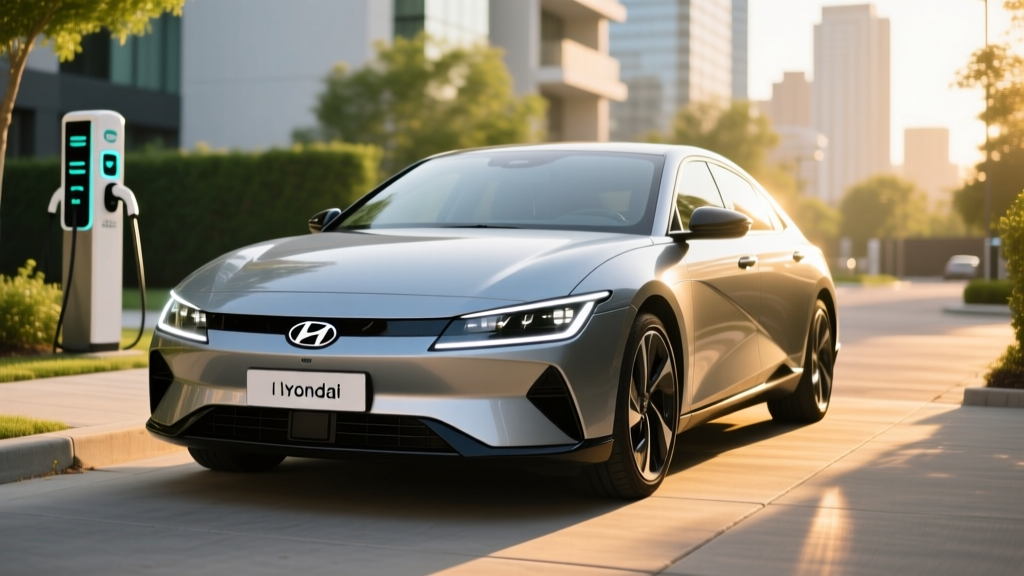
The 2023 Hyundai Ioniq 6 arrived as Hyundai's aerodynamic answer to the Tesla Model 3, trading the crossover practicality of its Ioniq 5 sibling for a sleek sedan silhouette and class-leading efficiency. Built on the Hyundai Motor Group's E-GMP 800-volt architecture, it delivers some of the fastest DC charging speeds available in its price bracket and an EPA-estimated range that rivals vehicles costing tens of thousands more. But the streamlined roofline comes with trade-offs in cargo space and rear visibility that buyers need to weigh carefully.
This review covers the 2023 model year specifically. If you're shopping for a used Ioniq 6 or comparing it against newer model-year updates, the core E-GMP powertrain, battery, and charging hardware remain the foundation — but always verify current trim pricing and federal tax credit eligibility at the point of purchase.
Range and Efficiency: EPA Numbers vs. the Real World
The 2023 Ioniq 6 is available with two battery configurations. The base Standard Range model pairs a 53.0 kWh (usable) lithium-ion polymer battery with rear-wheel drive for an EPA-estimated 240 miles. The Long Range models use a 77.4 kWh usable battery — an NMC (nickel manganese cobalt) chemistry pack — and deliver the headline range figures that put this car on the map.
| Trim / Drivetrain | Battery (kWh usable) | EPA Range (mi) | MPGe (city/hwy/combined) | kWh/100 mi |
|---|---|---|---|---|
| SE Standard Range RWD | 53.0 | 240 | 130 / 111 / 120 | 28 |
| SE / SEL / Limited RWD (Long Range) | 77.4 | 361 | 140 / 121 / 132 | 25 |
| SE / SEL / Limited AWD (Long Range) | 77.4 | 316 | 117 / 100 / 109 | 31 |
The Long Range RWD's 132 MPGe combined makes it one of the most efficient EVs sold in the United States for its model year, rivaling the Tesla Model 3 Rear-Wheel Drive and the Lucid Air Pure in energy consumption per mile. Hyundai achieved this partly through an exceptionally low drag coefficient of 0.21 Cd — among the slipperiest production cars ever sold — along with standard heat pump climate control and an available digital side-mirror system (Camera Monitor System) on Limited trims that further reduces drag.
The EPA's 361-mile figure for the Long Range RWD is achievable in mild-weather city and suburban driving at moderate speeds. In real-world highway testing at 70–75 mph, expect approximately 300–320 miles in warm conditions. In cold weather (below 32°F / 0°C), range drops roughly 15–25% depending on cabin heating demand, bringing usable range to approximately 270–300 miles. The AWD models see a steeper highway and cold-weather penalty due to the additional motor's parasitic losses and higher curb weight. The Ioniq 6's heat pump — standard on all trims — helps mitigate cold-weather losses compared to EVs without one, but physics still governs: battery chemistry slows in the cold, and resistive heating draws energy even with a heat pump supplement.
Charging Speed: 800-Volt Architecture Pays Off
The Ioniq 6's E-GMP platform supports 800-volt DC fast charging, a feature still relatively rare in the sub-$55,000 EV segment (shared with the Kia EV6, Genesis GV60, and Porsche Taycan). On a 350 kW-capable DC fast charger, Hyundai rates the Long Range model for a peak charge rate of approximately 239 kW, enabling a 10–80% charge in roughly 18 minutes under optimal conditions.
| Charge Level | Power / Voltage | Rate | Time (10–80% or Full) |
|---|---|---|---|
| Level 1 (120V household) | ~1.4 kW | ~4–5 mi/hr | ~55+ hours (full) |
| Level 2 (240V home / public) | 10.9 kW (onboard charger max) | ~36 mi/hr | ~7 hours (10–100%) |
| DC Fast Charge (800V, 350 kW station) | Peak ~239 kW | Varies by SoC | ~18 min (10–80%) |
| DC Fast Charge (400V, 150 kW station) | Peak ~100–120 kW | Varies by SoC | ~30–35 min (10–80%) |
A few practical notes on the charging experience. The 800V architecture's biggest advantage shows at 350 kW stations — on a typical 150 kW Electrify America or EVgo stall, the Ioniq 6 charges at rates comparable to 400V competitors, so seek out ultra-fast chargers to exploit the hardware. The charge curve is aggressive through 55% State of Charge (SoC), then tapers progressively; the 18-minute claim applies specifically to the 10–80% window, and charging from 80–100% adds significant time due to cell-balancing protocols. Hyundai includes a standard NACS charge port adapter for newer model-year vehicles; for the 2023 model year, the vehicle shipped with a CCS1 port. Hyundai offered a complimentary NACS adapter program, and owners should verify adapter availability when purchasing used.
For home charging, the 10.9 kW onboard AC charger means a full charge from near-empty takes roughly 7 hours on a 48-amp Level 2 home station (such as a ChargePoint Home Flex or Emporia Level 2). On a standard 120V household outlet (Level 1), expect about 4–5 miles of range added per hour — adequate only for overnight top-ups on low-mileage commutes.
Performance and Drivetrain
The 2023 Ioniq 6 prioritizes efficiency over raw performance, but it's no slouch. The RWD Long Range model uses a single rear-mounted permanent-magnet synchronous motor producing 225 horsepower and 258 lb-ft of torque. Hyundai claims a 0–60 mph time of 5.1 seconds — quick enough for confident highway merging and passing.
The AWD Long Range model adds a front induction motor for a combined 320 horsepower and 446 lb-ft of torque, dropping the 0–60 time to approximately 4.5 seconds. The AWD system is rear-biased under normal driving and engages the front motor under acceleration or low-traction conditions. AWD models also gain a slight towing advantage, though the Ioniq 6 is not a serious tow vehicle — maximum towing capacity is not officially rated for most trims, and Hyundai does not recommend towing with the Standard Range model.
Ride quality leans toward the firm side, especially on the Limited trim's 20-inch wheels. The SE and SEL trims on 18-inch rubber deliver a more compliant ride that suits daily commuting and long-distance travel. All trims feature multi-link rear suspension and regenerative braking with adjustable levels via steering-wheel paddles, including an i-PEDAL mode for one-pedal driving that can bring the car to a complete stop.
Interior, Cargo, and Technology
The Ioniq 6's interior is modern and minimalist, with a dual-screen setup featuring a 12.3-inch digital instrument cluster and a 12.3-inch infotainment touchscreen running Hyundai's latest software. Wireless Apple CarPlay and Android Auto are standard. The cabin uses recycled materials extensively, including bio-paint and eco-processed leather on higher trims.
Front-seat comfort is excellent, with generous headroom and legroom. Rear-seat legroom measures 35.2 inches, adequate for adults on shorter trips, though the sloping roofline cuts into rear headroom — taller passengers will notice. The trunk offers 11.2 cubic feet of cargo space, which is modest for a midsize sedan and noticeably less than the Ioniq 5's 27.2 cu ft or a Tesla Model 3's 23 cu ft (including the frunk). The Ioniq 6's front trunk (frunk) adds only about 0.5 cu ft on AWD models and 1.6 cu ft on RWD — enough for a charging cable bag, not much else.
Available technology highlights include:
- Hyundai Digital Key (NFC-based smartphone unlock and start)
- Vehicle-to-Load (V2L) capability — a 120V outlet inside the rear seat area and an external V2L adapter on the charge port (up to 3.6 kW output) for powering devices or camping equipment
- Remote Smart Parking Assist (on Limited trim) — the car can park and unpark itself in tight spaces via key fob
- Over-the-air (OTA) software updates for navigation, infotainment, and powertrain calibration
- Highway Driving Assist 2 (HDA2) — adaptive cruise with lane centering, automatic lane changes, and machine-learning-based driving style adaptation
The Ioniq 6's swoopy exterior creates real compromises. Rear visibility is poor — the rear window is narrow and high-mounted, making the standard rearview camera essential. The trunk opening is small and the cargo area shallow. Touch-sensitive climate controls on the center console replace physical buttons, which frustrates some drivers. Early 2023 models experienced some infotainment software lag that Hyundai addressed via OTA updates, but verify the latest software version is installed when buying used.
Pricing, Tax Credits, and Ownership Cost
At launch, the 2023 Ioniq 6 was positioned competitively against the Tesla Model 3, BMW i4, and Polestar 2. Below are the original MSRP figures by trim (destination charge included):
| Trim | Drivetrain | Original MSRP (incl. destination) |
|---|---|---|
| SE Standard Range | RWD | ~$38,650 |
| SE | RWD | ~$45,500 |
| SE | AWD | ~$49,000 |
| SEL | RWD | ~$48,000 |
| Limited | RWD | ~$53,400 |
| Limited | AWD | ~$56,900 |
Federal tax credit eligibility for the Ioniq 6 depends on IRS §30D rules, which include buyer income caps, MSRP caps (sedans must be ≤$55,000), and critical-mineral and battery-component sourcing requirements that have tightened since 2023. The SE and SEL RWD trims generally fell under the MSRP cap; the Limited AWD exceeded $55,000 and was ineligible for the new-vehicle credit. Sourcing rules evolved throughout 2023–2024, and the credit amount (up to $7,500) depended on when the vehicle was placed in service. As of 2025–2026, the used-EV credit (§25E) may offer up to $4,000 on qualifying pre-owned Ioniq 6 vehicles priced at or below $25,000, subject to income limits. Always verify current eligibility at IRS.gov and confirm with a tax professional before purchasing.
For total ownership cost, the Ioniq 6 benefits from low fueling costs (approximately $0.04–$0.06 per mile on home Level 2 charging, depending on local electricity rates), zero oil changes, and reduced brake wear from regenerative braking. Hyundai's warranty coverage is among the best in the industry:
- Basic vehicle warranty: 5 years / 60,000 miles
- Powertrain warranty: 10 years / 100,000 miles
- EV battery warranty: 8 years / 100,000 miles (covers capacity loss below 70% of original)
- Complimentary maintenance: 3 years / 36,000 miles
How It Compares: Ioniq 6 vs. Key Rivals
The 2023 Ioniq 6 competes in the premium electric sedan segment. Here's how it stacks up against its most direct competitors:
| Spec | Hyundai Ioniq 6 LR RWD | Tesla Model 3 LR RWD | BMW i4 eDrive40 | Polestar 2 LR SM |
|---|---|---|---|---|
| EPA Range | 361 mi | 341 mi | 301 mi | 276 mi |
| Battery (kWh usable) | 77.4 | ~75 | 81.5 | 75.0 |
| Peak DC Charge (kW) | ~239 | ~250 | ~205 | ~205 |
| 10–80% DC Time | ~18 min | ~20 min | ~31 min | ~30 min |
| 0–60 mph | 5.1 sec | 5.8 sec | 5.5 sec | 6.2 sec |
| Cargo (cu ft) | 11.2 | 23.0 | 16.6 | 14.4 |
| Base MSRP (2023) | ~$45,500 | ~$42,990 | ~$52,200 | ~$49,800 |
The Ioniq 6 wins on EPA range and charging speed among this group. The Tesla Model 3 offers significantly more cargo space and access to the Supercharger network natively (though Hyundai's NACS adapter program largely closes this gap). The BMW i4 delivers superior driving dynamics and build quality but at a higher price and slower charging. The Polestar 2 is the least efficient and slowest-charging of the group but appeals to buyers seeking Scandinavian design and Google-built infotainment.
Choose the Ioniq 6 if: You prioritize maximum range per dollar, want the fastest possible DC charging in its class, commute long distances, and don't need significant cargo space. It's ideal for solo drivers or couples who take road trips and value efficiency over practicality.
Look elsewhere if: You regularly carry rear-seat passengers (the sloping roofline and tight rear headroom are limiting), need trunk space for strollers or gear (the Ioniq 5 or Model 3 are far more practical), or want a performance-oriented driving experience (the BMW i4 M50 or Tesla Model 3 Performance are more engaging).
Pros and Cons at a Glance
- Class-leading 361-mile EPA range (Long Range RWD)
- 800V architecture: ~18-minute 10–80% DC fast charge
- Excellent efficiency: 132 MPGe combined
- Standard heat pump for cold-weather performance
- V2L capability (3.6 kW output)
- Strong warranty: 8-yr/100k-mi battery, 10-yr/100k-mi powertrain
- Quiet, refined highway ride
- Tiny trunk (11.2 cu ft) and impractical frunk
- Poor rear visibility from sloping roofline
- Rear headroom tight for tall passengers
- Touch-sensitive climate controls lack tactile feedback
- AWD models lose significant range (316 vs 361 mi EPA)
- No rear wiper (sedan design, but still missed in rain)
- Limited trim above $55K MSRP cap loses tax credit eligibility
Frequently Asked Questions
What is the real-world range of the 2023 Hyundai Ioniq 6?
In warm-weather highway driving at 70–75 mph, the Long Range RWD delivers approximately 300–320 miles. In city and suburban driving with regenerative braking, you may match or slightly exceed the 361-mile EPA figure. Cold weather (below freezing) reduces range by 15–25%, yielding roughly 270–300 miles depending on heating use and driving style.
How fast does the Ioniq 6 charge at home and on the road?
On a 350 kW DC fast charger, the Long Range model peaks at ~239 kW and charges from 10–80% in approximately 18 minutes. On a 150 kW station, expect 30–35 minutes for the same window. At home on a Level 2 (240V, 48-amp) charger, the 10.9 kW onboard charger delivers roughly 36 miles of range per hour, fully charging the 77.4 kWh battery in about 7 hours.
Does the 2023 Ioniq 6 qualify for the federal EV tax credit?
Eligibility depends on IRS §30D rules including buyer income caps ($150K single / $300K joint for new vehicles), the $55,000 MSRP cap for sedans, and battery critical-mineral and component sourcing requirements that changed throughout 2023. The SE and SEL RWD trims generally fell under the MSRP cap. Always check current rules at IRS.gov and consult a tax professional.
Is the Ioniq 6 worth buying over a Tesla Model 3?
The Ioniq 6 offers more EPA range (361 vs. 341 mi), faster DC charging on 350 kW stations, and a more traditional dealership purchase and service experience. The Model 3 provides significantly more cargo space, native Supercharger access (though Hyundai's NACS adapter narrows this gap), and a more established software ecosystem. If range and charging speed are your top priorities, the Ioniq 6 edges ahead. If cargo versatility and charging-network convenience matter more, the Model 3 remains compelling.
What is the battery warranty on the 2023 Ioniq 6?
Hyundai covers the high-voltage battery for 8 years or 100,000 miles, whichever comes first. The warranty covers capacity loss below 70% of original rated capacity. The broader powertrain is covered for 10 years / 100,000 miles.
Sources: EPA range and efficiency data from fueleconomy.gov; federal tax credit rules from IRS.gov; manufacturer specifications from Hyundai USA press materials.