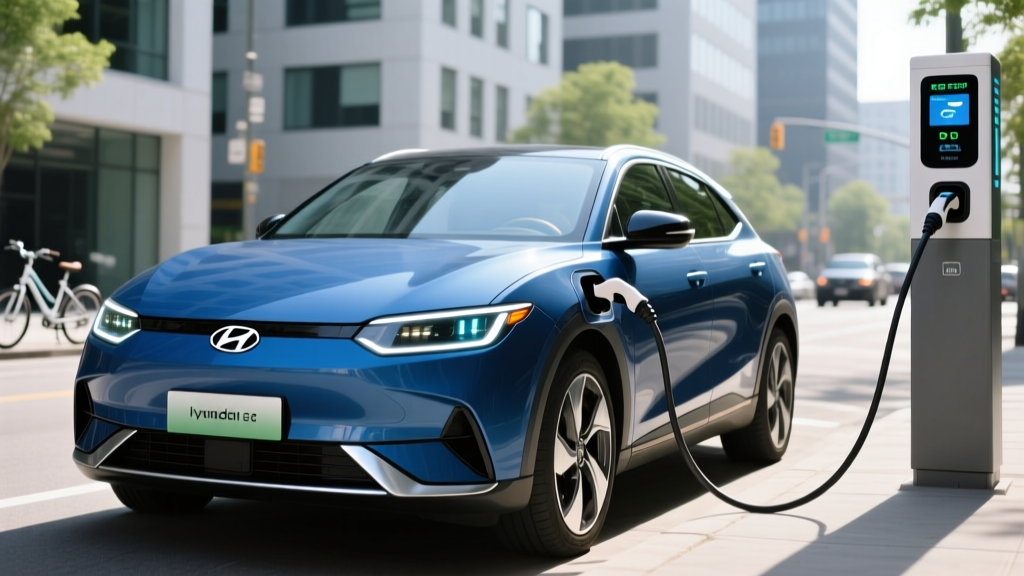
Quick Verdict: The Value Sweet Spot of the Ioniq 5 Lineup
The 2023 Hyundai Ioniq 5 SE occupies a rare position in the electric crossover segment: it delivers near-identical range, charging speed, and interior space as the higher-trim SEL and Limited models, but at a base MSRP that keeps it within reach of the federal EV tax credit's price cap. For buyers who can live without ventilated seats and a panoramic sunroof, the SE trim is the most rational way to access Hyundai's E-GMP platform — the same 800V architecture that underpins the Genesis GV60 and Kia EV6.
After spending time with the dual-motor AWD configuration and analyzing EPA data, real-world charging logs, and ownership costs, we rate the 2023 Ioniq 5 SE as one of the strongest value propositions in the midsize electric SUV class. Its weaknesses — a soft suspension tune, noticeable wind noise above 70 mph, and Hyundai's occasionally laggy infotainment — are trade-offs most buyers will accept at this price point.
Range, Battery, and Efficiency
| Attribute | SE RWD (Standard Range) | SE RWD (Long Range) | SE AWD (Long Range) |
|---|---|---|---|
| EPA Range | 220 mi | 303 mi | 260 mi |
| Battery (usable) | 58 kWh | 77.4 kWh | 77.4 kWh |
| Chemistry | NMC (Nickel Manganese Cobalt) | NMC | NMC |
| Drivetrain | Rear-Wheel Drive | Rear-Wheel Drive | Dual-Motor AWD |
| Horsepower | 168 hp | 225 hp | 320 hp |
| 0-60 mph | ~8.5 sec | ~7.0 sec | ~5.0 sec |
| MPGe (combined) | 110 MPGe | 114 MPGe | 110 MPGe |
| kWh/100 mi | 30 | 29 | 31 |
| Base MSRP | $41,450 | $45,500 | $48,900 |
The 2023 Ioniq 5 SE is offered in three powertrain configurations. The base Standard Range RWD uses a 58 kWh battery and delivers 220 miles of EPA-estimated range — adequate for commuting but limiting on road trips. Most buyers should target the Long Range RWD at 303 miles EPA or the Long Range AWD at 260 miles EPA. All configurations use NMC (nickel manganese cobalt) lithium-ion cells supplied by SK On, not the LFP (lithium iron phosphate) chemistry found in some Tesla and Ford models. NMC offers higher energy density but requires more careful charge management to minimize long-term degradation.
The EPA sticker says 303 miles for the Long Range RWD, but real-world results depend heavily on conditions:
- City/suburban driving (55-65 mph, mild weather): 280-300 miles achievable with moderate regen use.
- Highway cruising (75 mph, 70°F): Expect 240-260 miles. The Ioniq 5's boxy shape creates more aerodynamic drag than sleeker competitors like the Tesla Model Y.
- Cold weather (30°F, highway): Range drops to approximately 190-220 miles. The Ioniq 5 uses a resistive PTC heater in lower trims rather than a heat pump (standard on the Limited), which consumes significantly more energy in winter.
- Mountain driving / towing: Towing capacity is limited to 1,213 lbs (braked); expect steep range reduction under load.
Efficiency figures from fueleconomy.gov show the Long Range RWD achieving 114 MPGe combined (29 kWh/100 mi), which is competitive with the Ford Mustang Mach-E California Route 1 (105 MPGe) but trails the Tesla Model Y Long Range (122 MPGe). The AWD model drops slightly to 110 MPGe.
Charging Speed: The 800V Advantage
Hyundai's E-GMP platform supports 800V DC fast charging — a feature that remains rare in the sub-$60,000 EV segment. This allows the Ioniq 5 to accept significantly higher peak charge rates than 400V competitors.
| Charging Level | Power / Rate | Time / Range Added | Notes |
|---|---|---|---|
| Level 1 (120V household) | ~1.4 kW | ~4-5 miles per hour | Emergency/trickle only; full charge takes 50+ hours |
| Level 2 (240V home/public) | 10.9 kW (max onboard) | ~33-36 miles per hour | Full 0-100% in ~7.5 hours (77.4 kWh battery) |
| DC Fast Charge (350 kW station) | Peak 235 kW | 10-80% in ~18 minutes | Requires 800V-capable station (e.g., Electrify America 350 kW) |
| DC Fast Charge (150 kW station) | Peak ~150 kW | 10-80% in ~25 minutes | More common infrastructure; still fast |
| DC Fast Charge (50 kW station) | 50 kW | 10-80% in ~60 minutes | CHAdeMO/older CCS stations; not ideal for road trips |
The headline number — 235 kW peak charge rate — is genuinely impressive, but EV buyers should understand the charge curve. The Ioniq 5 sustains above 200 kW from roughly 10% to 45% state of charge (SoC), then tapers progressively. From 60% to 80%, the rate drops to approximately 100-130 kW. This is why Hyundai advertises 10-80% in 18 minutes rather than 0-100%. Charging from 80% to 100% on DC fast charge adds another 20-25 minutes and is generally not recommended for battery longevity.
For home charging, the 10.9 kW onboard charger means a full charge from empty in about 7.5 hours using a 48-amp Level 2 wallbox on a 60-amp circuit. Most owners charging overnight from 20-80% will replenish approximately 200 miles of range in 5-6 hours — more than sufficient for daily driving patterns.
Connector note: The 2023 Ioniq 5 ships with a CCS1 (Combined Charging System) port. Hyundai began transitioning to the NACS (Tesla-style) connector for the 2025 model year, so 2023 owners who want Supercharger access will need a CCS-to-NACS adapter. Hyundai has offered adapters to existing owners through dealer programs, but availability varies.
Performance and Driving Dynamics
The dual-motor AWD Ioniq 5 SE produces 320 horsepower and 446 lb-ft of torque, delivering a 0-60 mph time of approximately 5.0 seconds — quick for a family crossover, though it trails the Tesla Model Y Performance (3.5 sec) and Kia EV6 GT (3.4 sec). The single-motor RWD version is more sedate at 7.0 seconds to 60 mph with 225 hp.
Driving impressions reveal a comfort-oriented suspension tune that absorbs bumps well but allows noticeable body lean in aggressive cornering. Steering is light and precise but lacks the feedback enthusiasts might want. Regenerative braking offers four levels (0-3) selectable via steering-wheel paddles, with Level 3 approaching one-pedal driving in city traffic. The i-PEDAL mode brings the car to a complete stop without touching the brake pedal.
Noise isolation is acceptable at city speeds but wind noise from the A-pillars and side mirrors becomes noticeable above 70 mph — a common complaint among owners on long highway trips. The absence of a front trunk (frunk) in the AWD model is a minor practicality loss; the RWD version offers a small 0.85 cu-ft frunk suitable for charging cables.
Interior, Cargo, and Technology
The Ioniq 5's retro-futuristic interior is one of its strongest selling points. The dual 12.3-inch displays (instrument cluster and infotainment) are housed in a single curved panel, and the flat floor — enabled by the skateboard-style battery pack — creates an airy, spacious cabin.
Passenger space:
- Front headroom: 39.6 inches
- Front legroom: 41.7 inches
- Rear headroom: 38.7 inches
- Rear legroom: 39.4 inches (class-leading; exceeds Model Y and Mach-E)
Cargo volume:
- Behind rear seats: 27.2 cu ft
- Rear seats folded: 59.3 cu ft
- Frunk (RWD only): 0.85 cu ft; AWD model has no frunk
The center console slides forward and back on a track (Hyundai calls it the "Universal Island"), which is useful for tight parking-space exits. However, the SE trim uses cloth upholstery and lacks the premium materials of the Limited. The infotainment system runs Hyundai's standard software, which includes wireless Apple CarPlay and Android Auto, built-in navigation, and over-the-air updates. The system is functional but occasionally laggy, and the touch-capacitive climate controls below the screen are a usability downgrade compared to physical buttons.
Driver assistance: The SE trim includes Hyundai SmartSense as standard: forward collision-avoidance assist with pedestrian detection, lane-keeping assist, blind-spot monitoring, rear cross-traffic alert, and adaptive cruise control with stop-and-go. Highway Driving Assist (HDA) combines adaptive cruise with lane-centering on marked highways — this is an SAE Level 2 system, meaning the driver must keep hands on the wheel and eyes on the road at all times. It is not autonomous driving. The more advanced Highway Driving Assist 2 (HDA2) with lane-change assist is reserved for the SEL and Limited trims.
Pricing, Tax Credits, and Total Cost
| Configuration | Base MSRP | Destination | As-Tested (typical) | §30D Credit Eligibility |
|---|---|---|---|---|
| SE Standard Range RWD | $41,450 | $1,495 | $42,945 | Eligible (up to $7,500)* |
| SE Long Range RWD | $45,500 | $1,495 | $46,995 | Eligible (up to $7,500)* |
| SE Long Range AWD | $48,900 | $1,495 | $50,395 | Eligible (up to $7,500)* |
*Federal tax credit eligibility under IRS §30D is subject to multiple requirements that change periodically. As of the current tax year, key constraints include:
- MSRP cap: SUVs/crossovers must have an MSRP at or below $80,000 (all Ioniq 5 trims qualify).
- Buyer income cap: Modified adjusted gross income must not exceed $150,000 (single), $225,000 (head of household), or $300,000 (joint filing).
- Battery sourcing: A percentage of critical minerals and battery components must be sourced from the U.S. or free-trade-agreement countries. The Ioniq 5's SK On battery cells, manufactured in Georgia, have generally met partial credit thresholds, but full $7,500 eligibility depends on the specific model year's sourcing compliance. Check the latest IRS qualified vehicles list before purchasing.
- Point-of-sale transfer: Buyers can elect to transfer the credit to the dealer at purchase, reducing the upfront price rather than waiting for a tax refund.
- Assembly: Final assembly must occur in North America. The 2023 Ioniq 5 sold in the U.S. is assembled at Hyundai's Montgomery, Alabama plant, satisfying this requirement.
Important caveat: Battery-sourcing requirements tighten annually. A vehicle that qualified for the full $7,500 in early 2023 may have qualified for only $3,750 later in the year as the critical-minerals threshold increased. Always verify eligibility at the point of sale using the VIN and the IRS portal. Consult a tax professional for your specific situation.
With the full $7,500 credit applied, the SE Long Range RWD drops to an effective price of approximately $39,495 — competitive with a well-equipped Toyota RAV4 Hybrid and significantly cheaper than a Tesla Model Y Long Range (starting around $47,740 before credits).
Warranty and Long-Term Ownership
Hyundai backs the Ioniq 5 with one of the strongest warranty packages in the EV segment:
- Battery warranty: 8 years / 100,000 miles (whichever comes first), covering defects and capacity loss below 70% of original capacity.
- Powertrain warranty: 10 years / 100,000 miles.
- New vehicle limited warranty: 5 years / 60,000 miles.
- Complimentary maintenance: 3 years / 36,000 miles (oil changes don't apply, but this covers cabin air filters, tire rotations, and inspections).
NMC batteries in the E-GMP platform have shown modest degradation in early owner reports — typically 3-6% capacity loss over the first 50,000 miles, which is within normal expectations. Hyundai's 70% capacity-retention warranty threshold is standard for the industry; if your 77.4 kWh battery drops below approximately 54 kWh usable capacity within 8 years/100,000 miles, Hyundai will repair or replace it. Real-world battery replacement costs outside of warranty are estimated at $12,000-$18,000 for the full pack, though module-level repairs may be less expensive.
To maximize battery longevity, Hyundai recommends charging to 80% for daily use and limiting DC fast charging to road trips. The vehicle's battery management system includes a buffer (approximately 4-5 kWh below the nominal 77.4 kWh is reserved and inaccessible), which helps protect against deep-discharge degradation.
How It Compares: Ioniq 5 SE vs. Key Rivals
| Spec | Hyundai Ioniq 5 SE AWD | Tesla Model Y LR | Ford Mach-E Prem. AWD | Kia EV6 Wind AWD |
|---|---|---|---|---|
| EPA Range | 260 mi | 304 mi | 290 mi | 282 mi |
| Battery (usable) | 77.4 kWh | ~75 kWh | 88 kWh | 77.4 kWh |
| Peak DC Charge | 235 kW | 250 kW | 150 kW | 235 kW |
| 10-80% DCFC | ~18 min | ~20 min | ~38 min | ~18 min |
| 0-60 mph | 5.0 sec | 4.8 sec | 5.1 sec | 5.1 sec |
| Horsepower | 320 hp | 384 hp | 346 hp | 320 hp |
| Cargo (rear up) | 27.2 cu ft | 30.2 cu ft | 29.7 cu ft | 24.4 cu ft |
| Rear Legroom | 39.4 in | 35.2 in | 38.1 in | 39.0 in |
| Base MSRP (AWD) | $48,900 | $47,740 | $51,975 | $51,600 |
- Choose the Ioniq 5 SE if: You prioritize fast DC charging, rear-seat space, and a distinctive design. The 800V architecture is a genuine advantage for road-trippers who use 350 kW Electrify America stations regularly.
- Choose the Tesla Model Y if: Maximum range and Supercharger network access are your top priorities, and you prefer the minimalist (if polarizing) interior. The Model Y also has more cargo space and a more mature software ecosystem.
- Choose the Ford Mach-E if: You want a more car-like driving feel, a larger battery for extended range, and don't mind slower DC charging. The Mach-E's BlueCruise hands-free driving system (available on higher trims) is more advanced than Hyundai's HDA.
- Choose the Kia EV6 if: You want the same E-GMP platform and charging speed in a sportier, lower-slung package with slightly less interior space. The EV6 and Ioniq 5 are mechanically identical — the choice is purely aesthetic.
Pros and Cons
Pros
- Class-leading 235 kW DC fast charging (10-80% in ~18 min on 350 kW stations)
- Spacious rear seat with 39.4 inches of legroom — more than Model Y or Mach-E
- Distinctive retro-modern design that stands out in a sea of generic crossovers
- Strong warranty: 8yr/100k-mi battery, 10yr/100k-mi powertrain
- Flat floor and sliding center console create a versatile, airy cabin
- Vehicle-to-load (V2L) capability powers external devices (camping, emergencies)
- Competitive pricing; all trims under the $80,000 §30D MSRP cap
Cons
- No heat pump on SE trim — cold-weather range loss is more severe than Limited
- Noticeable wind and road noise at highway speeds
- Infotainment can be laggy; touch-capacitive climate controls are distracting
- CCS1 connector limits Supercharger access without an adapter
- AWD model has no frunk; cargo space (27.2 cu ft) trails Model Y and Mach-E
- Soft suspension tuning sacrifices handling confidence for comfort
- Rear visibility is compromised by thick C-pillars and small rear window
Who Is the 2023 Ioniq 5 SE Best For?
The 2023 Hyundai Ioniq 5 SE is ideal for suburban commuters and small families who need practical daily range, fast public charging for road trips, and generous rear-seat space for child seats or adult passengers. The Long Range RWD configuration (303 mi EPA, $45,500 MSRP) is the value sweet spot — it maximizes range and efficiency while staying well under the federal credit's MSRP cap.
It is not ideal for buyers in extreme cold climates (the lack of a heat pump on the SE trim is a real drawback), those who regularly tow (1,213-lb capacity is minimal), or drivers who prioritize sporty handling over comfort. If you frequently drive highways above 75 mph, the wind noise will be noticeable.
For road-trippers who have access to 350 kW Electrify America or similar 800V-capable DC fast chargers along their routes, the Ioniq 5's charging speed is a genuine differentiator that saves 10-15 minutes per stop compared to 400V competitors like the Mach-E or Volkswagen ID.4.
Frequently Asked Questions
What is the real-world range of the 2023 Hyundai Ioniq 5 SE?
The EPA rates the Long Range RWD at 303 miles and the AWD at 260 miles. In real-world mixed driving at moderate temperatures, expect 260-285 miles for the RWD and 225-245 miles for the AWD. Highway driving at 75 mph reduces range by approximately 15-20%, and cold weather (below freezing) can reduce it by 25-35%, especially on the SE trim which lacks a heat pump.
How fast does the Ioniq 5 SE charge at home and on DC fast chargers?
At home on a Level 2 (240V, 48-amp) charger, the Ioniq 5 accepts up to 10.9 kW, adding approximately 33-36 miles of range per hour and fully charging the 77.4 kWh battery in about 7.5 hours. On a 350 kW DC fast charger, it peaks at 235 kW and charges from 10-80% in approximately 18 minutes. On a more common 150 kW station, expect 10-80% in about 25 minutes.
Does the 2023 Ioniq 5 SE qualify for the federal EV tax credit?
The 2023 Ioniq 5 generally qualifies for up to $7,500 under IRS §30D, but eligibility depends on the buyer's income (must be under $150K single / $300K joint), the vehicle's MSRP (must be under $80,000 — all trims qualify), and battery-sourcing requirements that changed throughout 2023. The vehicle is assembled in Alabama, meeting the North American assembly requirement. Always verify current eligibility on the IRS qualified vehicles list before purchasing.
Is the Ioniq 5 SE worth buying over the Tesla Model Y?
It depends on priorities. The Ioniq 5 SE offers faster DC charging on compatible stations, more rear legroom, a more distinctive design, and a lower starting price for AWD. The Model Y offers longer range, access to the Supercharger network, more cargo space, and more advanced software. If Supercharger access is critical in your area, the Model Y has the edge. If you value charging speed and interior space, the Ioniq 5 wins.
What is the biggest drawback of the Ioniq 5 SE trim specifically?
The absence of a heat pump is the most consequential omission. The SE uses a resistive PTC heater, which draws significantly more battery power in cold weather than a heat pump system. This translates to greater winter range loss — potentially 30-35% in sub-freezing conditions versus 20-25% for heat-pump-equipped EVs. If you live in a cold climate, the Limited trim (which includes the heat pump) is worth the upcharge.
How long will the Ioniq 5 battery last?
Hyundai warranties the battery for 8 years/100,000 miles against capacity loss below 70%. Based on early owner data and similar E-GMP platform vehicles, expect approximately 3-6% degradation over the first 50,000 miles. With proper care (daily charge limit set to 80%, minimized DC fast charging, avoiding prolonged storage at 0% or 100%), the battery should retain 85-90% of original capacity at 100,000 miles. Full pack replacement outside warranty is estimated at $12,000-$18,000.
Sources: EPA range and efficiency data via fueleconomy.gov; federal tax credit rules via IRS.gov; vehicle specifications via Hyundai Motor America press materials.