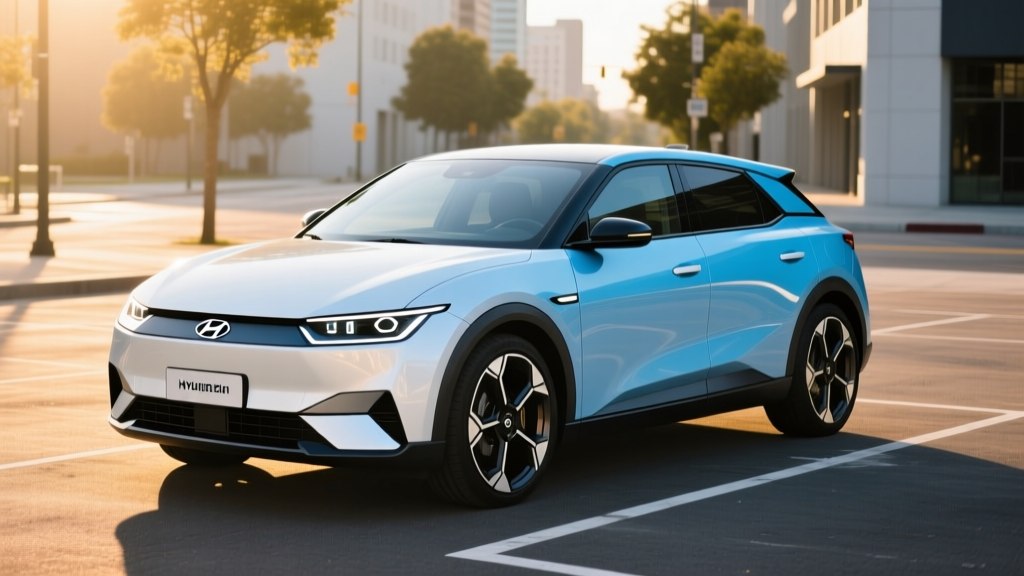
Why the 2023 Hyundai Ioniq 5 Curb Weight Matters for EV Buyers
When shoppers research the 2023 Hyundai Ioniq 5 curb weight, they're usually trying to answer a practical question: how does this electric crossover's mass affect range, tire wear, efficiency, and even home charging requirements? At between 4,431 and 4,663 pounds depending on trim and drivetrain, the Ioniq 5 sits in the middle of the electric midsize crossover segment — lighter than the Ford Mustang Mach-E GT but heavier than the base Tesla Model Y. That weight directly influences everything from its EPA range rating to its regenerative braking behavior and real-world highway efficiency.
This review examines the 2023 Ioniq 5 through the lens of an owner-analyst: exact specifications, real-world range reconciliation, DC fast-charging curves, and the federal tax credit landscape as it applies to this specific model year. Whether you're considering a used 2023 example or comparing it against newer inventory, these numbers remain the benchmark for Hyundai's E-GMP platform.
Core Specifications: Weight, Battery, and Powertrain
| Spec | SE Standard Range (RWD) | SE / SEL / Limited (RWD Long Range) | SE / SEL / Limited (AWD Long Range) |
|---|---|---|---|
| Curb Weight | 4,431 lbs | 4,541 lbs | 4,663 lbs |
| Battery (usable) | 58 kWh (NMC) | 77.4 kWh (NMC) | 77.4 kWh (NMC) |
| Horsepower | 168 hp | 225 hp | 320 hp |
| Torque | 258 lb-ft | 258 lb-ft | 446 lb-ft |
| 0-60 mph | ~7.0 sec | ~4.5 sec | |
| EPA Range | 220 mi | 303 mi | 260 mi (Limited: 256 mi) |
| EPA Combined MPGe | 110 MPGe | 114 MPGe | 110 MPGe |
| Efficiency (kWh/100 mi) | 30 kWh | 28 kWh | 30 kWh |
| Drivetrain | RWD single motor | RWD single motor | AWD dual motor |
The 232-pound gap between the lightest Standard Range RWD and the heaviest AWD Long Range trim is significant in EV terms. That extra mass comes from the front motor assembly, heavier cooling hardware, and the larger 77.4 kWh battery pack. Hyundai uses nickel-manganese-cobalt (NMC) chemistry across the entire 2023 Ioniq 5 lineup — not the lithium iron phosphate (LFP) found in some Standard Range Tesla Model Y variants. NMC delivers higher energy density (more kWh per kilogram), which is why Hyundai can package 77.4 usable kWh without the vehicle exceeding 4,700 pounds.
Real-World Range: What the EPA Number Doesn't Tell You
EPA Estimated: 303 miles
Real-World Highway (70-75 mph, 65°F): ~255-275 miles
Real-World City / Mixed Commute: ~285-305 miles
Cold Weather (below 32°F, highway): ~210-240 miles
Source: fueleconomy.gov and independent EV road-trip testing data.
The 303-mile EPA rating on the Long Range RWD applies to a blended city/highway test cycle. In practice, the Ioniq 5's boxy crossover profile creates more aerodynamic drag than a sedan like the Tesla Model 3, and that drag penalty compounds above 65 mph. On sustained highway runs at 75 mph in moderate temperatures, expect roughly 255-275 miles before you need to stop. That's a 9-16% reduction from the sticker — typical for the segment, but worth budgeting for on road trips.
Cold weather is the bigger range killer. Lithium-ion chemistry becomes sluggish below freezing, and the energy required to heat the cabin (even with the Ioniq 5's heat pump on higher trims) and warm the battery pack can drop usable range to 210-240 miles in sub-32°F highway driving. The AWD trims, carrying 4,663 pounds of curb weight, see slightly steeper losses because more mass requires more energy to accelerate from each stop.
The Standard Range model's 220-mile EPA rating is honest for city commuting but tight for anyone with a long highway commute or frequent road-trip ambitions. It's best suited as a second car or urban daily driver with reliable home charging.
Charging Speed: 800-Volt Architecture in Practice
The Ioniq 5's E-GMP platform uses an 800-volt electrical architecture — one of the few non-Porsche/Taycan vehicles to do so at its price point. This enables exceptionally fast DC charging when paired with a capable station.
| Charging Level | Power | Speed / Time | Connector |
|---|---|---|---|
| Level 1 (120V household) | ~1.4 kW | ~3-4 miles per hour | J1772 |
| Level 2 (240V home/public) | 10.9 kW (max onboard) | ~36 miles per hour / 7-8 hrs (10-100%) | J1772 |
| DC Fast Charge (350 kW station) | Peak ~235 kW | 10-80% in ~18 minutes | CCS1 |
| DC Fast Charge (150 kW station) | ~150 kW sustained | 10-80% in ~25-28 minutes | CCS1 |
| DC Fast Charge (50 kW station) | 50 kW | 10-80% in ~65-70 minutes | CCS1 |
The headline number — 10-80% in approximately 18 minutes — is achievable at Electrify America or similar 350 kW CCS stations, but only under ideal conditions. The battery must be preconditioned (the Ioniq 5 does this automatically when a DC charger is set as your navigation destination), and ambient temperature should be moderate. In cold weather, expect 25-30+ minutes for the same 10-80% session because the battery management system limits charge rate to protect the cells.
The charge curve is not flat. The Ioniq 5 peaks near 235 kW between roughly 10-45% state of charge, then tapers progressively. From 80-100%, charging slows dramatically — often below 30 kW. This is normal lithium-ion behavior and is why road-trip strategy focuses on 10-80% sessions rather than filling to full.
For home charging, the 10.9 kW onboard charger is competitive. On a 48-amp Level 2 circuit (the most common home installation), you'll see roughly 36 miles of range added per hour — enough to fully replenish overnight for any daily commute under 200 miles. A licensed electrician will typically install a 60-amp breaker circuit to support this; panel upgrades may be necessary in older homes with 100-amp service.
Interior Space, Cargo, and Daily Practicality
The Ioniq 5's 118.1-inch wheelbase — longer than the Tucson's — translates into generous interior volume. Rear-seat legroom measures 39.4 inches, enough for adults on long trips without knee compression. The flat floor (no transmission tunnel) makes the middle seat genuinely usable.
Cargo capacity behind the rear seats is 27.2 cubic feet, expanding to 59.3 cubic feet with the rear seats folded. The front trunk (frunk) varies by drivetrain: AWD models offer a modest 0.85 cubic feet (enough for a charging cable bag), while RWD models provide 2.1 cubic feet — useful for groceries or a small bag.
The vehicle's 4,431-4,663 lb curb weight is managed by a multi-link rear suspension that keeps the ride composed despite the mass. Hyundai's tuning prioritizes comfort over sportiness, which suits the Ioniq 5's commuter-and-family mission. The weight does mean higher tire wear than lighter EVs — budget for replacement rubber every 25,000-35,000 miles depending on driving style and regen braking usage.
Pricing, Trims, and Federal Tax Credit Eligibility
| Trim | Base MSRP | Federal §30D Credit | Effective Price (if eligible) |
|---|---|---|---|
| SE Standard Range | $41,450 | Not eligible (Korea-assembled for 2023) | $41,450 |
| SE Long Range RWD | $47,250 | Not eligible (Korea-assembled for 2023) | $47,250 |
| SEL Long Range RWD | $49,900 | Not eligible (Korea-assembled for 2023) | $49,900 |
| Limited Long Range RWD | $52,200 | Not eligible (Korea-assembled for 2023) | $52,200 |
| SE/SEL/Limited AWD | $48,750-$53,700 | Not eligible (Korea-assembled for 2023) | $48,750-$53,700 |
Critical tax credit note: The 2023 Hyundai Ioniq 5 was manufactured in Ulsan, South Korea, not in a North American assembly plant. Under the Inflation Reduction Act's §30D rules as implemented in 2023, this disqualified it from the new-vehicle federal tax credit of up to $7,500 at the point of purchase. This was a significant competitive disadvantage versus the US-built Tesla Model Y and Ford Mustang Mach-E during the 2023 model year.
However, there are two pathways to incentive value. First, a used 2023 Ioniq 5 purchased from a dealer for $25,000 or less may qualify for the used clean vehicle credit of up to $4,000 (30% of sale price, capped at $4,000), subject to buyer income limits ($75,000 single / $150,000 joint). Second, Hyundai shifted Ioniq 5 production to its Ellabell, Georgia plant starting with the 2024 model year, which restored §30D eligibility for newer examples. If the federal credit is a dealbreaker, consider a 2024 or later Ioniq 5 instead.
Always verify current eligibility rules at irs.gov — income caps, MSRP caps, and battery-sourcing requirements change and apply differently based on purchase date.
Technology, Driver Assistance, and Ownership Experience
The Ioniq 5's cabin tech centers on dual 12.3-inch displays (instrument cluster and infotainment) running Hyundai's connected-car platform. Wireless Apple CarPlay and Android Auto are standard. The Limited trim adds a head-up display with augmented-reality navigation overlays, a premium feature that projects turn-by-turn directions onto the windshield.
Hyundai's SmartSense driver-assistance suite is standard across all trims and includes:
- Adaptive cruise control with stop-and-go (SCC)
- Lane-keeping assist and lane-centering (LFA)
- Forward collision-avoidance with pedestrian/cyclist detection (FCA)
- Blind-spot collision-avoidance assist (BCA)
- Rear cross-traffic collision-avoidance (RCCA)
- Highway Driving Assist (HDA) on SEL and Limited — combines adaptive cruise with lane-centering for hands-on-wheel semi-autonomous highway driving
One standout feature: Vehicle-to-Load (V2L). Using an adapter plugged into the charge port or the interior V2L outlet (SEL/Limited), the Ioniq 5 can power external devices up to 3.6 kW — enough to run a laptop workstation, power tools at a job site, or keep a refrigerator running during an outage. This is a practical differentiator versus competitors that don't offer bidirectional power.
Notable drawbacks: The Ioniq 5 lacks a rear wiper, which is a genuine annoyance in rain and road spray. The single-pedal driving mode (i-Pedal) requires a steering-wheel paddle hold to activate on the 2023 model year — less intuitive than a dedicated button. And at 4,663 pounds for the AWD, the Ioniq 5's mass is noticeable during spirited cornering; this is a comfort cruiser, not a sports crossover.
Warranty and Long-Term Battery Outlook
Hyundai backs the Ioniq 5 with one of the strongest warranty packages in the EV segment:
- New Vehicle Limited Warranty: 5 years / 60,000 miles
- Powertrain Warranty: 10 years / 100,000 miles
- EV Battery Warranty: 10 years / 100,000 miles (covers repair or replacement if capacity drops below 70% of original)
- Complimentary Maintenance: 3 years / 36,000 miles
The 70% capacity retention threshold is standard for the industry. Based on NMC battery degradation data from early Ioniq 5 owners and similar E-GMP platform vehicles (Kia EV6, Genesis GV60), expect approximately 5-8% total degradation over the first 100,000 miles under normal use — meaning most owners will never approach the warranty threshold. To maximize longevity, avoid routinely charging to 100% or depleting below 10%; the Ioniq 5's battery management system already maintains a top and bottom buffer to protect the cells.
Who Should Buy the 2023 Hyundai Ioniq 5?
- You want 800V-class DC fast charging without paying Porsche or Lucid prices
- Your daily commute is under 150 miles round-trip and you have home Level 2 access
- You value V2L capability for camping, worksite power, or emergency backup
- You prefer a comfortable, quiet ride over sporty handling dynamics
- You're buying used and can access the $4,000 used-EV tax credit
- You need the full $7,500 federal new-vehicle credit — consider a 2024+ US-built Ioniq 5, Tesla Model Y, or Ford Mustang Mach-E
- You regularly drive 300+ miles in cold weather without charging stops
- You need three-row seating or maximum cargo volume (consider the Kia EV9 or Rivian R1S)
- You prioritize sporty handling — the Mach-E GT or Model Y Performance are sharper
The 2023 Ioniq 5's curb weight of 4,431-4,663 lbs places it squarely in the efficiency-versus-comfort sweet spot of the EV crossover segment. It's heavy enough to deliver a planted, quiet ride and accommodate a large battery, but not so heavy that it sacrifices the efficiency that makes EV ownership economical. At 28-30 kWh per 100 miles, operating costs run roughly $0.04-$0.06 per mile on residential electricity — about one-third the per-mile cost of a comparable gas crossover at $3.50/gallon.
Frequently Asked Questions
What is the exact curb weight of the 2023 Hyundai Ioniq 5?
The 2023 Ioniq 5 Standard Range RWD has a curb weight of 4,431 lbs. The Long Range RWD weighs 4,541 lbs, and the Long Range AWD comes in at 4,663 lbs. These figures include all standard equipment, fluids, and a full battery but no passengers or cargo.
Does the 2023 Ioniq 5 qualify for the $7,500 federal EV tax credit?
No. The 2023 Ioniq 5 was assembled in South Korea, which disqualifies it from the §30D new clean vehicle credit under the Inflation Reduction Act's North American assembly requirement. However, a used 2023 Ioniq 5 purchased for $25,000 or less may qualify for the used clean vehicle credit of up to $4,000. Model year 2024+ Ioniq 5 vehicles are built in Georgia and may qualify for the full credit, subject to IRS income, MSRP, and battery-sourcing requirements.
How fast does the 2023 Ioniq 5 charge at home?
On a Level 2 home charger (240V, 48 amps), the Ioniq 5's 10.9 kW onboard charger adds approximately 36 miles of range per hour. A full charge from 10-100% on the Long Range battery takes 7-8 hours. Most owners with a daily commute under 100 miles only need 2-3 hours of charging overnight.
Is the 2023 Ioniq 5 worth buying vs. the Tesla Model Y?
It depends on priorities. The Model Y offers access to the Supercharger network (though the Ioniq 5 can now use NACS adapters for Supercharger access starting 2025), slightly more cargo space, and over-the-air software updates. The Ioniq 5 counters with 800V ultra-fast charging, V2L capability, a more comfortable ride, and Hyundai's 10-year warranty vs. Tesla's 4-year/50,000-mile basic and 8-year/120,000-mile battery coverage. On a used market, the 2023 Ioniq 5 often trades at a discount to the Model Y, making it a strong value pick.
What is the real-world highway range of the Ioniq 5 Long Range AWD?
The EPA rates the 2023 Ioniq 5 Long Range AWD at 260 miles (256 for the Limited trim with 20-inch wheels). In real-world highway driving at 70-75 mph in moderate temperatures, expect 220-240 miles. In cold weather (below freezing), that drops to approximately 180-210 miles. Plan road trips around 180-mile legs to maintain a comfortable buffer.
How does the Ioniq 5's weight affect tire wear and maintenance?
At 4,663 lbs (AWD), the Ioniq 5's curb weight accelerates tire wear compared to lighter vehicles. EV-specific tires (like the Michelin Primacy Tour A/S or Hankook iON evo) are designed for the higher load and instant torque; expect 25,000-35,000 miles from a set depending on driving style and regenerative braking usage. Using i-Pedal mode reduces brake pad wear significantly — many EV owners report original brake pads at 60,000+ miles.