Quick Verdict: The 2023 Hummer EV Is an Engineering Marvel With Real Trade-Offs
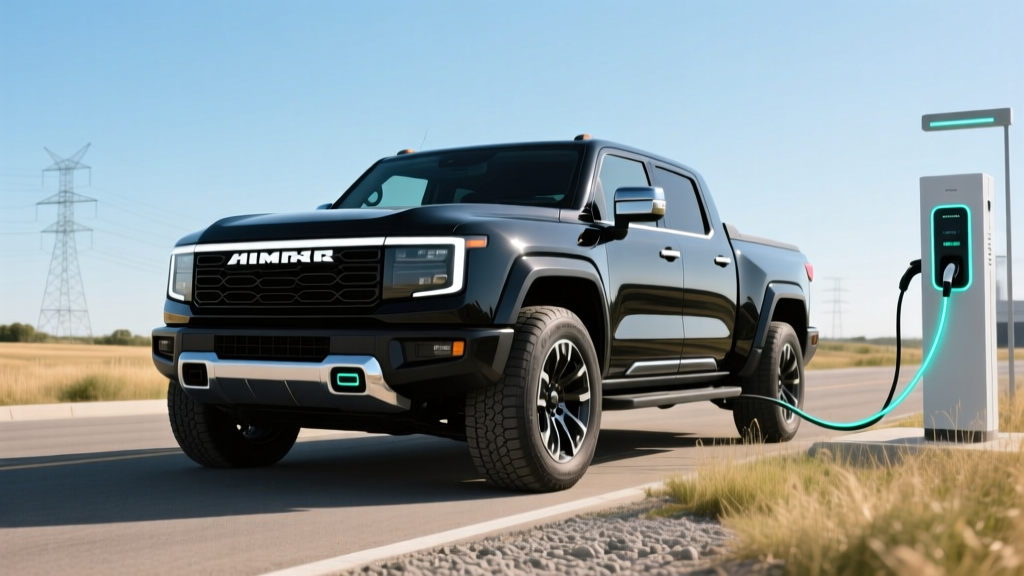
The 2023 GMC Hummer EV Pickup is a 9,000-pound statement of intent. With 1,000 horsepower from its tri-motor drivetrain, a 246 kWh usable battery pack, and a 329-mile EPA range estimate, it redefined what an electric truck could be when it launched. But behind the Watts to Freedom launch mode and four-wheel CrabWalk steering sits a genuine daily-driver proposition — one with serious charging infrastructure demands, significant efficiency penalties, and a price tag that demands scrutiny.
Having spent time with the Edition 1 launch model and subsequent 2X and 3X trims, here's a data-driven breakdown of what ownership actually looks like: real range, charging realities, tax credit eligibility under current IRS §30D rules, and whether this electric supertruck earns its place in your garage versus more practical alternatives.
Range, Efficiency & Battery: The Physics of a 9,000-lb EV
Real-World Expectation: 260–290 miles highway at 70 mph; 220–250 miles in freezing temperatures with cabin heat. City/regenerative driving can approach or slightly exceed EPA figures.
The Hummer EV's 246 kWh usable battery — built on GM's Ultium platform using NMC (nickel manganese cobalt) lithium-ion pouch cells — is one of the largest ever fitted to a production passenger vehicle. For context, that's roughly 2.5 times the capacity of a Tesla Model Y Long Range battery.
But massive capacity comes with massive consumption. According to EPA data on fueleconomy.gov, the Hummer EV Pickup posts a combined 47 MPGe, which translates to roughly 72 kWh per 100 miles driven. That's exceptionally thirsty by EV standards — a Hyundai Ioniq 5 consumes around 30 kWh/100mi for comparison.
| Specification | Value |
|---|---|
| Battery Usable Capacity | 246 kWh (NMC pouch cells) |
| EPA Range (Edition 1 / 3X) | 329 miles |
| EPA Range (2X, smaller pack) | 303 miles |
| Combined MPGe | 47 MPGe |
| Energy Consumption | ~72 kWh/100 mi |
| Battery Thermal Management | Active liquid cooling/heating |
The real-world range gap stems from three factors: aerodynamic drag at highway speeds (the Hummer is a brick), the energy cost of moving 9,000+ pounds, and cold-weather battery conditioning demands. On a 65°F day with mixed city/highway driving, expect to see numbers close to the EPA sticker. On a 20°F winter highway run, plan for 220–250 miles before needing a charger. The heat pump helps, but physics wins at this mass.
Charging Speed: DC Fast Charging and Home Level 2 Reality
GMC engineered the Hummer EV's Ultium pack with an 800-volt architecture capable of accepting up to 350 kW on compatible DC fast chargers. Here's what that translates to in practice:
| Charging Level | Power / Rate | Time / Recovery |
|---|---|---|
| DC Fast Charge (350 kW capable) | Peak ~300+ kW (sustained ~200 kW avg) | 10–80% in approximately 34 minutes |
| DC Fast Charge (150 kW station) | ~130 kW sustained | 10–80% in approximately 55–60 minutes |
| Level 2 Home (19.2 kW onboard charger) | 19.2 kW max | ~14 miles of range per hour; full charge ~13 hours |
| Level 2 Home (11.5 kW / 48A circuit) | 11.5 kW | ~8 miles of range per hour; full charge ~22 hours |
| Level 1 (120V standard outlet) | ~1.4 kW | ~1 mile per hour — emergency/trickle only |
Charging curve reality: The 350 kW peak figure is just that — a peak. On a 350 kW Electrify America or Tesla Supercharger V4 station with CCS adapter, the Hummer EV ramps quickly to ~290–300 kW between roughly 10–30% state of charge, then progressively tapers. The charge curve flattens significantly above 70% SoC, which is why the 10–80% time of ~34 minutes is the more meaningful metric. Charging from 80–100% can add another 30+ minutes.
For home charging, the Hummer EV's 19.2 kW onboard charger is among the most powerful in any production EV. But extracting that rate requires a hardwired Level 2 station on a dedicated 100-amp circuit — something most residential panels can't support without an upgrade. Most owners will install a 48-amp or 60-amp Level 2 charger delivering 11.5–14.4 kW, which still means an overnight charge from near-empty takes 17–22 hours given the massive battery. Plan accordingly: if your daily commute is 50 miles, topping off each night is manageable. If you drain the pack on a road trip, budget a full day at home to recover.
Performance: 1,000 HP and the Watts to Freedom Experience
The 2023 Hummer EV Pickup in its top 3X trim (tri-motor, AWD) produces an estimated 1,000 horsepower and 12,000 lb-ft of wheel torque. The results are surreal for a vehicle with the frontal area of a garden shed:
| Specification | 3X (Tri-Motor AWD) | 2X (Dual-Motor AWD) |
|---|---|---|
| Horsepower | ~1,000 hp | ~625 hp |
| 0–60 mph | ~3.0 seconds | ~5.0 seconds |
| Drivetrain | Tri-motor AWD w/ torque vectoring | Dual-motor AWD |
| Top Speed | ~106 mph (governed) | ~106 mph |
| Towing Capacity | 7,500 lbs (rated) | 7,500 lbs (rated) |
The Watts to Freedom (WTF) launch mode is more theater than daily utility — the vehicle lowers on its air suspension, the seats vibrate, the speakers play a launch soundtrack, and then you're pressed into the seat with supercar-rivaling acceleration. But the everyday driving experience is what surprises: adaptive air suspension delivers a genuinely comfortable ride, the four-wheel steering (CrabWalk) makes parking-lot maneuvers shockingly manageable for a 20-foot truck, and the regen braking is well-calibrated for one-pedal driving in traffic.
The 7,500-pound towing capacity is respectable but not class-leading — the Ford F-150 Lightning and Rivian R1T both offer 10,000+ pounds. Towing also decimates range: expect 120–160 miles before needing a charge when pulling a 5,000+ lb trailer at highway speed.
Interior, Cargo & Technology
The Hummer EV's cabin is spacious, rugged-themed, and packed with screens. The 13.4-inch infotainment touchscreen runs GM's latest Ultifi-based software with wireless Apple CarPlay and Android Auto. A 12.3-inch digital instrument cluster and available head-up display round out the driver information suite.
Cargo and passenger dimensions:
- Front legroom: 45.6 inches
- Rear legroom: 38.9 inches (SUV) / 34.7 inches (Pickup crew cab)
- Pickup bed length: 5 feet (with Infinity Roof panels stored in bed)
- Front trunk (frunk): ~11.7 cu ft (with eTrunk storage)
- Rear cargo volume (SUV): 81.8 cu ft behind front seats
The removable Infinity Roof panels (stored in the frunk or bed) give open-air driving capability, and the power-operated rear window and available MultiPro tailgate add utility. Build quality in the Edition 1 and early 3X models drew some criticism for interior material quality not matching the $100,000+ price point — GMC has made iterative improvements in later builds.
Driver Assistance (ADAS): The Hummer EV comes standard with the GMC Pro Safety Plus suite, including automatic emergency braking, lane-keep assist, adaptive cruise control, and a 360-degree camera system. Available Super Cruise — GM's Level 2 hands-free highway driving system — works on over 400,000 miles of mapped roads in the U.S. and Canada. Note: Super Cruise is SAE Level 2, meaning the driver must remain attentive and eyes on the road via an infrared monitoring camera. It is not autonomous driving.
Pricing, Trim Levels & Federal Tax Credit Eligibility
The 2023 Hummer EV launched as the Edition 1 (fully loaded, sold out), with subsequent 2X and 3X trims following. Pricing reflects the premium positioning:
| Trim | Base MSRP | As-Tested (Typical) | Federal Tax Credit (§30D) |
|---|---|---|---|
| Edition 1 (sold out) | $112,595 | $117,000+ | Not eligible (MSRP cap exceeded) |
| 3X (Tri-Motor) | $104,995 | $110,000–$120,000 | Not eligible (MSRP cap exceeded) |
| 2X (Dual-Motor) | $99,995 | $105,000–$110,000 | Not eligible (MSRP cap exceeded) |
Federal tax credit reality: Under current IRS §30D rules, the Hummer EV Pickup does not qualify for the up-to-$7,500 federal EV tax credit. The reason is straightforward: IRS rules cap eligible pickup trucks at an MSRP of $80,000. Every 2023 Hummer EV trim exceeds this threshold. Additionally, the credit has modified adjusted gross income (MAGI) caps for buyers ($150,000 single / $300,000 joint filers) and battery critical-mineral and component sourcing requirements. See the IRS clean vehicle credit page for current eligibility details.
Some buyers have explored the commercial vehicle credit (§45W) pathway, which lacks the MSRP cap but requires business use. Consult a tax professional before pursuing this route.
Warranty, Ownership Costs & Long-Term Battery Outlook
GMC backs the Hummer EV with a competitive warranty package:
- Bumper-to-bumper: 3 years / 36,000 miles
- Powertrain: 5 years / 60,000 miles
- Battery pack: 8 years / 100,000 miles (with minimum 70% capacity retention threshold)
The 8-year/100,000-mile battery warranty is industry-standard for the segment. GM's Ultium platform includes active thermal management with liquid cooling and heating, which helps mitigate degradation. However, the sheer size of the 246 kWh pack means that even modest percentage degradation translates to noticeable range loss — a 10% capacity loss would mean 33 fewer EPA miles. Long-term degradation data for Ultium packs is still accumulating as of 2026, so prospective buyers of used examples should request a battery State of Health (SoH) report.
Insurance: Expect premiums significantly above average for the EV segment. The Hummer EV's high repair costs, mass, and performance profile push annual premiums into the $3,500–$5,000+ range depending on location and driver profile.
Charging costs: At a national DC fast-charging average of ~$0.48/kWh, charging the Hummer EV's 246 kWh pack from 10–80% costs roughly $82–$90. Home charging at $0.16/kWh (national residential average) costs about $35 for the same session. Per-mile energy cost runs approximately $0.11–$0.13 at home and $0.30+ on public DC fast chargers.
How It Stacks Up: Hummer EV vs. Key Competitors
The Hummer EV occupies a unique niche — it's more supertruck than workhorse. Here's how it compares to alternatives in the electric truck and large SUV space:
| Spec | Hummer EV 3X | Rivian R1T Quad | Ford F-150 Lightning Platinum | Tesla Cybertruck Cyberbeast |
|---|---|---|---|---|
| EPA Range | 329 mi | 328 mi (Max pack) | 288 mi | 320 mi |
| 0–60 mph | ~3.0s | ~2.6s | ~3.8s | ~2.6s |
| Battery (usable) | 246 kWh | 141 kWh | 131 kWh | ~123 kWh |
| Peak DC Charge | 350 kW | 200 kW | 150 kW | 250 kW |
| Towing | 7,500 lbs | 11,000 lbs | 10,000 lbs | 11,000 lbs |
| Base MSRP | ~$104,995 | ~$89,800 | ~$96,874 | ~$99,990 |
| Tax Credit Eligible? | No | No (MSRP cap) | No (Platinum); yes on lower trims | No (Cyberbeast); yes on AWD |
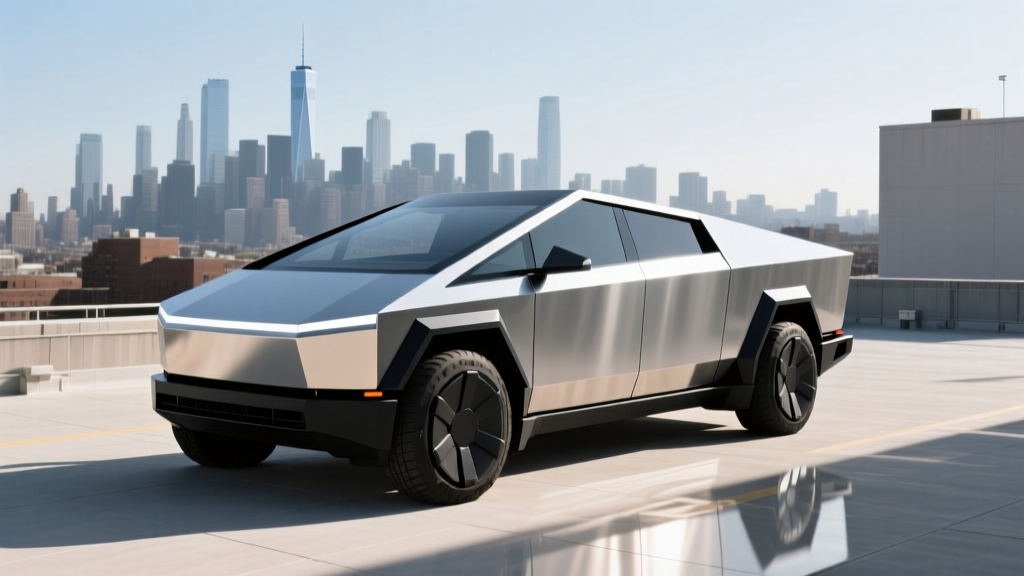
The Rivian R1T is more practical for most truck buyers — better towing, smaller footprint, and a more refined interior. The F-150 Lightning excels as a work truck with available Pro Power Onboard and better fleet compatibility. The Cybertruck offers comparable performance at a slightly lower price point with a stainless-steel exoskeleton. The Hummer EV wins on sheer presence, the open-air Infinity Roof, CrabWalk party-trick capability, and the longest EPA range in the electric truck segment.
Pros
- Class-leading 329-mile EPA range among electric pickups
- 350 kW DC fast-charge capability — among the fastest-charging EVs available
- 1,000 hp tri-motor performance with 3.0-second 0–60
- CrabWalk four-wheel steering for tight maneuvering
- Super Cruise Level 2 hands-free driving on 400,000+ miles of roads
- Removable Infinity Roof panels for open-air driving
- 8-year/100,000-mile battery warranty
Cons
- Not eligible for $7,500 federal tax credit (MSRP exceeds $80K cap)
- Extreme energy consumption: ~72 kWh/100mi (47 MPGe)
- 9,000+ lb curb weight impacts tire wear, braking distances, and efficiency
- Full Level 2 home charge takes 13–22 hours depending on circuit
- 7,500-lb towing capacity trails F-150 Lightning and R1T
- Interior material quality doesn't fully match six-figure price
- Limited service center network; long wait times for body/parts repair
Who Should Buy the 2023 Hummer EV?
The 2023 Hummer EV is the right truck for a specific buyer: someone who wants maximum electric range in a pickup, values performance and presence over work-truck utility, has reliable home charging access (ideally a 60-amp+ Level 2 circuit), and can absorb $100,000+ without a tax credit offset. It's a compelling weekend adventure rig and daily driver for those who don't regularly tow heavy loads.
It's the wrong choice if you need a work truck (towing lags competitors), want tax-credit savings (MSRP disqualifies it), or prioritize efficiency and low running costs. For those needs, an F-150 Lightning XLT or Lariat (which can qualify for §30D) or a Rivian R1T in a lower trim make more financial sense.
Frequently Asked Questions
What is the real-world range of the 2023 Hummer EV?
Expect 260–290 miles on a highway road trip at 70 mph in mild weather, and 220–250 miles in freezing conditions. City driving with regenerative braking can get you close to the 329-mile EPA figure. Towing drops range to roughly 120–160 miles.
How fast does the Hummer EV charge at home and on DC fast chargers?
On a 350 kW DC fast charger, 10–80% takes approximately 34 minutes with a peak rate near 300 kW. On a typical home Level 2 charger (11.5 kW / 48A), you'll recover about 8 miles of range per hour, requiring 17–22 hours for a full charge from near-empty. A 19.2 kW hardwired station cuts this to ~13 hours.
Does the 2023 Hummer EV qualify for the $7,500 federal EV tax credit?
No. Under IRS §30D rules, pickup trucks must have an MSRP at or below $80,000 to qualify. Every 2023 Hummer EV trim starts at $99,995 or above, disqualifying it entirely. Business buyers may explore the §45W commercial clean vehicle credit — consult a tax professional.
Is the Hummer EV worth buying versus the Rivian R1T or F-150 Lightning?
If you prioritize maximum range, head-turning presence, and supertruck performance, yes. If you need towing capacity (R1T and Lightning both tow 10,000+ lbs), tax credit eligibility, or a more work-oriented bed, the R1T or Lightning are more practical choices at lower price points.
What battery chemistry does the Hummer EV use?
The Hummer EV uses NMC (nickel manganese cobalt) lithium-ion pouch cells on GM's Ultium platform. NMC offers high energy density suited to the Hummer's massive range requirement, though it is more sensitive to sustained high-state-of-charge storage than LFP chemistry. GM recommends daily charging to 80% for battery longevity.
How much does it cost to charge a Hummer EV?
A 10–80% session at home (at ~$0.16/kWh national average) costs approximately $35. The same session on a public DC fast charger (~$0.48/kWh) costs $82–$90. Per-mile cost ranges from ~$0.12 at home to $0.30+ on public fast chargers.