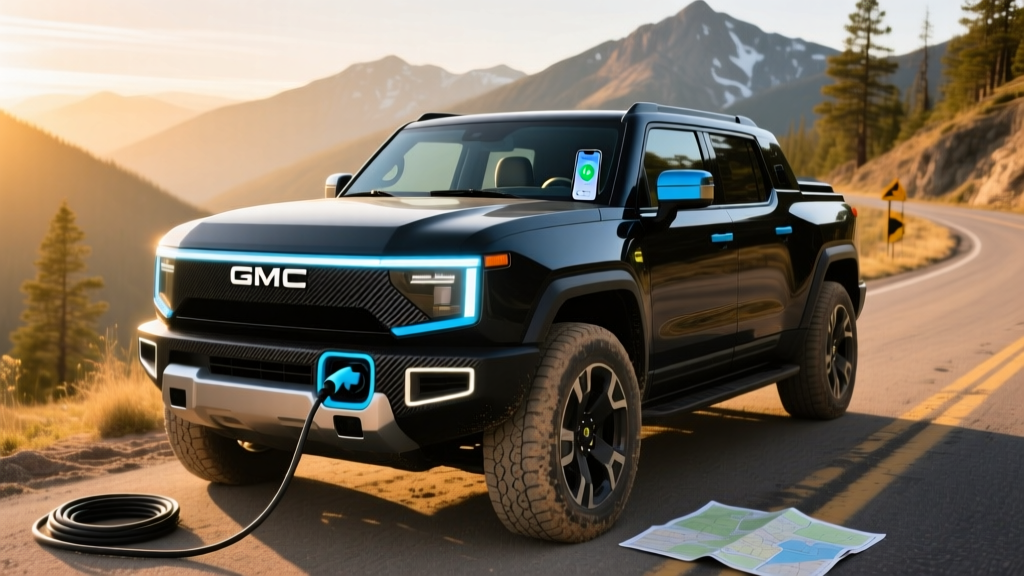
The 2023 GMC Hummer EV is a 9,000-pound electric supertruck that defies efficiency conventions while delivering supercar-level acceleration. Built on GM's Ultium platform, it offers up to 329 miles of EPA-estimated range in Edition 1 trim and a staggering 830 horsepower in the Pickup variant. But with a starting price north of $85,000 and an MSRP that exceeds the federal tax credit cap, this is an EV for buyers who prioritize presence, performance, and off-road capability over frugality. Here's everything you need to know before putting one in your garage.
Range, Battery, and Real-World Efficiency
The 2023 Hummer EV Pickup Edition 1 carries a massive 24-module Ultium lithium-ion battery pack with a usable capacity of approximately 212.7 kWh (gross capacity ~246 kWh). The battery uses NMC (nickel manganese cobalt) chemistry, which favors energy density over the lower cost and longer cycle life of LFP cells — a necessary trade-off for a vehicle this heavy.
EPA Estimated: 329 miles (Edition 1 Pickup, 20-inch wheels)
Real-World Highway (70+ mph): Expect approximately 250–280 miles. The Hummer EV's brick-like aerodynamics and 9,000+ lb curb weight punish highway efficiency. Sustained speeds above 70 mph cause energy consumption to climb sharply.
Cold Weather (below 32°F): Plan for 20–30% range loss, bringing effective range down to roughly 230–265 miles. The Ultium platform includes active thermal management, but physics is unforgiving with a battery this large in freezing temps.
City/Mixed Driving: Closer to EPA estimates — regenerative braking recovers energy effectively in stop-and-go traffic. Expect 290–320 miles in mild conditions.
EPA-rated efficiency sits at 47 MPGe combined (Pickup Edition 1), translating to roughly 73 kWh per 100 miles. For context, that's roughly three times the energy consumption of a Tesla Model Y per mile driven. The Hummer EV SUV variant (with its shorter wheelbase and slightly lower weight) posts an EPA range of 314 miles and 43 MPGe combined.
| Spec | Pickup Edition 1 | SUV Edition 1 |
|---|---|---|
| EPA Range | 329 miles | 314 miles |
| Battery (usable) | ~212.7 kWh (NMC) | ~212.7 kWh (NMC) |
| Horsepower | 1,000 hp (Watts to Freedom) | 830 hp |
| 0–60 mph | ~3.0 seconds | ~3.5 seconds |
| Drivetrain | Tri-motor AWD | Dual-motor AWD |
| Max DC Fast Charge | 350 kW (peak) | 350 kW (peak) |
| 10–80% DC Charge | ~35–40 minutes | ~35–40 minutes |
| Level 2 Charge Rate | 11.5 kW (~16 mi/hr) | 11.5 kW (~16 mi/hr) |
| MPGe (combined) | 47 MPGe | 43 MPGe |
| Curb Weight | ~9,046 lbs | ~9,000 lbs |
| Battery Warranty | 8 yr / 100,000 mi | 8 yr / 100,000 mi |
Charging: DC Fast, Level 2, and Home Setup
The Hummer EV supports up to 350 kW peak DC fast charging on compatible stations. However, as with all EVs, that peak rate is not sustained throughout the session. The charge curve tapers significantly above 50% state of charge (SoC), and thermal management plays a major role with a 212+ kWh pack generating substantial heat during high-power charging.
| Charge Level | Power / Rate | Approximate Speed | Notes |
|---|---|---|---|
| Level 1 (120V) | ~1.4 kW | ~2 miles per hour | Emergency/trickle only — a full charge would take 6+ days |
| Level 2 (240V, 48A) | 11.5 kW | ~16 miles per hour | Full charge in ~13–14 hours; overnight charging adds ~100–130 miles |
| DC Fast Charge (peak) | 350 kW | 10–80% in ~35–40 min | Requires 800V-compatible 350 kW station; expect tapering above 50% SoC |
| DC Fast Charge (typical 150 kW) | 150 kW | 10–80% in ~60–70 min | More common at Electrify America and similar networks |
Home charging reality: With a 212.7 kWh battery and an 11.5 kW onboard charger, a full Level 2 charge takes approximately 13–14 hours. Most owners will plug in nightly and rarely need a full 0–100% charge. For a typical 100-mile daily drive, you'll need roughly 6–7 hours of Level 2 charging to replenish. A 48-amp Level 2 home charger on a 60-amp circuit is strongly recommended; a 100-amp dedicated circuit provides the best experience. Budget $800–$2,500 for professional Level 2 installation depending on your electrical panel's capacity and proximity to the parking spot.
The Hummer EV uses the CCS1 connector for DC fast charging (J1772 for Level 2 AC). As GM transitions to NACS for newer models, 2023 Hummer EV owners will have access to Tesla Superchargers via GM's approved adapter, expanding the public charging network significantly.
Performance and Drivetrain
The 2023 Hummer EV Pickup Edition 1 features a tri-motor all-wheel-drive configuration — one motor on the front axle and two on the rear. With GM's Watts to Freedom (WTF) launch mode engaged, the system delivers up to 1,000 horsepower and a manufacturer-estimated 0–60 mph time of approximately 3.0 seconds. That's extraordinary for a vehicle with a curb weight exceeding 9,000 pounds.
The SUV Edition 1 uses a dual-motor AWD setup producing 830 horsepower with a 0–60 time around 3.5 seconds. Both variants feature an adaptive air suspension with Extract Mode, which raises the ride height by approximately 6 inches for off-road obstacle clearance. The four-wheel steering system (crab walk) allows the rear wheels to turn up to 10 degrees, enabling diagonal movement and tightening the turning circle despite the truck's massive footprint.
Towing capacity is rated at 7,500 pounds for the Pickup and 5,500 pounds for the SUV. Payload comes in around 1,300 pounds. Note that towing at or near max capacity will reduce range dramatically — expect to lose 40–50% of your EPA-estimated miles when pulling a heavy trailer at highway speeds.
Pricing, Trims, and Federal Tax Credit Eligibility
The 2023 Hummer EV launched primarily as the Edition 1 trim, which was the only configuration delivered to customers for much of the model year. Later trim levels (2X, 3X) became available as production expanded.
| Trim | Body Style | Base MSRP | As-Tested (typical) | Federal §30D Credit |
|---|---|---|---|---|
| Edition 1 | Pickup | $84,650 | $93,000–$99,000 (with options) | Not eligible (exceeds MSRP cap) |
| Edition 1 | SUV | $84,650 | $90,000–$96,000 | Not eligible (exceeds MSRP cap) |
| 2X | Pickup | $99,995 | $105,000+ | Not eligible (exceeds MSRP cap) |
| 3X | Pickup | $110,595 | $115,000+ | Not eligible (exceeds MSRP cap) |
Federal Tax Credit (§30D) Status: The 2023 GMC Hummer EV does not qualify for the $7,500 federal EV tax credit. Under current IRS rules, pickup trucks must have an MSRP at or below $80,000 to be eligible. Even the base Edition 1 Pickup starts at $84,650, placing it above the cap. Additionally, buyers must meet income thresholds ($150,000 single / $300,000 joint AGI) and the vehicle's battery must satisfy critical-mineral and battery-component sourcing requirements per IRS guidelines. Consult a tax professional for eligibility specific to your situation.
Interior, Cargo, and Technology
The Hummer EV's cabin is designed to match its exterior bravado. The Edition 1 features a 13.4-inch diagonal infotainment touchscreen running GM's latest Ultifi software platform, paired with a 12.3-inch driver instrument cluster. The interface supports wireless Apple CarPlay and Android Auto, over-the-air updates, and embedded Google Built-in navigation.
Cargo and passenger space (Pickup Edition 1):
- Bed length: 5 feet (with MultiPro tailgate)
- Front trunk (frunk): ~8.1 cubic feet — useful for charging cables and small gear
- Rear-seat legroom: ~45.2 inches
- Front headroom: ~42.5 inches
- Seating: 5 passengers
The SUV variant offers an enclosed rear cargo area with approximately 81.8 cubic feet of space behind the front seats (seats folded) and 35.9 cubic feet behind the second row. The removable Infinity Roof panels (four modular panels stored in the frunk) add an open-air element reminiscent of a Jeep Wrangler.
Driver assistance: The 2023 Hummer EV comes equipped with Super Cruise — GM's Level 2 hands-free driver-assistance system — on over 400,000 miles of compatible divided highways in the U.S. and Canada. Super Cruise requires the driver to remain attentive (monitored via a steering-column camera) and is not autonomous driving. It handles steering, acceleration, and braking on mapped roads, and includes automatic lane-change capability.
Pros and Cons
Pros
- Class-leading acceleration: 0–60 in ~3.0 seconds (Edition 1 Pickup) — faster than many sports cars
- 329 miles EPA range: Impressive for a 9,000-lb vehicle; competitive with lighter trucks
- 350 kW peak DC charging: Among the fastest-charging EVs available when paired with compatible infrastructure
- Super Cruise standard: Genuine hands-free highway driving on mapped routes (SAE Level 2, driver monitored)
- Off-road capability: Extract Mode, CrabWalk four-wheel steering, underbody armor, adaptive air suspension
- Ultium battery warranty: 8 years / 100,000 miles (minimum 70% capacity retention)
- Distinctive presence: Nothing else on the road looks or sounds like a Hummer EV
Cons
- No federal tax credit: All trims exceed the $80,000 MSRP cap for pickups under §30D
- Extreme weight: 9,000+ lbs impacts tire wear, braking distances, efficiency, and garage floor loading
- High energy consumption: 73 kWh/100mi means costly public DC charging sessions (~$50–$70 per 10–80%)
- Slow home charging relative to battery size: 13–14 hours for a full Level 2 charge
- Real-world highway range drops significantly: Expect 250–280 miles at sustained 70+ mph speeds
- Large footprint: At 217+ inches long and over 96 inches wide (mirrors), tight garages and parking spaces are problematic
- Towing range penalty: 40–50% range reduction when towing near max capacity
Warranty and Long-Term Ownership
GMC backs the Hummer EV's Ultium battery pack with an 8-year / 100,000-mile warranty guaranteeing a minimum of 70% capacity retention. The powertrain (motors, power electronics) carries the same 8-year/100,000-mile coverage. The bumper-to-bumper limited warranty is 3 years / 36,000 miles.
Given the battery's NMC chemistry and massive 212.7 kWh capacity, long-term degradation is a legitimate consideration. NMC cells typically experience 10–15% capacity loss over 150,000–200,000 miles depending on charging habits, ambient temperatures, and DC fast-charge frequency. The 70% retention threshold in GM's warranty means the battery must still hold at least ~149 kWh of usable capacity to remain covered. Owners who primarily use Level 2 home charging and avoid frequent 100% charges will likely see better long-term health.
Insurance premiums for the Hummer EV tend to run higher than average, reflecting the vehicle's repair costs, weight, and performance. Expect annual premiums in the $2,800–$4,200 range depending on your location, driving record, and coverage level. Always get personalized quotes before purchasing.
Who Should Buy the 2023 GMC Hummer EV?
The Hummer EV is not a rational purchase — it's an emotional one backed by legitimate engineering. It makes the most sense for:
- Enthusiast truck buyers who want maximum performance, off-road capability, and road presence and have the budget to support it
- Home-charging-capable owners with access to Level 2 charging (ideally a 60-amp dedicated circuit) to manage the large battery overnight
- Adventure-oriented drivers who'll use Extract Mode, CrabWalk, and the available underbody cameras for trail riding
- Two-vehicle households where the Hummer EV handles weekend and recreation duties while a more efficient EV or PHEV covers daily commuting
It's a poor fit for daily commuters prioritizing efficiency, apartment dwellers without home charging access, or buyers counting on the federal tax credit to offset the purchase price.
2023 GMC Hummer EV vs. Key Competitors
The Hummer EV competes in the premium electric truck space against the Rivian R1T, Ford F-150 Lightning, and the Tesla Cybertruck. Each serves a different buyer:
- Rivian R1T (Tri Motor): More refined interior, better on-road manners, 328-mile range (Dual-Motor Max), starts around $73,000 (eligible for §30D credit on qualifying configurations). Lighter and more agile.
- Ford F-150 Lightning (Platinum): Practical work truck with up to 320 miles range (Extended Range), Pro Power Onboard, starts around $55,000. Qualifies for the $7,500 credit on eligible trims. Far more efficient and affordable.
- Tesla Cybertruck (Cyberbeast): 320-mile range, tri-motor AWD, stainless-steel exoskeleton, starts around $79,990. More polarizing design, Supercharger network access native.
The Hummer EV wins on raw power (1,000 hp), off-road hardware, and sheer presence. It loses on price, efficiency, and tax-credit eligibility. If you want the most capable off-road electric truck and cost is secondary, the Hummer EV is unmatched. If you want a practical daily-driver truck, the F-150 Lightning or R1T are more rational choices.
Frequently Asked Questions
What is the real-world range of the 2023 GMC Hummer EV?
The EPA rates the Edition 1 Pickup at 329 miles. In real-world highway driving at 70+ mph, expect 250–280 miles. In cold weather (below freezing), plan for 230–265 miles. City and mixed driving in mild conditions will get you closer to the EPA estimate, around 290–320 miles. The Hummer EV's aerodynamic profile and 9,000+ lb weight make highway efficiency its weakest point.
How fast does the Hummer EV charge at home and on the road?
At home on a Level 2 (240V, 48A) charger, the Hummer EV charges at 11.5 kW, adding roughly 16 miles of range per hour. A full charge takes 13–14 hours. On a 350 kW DC fast charger, a 10–80% session takes approximately 35–40 minutes, though peak rates are not sustained and most public stations deliver 150 kW, extending that time to 60–70 minutes.
Does the 2023 GMC Hummer EV qualify for the federal EV tax credit?
No. Under IRS §30D rules, pickup trucks must have an MSRP at or below $80,000 to qualify for the $7,500 federal clean vehicle credit. The Hummer EV's lowest MSRP is $84,650 (Edition 1), which exceeds the cap regardless of buyer income or battery sourcing. See IRS clean vehicle credit guidelines for full rules.
Is the Hummer EV worth buying over the Rivian R1T or F-150 Lightning?
It depends on your priorities. The Hummer EV offers more horsepower (1,000 hp), more aggressive off-road hardware, and a more commanding road presence than either rival. However, the F-150 Lightning is significantly more affordable, more efficient, and qualifies for the federal tax credit. The Rivian R1T offers a more refined interior and better on-road dynamics. If performance and presence are your top criteria and budget is flexible, the Hummer EV delivers. If practicality and value matter more, look at the Lightning or R1T.
What are the biggest drawbacks of owning a Hummer EV?
The most significant ownership challenges are the high energy consumption (73 kWh/100mi means expensive public charging sessions), slow home charging relative to battery size (13–14 hours for a full charge), extreme weight affecting tire wear and braking, and the vehicle's massive physical footprint making tight garages and parking structures difficult. The lack of a federal tax credit also means paying full MSRP.
How long will the Hummer EV battery last?
GM warranties the Ultium battery for 8 years or 100,000 miles with a minimum 70% capacity retention guarantee. NMC chemistry typically sees 10–15% degradation over 150,000–200,000 miles with normal use. Best practices — avoiding frequent 100% charges, minimizing DC fast charging when possible, and allowing battery preconditioning in cold weather — will help maximize long-term health. Battery replacement cost, if needed out of warranty, is estimated at $15,000–$25,000+ given the pack's 212+ kWh capacity.
Can the Hummer EV use Tesla Superchargers?
GM has enabled Supercharger access for Ultium-based EVs via an approved NACS adapter. 2023 Hummer EV owners (equipped with CCS1 ports) can use GM-provided adapters to access Tesla's Supercharger network, significantly expanding DC fast-charging options. Check with your GMC dealer for adapter availability and compatibility.
Sources: EPA Fuel Economy — 2023 GMC Hummer EV Pickup, GMC Hummer EV Official Specifications, IRS §30D Clean Vehicle Credit Rules.