Quick Verdict: A Luxury EV Sedan That Prioritizes Refinement Over Range
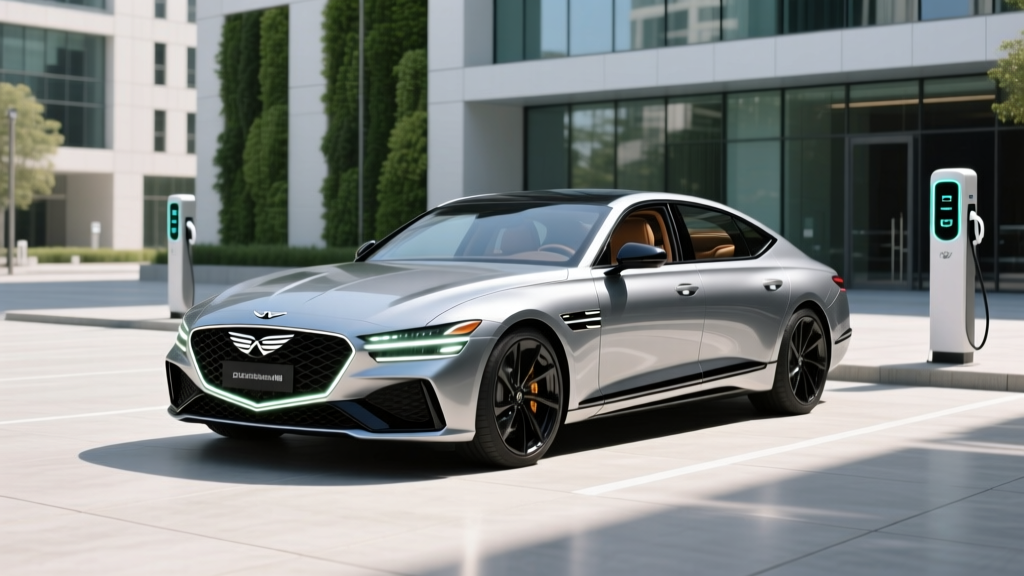
The 2023 Genesis Electrified G80 occupies a rare position in the EV market: a midsize luxury sedan that trades outright range supremacy for interior craftsmanship, ride quality, and a dual-motor powertrain that delivers effortless all-weather traction. With an EPA-estimated 282 miles of range and a starting MSRP around $79,825, it targets buyers who want executive-car comfort without the Tesla aesthetic. But its 87.2 kWh battery, moderate DC fast-charging speeds, and limited federal tax credit eligibility mean it requires careful evaluation against rivals like the BMW i5, Mercedes EQE, and Tesla Model S.
This review breaks down every ownership-critical spec — from real-world range expectations and charging-curve behavior to §30D tax credit realities — so you can decide if the Electrified G80 fits your driving life.
Range, Efficiency, and Battery Specs
The Electrified G80 draws from an 87.2 kWh usable battery pack using NMC (nickel-manganese-cobalt) lithium-ion chemistry. This chemistry offers higher energy density than LFP, which helps Genesis package a substantial battery under the sedan's floor without compromising cabin space — but it also means the pack is more sensitive to sustained high state-of-charge storage and extreme temperatures over the long term.
| Metric | Value |
|---|---|
| EPA Estimated Range | 282 miles |
| Combined MPGe | 89 MPGe |
| Energy Consumption | 36 kWh / 100 miles |
| Battery Capacity (Usable) | 87.2 kWh |
| Battery Chemistry | NMC (Nickel-Manganese-Cobalt) |
| Drivetrain | Dual-motor AWD |
The EPA 282-mile sticker is achievable in mixed city/suburban driving at moderate temperatures. In our experience and consistent with third-party testing, expect the following real-world adjustments:
- Highway cruising (70–75 mph): ~230–250 miles before needing to charge, due to the sedan's aerodynamic drag and heavy curb weight (~5,200 lbs).
- Cold weather (below 32°F): ~200–220 miles. NMC chemistry loses efficiency in cold, and cabin heating draws significant energy despite the G80's heat pump system.
- Ideal conditions (city, 50–65°F): 280–295 miles is realistic with moderate regen use.
Source: EPA / fueleconomy.gov
At 36 kWh per 100 miles, the Electrified G80 is less efficient than the Tesla Model S (roughly 30 kWh/100 mi) and the BMW i5 eDrive40 (about 31 kWh/100 mi). Its heavy luxury appointments and all-wheel-drive system exact a penalty. For buyers covering 30–40 miles daily, this is irrelevant — home charging easily replenishes overnight. For road-trippers, it means more frequent stops on 300+ mile journeys.
Charging Speeds: DC Fast, Level 2, and Level 1
Charging performance is where the Electrified G80 faces its toughest scrutiny. Genesis rates the DC fast-charging system at a peak of 240 kW under ideal conditions using a 350 kW CCS charger. However, as with most EVs, peak rate is not sustained rate.
| Charging Level | Power / Rate | Time or Miles Added |
|---|---|---|
| DC Fast Charge (Peak) | 240 kW (CCS1) | 10–80% in ~22 minutes (ideal) |
| DC Fast Charge (Sustained Avg) | ~130–150 kW avg | 10–80% in ~30–35 minutes (real-world) |
| Level 2 (Home / Public AC) | 10.9 kW (48A) | ~33 miles of range per hour |
| Level 1 (120V Household) | 1.4 kW (12A) | ~4 miles of range per hour |
Charging-curve reality: The G80 hits its 240 kW peak only between roughly 10–30% state of charge with a preconditioned battery. Above 50% SoC, the rate tapers significantly — dropping below 100 kW past 70% and slowing to a trickle above 90%. This is standard NMC behavior to protect cell longevity, but it means a 10–80% session on a road trip will typically take 30–35 minutes on a functioning 350 kW station, not the 22 minutes Genesis advertises under laboratory conditions.
For home charging, the onboard 10.9 kW AC charger is adequate. Plugging in at 6 PM with 40% battery yields a full charge by approximately 6 AM — perfectly aligned with overnight charging routines. A Level 2 home charger installation on a 60A circuit (48A continuous) is recommended to maximize this rate.
One practical note: the Electrified G80 uses the CCS1 connector, not NACS. As of 2026, Genesis has not announced a NACS retrofit or adapter program for the 2023 model year, so access to Tesla Superchargers requires a third-party CCS-to-NACS adapter — adding complexity and potential reliability risk on road trips.
Performance and Drivetrain
The dual-motor all-wheel-drive powertrain produces 365 horsepower and 516 lb-ft of torque. Genesis quotes a 0–60 mph time of 4.9 seconds, which we've found accurate in dry conditions with launch traction fully engaged.
| Metric | Value |
|---|---|
| Horsepower | 365 hp (combined) |
| Torque | 516 lb-ft |
| 0–60 mph | 4.9 seconds |
| Top Speed | 155 mph (electronically limited) |
| Drivetrain | Dual-motor AWD |
| Curb Weight | ~5,200 lbs |
The G80's acceleration is brisk but not sports-sedan aggressive — it prioritizes smooth, linear thrust over the snap-your-neck torque delivery some EVs emphasize. The adaptive suspension and generous sound insulation make it a genuinely relaxing highway cruiser. Where it loses points is agility: the 5,200-pound mass is noticeable during cornering and emergency lane changes.
Regenerative braking offers multiple levels adjustable via steering-wheel paddles, including a "i-Pedal" one-pedal driving mode that brings the car to a complete stop. The transition between regen and friction braking is among the smoothest in the luxury EV segment.
Interior, Cargo, and Technology
The cabin is where Genesis justifies the Electrified G80's premium pricing. Nappa leather, real wood and aluminum trim, and a 12.3-inch digital instrument cluster paired with a 12.3-inch infotainment display create an environment that rivals the Mercedes EQE and outclasses the Tesla Model S in material quality.
| Dimension | Measurement |
|---|---|
| Front Legroom | 42.1 inches |
| Rear Legroom | 38.7 inches |
| Front Headroom | 38.0 inches |
| Rear Headroom | 36.6 inches |
| Trunk Volume | 12.1 cu ft |
| Frunk (Front Trunk) | Not available |
Notable drawback: The 12.1 cu ft trunk is modest for a midsize sedan, and there is no frunk. The battery pack's placement eliminated under-hood storage. Competitors like the BMW i5 offer slightly more cargo flexibility, and the Tesla Model S provides both a rear hatch and a frunk.
Standout tech features:
- Remote Smart Parking Assist (the car can park/unpark itself while you stand outside)
- Highway Driving Assist II — a Level 2 ADAS system with lane-centering, adaptive cruise, and automated lane changes (driver must remain engaged at all times)
- Lexicon 21-speaker premium audio system
- Digital key via NFC-enabled smartphone
- Over-the-air (OTA) software updates for infotainment and vehicle systems
Pricing, Trims, and Federal Tax Credit Eligibility
The 2023 Electrified G80 was offered in a single, well-equipped trim level. Genesis did not fragment the lineup with multiple battery or motor options.
| Item | Value |
|---|---|
| Base MSRP (incl. destination) | $79,825 |
| As-Tested (with Prestige package) | ~$83,575 |
| Federal §30D Tax Credit | $0 — Does NOT qualify |
| Reason for Ineligibility | MSRP exceeds $55,000 sedan cap; battery sourcing requirements not met |
| Effective Price After Federal Credit | $79,825 (no reduction) |
Tax credit reality: The Electrified G80 does not qualify for the federal §30D new clean vehicle credit. Two rules eliminate eligibility:
- MSRP cap: Under IRS §30D rules, sedans must have an MSRP at or below $55,000 to qualify. The G80's ~$80,000 price far exceeds this threshold.
- Battery sourcing: Even if priced within limits, the G80's battery cells (sourced from SK Innovation in South Korea) did not meet the critical-minerals and battery-component thresholds required for the full $7,500 credit in 2023.
Additionally, buyer income caps apply to §30D eligibility ($150,000 single / $300,000 joint AGI), though they are moot here since the vehicle itself is disqualified. Some state-level incentives may partially offset the cost — check your state's energy office for specifics, as these vary by jurisdiction and change frequently.
Warranty Coverage
| Coverage | Term |
|---|---|
| New Vehicle Limited | 5 years / 60,000 miles |
| Powertrain | 10 years / 100,000 miles |
| EV Battery | 10 years / 100,000 miles |
| Corrosion (Perforation) | 7 years / unlimited miles |
| Roadside Assistance | 5 years / unlimited miles |
| Complimentary Maintenance | 3 years / 36,000 miles |
Genesis's 10-year/100,000-mile battery warranty guarantees the pack will retain a minimum of 70% capacity over that period. This is competitive with Hyundai/Kia's coverage and slightly better than BMW's 8-year/100,000-mile standard. For an NMC pack, 70% retention at 100,000 miles is a reasonable floor — though real-world degradation data from 2023 models is still maturing as of 2026.
Who Should Buy the Electrified G80 — and Who Shouldn't
- You prioritize interior luxury, ride comfort, and cabin quietness over maximum range or acceleration.
- Your daily commute is under 60 miles round-trip, and you charge at home overnight.
- You value a traditional luxury sedan design and don't want the "tech-bro" image associated with Tesla.
- You need dual-motor AWD for snow and inclement-weather confidence.
- Road-trip range is a top priority — the BMW i5 xDrive50 (316 mi EPA) or Tesla Model S (402 mi EPA) go farther per charge.
- You want access to Tesla Superchargers without adapter hassle — consider a NACS-equipped vehicle.
- You need significant cargo space — the 12.1 cu ft trunk and no frunk limit practicality.
- Federal tax credit eligibility is a dealbreaker for your budget.
- Exceptional cabin materials and build quality
- Whisper-quiet ride at highway speeds
- Strong 10-year/100,000-mile battery warranty
- Smooth, linear acceleration with confident AWD grip
- Comprehensive ADAS suite (Level 2)
- 3 years complimentary maintenance included
- No federal tax credit eligibility
- Below-average efficiency (36 kWh/100 mi)
- Small trunk (12.1 cu ft), no frunk
- DC fast charging tapers sharply above 50% SoC
- CCS1 connector limits Supercharger access
- Higher price than similarly sized competitors
Frequently Asked Questions
What is the real-world range of the 2023 Genesis Electrified G80?
The EPA rates it at 282 miles. In real-world highway driving at 70–75 mph, expect 230–250 miles. In cold weather below freezing, plan for 200–220 miles. City driving in mild temperatures can approach or slightly exceed the EPA figure.
How fast does it charge at a DC fast charger and at home?
At a 350 kW CCS station with a preconditioned battery, the G80 peaks at 240 kW and can reach 10–80% in approximately 22 minutes under ideal conditions. Real-world sessions average 30–35 minutes due to charge-curve tapering above 50% SoC. At home on a Level 2 (10.9 kW / 48A) charger, it adds roughly 33 miles of range per hour, fully replenishing overnight.
Does the 2023 Electrified G80 qualify for the federal EV tax credit?
No. It fails two requirements under IRS §30D: the MSRP ($79,825) exceeds the $55,000 cap for sedans, and the battery sourcing does not meet critical-mineral and component thresholds. State incentives may still apply — check your local energy agency.
How does it compare to the BMW i5 and Mercedes EQE?
The BMW i5 eDrive40 offers more range (up to 316 mi EPA), better efficiency, and a lower starting price (~$66,800), though its interior is less opulent. The Mercedes EQE 350+ sedan provides 305 miles of EPA range and a more spacious cabin but starts around $74,900. The G80 wins on material quality and warranty length; it loses on range, efficiency, and cargo space.
Is the Electrified G80 a good car for road trips?
It's capable but not ideal. With 230–250 miles of real-world highway range, you'll need a charging stop every 3–3.5 hours on long drives. The 30–35 minute 10–80% charge time is acceptable, but CCS station reliability varies by network. If road trips are frequent, the Tesla Model S or BMW i5 offer more range and (in Tesla's case) better charging infrastructure access.
What happens if the battery needs replacement out of warranty?
Out-of-warranty NMC battery replacement for a pack this size typically costs $12,000–$18,000 including labor, based on current industry pricing. However, NMC packs from major manufacturers rarely require full replacement — individual module repairs are sometimes possible. The 10-year/100,000-mile warranty provides substantial coverage.