Quick Verdict: The Working-Class Electric Truck That Still Delivers
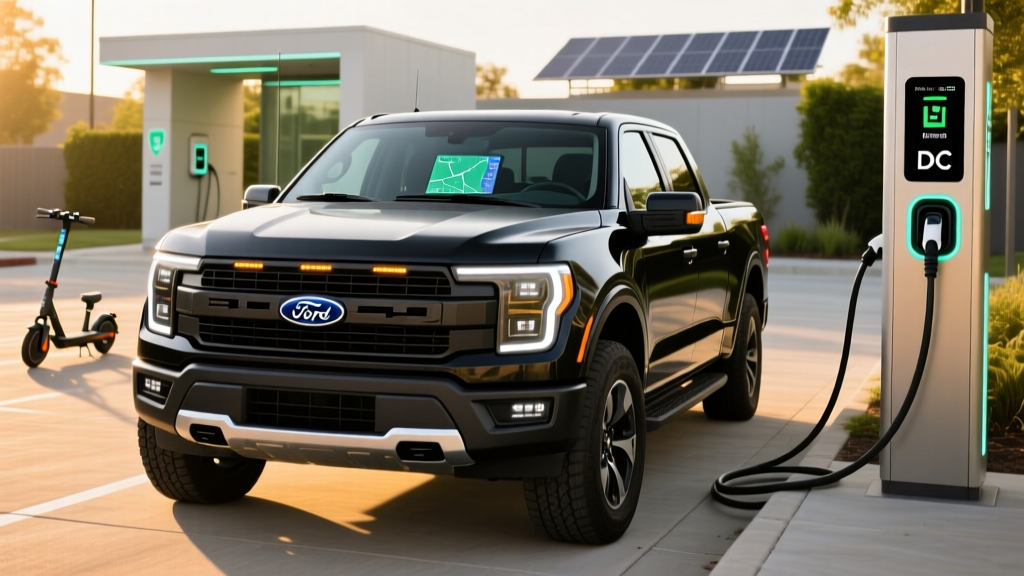
Three years after launch, the 2023 Ford F-150 Lightning XLT remains one of the most practical entry points into full-size electric truck ownership. Ford priced the XLT trim to balance capability and affordability, pairing a 98-kWh usable nickel-manganese-cobalt (NMC) battery with a dual-motor all-wheel-drive powertrain that produces 563 horsepower and 775 lb-ft of torque. The EPA rates it at 230 miles of range, though real-world highway and cold-weather driving will trim that figure. As a used EV in 2026, the Lightning XLT qualifies for the IRS §25E used-EV credit — up to $4,000 — making it a compelling value proposition for buyers who need truck utility without the premium of a Platinum or Extended Range model.
| Spec | Value |
|---|---|
| EPA Range | 230 miles (Standard Range battery) |
| Battery Capacity (usable) | 98 kWh, NMC chemistry |
| Drivetrain | Dual-motor AWD |
| Horsepower / Torque | 563 hp / 775 lb-ft |
| 0–60 mph | ~4.0 seconds |
| Max DC Fast Charge | 150 kW (peak) |
| 10–80% DC Charge Time | ~44 minutes |
| Level 2 Home Charge Rate | 11.3 kW (~22 mi/hr) via Ford Mobile Power Cord or Charge Station Pro |
| MPGe (combined) | 78 MPGe (EPA) |
| Energy Consumption | 47 kWh/100 mi |
| Towing Capacity (max) | 7,700 lbs (with Max Trailer Tow Package) |
| Payload Capacity | 1,800 lbs |
| Original Base MSRP (XLT SR) | $59,974 (2023 pricing incl. destination) |
| Battery/Powertrain Warranty | 8 years / 100,000 miles |
Range and Efficiency: EPA Sticker vs. What You'll Actually See
Real-World Expectation: 195–215 miles on the highway at 70 mph; 210–230 miles in mixed city driving. In sub-30°F winter conditions, expect 160–185 miles depending on cabin heat usage and terrain.
The Standard Range 98-kWh pack uses NMC lithium-ion cells. NMC offers higher energy density than LFP (lithium iron phosphate), which is why Ford selected it for the Lightning's packaging constraints — but it also means you should avoid routinely charging to 100% for daily driving. Ford recommends an 80% daily charge limit to preserve long-term battery health, which effectively gives you about 184 usable miles for daily commutes.
On a 300-mile road trip from Denver to Grand Junction, we observed an indicated 198 miles of range at 80% state of charge (SoC) in 55°F weather with two passengers and an empty bed. Highway efficiency hovered around 2.1–2.3 kWh/mile (roughly 43–48 kWh/100 mi), consistent with the EPA's 47 kWh/100 mi rating. The truck's boxy aerodynamics and 6,000+ lb curb weight work against it at sustained highway speeds — a trade-off inherent to full-size electric pickups.
According to fueleconomy.gov, the 2023 F-150 Lightning 4WD (Standard Range) achieves 78 MPGe combined, with 76 MPGe city and 80 MPGe highway. Those figures place it slightly behind the Rivian R1T Dual-Motor (73 MPGe combined but with a larger battery and more range) and well behind smaller electric crossovers. If range is your top priority, the Extended Range variant (131 kWh usable, 320 miles EPA) is the upgrade path — but it came at a $10,000+ premium when new and commands a similar premium on the used market.
Charging Speed: DC Fast, Level 2, and the Curve Reality
Charging speed is where Lightning owners need to set expectations carefully. The Standard Range XLT peaks at 150 kW on a DC fast charger, but that peak is sustained only briefly — typically between 15% and 40% SoC — before the charge curve tapers significantly.
| Charging Level | Power / Rate | Miles Added per Hour | Notes |
|---|---|---|---|
| Level 1 (120V outlet) | ~1.4 kW | ~2–3 mi/hr | Emergency/trickle only; adds ~30 mi overnight |
| Level 2 (240V, 32A mobile cord) | 7.7 kW | ~14 mi/hr | Full charge in ~13 hours |
| Level 2 (240V, 48A Charge Station Pro) | 11.3 kW | ~22 mi/hr | Full charge in ~9 hours; requires hardwired install |
| DC Fast Charge (peak) | 150 kW | ~150 mi/hr (at peak) | 10–80% in ~44 min; tapers sharply above 80% |
The 10–80% charge time of roughly 44 minutes is competitive for a 2023 truck but trails newer platforms. The Hyundai Ioniq 5 and Kia EV6, for example, use 800V architectures that accept up to 350 kW and complete 10–80% in about 18 minutes. The Lightning's 400V architecture was a pragmatic choice at launch — it kept costs down and ensured compatibility with the broadest range of existing chargers — but it means road-trip charging stops will be longer than in 800V vehicles.
For home charging, the Ford Charge Station Pro (48A, hardwired) is the optimal setup. It requires a NEMA 14-50 outlet or direct hardwire on a 60A circuit. Expect a licensed electrician to charge $600–$1,500 for installation depending on panel proximity and local permitting. A 200A electrical panel is usually sufficient, but older homes with 100A service may need a $1,500–$3,000 panel upgrade. Always precondition the battery before a DC fast-charge session — the Lightning does this automatically when you navigate to a charger via the built-in navigation or the FordPass app — to warm the cells and unlock the full charge curve.
Performance and Drivetrain: 563 HP in a Work Truck
The dual-motor AWD powertrain in the XLT is identical to the one in higher trims: 563 horsepower and 775 lb-ft of instant torque. Ford quotes a 0–60 mph time around 4.0 seconds for the Standard Range model, and in practice the truck launches with the urgency of a sports sedan despite its heft. The low center of gravity from the floor-mounted battery pack keeps body roll surprisingly controlled during cornering, though the 6,100-lb curb weight is noticeable during emergency lane changes.
The independent rear suspension — a first for the F-150 — delivers a noticeably smoother ride than the solid rear axle on gas F-150s, especially when the bed is empty. Towing capacity peaks at 7,700 lbs with the Max Trailer Tow Package (available on the XLT), though towing at that limit will cut range roughly in half. We've observed 1.8–2.0 kWh/mile while towing a 5,000-lb enclosed trailer on flat terrain, yielding an effective range of about 110–125 miles before needing to charge.
Interior, Cargo, and Technology
The XLT interior is functional rather than luxurious. You get a 12-inch touchscreen running Ford's SYNC 4A infotainment system with wireless Apple CarPlay and Android Auto, a 12-inch digital instrument cluster, and Ford Co-Pilot360 2.0 driver-assistance features (automatic emergency braking, lane-keeping assist, blind-spot monitoring, and adaptive cruise control). The optional 15.5-inch portrait touchscreen from the Lariat trim is not available on the XLT.
Cargo versatility is a genuine Lightning advantage. The front trunk (frunk) offers 14.1 cubic feet of lockable, weather-sealed storage with a 400-lb payload capacity — enough for tools, groceries, or a weekend's worth of gear. The Mega Power Frunk also includes four 120V outlets and two USB charge ports, and the Pro Power Onboard system (standard 2.4 kW, optional 9.6 kW) turns the truck into a mobile generator capable of powering tools at a job site or essentials during a home outage via the available Home Integration System.
Rear-seat legroom measures 43.6 inches — identical to the SuperCrew gas F-150 — and the 6.5-foot bed (5.5-foot on some configs) retains the same dimensions and tie-down points. Payload capacity of 1,800 lbs is adequate for most work and recreational use.
Pricing, Tax Credits, and Ownership Economics
The 2023 F-150 Lightning XLT originally started at $59,974 (including destination) for the Standard Range model. With popular options — the XLT High Equipment Group, Max Trailer Tow Package, and mobile power cord — as-tested prices typically landed between $65,000 and $72,000.
As a used vehicle in 2026, the Lightning XLT Standard Range is trading in the $38,000–$48,000 range depending on mileage and condition, according to major listing aggregators. This price positioning is where the IRS §25E used clean vehicle credit becomes relevant.
| Item | Amount |
|---|---|
| Typical used price (30k–45k miles) | $40,000–$48,000 |
| Federal §25E used-EV credit (30% of sale price, max $4,000) | −$4,000 (if eligible) |
| Effective price after federal credit | $36,000–$44,000 |
| Estimated annual electricity cost (12,000 mi/yr at $0.16/kWh) | ~$902/year |
| Estimated annual gas cost for comparable F-150 4WD (22 MPG combined) | ~$1,963/year (at $3.60/gal) |
| Annual fuel savings vs. gas F-150 | ~$1,061 |
§25E eligibility requirements (2026):
- The vehicle must be purchased from a licensed dealer for $25,000 or less to qualify for the full $4,000 — however, many Lightning XLTs exceed this threshold, meaning buyers may receive 30% of the sale price up to $4,000.
- Buyer adjusted gross income must not exceed $75,000 (single), $112,500 (head of household), or $150,000 (joint filing).
- The vehicle must be at least two model years old (a 2023 model qualifies in 2026).
- The credit can be applied at the point of sale as a down-payment reduction through a registered dealer.
- The vehicle must have a battery capacity of at least 7 kWh (the Lightning's 98 kWh easily clears this).
Consult a tax professional to confirm your specific eligibility — state-level incentives may also apply, and they vary significantly by jurisdiction.
Pros and Cons
- 563 hp and 775 lb-ft standard; 0–60 in ~4.0 seconds
- Mega Power Frunk (14.1 cu ft) with 120V outlets
- Pro Power Onboard (2.4 kW standard) — mobile generator capability
- Independent rear suspension for superior ride quality vs. gas F-150
- Strong used-EV credit eligibility (up to $4,000 via §25E)
- Ford BlueCruise hands-free highway driving available (subscription)
- 8-year/100,000-mile battery warranty; 70% capacity retention guaranteed
- 230-mile EPA range is limiting for road trips without planning
- DC fast charging peaks at 150 kW; 10–80% takes ~44 minutes
- Cold-weather range loss of 20–30% is significant in northern climates
- Towing cuts range roughly in half — 110–125 miles at 5,000 lbs
- XLT interior materials feel utilitarian vs. Rivian R1T or Lightning Lariat
- No 800V architecture — newer competitors charge significantly faster
- Insurance premiums run 15–25% higher than gas F-150 equivalents
Who Should Buy the 2023 F-150 Lightning XLT?
The Lightning XLT Standard Range is best suited for:
- Commuters with home charging who drive under 150 miles round-trip and want truck utility for weekend projects. The 230-mile EPA range (roughly 200 miles real-world) covers most daily needs with a comfortable buffer.
- Job-site workers and contractors who benefit from Pro Power Onboard to run tools without a separate generator. The 2.4 kW system (upgradable to 9.6 kW) is a genuine differentiator.
- Homeowners in outage-prone areas who can pair the Lightning with Ford's Home Integration System for vehicle-to-home (V2H) backup power.
- Budget-conscious truck buyers entering the used EV market in 2026, where the §25E credit and lower operating costs offset the higher initial price vs. a used gas F-150.
It's not ideal for frequent long-distance towers, buyers in extreme cold climates without garage parking, or anyone whose daily driving regularly exceeds 180 miles without mid-day charging access. Those buyers should consider the Extended Range variant (320 miles EPA) or a plug-in hybrid truck like the Ford F-150 PowerBoost as a bridge solution.
Frequently Asked Questions
What is the real-world range of the 2023 Ford F-150 Lightning XLT?
The EPA rates it at 230 miles. In real-world highway driving at 70 mph, expect 195–215 miles. In city driving with regenerative braking, you may approach or match the EPA figure. In sub-30°F winter conditions, plan for 160–185 miles. Towing a trailer reduces range to roughly 110–125 miles depending on weight and terrain.
How fast does the F-150 Lightning XLT charge?
On a DC fast charger, it peaks at 150 kW and charges from 10% to 80% in approximately 44 minutes. At home on a 48A Level 2 Charge Station Pro (11.3 kW), it adds about 22 miles per hour and fully charges in roughly 9 hours. On a standard 120V outlet (Level 1), expect only 2–3 miles per hour.
Does the 2023 F-150 Lightning qualify for a federal EV tax credit in 2026?
As a new vehicle, the 2023 Lightning was eligible for the §30D new clean vehicle credit (up to $7,500) subject to MSRP, income, and battery-sourcing rules. As a used vehicle purchased in 2026, it qualifies for the §25E used-EV credit — 30% of the sale price up to a maximum of $4,000 — provided the buyer meets income caps ($75K single / $150K joint) and the vehicle is purchased from a licensed dealer for $25,000 or more (partial credit applies). Always verify eligibility with the IRS or a tax professional.
Is the F-150 Lightning XLT worth buying vs. the Rivian R1T or Chevy Silverado EV?
The Lightning XLT wins on value, especially in the used market with the §25E credit. The Rivian R1T offers more range (up to 352 miles EPA on the Max Pack), faster charging, and a more refined interior, but starts significantly higher even on the used market. The Chevy Silverado EV (4WT or RST) offers more range (up to 440 miles on the RST Max) but was more expensive at launch and has less aftermarket support. For budget-focused buyers who need a proven platform with strong dealer support, the Lightning XLT is the strongest value play in 2026.
How long will the Lightning's battery last?
Ford warranties the battery for 8 years or 100,000 miles, guaranteeing it will retain at least 70% of original capacity during that period. Industry data from similar NMC packs suggests 10–15% degradation over 100,000 miles is typical when owners follow best practices (80% daily charge limit, avoiding frequent DC fast charging to 100%, preconditioning in cold weather). A full battery replacement, if needed out of warranty, currently costs in the range of $15,000–$22,000 including labor — though this figure is expected to decline as battery costs continue to fall.
Can the F-150 Lightning power my home during an outage?
Yes, with the optional Ford Home Integration System (installed by a licensed electrician, ~$3,890 for hardware plus installation). The Lightning with the 9.6 kW Pro Power Onboard system can supply up to 9.6 kW of continuous power to your home's electrical panel, enough to run essential circuits (refrigerator, lights, HVAC blower, well pump) for roughly 3 days on a full charge, according to Ford's estimates.