The 2023 Fisker Ocean One AWD arrived with bold promises: 350 miles of EPA-estimated range, a solar roof, and a premium dual-motor powertrain — all from a startup aiming to disrupt the electric SUV segment. But with Fisker Inc. having filed for bankruptcy in mid-2024, prospective buyers now face a different calculus. This review dissects the Ocean One AWD's engineering merits, real-world limitations, and what ownership looks like in 2026 for those considering one on the secondary market.
Quick Verdict: An Ambitious EV With a Complicated Legacy
The Fisker Ocean One AWD is a spacious, tech-forward electric SUV that delivers genuine long-range capability and distinctive design. Its 113 kWh battery and dual-motor AWD system provide confident performance, and its SolarSkin roof is a genuine differentiator. However, Fisker's bankruptcy means no factory support, uncertain parts availability, and software that will likely never receive further updates. If you're evaluating one in 2026, the value proposition hinges entirely on price, condition, and your tolerance for orphan-brand risk.
| Spec | Value |
|---|---|
| EPA Range | 350 miles |
| Battery (Usable) | ~106 kWh (113 kWh gross), NMC lithium-ion |
| Drivetrain | Dual-motor AWD |
| Horsepower | 564 hp (Hyper mode) |
| 0–60 mph | 3.9 seconds |
| DC Fast Charge (Peak) | ~175 kW |
| 10–80% DC Charge Time | ~35 minutes (est.) |
| Level 2 Home Charging | 11.5 kW onboard charger |
| EPA Efficiency | 76 MPGe combined (44 kWh/100 mi) |
| Cargo Volume | 32.5 cu ft (rear seats up), ~65 cu ft (folded) |
| Original MSRP (Ocean One) | $68,999 |
| Battery Warranty (Original) | 8 years / 100,000 miles |
Range and Efficiency: 350 EPA Miles, but What's the Real Story?
Real-World Expectation: ~280–310 miles on highway road trips at 70+ mph; ~220–250 miles in freezing temperatures with cabin heat running. City driving with regen braking can approach or exceed the EPA figure.
The Ocean One AWD's 113 kWh (gross) nickel-manganese-cobalt (NMC) battery pack is one of the largest in any consumer EV. That capacity gives it a legitimate long-range envelope, but physics still applies. At sustained highway speeds, the boxy SUV shape and ~5,200-pound curb weight push consumption to roughly 48–52 kWh/100 mi, cutting effective range to the 280–310 mile window.
In cold weather (below 32°F), expect a 25–35% reduction from the EPA figure. NMC chemistry is less resilient in extreme cold than LFP, and the Ocean's thermal management system — while present — wasn't benchmarked against Tesla's industry-leading heat pump architecture. Preconditioning the battery before DC fast charging is essential; without it, charge speeds drop significantly below the 175 kW peak.
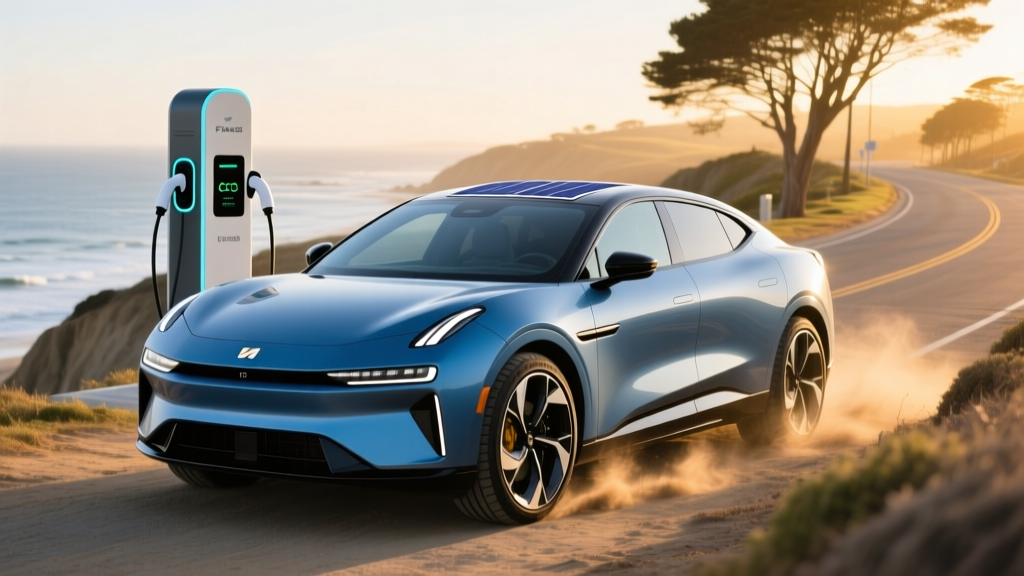
The SolarSkin roof adds a modest amount of range — Fisker claimed up to 1,500 miles per year under ideal conditions, which translates to roughly 4 miles per day of solar gain. It's a nice supplement but not a meaningful range extender for daily driving.
Charging Speed: DC Fast, Level 2, and the Curve Reality
| Charging Level | Power / Rate | Estimated Speed |
|---|---|---|
| Level 1 (120V) | ~1.4 kW | ~3–4 miles per hour |
| Level 2 (240V, 48A) | 11.5 kW (onboard max) | ~28–32 miles per hour |
| DC Fast Charge (CCS) | ~175 kW peak | 10–80% in ~35 min |
The Ocean One AWD uses a CCS1 connector for DC fast charging. Its peak rate of approximately 175 kW is respectable but not class-leading — rivals like the Hyundai Ioniq 5 (peaking at ~240 kW on 800V architecture) or the Tesla Model Y (up to ~250 kW on V3 Superchargers) charge considerably faster.
Critically, the charge curve tapers hard above 80% state of charge (SoC). Charging from 80–100% can add another 25–30 minutes, which is typical for NMC packs protecting longevity but frustrating on road trips if you need a full top-off. Plan your stops around 10–80% windows for the best time efficiency.
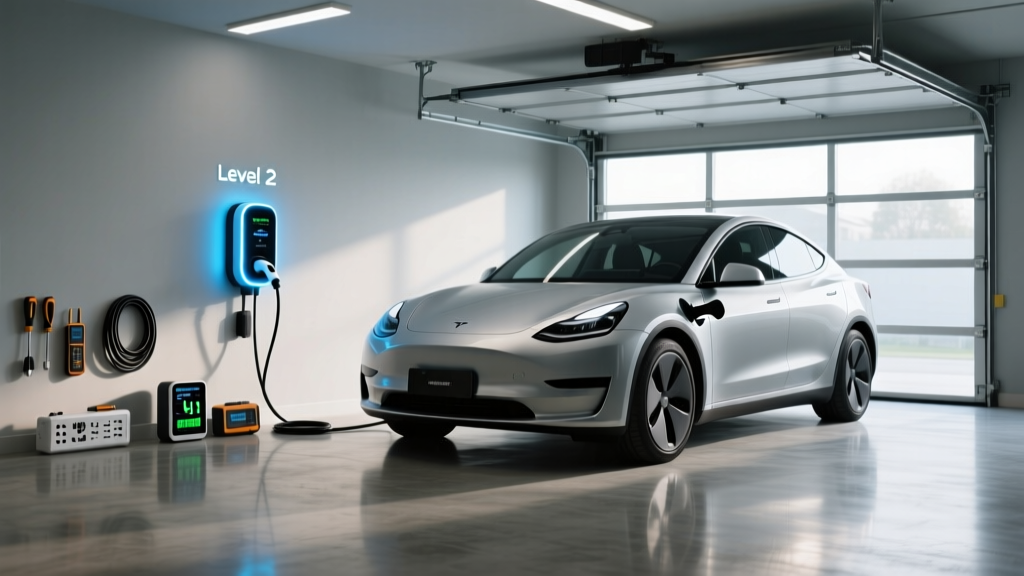
At home on a Level 2 wall connector, the 11.5 kW onboard charger replenishes the pack in roughly 9–10 hours from near-empty — fast enough for overnight charging on any standard 240V/48A home setup. A 40A circuit (common in older installations) will reduce this to ~9.6 kW, adding about an hour to a full charge.
Performance and Driving Dynamics
In Hyper mode (the top drive setting), the dual-motor AWD system delivers all 564 horsepower, launching the Ocean One to 60 mph in a claimed 3.9 seconds. That's genuinely quick for a 5,200-pound SUV and puts it in the same ballpark as a Tesla Model Y Performance. Earth mode provides a more relaxed throttle map suited to commuting, while the Eco setting maximizes range by limiting power output and optimizing climate control draw.
Ride quality is compliant thanks to a well-tuned suspension, and the cabin is impressively quiet at highway speeds. However, the steering lacks the precision of a Model Y or BMW iX, and the regenerative braking feel — while adjustable — never quite achieves the seamless one-pedal driving experience that Tesla and Hyundai/Kia have refined.
Interior, Cargo, and Standout Technology
The Ocean One AWD's interior is airy and modern, anchored by a 17.1-inch rotating central touchscreen that toggles between portrait ("Control") and landscape ("Hollywood") modes. The digital instrument cluster is clear, and the head-up display is a welcome inclusion on the One trim.
Cargo space measures 32.5 cubic feet behind the rear seats and expands to roughly 65 cubic feet with the 60/40 split rear bench folded. A small front trunk (frunk) adds about 1.5 cubic feet for charging cables or groceries. Rear legroom is generous at ~38.5 inches, comfortably accommodating adult passengers.
Standout features:
- SolarSkin roof: Integrated photovoltaic cells across the full roof surface
- California Mode: One-touch command that lowers all windows simultaneously for an open-air experience
- Revolve rotating screen: Portrait for driving, landscape for media
- Digital rearview mirror: Camera-based mirror with a wide field of view
Notable drawbacks:
- Software bugs: Early-production units had infotainment glitches, phantom warnings, and intermittent connectivity — many were addressed via OTA updates, but no further patches are expected post-bankruptcy
- No Apple CarPlay / Android Auto: The Ocean relies entirely on its native infotainment, which lacks the app ecosystem drivers expect
- Driver assists: The Fisker Intelligent Pilot ADAS suite is a basic Level 2 system (hands-on-wheel required) — it lacks the sophistication of Tesla Autopilot, GM Super Cruise, or Ford BlueCruise
Pricing, Tax Credits, and 2026 Market Reality
| Item | Amount |
|---|---|
| Original MSRP (Ocean One AWD) | $68,999 |
| Federal §30D Tax Credit (Original Purchase) | Up to $7,500 (if eligible) |
| Estimated 2026 Used Market Price | $22,000–$35,000 (condition/mileage dependent) |
| Used EV Tax Credit (§25E, if eligible) | Up to $4,000 (30% of sale price, max $4,000) |
When new, the Ocean One AWD at $68,999 was positioned against the Tesla Model Y Long Range (~$52,990), the BMW iX xDrive50 (~$87,000), and the Ford Mustang Mach-E GT (~$60,000). It was eligible for the full §30D federal tax credit of up to $7,500, provided the buyer met income thresholds ($150K single / $300K joint AGI) and the vehicle's battery sourcing complied with critical-mineral and component requirements — which were evolving rapidly during 2023.
In 2026, the Ocean One AWD is only available on the used market, where bankruptcy-driven depreciation has pushed prices to a fraction of original MSRP. Buyers may qualify for the §25E used EV credit — up to $4,000 or 30% of the sale price — if purchased from a licensed dealer, the sale price is $25,000 or less, and buyer income falls within caps ($75K single / $150K joint). Always verify current-year rules with a tax professional.
Battery Warranty and Long-Term Ownership Risk
Fisker originally backed the Ocean's battery and powertrain with an 8-year / 100,000-mile warranty — standard for the industry and compliant with CARB-state requirements. However, with Fisker Inc. in bankruptcy and no successor entity actively supporting the vehicle, enforcing that warranty in 2026 is uncertain at best. Independent EV service centers may handle basic maintenance, but high-voltage battery repair or module replacement requires specialized parts and training that are now scarce.
NMC battery degradation for a pack of this size typically runs 8–12% over the first 100,000 miles under normal use (avoiding frequent 100% charges and DC fast charging in extreme heat). A full pack replacement, if one could be sourced, would likely exceed $20,000 — a critical risk factor for any used buyer.
Pros
- 350-mile EPA range — among the longest of any EV SUV
- SolarSkin roof is a unique, functional feature
- Spacious interior with generous cargo and rear legroom
- Strong 564 hp dual-motor performance (3.9s 0–60)
- Deep depreciation on used market creates value opportunity
- Distinctive design that stands out from crossover homogeneity
Cons
- Fisker bankruptcy means no factory support or OTA updates
- Battery warranty enforcement is highly uncertain
- CCS charging at ~175 kW is slower than 800V rivals
- No Apple CarPlay or Android Auto
- Early software bugs may persist unpatched
- Parts scarcity for collision or high-voltage repairs
- Insurance may be difficult or expensive to secure
Who Should Consider the Fisker Ocean One AWD in 2026?
Consider it if: You find one at a steep discount ($25K or less), have home Level 2 charging, can self-insure or secure coverage, and are comfortable with the risk of limited service support. It suits a tech-tolerant commuter who values range and cargo space and doesn't rely on dealer service networks.
Pass on it if: You need reliable warranty coverage, live in a cold climate where range loss compounds, depend on public DC charging (slower speeds + CCS network reliability), or want a vehicle with active software development and a proven service network. A used Tesla Model Y, Hyundai Ioniq 5, or Ford Mach-E will offer far better support infrastructure.
Frequently Asked Questions
What is the real-world range of the 2023 Fisker Ocean One AWD?
The EPA rates it at 350 miles. In real-world highway driving at 70+ mph, expect 280–310 miles. In freezing weather with cabin heat, plan for 220–250 miles. City driving with regenerative braking can match or slightly exceed the EPA estimate.
How fast does the Fisker Ocean One charge?
On a DC fast charger, it peaks at approximately 175 kW, reaching 10–80% in roughly 35 minutes. At home on a Level 2 (240V/48A) charger, the 11.5 kW onboard charger adds about 28–32 miles of range per hour, filling the pack overnight in ~9–10 hours.
Does the Fisker Ocean One AWD qualify for the federal EV tax credit?
When purchased new in 2023, it was potentially eligible for up to $7,500 under §30D, subject to buyer income caps, MSRP limits (SUVs: $80,000), and battery-sourcing requirements. On the used market in 2026, buyers may qualify for the §25E used EV credit of up to $4,000 if the sale price is $25,000 or less and income thresholds are met. Consult the IRS guidelines and a tax professional.
Is the Fisker Ocean One worth buying versus a Tesla Model Y or Hyundai Ioniq 5?
On pure specs — range, cargo, performance — the Ocean One competes well. But in 2026, Tesla and Hyundai offer active software support, established service networks, proven Supercharger/dealer infrastructure, and stronger residual values. The Ocean only makes sense at a deep discount and for buyers who accept orphan-brand risk.
What are the biggest risks of owning a Fisker Ocean after the company's bankruptcy?
The primary risks are: no further OTA software updates (leaving known bugs unresolved), difficulty sourcing replacement parts (especially body panels and high-voltage components), uncertain warranty enforcement, potentially higher insurance premiums, and limited resale liquidity. Independent EV shops can handle basic service, but complex electrical or battery work is a significant challenge.
What battery chemistry does the Fisker Ocean One use?
The Ocean One AWD uses an NMC (nickel-manganese-cobalt) lithium-ion battery with a gross capacity of 113 kWh and approximately 106 kWh usable. NMC offers higher energy density than LFP but is more sensitive to extreme temperatures and typically shows slightly faster degradation if routinely charged to 100%.