Quick Verdict: The 2023 Mercedes-Benz EQS SUV
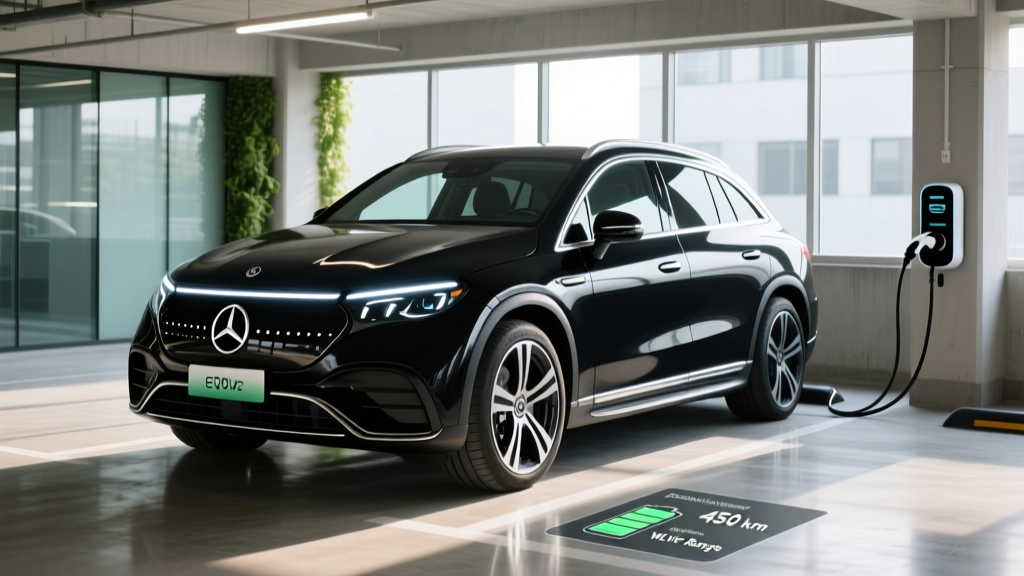
The 2023 EQS SUV is Mercedes-Benz's flagship electric utility vehicle — a three-row luxury hauler built on the same EVA2 platform as the EQS sedan. It targets buyers who want the silent torque and low running costs of a battery-electric vehicle without sacrificing the interior opulence and ride refinement of a six-figure Mercedes. With up to 305 miles of EPA-estimated range, a 108 kWh usable battery, and a cabin dominated by the Hyperscreen glass dashboard, the EQS SUV makes a compelling case as a premium electric family transporter. But at a base MSRP north of $104,000, and with real-world range that can dip below 250 miles on cold highway runs, it demands a clear-eyed look at the numbers before signing.
This review covers the 2023 model year specifically — the EQS SUV's debut year in the U.S. market. We'll break down real-world range, charging behavior, ownership costs, and how it stacks up against rivals like the BMW iX, Rivian R1S, and Tesla Model X.
| Spec | EQS 450+ (RWD) | EQS 450 4MATIC (AWD) | EQS 580 4MATIC (AWD) |
|---|---|---|---|
| EPA Range | 305 mi | 285 mi | 285 mi |
| Battery (usable) | 108.4 kWh, NMC lithium-ion | ||
| Horsepower | 355 hp | 355 hp | 536 hp |
| Torque | 419 lb-ft | 590 lb-ft | 633 lb-ft |
| 0–60 mph | 6.5 sec | 5.8 sec | 4.3 sec |
| Drivetrain | RWD (single motor) | AWD (dual motor) | AWD (dual motor) |
| Max DC Charge Rate | 200 kW peak | ||
| 10–80% DC Fast Charge | ~31 minutes | ||
| Level 2 Home Charge Rate | 9.6 kW (48A) | ||
| Efficiency (combined) | 84 MPGe | 79 MPGe | 79 MPGe |
| Base MSRP | $104,400 | $107,400 | $125,950 |
Range & Efficiency: EPA Sticker vs. Real-World Reality
EPA Estimated Range: 305 miles (450+ RWD) / 285 miles (450 4MATIC & 580 4MATIC)
Real-World Expectation: Expect 260–285 miles in mixed city/highway driving at moderate temperatures. Sustained highway driving at 75+ mph drops range to roughly 235–260 miles. In cold weather (below 32°F), anticipate a 15–25% reduction, putting the 450+ at approximately 225–260 miles on a full charge.
The 2023 EQS SUV's 108.4 kWh usable battery pack is one of the largest in any production EV sold in the U.S., and it shows in the EPA numbers. The rear-wheel-drive 450+ achieves 305 miles — a strong figure for a three-row SUV weighing over 6,000 pounds. The dual-motor AWD variants sacrifice about 20 miles of range for the added traction and torque.
Efficiency varies meaningfully by trim. Per fueleconomy.gov, the 450+ returns 84 MPGe combined (roughly 40 kWh/100 mi), while the AWD trims settle at 79 MPGe combined (~43 kWh/100 mi). That's competitive with the BMW iX xDrive50 (86 MPGe) but trails the lighter, more aerodynamic Tesla Model X Long Range (102 MPGe).
Where the EQS SUV's range story gets nuanced is highway driving. The vehicle's bluff frontal area and ~6,000-lb curb weight work against it at sustained speeds. In independent testing by EV analysts, the 450 4MATIC achieved approximately 245–255 miles at 70 mph in 50°F conditions. Cold weather compounds this: lithium-ion cells experience higher internal resistance in freezing temperatures, and cabin heating draws significant energy even with the EQS SUV's standard heat pump. Budget-conscious road-trippers should plan charging stops at the 200-mile mark in winter to maintain a safety buffer.
Charging: DC Fast Charging, Home Level 2, and the Charge Curve
Mercedes rates the 2023 EQS SUV at a peak DC fast-charge rate of 200 kW via its CCS1 connector. On a compatible 350 kW station (such as Electrify America or EVgo), the large battery can accept high power for a sustained portion of the session — but like all EVs, the charge curve tapers significantly above 80% state of charge to protect cell longevity.
| Charging Level | Power / Rate | Time / Recovery | Notes |
|---|---|---|---|
| Level 1 (120V household) | ~1.4 kW | ~3–4 mi/hr | Emergency/trickle only; full charge in 70+ hours |
| Level 2 (240V home/public) | 9.6 kW (48A) | ~28–32 mi/hr; full in ~11.5 hrs | Requires 60A circuit; NEMA 14-50 or hardwired |
| DC Fast Charge (CCS1) | 200 kW peak | 10–80% in ~31 min | Sustains ~150–180 kW to ~55%, then tapers |
Charge curve reality: The EQS SUV's 200 kW peak is achievable from roughly 10–20% SoC, and the vehicle holds strong power (150–180 kW) through about 50–55%. Beyond that, the rate drops progressively — by 80%, you're seeing roughly 70–90 kW. The 10–80% time of approximately 31 minutes is respectable for a 108 kWh pack, but it's not class-leading. The Hyundai Ioniq 5, with its 800V architecture and smaller battery, does 10–80% in about 18 minutes, albeit with far less total range.
For home charging, the onboard 9.6 kW charger is adequate. Plugging in overnight at a Level 2 wallbox (such as a ChargePoint Home Flex or Tesla Wall Connector with J1772 adapter) will replenish the full pack in about 11–12 hours. Most owners who arrive home with 30–50% remaining will wake to a full battery. A dedicated 60-amp circuit is recommended; installation typically runs $800–$2,500 depending on panel proximity, per licensed electrician estimates.
Preconditioning tip: The EQS SUV supports battery preconditioning when you set a DC fast-charger as your navigation destination. This warms or cools the pack to optimal temperature before arrival, which is critical for achieving peak charge speeds — especially in cold weather. Always navigate to the charger rather than just driving there.
Performance & Driving Dynamics
The 2023 EQS SUV lineup offers three powertrain configurations:
- EQS 450+ (RWD): A single rear motor producing 355 hp and 419 lb-ft of torque. The 0–60 mph time is 6.5 seconds — adequate for a luxury cruiser but not thrilling. This is the efficiency-maximizing trim.
- EQS 450 4MATIC (AWD): Dual motors with 355 hp but a healthier 590 lb-ft of torque, cutting 0–60 to 5.8 seconds. The added front motor provides all-weather traction with a modest range penalty.
- EQS 580 4MATIC (AWD): The performance flagship. 536 hp and 633 lb-ft deliver a 4.3-second 0–60 run — genuinely quick for a vehicle this size. The trade-off is the same 285-mile EPA range as the 450 4MATIC, though aggressive driving will reduce that further.
On the road, the EQS SUV rides on a standard AIRMATIC air suspension that delivers the pillowy compliance Mercedes is known for. The adaptive damping adjusts to road conditions, and the cabin remains remarkably quiet even at highway speeds — aided by acoustic laminated glass and extensive sound deadening. The rear-axle steering (standard, up to 4.5 degrees; optional 10 degrees) shrinks the turning circle to an unexpectedly tight 35.8 feet, making this large SUV manageable in parking structures.
Regenerative braking offers multiple levels selectable via steering-wheel paddles, from coasting (D Auto or D+) to strong one-pedal-style deceleration (D−). However, unlike some competitors, the EQS SUV does not come to a complete stop in its strongest regen mode — you'll still need the brake pedal at lights. The D Auto mode uses radar and navigation data to modulate regen intelligently, and it's the set-and-forget choice for most drivers.
Interior, Cargo & Technology
The EQS SUV seats up to seven in its optional third-row configuration (standard on some trims, optional on others), though the third row is best suited for children or short trips. With the third row folded, cargo volume is 64.5 cubic feet; with both rear rows folded, it expands to 80.2 cubic feet. Behind the third row, you get approximately 14.4 cubic feet — enough for a few grocery bags but tight for luggage. Second-row legroom is a generous 39.5 inches; front legroom is 40.7 inches.
The dashboard is dominated by the available MBUX Hyperscreen — a 56-inch curved glass panel spanning the full width of the dash, integrating a 17.7-inch central OLED touchscreen, a 12.3-inch driver cluster, and a 12.3-inch passenger display. The system runs the latest MBUX software with wireless Apple CarPlay and Android Auto, over-the-air updates, and an AI-driven "zero layer" interface that surfaces frequently used functions. It's visually stunning, though some users report that the touch-capacitive surfaces attract fingerprints and that menu depth can be frustrating for simple climate adjustments.
Driver assistance: The EQS SUV comes standard with a comprehensive ADAS suite including adaptive cruise control, lane-keeping assist, blind-spot monitoring, and automated emergency braking. The optional Driver Assistance Package adds Active Lane Change Assist and Active Steering Assist. Per SAE classification, this is a Level 2 system — it requires the driver to remain engaged with hands on the wheel and eyes on the road at all times. This is not autonomous driving. Mercedes' more advanced DRIVE PILOT (conditional Level 3) was not available on the 2023 U.S.-spec EQS SUV.
A notable omission: there is no front trunk (frunk). The space under the hood houses HVAC components and is sealed, unlike the Tesla Model X or Rivian R1S which offer usable front cargo space.
Pricing, Trims & Federal Tax Credit Eligibility
| Trim | Base MSRP | As-Tested (typical) | §30D Federal Credit |
|---|---|---|---|
| EQS 450+ SUV (RWD) | $104,400 | $112,000–$118,000 | See eligibility note below |
| EQS 450 4MATIC SUV | $107,400 | $115,000–$122,000 | See eligibility note below |
| EQS 580 4MATIC SUV | $125,950 | $135,000–$145,000 | See eligibility note below |
Federal tax credit (§30D) — critical eligibility note: Under the Inflation Reduction Act rules effective for the 2023 tax year, the EQS SUV faces several eligibility hurdles. First, the MSRP cap for SUVs is $80,000 — and every EQS SUV trim exceeds this, which means the 2023 EQS SUV does not qualify for the $7,500 federal EV tax credit under §30D. This is a significant consideration for buyers cross-shopping against vehicles like the Rivian R1S (Dual-Motor, starting ~$79,900, which can qualify depending on trim and sourcing).
Additionally, §30D imposes buyer income caps ($300,000 joint / $150,000 single for new vehicles) and battery critical-mineral and component sourcing requirements that phased in throughout 2023–2024. Even if the MSRP cap were met, the EQS SUV's battery sourcing would need independent verification. Always consult IRS.gov §30D guidance and a tax professional before assuming credit eligibility.
The destination charge adds $1,150 to all trims. Popular options include the AMG Line exterior package (~$3,500), the Executive Rear Seat Package (~$3,000), and 21-inch wheels (~$1,850), which can reduce range slightly due to increased rolling resistance. A well-equipped 450 4MATIC with Premium and Driver Assistance packages typically lands in the $118,000–$125,000 range before any state incentives.
Warranty, Battery Longevity & Ownership Costs
Mercedes-Benz backs the 2023 EQS SUV with the following warranty coverage:
- New Vehicle Limited Warranty: 4 years / 50,000 miles
- High-Voltage Battery Warranty: 8 years / 100,000 miles (capacity retention guaranteed above 70% of original)
- Powertrain (e-motors, reducer): Covered under the HV battery warranty terms
- Corrosion Perforation: 4 years / 50,000 miles
- Roadside Assistance: 4 years / 50,000 miles
The 8-year/100,000-mile battery warranty with a 70% capacity-retention threshold is industry-standard, matching BMW and slightly below Hyundai's 10-year/100,000-mile coverage. The NMC (nickel manganese cobalt) chemistry in the EQS SUV's pack offers high energy density but historically shows slightly faster calendar degradation than LFP (lithium iron phosphate) cells used in some competitors like the Tesla Model Y Standard Range. That said, Mercedes' thermal management system — liquid cooling with active preconditioning — should keep degradation manageable. Owners who avoid frequent DC fast-charging to 100% and who keep the pack between 20–80% for daily use can expect minimal degradation in the first 5–6 years.
Insurance costs: Expect premiums 15–25% higher than a comparable gas-powered GLS, driven by the EV's repair complexity, high-voltage components, and elevated MSRP. Average annual premiums run $2,800–$4,200 depending on state, driver profile, and coverage level.
Maintenance: The EQS SUV eliminates oil changes, spark plugs, and transmission fluid. Scheduled maintenance is limited to cabin air filters, brake fluid checks, tire rotation, and wiper fluid. Mercedes offers a prepaid maintenance plan (~$1,200 for 4 years), but out-of-pocket annual costs typically run $300–$500 — significantly less than the GLS 450's $800–$1,200/year.
Pros, Cons & Who Should Buy the 2023 EQS SUV
Pros
- Class-leading cabin quietness and ride comfort via AIRMATIC air suspension
- Massive 108.4 kWh battery delivers up to 305 miles EPA range
- Hyperscreen dashboard is visually striking and feature-rich
- Rear-axle steering gives limo-like maneuverability in tight spaces
- Strong 580 4MATIC performance (4.3 sec 0–60) for a three-row SUV
- Comprehensive standard ADAS suite with smooth, non-intrusive operation
Cons
- Base MSRP exceeds $104K; no federal §30D tax credit (over $80K MSRP cap)
- No front trunk (frunk) — wasted cargo opportunity
- Third row is cramped for adults; cargo behind third row is limited
- 200 kW peak DC charge rate trails 800V competitors (Ioniq 5, Taycan, Lucid)
- MBUX Hyperscreen can be distracting and fingerprint-prone
- Heavy weight (~6,100 lbs) impacts tire wear and highway efficiency
Who this EV suits best: The 2023 EQS SUV is ideal for luxury-commuter families who prioritize ride comfort, cabin silence, and brand prestige over value or maximum range. If your daily drive is under 80 miles round-trip and you have reliable home Level 2 charging, the EQS SUV delivers a near-effortless ownership experience. It's also a strong fit for executives who want a premium EV without the tech-bro associations of Tesla. It is not ideal for budget-conscious buyers, frequent cold-climate road-trippers who need maximum range buffer, or those who want the latest 800V charging architecture for the fastest possible pit stops.
Competitor Comparison: EQS SUV vs. iX, Model X & R1S
| Attribute | MB EQS 450+ SUV | BMW iX xDrive50 | Tesla Model X LR | Rivian R1S Dual-Motor |
|---|---|---|---|---|
| EPA Range | 305 mi | 324 mi | 348 mi | 264 mi (Std) / 352 mi (Max) |
| Battery (usable) | 108.4 kWh (NMC) | 105.2 kWh (NMC) | ~100 kWh (est.) | 128.9 kWh (Max, NMC) |
| Peak DC Charge | 200 kW | 200 kW | 250 kW | 200 kW |
| 10–80% Time | ~31 min | ~35 min | ~28 min | ~40 min (Max pack) |
| 0–60 mph | 6.5 sec | 4.6 sec | 3.8 sec | 5.0 sec |
| Third Row | Yes (opt.) | No | Yes (opt.) | Yes (std.) |
| Base MSRP | $104,400 | $87,100 | $89,990 | $79,900 |
| §30D Credit Eligible | No (MSRP cap) | No (MSRP cap) | No (MSRP cap) | Yes (qualifying trims) |
The EQS SUV is the most expensive entry here and the only one that cannot access the federal credit due to its MSRP. The BMW iX offers a more engaging driving experience and a slightly lower price but lacks a third row. The Tesla Model X leads in range, charging speed, and performance but trails in interior material quality. The Rivian R1S is the value pick and the only one potentially eligible for §30D, with genuine off-road capability — though its standard battery range is lower and the Max pack adds significant cost.
Frequently Asked Questions
What is the real-world range of the 2023 EQS SUV?
In mixed driving at moderate temperatures, expect 260–285 miles from the 450+ (305 EPA) and 245–265 miles from the AWD trims (285 EPA). Sustained highway driving at 75 mph reduces range by roughly 15–20%, and cold weather (below freezing) can knock off an additional 15–25%. Plan conservatively: in winter highway conditions, 210–230 miles is a realistic safe range for the 450+.
How fast does the EQS SUV charge at home and on the road?
On a DC fast charger, the EQS SUV peaks at 200 kW and charges from 10–80% in approximately 31 minutes, though the rate tapers significantly above 55% SoC. At home on a Level 2 (240V, 48A) wallbox, it charges at 9.6 kW, adding roughly 28–32 miles per hour — a full charge takes about 11–12 hours. Level 1 (120V) adds only 3–4 miles per hour and is suitable only for emergencies.
Does the 2023 EQS SUV qualify for the federal EV tax credit?
No. Under IRS §30D rules, the federal new clean vehicle credit has an MSRP cap of $80,000 for SUVs. Every 2023 EQS SUV trim starts above $104,000, making it ineligible regardless of buyer income or battery sourcing. State-level incentives may still apply — check your state's energy office or IRS.gov for details. Always consult a tax professional.
Is the 2023 EQS SUV worth buying vs. the BMW iX or Tesla Model X?
It depends on your priorities. Choose the EQS SUV if cabin luxury, ride comfort, and brand prestige are paramount and you don't need maximum range or the fastest charging. Choose the BMW iX for a sportier drive and lower price (but no third row). Choose the Tesla Model X for maximum range, Supercharger access, and performance. Choose the Rivian R1S for value, off-road capability, and potential tax credit eligibility.
What is the battery warranty on the 2023 EQS SUV?
Mercedes-Benz covers the high-voltage battery for 8 years or 100,000 miles, whichever comes first. The warranty guarantees the battery will retain at least 70% of its original usable capacity during that period. If degradation exceeds 30%, Mercedes will repair or replace the pack at no cost. This is consistent with most luxury EV competitors.
Can the EQS SUV tow, and how does that affect range?
The 2023 EQS SUV has a maximum towing capacity of 3,500 pounds when properly equipped. Towing near maximum capacity can reduce range by 40–50%, depending on trailer aerodynamics and terrain. If you plan to tow frequently, expect effective range to drop to roughly 150–170 miles on the 450+ and plan charging accordingly.
Sources: fueleconomy.gov (EPA range and efficiency data), IRS.gov §30D clean vehicle credit rules, Mercedes-Benz USA official specifications.