The search term "2023 cruise cruise av" points to one of the most ambitious — and ultimately controversial — vehicles in the autonomous driving space: the Cruise robotaxi fleet, built on General Motors' EV architecture and designed to operate without a human driver. While the Cruise Origin purpose-built shuttle captured headlines, the workhorse of the 2023 Cruise AV fleet was actually a heavily modified Chevrolet Bolt EV packed with lidar, radar, and cameras. This review examines the 2023 Cruise AV platform from an EV-spec perspective — the battery, range, charging, and efficiency that underpinned millions of autonomous miles — while addressing the autonomy technology, the October 2023 safety incident that reshaped the company, and what riders and EV enthusiasts need to know.
The Cruise AV operated at SAE Level 4 within mapped urban geofences (San Francisco, Phoenix, Austin). No human driver was present in the vehicle during commercial rider service. This is fundamentally different from Level 2 driver-assist systems like GM Super Cruise or Tesla Autopilot, which require continuous driver supervision. Cruise's Level 4 designation means the system handles all driving tasks within its operational design domain — but that domain has strict geographic, speed, and weather boundaries.
The 2023 Cruise AV Fleet: Bolt-Based Workhorse and Origin Prototype
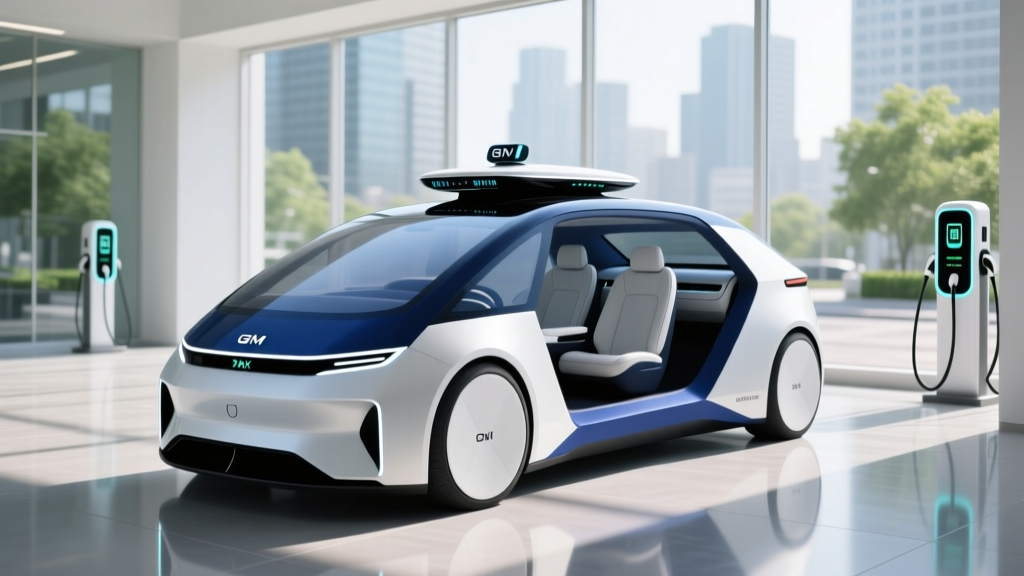
To understand the 2023 Cruise AV, you need to distinguish between two vehicles. The Cruise AV Gen 5 — the car that actually carried paying passengers in 2023 — was a modified Chevrolet Bolt EV retrofitted with Cruise's fifth-generation autonomous driving hardware suite. The Cruise Origin, a purpose-built, steering-wheel-free shuttle co-developed with Honda, was announced and shown but never entered commercial rider service before Cruise suspended operations in late October 2023.
The Bolt-based Cruise AV was never sold to consumers. It existed solely as a fleet vehicle operated by Cruise LLC (a GM majority-owned subsidiary). However, its underlying EV platform — the Bolt EV — is a consumer vehicle with well-documented specs, and understanding those specs is key to understanding how a robotaxi fleet manages energy, range, and charging logistics in real-world urban operations.
| Spec | Value |
|---|---|
| EPA Range | 259 miles (Bolt EV base) |
| Battery Capacity | 65 kWh usable (NMC lithium-ion) |
| Drivetrain | FWD, single permanent-magnet motor |
| Horsepower | 200 hp / 266 lb-ft torque |
| 0–60 mph | ~6.5 seconds |
| Max DC Fast Charge | 55 kW (CCS1) |
| Level 2 Charge Rate | 11.5 kW (~39 mi/hr) |
| EPA Efficiency | 120 MPGe combined / 28 kWh/100 mi |
| AV Sensor Suite (Gen 5) | 5 lidar, 16 cameras, 21 radar, ultrasonic |
| Consumer Availability | Not for sale — fleet-only robotaxi |
Range and Efficiency: Real-World Robotaxi Energy Management
Real-World Robotaxi Range: Expect 160–190 effective miles per charge cycle in urban stop-and-go service. The Cruise AV's sensor suite (lidar, compute, cameras) draws an estimated 1.5–2.5 kW of continuous auxiliary power, reducing effective range by roughly 15–25% versus a stock Bolt EV. In San Francisco's hilly terrain with constant acceleration and braking, fleet operators typically targeted 120–150 miles before scheduling a charge swap. Cold-weather impact was minimal in Cruise's primary SF and Phoenix markets, but testing in colder climates would have pushed effective range toward the lower bound.
The Bolt EV's 65 kWh NMC (nickel-manganese-cobalt) battery pack was competitive for urban duty cycles but not class-leading. For context, a Tesla Model Y Long Range carries ~75 kWh usable and achieves 330 miles EPA. The Cruise AV's efficiency advantage came from its urban speed profile — averaging 15–25 mph in San Francisco, regenerative braking recaptured significant energy that highway-heavy driving cycles lose.
According to EPA data at fueleconomy.gov, the 2023 Bolt EV achieves 120 MPGe combined (131 city / 109 highway). The city-heavy driving pattern of a robotaxi actually favored the Bolt platform's efficiency sweet spot, even with the parasitic load of the autonomous sensor and compute stack.
Charging Logistics: How a Robotaxi Fleet Stays on the Road
| Level | Power | Miles Added/Hour | Notes |
|---|---|---|---|
| Level 1 (120V) | 1.4 kW | ~4 mi/hr | Not used in fleet ops |
| Level 2 (240V) | 11.5 kW | ~39 mi/hr | Depot charging overnight (~7 hrs 0–100%) |
| DC Fast (CCS1) | 55 kW peak | ~160 mi/hr (peak) | 10–80% in ~60 min; charge curve tapers significantly above 80% |
The Bolt EV platform's 55 kW DC fast-charge ceiling was the Cruise AV's most significant operational limitation. While competitors like the Hyundai Ioniq 5 (peak 240 kW on 800V architecture) could add 200 miles in 18 minutes, the Cruise AV needed roughly 60 minutes for a 10–80% session. For a fleet operator, this meant each vehicle spent a substantial portion of its day charging rather than earning revenue.
Cruise addressed this through depot-based Level 2 charging. Vehicles would return to fleet depots (Cruise operated several in San Francisco's SoMa and Mission districts) for overnight charging at 11.5 kW. Mid-day top-ups at DC fast chargers supplemented this, but the 55 kW cap meant fleet scheduling had to carefully balance ride demand against charge time. This is a key reason the purpose-built Origin — which was expected to use GM's Ultium platform with faster charging capability — was so critical to Cruise's long-term unit economics.
The charge curve on the Bolt's NMC pack is typical: peak 55 kW holds from roughly 10–40% state of charge, then tapers to ~38 kW through 60%, and drops further to ~20 kW approaching 80%. Fleet software managed this by targeting partial charges (20–70%) during mid-day sessions to stay in the fastest portion of the curve.
Autonomous Driving Technology: Gen 5 Sensor Suite and Level 4 Operations
The Cruise AV's fifth-generation hardware suite represented a significant leap over earlier iterations. The Gen 5 package included:
- 5 lidar units — roof-mounted and fender-positioned for 360° 3D point-cloud mapping
- 16 cameras — covering all angles with redundancy for object classification and traffic signal detection
- 21 radar modules — short- and long-range for velocity detection and adverse-weather performance
- Ultrasonic sensors — near-field obstacle detection for low-speed maneuvers
- Custom compute stack — processing sensor fusion, localization, prediction, and planning in real time
Despite operating without a human driver, the Cruise AV was not capable of driving anywhere in any condition. Its Level 4 operational design domain (ODD) was restricted to mapped urban areas with specific speed limits (typically under 40 mph), and the system could struggle with construction zones, unusual road configurations, severe weather, and interactions with emergency vehicles. The October 2023 incident in San Francisco — where a Cruise AV made contact with a pedestrian who had been thrown into its path by a human-driven vehicle, then attempted to pull over while the pedestrian was under the car — exposed limitations in edge-case handling that led to California DMV permit suspension and a nationwide service pause.
Before the suspension, Cruise had accumulated over 2 million driverless miles in San Francisco alone, with expansion into Phoenix and Austin. According to California DMV disengagement reports, Cruise's miles-per-intervention improved significantly year over year, though direct comparisons with Waymo's data are complicated by different reporting methodologies and operational domains. The National Highway Traffic Safety Administration (NHTSA) investigated multiple Cruise AV incidents during 2023, and the company's Standing General Order reports to NHTSA documented over 100 reportable incidents across its fleet.
The Cruise Origin: What Was Promised vs. What Delivered
The Cruise Origin was designed to solve the Bolt-based AV's compromises. Key planned specifications included:
- Platform: GM Ultium (BTX architecture) — the same scalable platform underpinning the Cadillac Lyriq and GMC Hummer EV
- Battery: Estimated 80–100 kWh (NMC), targeting 200+ miles of range with the auxiliary compute load
- Charging: Expected 150+ kW DC fast charge capability (a major improvement over the Bolt's 55 kW)
- Design: No steering wheel, no pedals — symmetrical interior with bench seating for up to 6 passengers
- Sensors: Next-generation suite with improved lidar resolution and processing
However, the Origin never carried a paying passenger. Following the October 2023 safety incident and subsequent permit revocations, Cruise suspended all nationwide operations. By mid-2024, GM announced it would wind down Cruise's robotaxi operations and refocus autonomous driving R&D on personal-vehicle ADAS (advanced driver-assistance systems) through Super Cruise and Ultra Cruise. The Origin program was effectively shelved. As of 2026, the Origin remains an announced but never commercially deployed vehicle.
Fleet Economics and the Consumer Question
Because the 2023 Cruise AV was never a consumer product, there is no MSRP, no trim level, and no federal §30D tax credit to discuss for the AV itself. However, the underlying Bolt EV was available to consumers in 2023 with the following pricing:
| Trim | MSRP | §30D Credit Eligibility (2023) | Effective Price |
|---|---|---|---|
| 1LT | $26,500 | $7,500 (met sourcing requirements in 2023) | ~$19,000 |
| 2LT | $30,700 | $7,500 | ~$23,200 |
Important §30D caveats: The Bolt EV's credit eligibility depended on battery component and critical mineral sourcing requirements that evolved throughout 2023 and tightened significantly in 2024 and beyond. Buyer income caps ($150K single / $300K joint) and the MSRP cap ($55,000 for passenger cars) applied. Point-of-sale transfer became available in 2024. Always verify current eligibility at IRS.gov before purchasing, as sourcing rules change frequently. The Bolt EV was discontinued after the 2023 model year (a refreshed Bolt is expected for 2026 on the Ultium platform).
Cruise AV vs. Waymo: Comparing the Two Level 4 Operators
The Cruise AV's closest comparison isn't another consumer EV — it's Waymo's Jaguar I-PACE-based robotaxi, the other major Level 4 operator in the U.S. market. A brief comparison:
| Factor | Cruise AV (Bolt EV) | Waymo (Jaguar I-PACE) |
|---|---|---|
| EPA Range | 259 mi | 234 mi |
| Battery | 65 kWh NMC | 90 kWh NMC |
| DC Fast Charge | 55 kW | 100 kW |
| Service Status (2026) | Suspended; GM pivoted to ADAS | Active in Phoenix, SF, LA, Austin |
| Rider Miles Logged | ~2M+ driverless (SF only) | 20M+ paid trips (multi-city) |
Waymo's larger battery and faster charging gave it an operational edge in fleet utilization. More critically, Waymo maintained its California DMV permit and continued expanding while Cruise's operations were suspended. As of 2026, Waymo remains the dominant Level 4 robotaxi service in the United States.
Pros and Cons of the 2023 Cruise AV Platform
- Proven Bolt EV platform with 259 mi EPA range — sufficient for urban duty cycles
- 120 MPGe combined efficiency excellent for city-heavy driving
- Level 4 autonomy achieved millions of driverless miles in dense urban environments
- Gen 5 sensor suite among the most comprehensive in the industry (5 lidar, 16 cameras, 21 radar)
- Regenerative braking well-suited to stop-and-go urban patterns
- Relatively low vehicle cost (Bolt EV ~$26K base) kept fleet capital expenditure manageable
- 55 kW DC fast charge is painfully slow for fleet operations — ~60 min for 10–80%
- Auxiliary compute load reduced effective range by 15–25%
- October 2023 pedestrian incident exposed edge-case handling limitations
- Operations suspended nationwide; service never resumed at scale
- Not available to consumers — purely a fleet vehicle
- NMC chemistry degrades faster than LFP under high-cycle fleet use
- Origin (Ultium-based successor) never deployed before program cancellation
Battery Longevity and Fleet Degradation Considerations
The Bolt EV's 65 kWh NMC pack carried an 8-year / 100,000-mile warranty against capacity loss below 60% of original capacity (GM's threshold). For consumer use, NMC degradation typically follows a curve of ~5–8% loss in the first two years, then stabilizing at ~1–2% annually. However, fleet robotaxi use imposes far more demanding conditions: daily deep cycling, frequent DC fast charging, and the constant drain of the AV compute stack all accelerate degradation.
Industry estimates suggest fleet EVs in high-utilization service can see 3–5% annual degradation — roughly double consumer rates. Cruise's depot charging strategy (Level 2 overnight, partial DC fast mid-day) was designed to mitigate this by avoiding frequent 0–100% cycles and minimizing time at high state of charge. Still, battery replacement cost for the Bolt EV pack was approximately $14,000–$16,000 (parts only) as of 2023, a significant fleet maintenance consideration at scale.
For comparison, LFP (lithium iron phosphate) chemistry — used in standard-range Tesla Model 3/Y and some newer EVs — offers 3,000+ full cycles with minimal degradation, making it better suited to fleet applications. The Bolt EV's NMC chemistry prioritized energy density over cycle life, a trade-off that made sense for consumer range but was less ideal for robotaxi duty cycles.
Frequently Asked Questions
Can I buy a 2023 Cruise AV?
No. The Cruise AV was a fleet-only robotaxi based on the Chevrolet Bolt EV. It was never sold to consumers. The Bolt EV itself was discontinued after 2023, though a next-generation Bolt on GM's Ultium platform is expected for 2026. Used 2023 Bolt EVs are available on the secondary market and remain one of the most affordable new EVs ever sold when the §30D credit was applied.
What was the real-world range of the Cruise AV in robotaxi service?
While the underlying Bolt EV platform has a 259-mile EPA rating, the Cruise AV's autonomous sensor suite and compute stack drew an estimated 1.5–2.5 kW continuously, reducing effective range to approximately 160–190 miles. In practice, fleet operations scheduled charging after 120–150 miles to maintain a safety buffer and keep the battery in the optimal charge-curve window for fast charging.
Is Cruise still operating robotaxis in 2026?
No. Following the October 2023 pedestrian incident in San Francisco, California's DMV suspended Cruise's driverless testing permit, and Cruise voluntarily paused all nationwide operations. In 2024, GM announced a strategic pivot: winding down Cruise's robotaxi operations and integrating its autonomous driving technology into GM's consumer ADAS programs (Super Cruise and Ultra Cruise). Waymo remains the primary Level 4 robotaxi operator in the U.S. as of 2026.
How did the Cruise AV's charging speed compare to modern consumer EVs?
Poorly. The Bolt EV platform's 55 kW peak DC fast charge was already below average in 2023 and is far behind current leaders. The Hyundai Ioniq 5 peaks at 240 kW (10–80% in ~18 min), the Tesla Model Y at ~250 kW, and the Porsche Taycan at 270 kW. For fleet operations, the Bolt's slow charging was a major utilization bottleneck that the Ultium-based Origin was meant to solve.
Did the Cruise AV qualify for the federal EV tax credit?
The Cruise AV itself was not eligible for the §30D credit because it was not a consumer vehicle. The underlying Chevrolet Bolt EV did qualify for up to $7,500 in 2023, subject to buyer income caps ($150K single / $300K joint), MSRP caps ($55,000 for cars), and battery sourcing requirements. Credit rules have tightened significantly since 2023 — always check current eligibility at IRS.gov.
What happened to the Cruise Origin?
The Cruise Origin — a purpose-built, steering-wheel-free shuttle on GM's Ultium platform — was unveiled and underwent testing but never entered commercial rider service. Following Cruise's operational suspension in late 2023 and GM's strategic pivot away from robotaxi operations in 2024, the Origin program was effectively canceled. It remains one of the most notable "what-if" vehicles in the autonomous driving space.