Quick Verdict: The Budget EV Benchmark
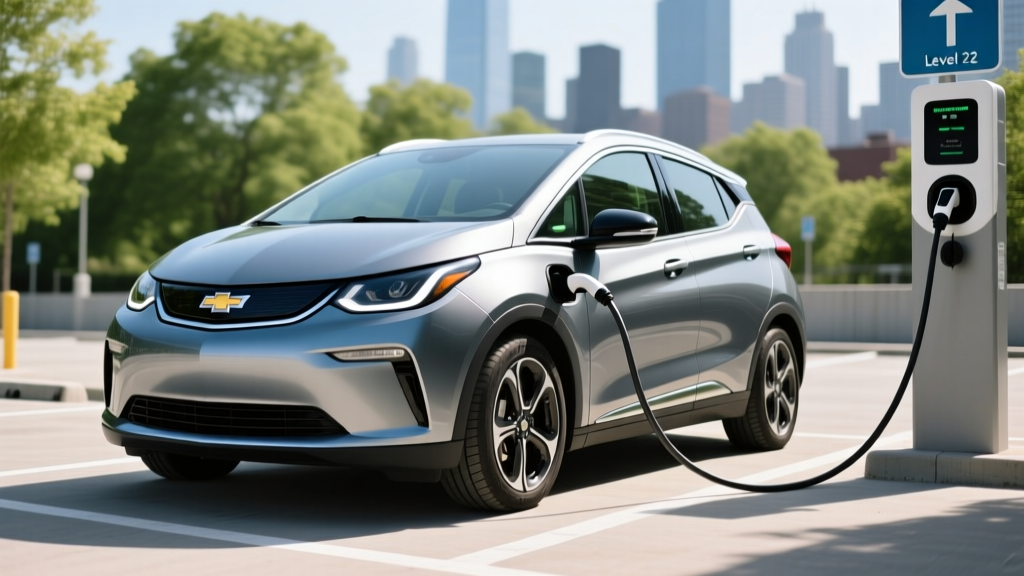
The 2023 Chevy Bolt EV remains one of the most compelling value propositions in the electric vehicle market. With a starting MSRP of $26,500 (before any incentives), 259 miles of EPA-estimated range, and eligibility for the full $7,500 federal tax credit, it delivers practicality that punches far above its price class. However, its DC fast-charging speed — capped at 55 kW — is a genuine limitation for road-trippers. This is a commuter-first EV that excels in daily driving but requires patience on longer journeys.
Chevrolet discontinued the Bolt EV after the 2023 model year to retool for a next-generation platform, making this a final-year model with proven reliability and a well-documented ownership track record. For buyers who can secure remaining dealer inventory or a certified pre-owned example, the Bolt EV offers exceptional value.
Range and Efficiency: EPA vs. Real-World
Real-World Expectation: 230–250 miles in mixed driving; 200–220 miles sustained highway at 70+ mph; 170–190 miles in cold weather (below 32°F) with cabin heating
The Bolt EV's 65 kWh lithium-ion battery pack (usable capacity approximately 60 kWh) uses NMC (nickel-manganese-cobalt) chemistry. This is not the LFP chemistry found in some Tesla Model 3 variants — NMC offers higher energy density but requires more careful thermal management and typically shows slightly more long-term degradation than LFP.
Efficiency is rated at 120 MPGe combined (city/highway), which translates to roughly 28 kWh per 100 miles. In real-world testing, owners report 26–30 kWh/100mi depending on driving style and climate. The Bolt EV's efficiency is competitive with the Hyundai Kona Electric and Nissan Leaf Plus, though it trails the Tesla Model 3's class-leading aerodynamics.
Cold weather impacts range noticeably. Without a heat pump (the Bolt EV uses resistive cabin heating), winter range loss of 25–35% is typical. Preconditioning the battery while plugged in helps mitigate this, but owners in northern climates should budget for 170–190 miles of usable winter range.
Charging Speed: The Bolt's Biggest Compromise
| Charging Level | Power (kW) | Time / Rate | Connector |
|---|---|---|---|
| Level 1 (120V household) | ~1.4 kW | ~4 miles per hour | J1772 |
| Level 2 (240V home/public) | 11.5 kW (max) | ~39 miles per hour / ~7 hours (0–100%) | J1772 |
| DC Fast Charging | 55 kW (peak) | ~30 minutes (10–80%); ~100 miles in 30 min | CCS1 |
The 55 kW DC fast-charging ceiling is the Bolt EV's most significant drawback for road-trip use. While competitors like the Hyundai Kona Electric (75 kW), Volkswagen ID.4 (125 kW), and Tesla Model 3 (170+ kW) charge substantially faster, the Bolt EV's peak rate means a 10–80% session takes approximately 30 minutes under ideal conditions.
The charge curve is relatively flat, which is a small positive: the Bolt EV sustains close to its peak rate from 10–60% state of charge before tapering. But 55 kW peak means you'll spend more time at charging stations than in faster-charging EVs. For a 300-mile road trip, plan for two charging stops of 30–40 minutes each.
Home charging on a Level 2 (240V) circuit at 48 amps delivers the full 11.5 kW, replenishing the battery in roughly 7 hours. This is adequate for overnight charging and is one of the faster Level 2 rates in its class. Installation of a home Level 2 charger typically costs $500–$2,000 depending on electrical panel capacity and circuit run length — budget for a licensed electrician to install a NEMA 14-50 outlet or hardwired EVSE.
Performance and Drivetrain
The 2023 Bolt EV is powered by a single front-mounted permanent-magnet electric motor producing 200 horsepower and 266 lb-ft of torque. This drives the front wheels only — there is no all-wheel-drive option.
Acceleration is respectable: 0–60 mph in approximately 6.5 seconds. The instant torque delivery makes the Bolt EV feel quicker in city driving than the numbers suggest, and it merges confidently onto highways. However, it's not a performance EV — the Kia EV6 and Tesla Model 3 are significantly quicker.
Ride quality is compliant, and the low center of gravity (battery pack under the floor) keeps body roll minimal. The Bolt EV is tuned for comfort rather than sportiness, which suits its commuter-car mission. Regenerative braking offers multiple levels, including a one-pedal driving mode that can bring the car to a complete stop without touching the brake pedal.
Interior, Cargo, and Technology
The Bolt EV is a compact hatchback with seating for five. Interior dimensions provide:
- Front legroom: 42.1 inches
- Rear legroom: 35.9 inches
- Cargo volume (rear seats up): 16.9 cubic feet
- Cargo volume (rear seats folded): 56.2 cubic feet
Cargo space is generous for the class — the hatchback design makes the Bolt EV practical for grocery runs, luggage, and occasional bulky items. The 16.9 cu-ft trunk is larger than the Nissan Leaf (23.6 cu-ft max) and competitive with the Hyundai Kona Electric (19.2 cu-ft behind rear seats).
The infotainment system centers on a 10.2-inch touchscreen with wireless Apple CarPlay and Android Auto. The interface is responsive and straightforward, though it lacks the visual polish of Tesla's or Hyundai's systems. A 6-speaker audio system, built-in navigation, and 4G LTE Wi-Fi hotspot are standard on the 2LT trim.
Driver-assistance features include:
- Forward collision alert with automatic emergency braking
- Lane keep assist with lane departure warning
- Following distance indicator
- Rear cross-traffic alert
- Adaptive cruise control (2LT trim only)
These are SAE Level 2 driver-assist features — they require continuous driver attention and do not constitute self-driving capability. The Bolt EV does not offer hands-free driving systems like GM's Super Cruise (reserved for higher-end Cadillac and Chevrolet models).
Pricing, Tax Credits, and Ownership Cost
| Trim | MSRP | Federal Credit (§30D) | Effective Price |
|---|---|---|---|
| 1LT | $26,500 | $7,500 (if eligible) | $19,000 |
| 2LT | $30,500 | $7,500 (if eligible) | $23,000 |
The 2023 Bolt EV qualifies for the full $7,500 federal tax credit under IRS §30D, provided the buyer meets income requirements (adjusted gross income ≤ $150,000 single / $300,000 joint) and the vehicle's MSRP is under the $55,000 cap for passenger cars. The Bolt EV's battery sourcing and critical-mineral content meet 2023 requirements, and the credit can be applied at point of sale as a down payment reduction (starting in 2024 for new purchases; 2023 purchases claim the credit on tax return).
At $19,000 effective price after the credit, the Bolt EV 1LT is the most affordable long-range EV available in the U.S. market. For comparison, the Hyundai Kona Electric starts around $34,000, and the Tesla Model 3 begins at $38,990 (before credits).
Important caveat: Federal tax credit eligibility depends on individual tax liability, income thresholds, and battery-sourcing rules that evolve annually. Consult IRS guidance on clean vehicle credits or a tax professional to confirm your eligibility before purchasing.
Five-year ownership costs are favorable. Electricity costs approximately $0.13–$0.16 per kWh nationally, meaning a full charge costs roughly $8–$10. Over 15,000 miles per year, annual fuel cost is approximately $550–$650 — compared to $1,800–$2,200 for a comparable gas-powered compact car at 30 MPG and $3.50/gallon. Insurance premiums for the Bolt EV average $1,400–$1,800 annually, which is moderate for an EV.
Battery Warranty and Longevity
Chevrolet warranties the Bolt EV's battery pack and electric powertrain for 8 years or 100,000 miles (whichever comes first), with a capacity retention threshold of 60%. This means if the battery degrades below 60% of original capacity within the warranty period, Chevrolet will repair or replace it.
Real-world degradation data from Bolt EV owners shows approximately 5–8% capacity loss over the first 50,000 miles, which is typical for NMC chemistry. The Bolt EV's active thermal management system (liquid cooling/heating) helps preserve battery health. Replacement cost out of warranty is approximately $14,000–$16,000 for the battery pack, though this is rare within the first 10 years of ownership.
For peace of mind, the Bolt EV's battery warranty is competitive with the Hyundai Kona Electric (10-year/100,000-mile) and Nissan Leaf (8-year/100,000-mile). Owners who charge primarily at home on Level 2 and avoid frequent DC fast charging will see the best long-term battery health.
Pros, Cons, and Who Should Buy
Pros
- Exceptional value: $26,500 MSRP, $19,000 after federal credit
- 259-mile EPA range is practical for most commutes
- Spacious hatchback cargo area (16.9 cu ft)
- Fast Level 2 home charging (11.5 kW)
- Eligible for full $7,500 federal tax credit
- Proven reliability with years of owner data
Cons
- Slow DC fast charging (55 kW peak) — 30+ min for 10–80%
- No heat pump — significant winter range loss
- Front-wheel drive only; no AWD option
- Discontinued after 2023 — limited new inventory
- Driver-assist features lag behind Tesla/Hyundai
- Interior materials feel budget-tier
Who this EV suits best: The 2023 Bolt EV is ideal for budget-conscious commuters who drive 30–60 miles per day, have access to home Level 2 charging, and rarely take road trips exceeding 200 miles. It's a practical second car for families, a cost-effective rideshare vehicle, and an entry point for first-time EV buyers who want proven technology without a $40,000+ price tag.
Who should look elsewhere: If you regularly drive 300+ miles in a day, need all-wheel drive for snow, or want the latest driver-assist tech, consider the Tesla Model 3, Hyundai Ioniq 5, or Volkswagen ID.4 instead. The Bolt EV's slow DC charging is a dealbreaker for frequent road-trippers.
FAQ: 2023 Chevy Bolt EV
What is the real-world range of the 2023 Chevy Bolt EV?
Expect 230–250 miles in mixed driving, 200–220 miles on sustained highway trips at 70+ mph, and 170–190 miles in cold weather (below freezing). The EPA estimates 259 miles for the 1LT trim, but real-world conditions reduce this by 10–30% depending on speed, temperature, and terrain.
How fast does the Bolt EV charge at home and on DC fast chargers?
On a Level 2 (240V) home charger at 48 amps, the Bolt EV charges at 11.5 kW, adding approximately 39 miles of range per hour and fully charging in about 7 hours. On DC fast chargers, it peaks at 55 kW, taking roughly 30 minutes to charge from 10–80%. This is slower than most competitors.
How much does the 2023 Bolt EV cost after tax credits?
The 1LT trim starts at $26,500 MSRP. With the full $7,500 federal tax credit (if you meet income and tax-liability requirements), the effective price drops to $19,000. The 2LT trim starts at $30,500, or $23,000 after the credit. State and local incentives may reduce the price further.
Is the 2023 Bolt EV worth buying vs. competitors?
If your priority is lowest cost per mile of range, the Bolt EV is unmatched. At $19,000 after federal credit, it offers 259 miles of range for less than any other EV. However, if you need fast DC charging for road trips, all-wheel drive, or more advanced driver-assist features, the Hyundai Kona Electric, Tesla Model 3, or Volkswagen ID.4 are better choices despite higher prices.
Does the 2023 Chevy Bolt EV qualify for the federal EV tax credit?
Yes, the 2023 Bolt EV qualifies for the full $7,500 federal tax credit under IRS §30D, provided the buyer's adjusted gross income is ≤ $150,000 (single) or $300,000 (joint), and the vehicle MSRP is under $55,000 (it is). The credit can be claimed on your tax return for 2023 purchases. Verify current eligibility on IRS.gov or with a tax professional.
Can I still buy a new 2023 Bolt EV?
Chevrolet discontinued the Bolt EV after the 2023 model year. Remaining new inventory is limited to dealer lots, and most buyers will find certified pre-owned or used examples. A next-generation Bolt is expected for the 2026 or 2027 model year with faster charging and updated styling.