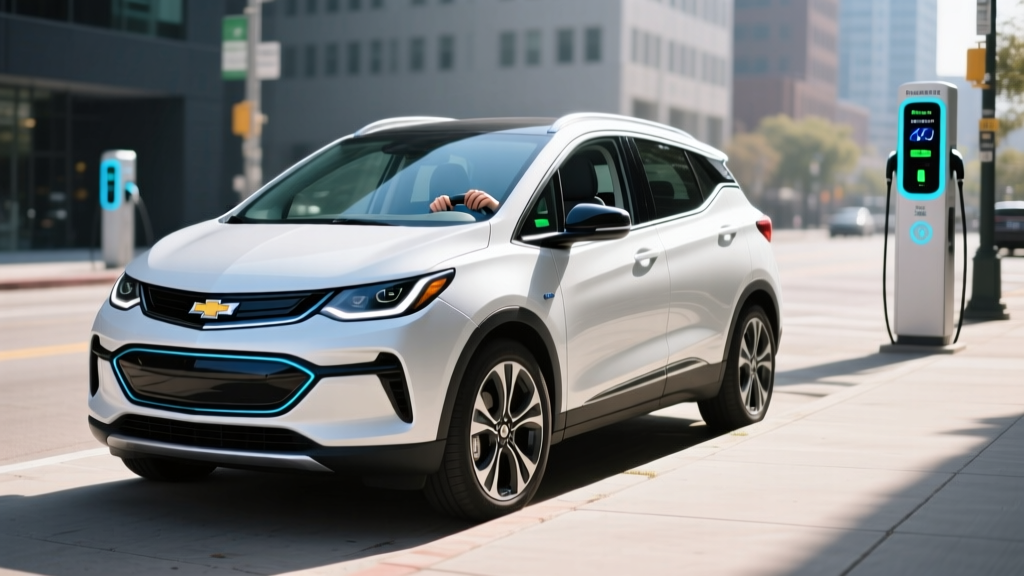
The 2023 Chevrolet Bolt EUV occupies a unique space in the electric-vehicle market: it's one of the most affordable crossover EVs ever sold new in the United States, and by 2026 it has become a standout value proposition on the used market. With a spacious cabin, a usable 247-mile EPA range, and a remarkably low entry price, the Bolt EUV was a commuter favorite when new. But its charging limitations and aging platform demand an honest look before you sign on the dotted line.
Chevrolet discontinued the Bolt EUV after the 2023 model year to make way for the next-generation Equinox EV and Blazer EV on the Ultium platform. That means every Bolt EUV you'll find today is pre-owned or a leftover new-old-stock unit — which changes the tax-credit math entirely. Let's break down exactly what you're getting.
2023 Chevy Bolt EUV: Core Specifications at a Glance
| Specification | Value |
|---|---|
| EPA Range | 247 miles (LT) / 247 miles (Premier) |
| Battery Capacity | 65 kWh usable (NMC lithium-ion) |
| Motor / Drivetrain | Single permanent-magnet motor, FWD |
| Horsepower / Torque | 200 hp / 266 lb-ft |
| 0–60 mph | ~7.0 seconds |
| Max DC Fast Charge Rate | 55 kW (CCS1) |
| Level 2 Charge Rate | 11.5 kW onboard charger |
| EPA Efficiency | 115 MPGe combined (29 kWh/100 mi) |
| Cargo Volume (rear seats up/down) | 16.3 cu ft / 56.9 cu ft |
| Rear Legroom | 39.1 inches |
| Base MSRP (when new) | $27,800 (LT) / $32,400 (Premier) — before destination |
| Battery/Powertrain Warranty | 8 years / 100,000 miles |
Real-World Range: What 247 EPA Miles Actually Means
The 2023 Bolt EUV carries a 247-mile EPA estimate. In real-world mixed driving at moderate temperatures (60–80°F), expect 220–240 miles. On sustained highway driving at 70–75 mph, range drops to approximately 195–215 miles. In cold weather (below 32°F), plan for 165–195 miles of usable range due to battery chemistry limitations and cabin-heating energy draw. The Bolt EUV does not offer a heat pump, so resistive heating consumes significant kWh in winter.
The 65 kWh NMC (nickel manganese cobalt) battery pack provides solid energy density for the vehicle's class. However, NMC chemistry is more sensitive to extreme temperatures than LFP (lithium iron phosphate), and the Bolt EUV's thermal management system — while adequate — is not as aggressive as the liquid-cooled systems found in newer Ultium-based GM EVs or Hyundai's E-GMP platform.
For daily commuting of 40–60 miles round-trip, the Bolt EUV's range is more than sufficient with a comfortable buffer. It's on road trips exceeding 200 miles where the combination of moderate range and slow DC charging becomes a genuine limitation.
Charging Speed: The Bolt EUV's Biggest Compromise
If there's one area where the 2023 Bolt EUV shows its age, it's charging performance. The vehicle uses a CCS1 connector and is capped at a peak DC fast-charge rate of just 55 kW — far below the 150–350 kW rates common on 2024–2026 EVs.
| Charging Level | Power (kW) | Speed / Time |
|---|---|---|
| Level 1 (120V household outlet) | ~1.4 kW | ~4 miles of range per hour |
| Level 2 (240V home/public) | Up to 11.5 kW | ~31 miles of range per hour; full charge in ~7 hours |
| DC Fast Charge (CCS1) | Peak 55 kW | 10–80% in approximately 55–65 minutes |
That 10–80% DC fast-charge time of roughly an hour is the critical number. On a road trip, you'll be spending significantly more time at charging stations than you would in a Hyundai Ioniq 5 (10–80% in ~18 minutes at 240 kW) or even a base Tesla Model Y on a V3 Supercharger (~25 minutes).
The charge curve is relatively flat — the Bolt EUV sustains close to its 55 kW peak through much of the 10–80% window, which is a small mercy. There's no dramatic taper until you push past 80%, where charging slows considerably as the battery management system protects the NMC cells. For road-trip strategy, plan to charge to 80% and go rather than waiting for a full top-off.
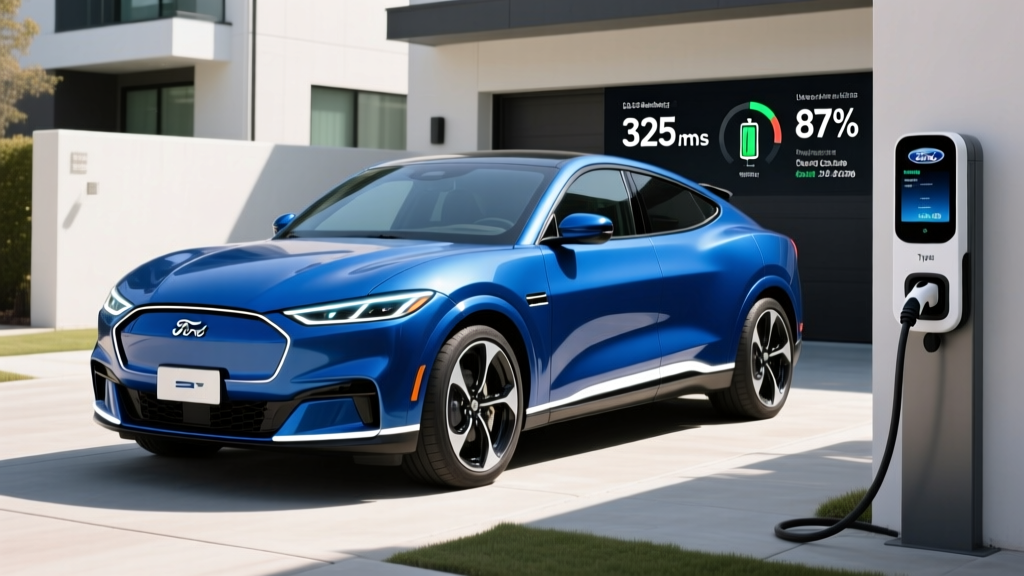
At home, the 11.5 kW Level 2 onboard charger is a bright spot. With a 48-amp Level 2 home charger on a 60-amp circuit, you can add roughly 31 miles of range per hour, meaning a full overnight charge is easily achievable. Installation for a Level 2 home charger typically runs $500–$2,000 depending on your electrical panel's capacity and the distance from panel to garage. According to fueleconomy.gov, home Level 2 charging remains the most cost-effective way to fuel an EV.
Performance, Efficiency, and Driving Impressions
The Bolt EUV's single front-mounted motor produces 200 horsepower and 266 lb-ft of torque, delivered to the front wheels. The 0–60 mph time of approximately 7.0 seconds is adequate for merging and passing but won't win any stoplight drag races against dual-motor competitors.
Where the Bolt EUV shines is in city and suburban driving. The instant torque delivery makes it feel punchy around town, and regenerative braking — adjustable via steering-wheel paddles or a one-pedal driving mode — lets you recapture energy efficiently in stop-and-go traffic. The one-pedal mode is strong enough to bring the vehicle to a complete stop without touching the brake pedal, a feature that veteran EV drivers appreciate.
Efficiency is a genuine strength. At 115 MPGe combined (29 kWh per 100 miles), the Bolt EUV is among the most efficient crossovers in its class. For context, that translates to roughly $0.04–$0.05 per mile when charging at home on a national-average electricity rate of $0.16/kWh — dramatically cheaper than a comparable gasoline crossover at $0.12–$0.15 per mile.
Interior Space, Technology, and Daily Livability
The "EUV" designation stands for Electric Utility Vehicle, and the extra length over the standard Bolt EV translates directly to rear-seat room. With 39.1 inches of rear legroom, the Bolt EUV offers more back-seat space than many compact gasoline crossovers and significantly more than the standard Bolt EV's 35.9 inches. Two adults can sit comfortably on longer trips; three across is tight but possible for short drives.
Cargo capacity measures 16.3 cubic feet behind the rear seats and 56.9 cubic feet with the 60/40 split rear seats folded — competitive with the Honda HR-V and Chevrolet Trax. There is no front trunk (frunk); the space under the hood houses the motor and power electronics.
The infotainment system centers on a 10.2-inch touchscreen running Chevrolet's Infotainment 3 Plus system with wireless Apple CarPlay and Android Auto. A 10.2-inch digital driver display replaces traditional gauges. The Premier trim adds a panoramic sunroof, leather-appointed seats, and a 360-degree camera system.
Driver-assistance features include Chevy Safety Assist as standard: automatic emergency braking, forward collision alert, lane-keep assist, following-distance indicator, and IntelliBeam automatic high beams. The available Super Cruise system — GM's hands-free SAE Level 2 driving-assistance technology — was offered on the Premier trim for the 2023 model year. Super Cruise operates on over 400,000 miles of pre-mapped divided highways in the US and Canada, using a driver-attention camera to ensure your eyes remain on the road. It is not autonomous driving — you must remain engaged and ready to take over at all times.
Pricing, Used Market Value, and the Federal Tax Credit
When new, the 2023 Bolt EUV started at an MSRP of $27,800 for the LT trim and $32,400 for the Premier (before the $1,095 destination charge). These prices made it one of the least expensive electric crossovers on the market, undercutting competitors like the Hyundai Kona Electric and Kia Niro EV by thousands.
On the used market in 2026, prices have settled considerably. Expect to find 2023 Bolt EUV LT models in the $16,000–$20,000 range and Premier trims between $19,000–$23,000, depending on mileage, condition, and region.
- Credit amount: Up to $4,000 or 30% of the sale price, whichever is less (IRC §25E, previously known as the used-EV credit under §30D framework)
- Vehicle price cap: Sale price must be $25,000 or less
- Buyer income limits: AGI must not exceed $75,000 (single), $112,500 (head of household), or $150,000 (married filing jointly)
- Vehicle age: Must be at least 2 model years old (2023 models qualify in 2026)
- Dealer requirement: Must be purchased from a licensed dealer and reported to the IRS
- One-time use: Buyer can only claim this credit once every 3 years
Rules are subject to change. Verify current eligibility at irs.gov and consult a tax professional before purchase.
Because most used 2023 Bolt EUVs fall under the $25,000 sale-price cap, qualifying buyers can potentially claim the $4,000 used clean-vehicle credit, bringing a $19,000 LT model down to an effective cost of $15,000. That makes the Bolt EUV one of the most affordable ways to get into a modern, 200+ mile EV in 2026. However, the income caps are strict — higher-earning buyers will not qualify.
Warranty, Battery Longevity, and Ownership Costs
Chevrolet backs the Bolt EUV's battery pack and electric powertrain with an 8-year / 100,000-mile warranty against defects and excessive capacity loss (defined as dropping below approximately 60–70% of original capacity, per GM's warranty terms). The limited vehicle warranty is 3 years / 36,000 miles — likely expired on most 2023 models by 2026, so check remaining coverage carefully.
NMC battery degradation in the Bolt platform has proven moderate in real-world use. Owners of earlier Bolt EVs (2017–2022) have reported approximately 8–12% capacity loss over 5–6 years and 60,000–80,000 miles, though GM's 2021–2022 battery recall and replacement program complicates direct comparisons. The 2023 model year uses an updated battery pack not affected by the original recall, but long-term degradation data specific to this pack is still limited.
Insurance costs for the Bolt EUV tend to be moderate — typically $1,200–$1,800 annually depending on your profile and location, which is comparable to gasoline crossovers in the same price range. Maintenance costs are minimal: no oil changes, no spark plugs, no transmission fluid. Budget for cabin-air-filter replacement, tire rotation, and wiper fluid — that's essentially it.
2023 Bolt EUV vs. Key Competitors
On the used market in 2026, the Bolt EUV competes against several other affordable EVs. Here's how the critical numbers stack up:
| Model (Year) | EPA Range | DC Fast Charge (peak kW) | 10–80% Time | Typical Used Price |
|---|---|---|---|---|
| 2023 Chevy Bolt EUV | 247 mi | 55 kW | ~55–65 min | $16,000–$23,000 |
| 2022 Hyundai Kona Electric | 258 mi | 75 kW | ~47 min | $18,000–$24,000 |
| 2022 Kia Niro EV | 239 mi | 77 kW | ~45 min | $19,000–$25,000 |
| 2022 VW ID.4 | 260 mi | 125 kW | ~35 min | $20,000–$27,000 |
The Bolt EUV wins on price and rear-seat space but loses decisively on DC charging speed. If your driving is 90% commuting with occasional road trips, the 55 kW charge rate is livable. If you regularly drive 200+ miles in a single day, the Kona Electric, Niro EV, or especially the ID.4 will save you meaningful time at charging stops.
- Lowest cost of entry for a 247-mile EV crossover
- Spacious rear seat (39.1 in. legroom) and useful cargo area
- Excellent efficiency: 115 MPGe / 29 kWh/100 mi
- Strong one-pedal regenerative braking
- Available Super Cruise (Level 2 hands-free highway assist)
- Qualifies for up to $4,000 used-EV tax credit
- Low running and maintenance costs
- DC fast charging capped at 55 kW — painfully slow for road trips
- No heat pump — significant range loss in cold weather
- FWD only — no AWD option for snow-belt buyers
- Discontinued platform; no future OTA updates expected
- No frunk (front trunk) for additional storage
- Infotainment feels dated vs. 2024+ competitors
- Original 3-year/36,000-mi bumper-to-bumper warranty likely expired
Who Should Buy the 2023 Chevy Bolt EUV?
Choose the 2023 Bolt EUV if: You're a budget-conscious commuter driving under 60 miles per day, you can charge at home overnight, you value rear-seat space for kids or carpool passengers, and you rarely take road trips exceeding 180 miles one-way. The used-EV tax credit makes this one of the cheapest ways into a practical, long-range EV.
Look elsewhere if: You regularly drive 200+ miles in a day, you need AWD for harsh winters, you want the latest infotainment and charging technology, or you plan to tow (the Bolt EUV is not rated for towing). Consider a used VW ID.4, Hyundai Ioniq 5, or Tesla Model Y if DC charging speed and road-trip capability are priorities — but expect to pay $5,000–$12,000 more.
Frequently Asked Questions
What is the real-world range of the 2023 Chevy Bolt EUV?
Expect 220–240 miles in moderate-temperature mixed driving, 195–215 miles on sustained highway trips at 70+ mph, and 165–195 miles in freezing weather. The 247-mile EPA estimate is achievable in ideal city-driving conditions but optimistic for highway or cold-climate use.
How fast does the Bolt EUV charge at home and on the road?
At home on a 240V Level 2 charger (11.5 kW), the Bolt EUV adds about 31 miles of range per hour, with a full charge taking roughly 7 hours. On DC fast chargers, the 55 kW peak means a 10–80% charge takes 55–65 minutes — the vehicle's most significant drawback for road-trip use.
Does the 2023 Bolt EUV qualify for the federal EV tax credit in 2026?
Not the new-vehicle §30D credit (the vehicle is no longer sold new). However, it may qualify for the used clean-vehicle credit (up to $4,000) if the sale price is $25,000 or less, the buyer meets income limits ($75K single / $150K joint), and the vehicle is purchased from a licensed dealer. Always verify at irs.gov before purchasing.
Is the Bolt EUV worth buying over a used Tesla Model 3 or Model Y?
It depends on your priorities. The Bolt EUV is $8,000–$15,000 cheaper than a comparable used Model Y and offers more rear-seat legroom. But Tesla's Supercharger network, faster DC charging (up to 250 kW on V3 stalls), and continued over-the-air software updates give the Model 3/Y a significant advantage in road-trip usability and long-term tech support. If budget is your top concern, the Bolt EUV wins. If charging infrastructure and tech longevity matter more, Tesla is the stronger choice.
What's the biggest risk of buying a discontinued EV like the Bolt EUV?
The primary risks are parts availability over the long term (particularly body panels and model-specific components), no future software updates, and potentially steeper depreciation as the platform ages. However, GM is obligated to honor the 8-year/100,000-mile battery warranty, and many mechanical and interior parts are shared with the broader GM ecosystem. The Bolt EUV's simplicity — FWD, single motor, proven NMC pack — actually works in its favor for long-term serviceability.
Can I use Tesla Superchargers with the Bolt EUV?
The 2023 Bolt EUV has a CCS1 charge port, not the NACS (Tesla) connector. As of 2026, GM has begun enabling Supercharger access for newer Ultium-based EVs via a NACS adapter, but the Bolt EUV — built on the older BEV2 platform — is not included in GM's NACS adapter program. You'll rely on CCS networks like Electrify America, EVgo, and ChargePoint for DC fast charging.