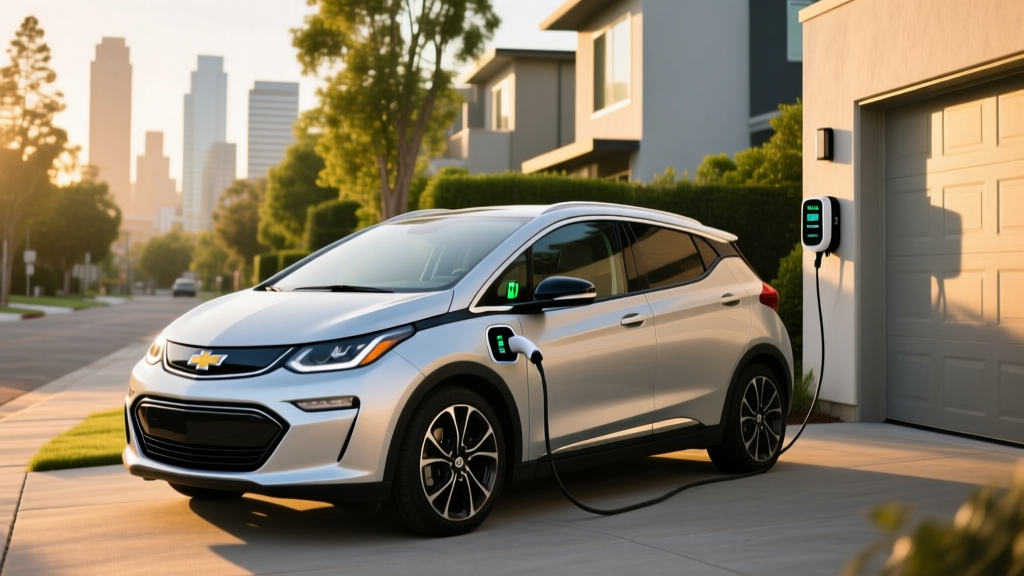
The 2023 Chevrolet Bolt EV occupies a unique space in the used-electric-vehicle market of 2026. Originally priced as one of the most affordable long-range EVs ever sold in the United States, the Bolt EV was discontinued after the 2023 model year to make way for GM's Ultium-based lineup. But for budget-conscious shoppers browsing the pre-owned EV market today, the Bolt EV remains a compelling commuter car — provided you understand its charging limitations and battery-chemistry trade-offs.
This review covers everything a 2026 buyer needs to know: real-world range expectations, DC fast-charging realities, battery health considerations for a three-year-old pack, and whether the used clean vehicle tax credit can still knock $4,000 off the price.
Range and Efficiency: 259 Miles EPA, But What Does That Mean in Practice?
Real-World Expectation (2026 Owner Data):
• City / moderate-speed driving (55 mph): ~265–280 miles (regenerative braking boosts efficiency)
• Highway (70–75 mph sustained): ~210–230 miles
• Cold weather (below 32°F, highway): ~170–195 miles
• Combined mixed-use typical: ~235–250 miles
The Bolt EV's EPA rating of 259 miles was genuinely impressive at its price point when new, and it still holds up against many 2026 competitors in the sub-$30,000 used segment. The car achieves this on a 65 kWh (usable) lithium-ion battery pack using NMC (nickel manganese cobalt) chemistry — the standard for GM's pre-Ultium EVs.
NMC chemistry offers higher energy density than LFP (lithium iron phosphate), which is why GM could fit 259 miles into a compact hatchback. However, NMC packs are more sensitive to sustained high states of charge and extreme temperatures. For a 2023 model in 2026, expect some degree of degradation — typically 5–10% capacity loss over three years depending on charging habits and climate. A pack that started at 65 kWh usable may now deliver 58–62 kWh, translating to roughly 230–245 miles of real-world mixed driving.
Efficiency on the EPA cycle is rated at 120 MPGe combined (120 city / 109 highway), which translates to roughly 28 kWh per 100 miles. That's competitive with the Nissan Leaf Plus and slightly less efficient than the Tesla Model 3 RWD, but entirely reasonable for a front-wheel-drive hatchback of this weight class.
| Specification | Value |
|---|---|
| EPA Range | 259 miles |
| Battery (usable) | 65 kWh, NMC chemistry |
| Efficiency | 120 MPGe combined (28 kWh/100 mi) |
| Motor | Single permanent-magnet, FWD |
| Horsepower | 200 hp |
| Torque | 266 lb-ft |
| 0–60 mph | ~6.5 seconds |
| Max DC Fast Charge | 55 kW (CCS1) |
| 10–80% DC Time | ~55–60 minutes |
| Level 2 Charge Rate | 11.5 kW (~39 mi/hr) |
| Cargo (rear seats up) | 16.6 cu ft |
| Cargo (rear seats folded) | 56.2 cu ft |
| Rear Legroom | 36.0 inches |
| Battery Warranty | 8 years / 100,000 miles |
| Original Base MSRP | $26,500 (1LT) |
Charging: The Bolt EV's Biggest Compromise
If there's one area where the 2023 Bolt EV shows its age in 2026, it's DC fast charging. The car peaks at 55 kW on a CCS1 connector — a figure that was acceptable in 2017 when the Bolt launched, but feels painfully slow in a market now populated by vehicles charging at 150–350 kW.
| Charging Level | Power / Rate | Miles Added per Hour | Notes |
|---|---|---|---|
| Level 1 (120V) | ~1.4 kW | ~4 mi/hr | Standard household outlet; overnight top-up only |
| Level 2 (240V) | 11.5 kW | ~39 mi/hr | Full charge in ~7 hours; ideal for home |
| DC Fast (CCS1) | 55 kW peak | ~150–180 mi/hr (at peak) | 10–80% in ~55–60 min; tapers sharply above 80% |
What this means in practice: On a road trip, plan for 45–60 minute stops to go from roughly 10% to 80%. The charge curve is relatively flat between 10–60% (sustaining near 50–55 kW), then tapers to ~30 kW by 80% and drops further to ~15 kW above 90%. For highway travel at 70 mph consuming roughly 3.5 miles per minute, you're trading 55 minutes of charging for about 170 miles of highway range — a ratio that makes long-distance trips viable but patience-testing.
At home, the 11.5 kW onboard charger is actually a bright spot. That's faster than many competitors (the base Nissan Leaf manages only 6.6 kW on Level 2), and it means a depleted Bolt EV can fully recharge overnight in about 7 hours on a properly installed 48-amp Level 2 home station. Most owners who charge at home and rarely road-trip will find the Bolt EV's charging perfectly adequate.
One important note for 2026 buyers: the Bolt EV uses the CCS1 connector, not Tesla's NACS. As the industry transitions to NACS through 2025–2026, CCS1 chargers remain widely available at Electrify America, EVgo, and ChargePoint stations, but future availability may shift. GM has offered NACS adapters for some models; check current adapter compatibility before purchase.
Performance and Driving Dynamics
The 2023 Bolt EV is no sports car, but it's genuinely quick off the line in a way that surprises first-time EV drivers. The single front-mounted motor produces 200 horsepower and 266 lb-ft of torque, delivering a 0–60 mph time of approximately 6.5 seconds. That's quicker than most compact gas hatchbacks and makes merging onto highways effortless.
The front-wheel-drive layout and 3,563-pound curb weight mean the Bolt EV isn't designed for spirited canyon carving. Steering is light and numb, body roll is noticeable in corners, and the Michelin Energy Saver tires prioritize low rolling resistance over grip. But for daily commuting, school runs, and grocery hauls, the driving experience is smooth, quiet, and one-pedal-friendly.
GM's one-pedal driving mode (activated via a steering-wheel paddle) provides aggressive regenerative braking that can bring the car to a complete stop without touching the brake pedal. It's one of the best implementations in the industry and significantly reduces brake wear — expect original brake pads to last 80,000+ miles with regular regen use.
Interior, Cargo, and Daily Practicality
The Bolt EV is a compact five-door hatchback, and interior space reflects that classification. Front-seat passengers get 42.1 inches of legroom — genuinely generous — while rear-seat occupants get 36.0 inches, which is adequate for adults on shorter trips but tight for tall passengers on longer journeys.
Cargo volume is 16.6 cubic feet behind the rear seats, expanding to 56.2 cubic feet with the 60/40 split rear seats folded. That's competitive with the Honda HR-V and significantly more practical than a Tesla Model 3 sedan's trunk. The cargo area is flat and square, making it easy to load boxes, strollers, or camping gear.
The 2023 model year brought a refreshed interior with a 10.2-inch touchscreen running Chevrolet Infotainment 3 Plus, wireless Apple CarPlay and Android Auto, and a 10.2-inch digital driver display. The system is responsive and logically laid out, though the lack of physical climate-control buttons (everything routes through the touchscreen) frustrates some drivers.
Driver-assistance technology includes Chevy Safety Assist as standard: automatic emergency braking, forward collision alert, lane-keep assist, following-distance indicator, and IntelliBeam automatic high beams. Adaptive cruise control is available on the 2LT trim. Note that these are SAE Level 1–2 driver-assist features — the driver must remain fully engaged at all times. The Bolt EV does not offer GM's Super Cruise hands-free system.
Pricing, Trims, and Tax Credit Eligibility in 2026
The 2023 Bolt EV was offered in two trims when new:
| Trim | Original MSRP | 2026 Used Market (est.) | Used EV Credit (§25E) |
|---|---|---|---|
| 1LT | $26,500 | $14,000–$17,000 | Up to $4,000 (if eligible) |
| 2LT | $29,700 | $16,000–$20,000 | Up to $4,000 (if eligible) |
Used Clean Vehicle Credit (IRS §25E): As of 2026, buyers purchasing a qualifying used EV from a licensed dealer may be eligible for a tax credit of up to $4,000 (30% of the sale price, capped at $4,000). Key eligibility requirements include:
- Price cap: The used vehicle must sell for $25,000 or less — most used Bolt EVs qualify.
- Buyer income limits: Modified AGI must not exceed $75,000 (single), $112,500 (head of household), or $150,000 (joint filers).
- Model age: The vehicle must be at least two model years old — the 2023 Bolt EV qualifies in 2026.
- Dealer requirement: Must be purchased from a licensed dealer, not a private party.
- First transfer: The credit applies only on the first qualified resale since August 16, 2022. Verify with the dealer that this specific VIN hasn't already been claimed.
- Claim frequency: A buyer can claim this credit only once every three years.
Always verify current rules at IRS.gov and consult a tax professional before relying on credit eligibility. Rules and interpretations can change.
The original §30D new-vehicle credit no longer applies to 2023 Bolt EVs purchased new, as the vehicle is discontinued. However, the used-credit pathway is the relevant incentive for 2026 buyers.
Battery Health, Warranty, and Long-Term Ownership
GM provides an 8-year / 100,000-mile battery and powertrain warranty on the Bolt EV, covering defects and capacity loss below 60% of original capacity. For a 2023 model, this warranty remains active through the 2031 model year or 100,000 miles — meaning most used Bolt EVs purchased in 2026 still carry substantial factory coverage.
The Bolt EV's NMC battery pack is liquid-cooled and actively thermally managed, which is a significant advantage over passively cooled packs (like the pre-2023 Nissan Leaf) in hot climates. That said, NMC chemistry degrades faster than LFP when routinely charged to 100%. Best practice for long-term health:
- Set the charge target to 80% for daily use; charge to 100% only before long trips.
- Avoid frequent DC fast charging when Level 2 is available — the Bolt's modest 55 kW rate is actually gentler on the battery than higher-rate packs, but heat accumulation during extended DC sessions still accelerates wear.
- In extreme cold, precondition the battery (plug in and use the departure-timer feature) to warm the pack before driving.
Bolt EV battery replacement cost, if needed out of warranty, is estimated at $14,000–$16,000 for the pack alone in 2026 — a significant expense relative to the vehicle's used-market value. However, actual out-of-warranty replacements remain rare; most packs retain 85–92% capacity at the 100,000-mile mark based on fleet data.
Bolt EV vs. Key Competitors in the 2026 Used Market
- Your budget is under $20,000 and you need 200+ miles of range.
- You primarily commute and charge at home (Level 2).
- You want hatchback cargo versatility without paying SUV prices.
- Road trips are occasional, not weekly.
- You need fast DC charging for frequent road trips (consider a used Hyundai Ioniq 5 or Tesla Model 3).
- You want all-wheel drive or winter-weather traction (consider a used Tesla Model Y or Ford Mustang Mach-E).
- You need rear-seat space for tall adults regularly (step up to a compact EV SUV).
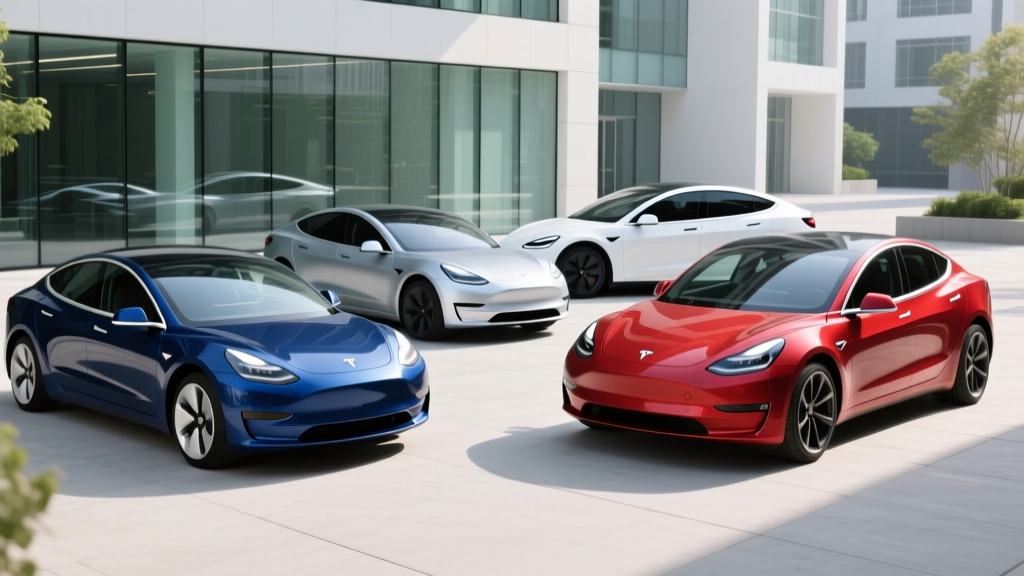
Against the used Tesla Model 3, the Bolt EV trades range efficiency and Supercharger network access for a lower purchase price, hatchback practicality, and simpler ownership. A 2021–2022 Model 3 Standard Range may offer similar range (~263–272 mi EPA) with 150+ kW charging, but typically costs $20,000–$25,000 on the used market.
Against the used Nissan Leaf Plus (226 mi EPA), the Bolt EV offers 33 more miles of range, liquid-cooled battery management (critical for longevity), and a faster Level 2 charger. The Leaf's CHAdeMO connector is also increasingly orphaned as the industry consolidates on CCS and NACS.
Against the used Hyundai Kona Electric (258 mi EPA), the Bolt EV is closely matched in range but offers slightly more cargo space and a faster Level 2 charger. The Kona Electric charges slightly faster on DC (up to 75 kW vs. 55 kW), which matters for road-trip-heavy buyers.
Pros and Cons at a Glance
- 259-mile EPA range is excellent for the price segment
- Strong 11.5 kW Level 2 onboard charger for fast home charging
- Generous cargo space (56.2 cu ft) for a compact hatchback
- Quick 0–60 time (6.5 sec) with smooth, quiet powertrain
- Active thermal management protects battery longevity
- One-pedal driving is among the best in the industry
- Likely eligible for $4,000 used-EV tax credit
- 8-yr/100,000-mi battery warranty still active on most 2023 examples
- DC fast charging limited to 55 kW — slow for road trips
- CCS1 connector may face infrastructure transition as NACS expands
- FWD only — no AWD option for snow-belt climates
- Rear seat is tight for tall adults on long trips
- Discontinued model — no new-vehicle production or updates
- Infotainment relies heavily on touchscreen (no physical climate buttons)
- No Super Cruise or advanced hands-free driving option
Frequently Asked Questions
What is the real-world range of the 2023 Chevrolet Bolt EV?
The EPA rates the 2023 Bolt EV at 259 miles. In real-world mixed driving, expect 235–250 miles. Highway driving at 75 mph reduces this to roughly 210–230 miles, and cold-weather highway driving (below freezing) can drop range to 170–195 miles. City driving with regenerative braking can actually exceed the EPA estimate, reaching 265–280 miles in mild weather.
How fast does the 2023 Bolt EV charge?
On a DC fast charger, the Bolt EV peaks at 55 kW and takes approximately 55–60 minutes to go from 10% to 80%. At home on a Level 2 (240V) charger, it charges at 11.5 kW, adding roughly 39 miles of range per hour and fully recharging in about 7 hours. Level 1 (120V) charging adds about 4 miles per hour and is suitable only for overnight top-ups.
How much does a used 2023 Bolt EV cost in 2026?
Used 2023 Bolt EVs typically list between $14,000 and $20,000 depending on trim (1LT vs. 2LT), mileage, and condition. If you qualify for the IRS §25E used clean vehicle credit, you may reduce your net cost by up to $4,000, bringing effective prices as low as $10,000–$16,000.
Does the 2023 Bolt EV qualify for any federal tax credit?
The new-vehicle §30D credit no longer applies since the Bolt EV is discontinued. However, the IRS §25E used clean vehicle credit may provide up to $4,000 when purchased from a licensed dealer, subject to income caps ($75K single / $150K joint), a $25,000 sale-price cap, and first-transfer requirements. Consult a tax professional to confirm eligibility.
Is the 2023 Bolt EV worth buying vs. a used Tesla Model 3?
It depends on your priorities. The Bolt EV is significantly cheaper ($14K–$20K vs. $20K–$25K), offers hatchback cargo space, and qualifies more easily for the used-EV credit. The Model 3 offers faster DC charging (150+ kW), Supercharger network access, better efficiency, and available AWD. For a commuter who charges at home and rarely road-trips, the Bolt EV is the smarter financial choice. For frequent travelers, the Model 3's charging speed is transformative.
What's the biggest risk of buying a used 2023 Bolt EV?
The primary risks are battery degradation (mitigated by the remaining 8-yr/100K-mi warranty) and the CCS1 connector's future as the industry shifts to NACS. Verify battery state of health via the vehicle's diagnostic menu or a dealer scan tool before purchase. Also confirm the vehicle's §25E credit eligibility with the selling dealer.
Is the Bolt EV good in winter?
The Bolt EV has no AWD option, so winter traction depends entirely on tire choice — dedicated winter tires are strongly recommended in snow-belt states. Range loss in cold weather is significant (25–35% reduction below freezing), but the active thermal management system helps precondition the battery when plugged in, reducing cold-weather losses compared to passively cooled EVs.
Sources: EPA range and efficiency data via fueleconomy.gov; IRS used clean vehicle credit rules via irs.gov; NHTSA safety ratings via nhtsa.gov.