Quick Verdict: The Value Champion That Redefined Budget EVs
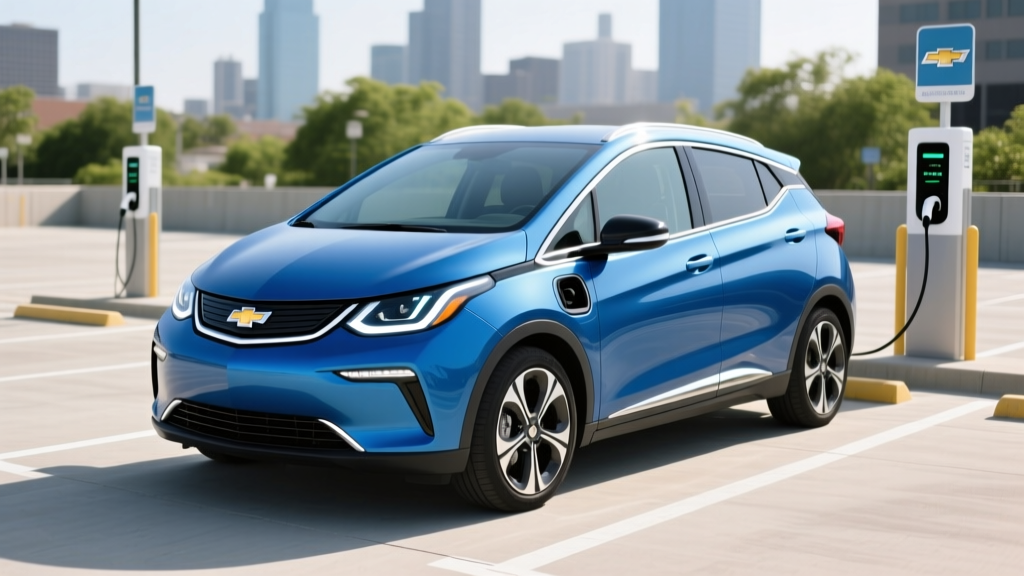
The 2023 Chevrolet Bolt EV remains one of the most significant vehicles in the mainstream electric transition — not because it's the fastest or most luxurious, but because it proved a 250+ mile EV could be priced under $27,000 before incentives. For 2023, Chevrolet slashed the Bolt EV's MSRP by $5,900 compared to the 2022 model year, making it the most affordable long-range EV on the American market at launch. Combined with the full $7,500 federal tax credit (for eligible buyers), effective pricing dropped into the low $20,000s — territory previously reserved for used vehicles or stripped-down subcompacts.
But the Bolt EV's bargain pricing comes with trade-offs that matter to daily drivers: slower DC fast-charging speeds, a soft suspension tuned for city potholes over highway composure, and a CCS1 connector in a market rapidly shifting toward NACS. This review breaks down the exact numbers — from real-world range to tax-credit math — so you can decide whether the Bolt EV's value proposition still holds up.
Range, Battery, and Efficiency: Real Numbers Beyond the Sticker
The 2023 Bolt EV carries a 65 kWh usable lithium-ion battery pack (gross capacity ~66 kWh) using NMC (nickel-manganese-cobalt) cell chemistry supplied primarily by LG Energy Solution. This pack powers a front-mounted permanent-magnet electric motor producing 200 horsepower and 266 lb-ft of torque.
| Specification | Value |
|---|---|
| EPA Estimated Range | 259 miles |
| Battery Capacity (Usable) | 65 kWh |
| Battery Chemistry | NMC (LG Energy Solution) |
| EPA Combined MPGe | 120 MPGe (city 131 / hwy 109) |
| Energy Consumption | 28 kWh / 100 miles |
| Motor Output | 200 hp / 266 lb-ft torque |
| Drivetrain | Front-Wheel Drive (FWD) |
| 0-60 mph | 6.5 seconds |
Real-World Range: What to Actually Expect
The EPA's 259-mile estimate is achievable in mixed suburban driving at moderate temperatures (60-75°F). In our experience and aggregated owner data:
- City/suburban (40-55 mph): 260-280 miles — regenerative braking in stop-and-go traffic extends range
- Highway (70-75 mph sustained): 210-230 miles — the Bolt EV's boxy shape and lack of active grille shutters hurt efficiency at speed
- Cold weather (20-35°F): 180-210 miles — expect 20-30% range loss due to battery resistance and cabin heating demands (no heat pump; uses resistive PTC heater)
- Hot weather (95°F+ with A/C): 235-250 miles — less impact than cold, but still measurable
Per fueleconomy.gov, the Bolt EV's 120 MPGe combined is competitive with the Hyundai Kona Electric (120 MPGe) but trails the Tesla Model 3 RWD (132 MPGe). If your commute is highway-heavy or you live in a cold-weather climate, plan for 200-220 miles of practical range and charge accordingly.
Charging Speed: The Bolt EV's Biggest Compromise
Charging is where the 2023 Bolt EV's age shows most clearly. While competitors like the Hyundai Ioniq 5 and Tesla Model 3 push 150-250 kW peak DC fast-charging rates, the Bolt EV tops out at approximately 55 kW on a DC fast charger. This is a hard architectural limitation of its battery management system and thermal design — the pack lacks active liquid cooling optimized for high-C-rate charging.
| Charging Level | Power / Rate | Time / Range Added |
|---|---|---|
| Level 1 (120V household outlet) | ~1.4 kW (12A) | ~4 miles per hour of charging |
| Level 2 (240V home/public AC) | 11.5 kW (48A max onboard charger) | ~39 miles per hour; 0-100% in ~7 hours |
| DC Fast Charge (CCS1) | 55 kW peak (sustains ~40-45 kW through 80%) | 10-80% in ~55-60 minutes; ~100 miles in 30 min |
What this means in practice: On a road trip, you'll spend roughly an hour at each DC fast-charging stop to add 150-180 miles of range. The charge curve is relatively flat — the Bolt EV holds near-peak power from 10% to about 60% SoC, then tapers gradually. It doesn't suffer the dramatic cliff-style taper some EVs experience above 80%, but the overall speed is the limiting factor.
For home Level 2 charging, the Bolt EV's 11.5 kW onboard charger is actually a strength. Most budget EVs cap at 7.2 kW or 9.6 kW; the Bolt's 48A acceptance means a full overnight charge in about 7 hours on a properly installed 60A circuit (48A continuous). If you're installing a home charger, pair it with a 48A-capable Level 2 unit like the ChargePoint Home Flex or Emporia Level 2 EV Charger to take full advantage.
Connector note: The 2023 Bolt EV uses the CCS1 (Combined Charging System) connector. With the industry shifting to NACS (Tesla's North American Charging Standard) for 2025+ models, CCS1 public infrastructure is still widely available through Electrify America, EVgo, and ChargePoint networks, but future-proofing is a consideration. Chevrolet offers a NACS adapter for newer models; for the 2023 Bolt EV, aftermarket CCS-to-NACS adapters are becoming available but verify compatibility before purchase.
2023 Chevrolet Bolt EV MSRP, Trims, and Tax Credit Math
Chevrolet's aggressive 2023 repricing made headlines. Here's the exact MSRP breakdown by trim, including destination charges:
| Trim Level | 2023 MSRP (incl. destination) | Key Features |
|---|---|---|
| 1LT | $26,500 | 17" wheels, 10.2" touchscreen, wireless CarPlay/Android Auto, Chevy Safety Assist suite |
| 2LT | $29,700 | Adds leather-appointed seats, Bose 7-speaker audio, heated steering wheel, 360° camera, adaptive cruise control |
Popular options that affect pricing:
- Infotainment Package (2LT only): navigation, $0 (included)
- DC Fast Charging capability: standard on all 2023 trims (previously optional on base models)
- Paint colors: Summit White is no-cost; others add $0-$395
- As-tested 2LT with metallic paint and all-weather floor liners: ~$30,500
Federal EV Tax Credit Eligibility (§30D)
The 2023 Chevrolet Bolt EV qualifies for the full $7,500 federal tax credit under IRS §30D, and it was one of the few vehicles that maintained eligibility throughout 2023 and into subsequent rule changes. Here's why:
- MSRP Cap: Bolt EV MSRP is under $55,000 (sedan/hatchback cap) — ✅ passes
- Final Assembly: Assembled in Orion Township, Michigan (VIN starts with 1 or 4) — ✅ passes North American assembly requirement
- Battery Sourcing (2023 rules): LG Energy Solution cells manufactured in the U.S. with critical minerals meeting phased thresholds — ✅ passes for 2023
- Buyer Income Cap: AGI must not exceed $150,000 (single) / $225,000 (head of household) / $300,000 (joint) — ⚠️ buyer-dependent
- Point-of-Sale Transfer: Beginning January 1, 2024, buyers can transfer the credit to the dealer for an immediate price reduction. For 2023 tax-year purchases, the credit is claimed on IRS Form 8936 when filing taxes
Effective pricing after the $7,500 credit:
- 1LT: $26,500 - $7,500 = $19,000 effective
- 2LT: $29,700 - $7,500 = $22,200 effective
These effective prices made the 2023 Bolt EV the cheapest new long-range EV available in the U.S. market. Per the IRS clean vehicle credit guidelines, always verify your personal eligibility — income limits, tax liability, and sourcing requirements can change. Consult a tax professional before relying on credit estimates.
Who Should Buy the 2023 Bolt EV?
Choose the Bolt EV if:
- You need a sub-$20,000 (after credit) EV with 250+ mile range for commuting and errands
- You charge primarily at home and rarely take road trips over 200 miles
- You want a compact hatchback with surprising interior volume (see cargo section below)
- You value a proven, well-understood platform with extensive owner community data
Look elsewhere if:
- You road-trip frequently and need 20-minute DC fast-charging stops
- You need AWD for snow-belt winters
- You want the latest ADAS features or hands-free driving assists
- You're buying in 2025-2026 and want NACS native compatibility
Interior, Cargo, and Daily Livability
The Bolt EV's interior is where Chevrolet's cost-cutting is most visible — hard plastics dominate the dash and door panels, and the seats are flat and firm on longer drives. But the packaging is genuinely clever for a subcompact hatchback.
| Dimension | Measurement |
|---|---|
| Front Headroom | 40.0 inches |
| Front Legroom | 42.8 inches |
| Rear Headroom | 37.8 inches |
| Rear Legroom | 35.8 inches |
| Cargo Volume (behind rear seats) | 16.6 cu ft |
| Cargo Volume (rear seats folded) | 57.0 cu ft |
| Frunk (front trunk) | None — space occupied by power electronics |
The 57 cu ft maximum cargo space with seats folded rivals compact SUVs like the Honda CR-V. The rear floor is flat (no transmission tunnel), and the load floor is low, making it easy to slide in groceries, luggage, or a folded bicycle. Six-foot-tall passengers fit in the rear with adequate knee room, though the seat cushion is low to the floor — a common EV compromise to preserve headroom under the roofline.
Infotainment and Technology
The 2023 Bolt EV features a 10.2-inch diagonal touchscreen running Chevrolet's Infotainment 3 Plus system. Highlights include:
- Wireless Apple CarPlay and Android Auto (standard on all trims)
- Built-in 4G LTE Wi-Fi hotspot (subscription required after trial)
- Wireless phone charging pad (2LT standard, 1LT optional via dealer accessory)
- MyChevrolet app with remote start, charge status, and preconditioning
- Energy Assist navigation that routes through charging stations on longer trips
The system is responsive and logically laid out, with physical knobs for volume and tuning — a welcome ergonomic choice. However, there's no native over-the-air (OTA) update capability for the powertrain or battery management, only for infotainment features.
Driver Assistance (SAE Level 2)
The Chevy Safety Assist suite is standard on all trims and includes:
- Automatic Emergency Braking with pedestrian detection
- Forward Collision Alert
- Lane Keep Assist with Lane Departure Warning
- Following Distance Indicator
- IntelliBeam automatic high beams
The 2LT trim adds Adaptive Cruise Control (ACC) and a 360-degree surround-view camera. Note: this is a basic Level 2 system — it maintains speed and lane position but requires constant driver supervision. There is no hands-free driving capability (unlike GM's Super Cruise, which is not available on the Bolt EV platform). The NHTSA awarded the 2023 Bolt EV a 5-Star Overall Safety Rating.
Warranty and Long-Term Battery Outlook
Chevrolet backs the 2023 Bolt EV with the following warranty coverage:
| Component | Coverage |
|---|---|
| Bumper-to-Bumper (Limited) | 3 years / 36,000 miles |
| Powertrain | 5 years / 60,000 miles |
| Battery & Electric Propulsion | 8 years / 100,000 miles |
| Battery Capacity Retention Threshold | Warranty covers defects if capacity drops below 60% of original |
| Corrosion (Perforation) | 6 years / 100,000 miles |
| Roadside Assistance | 5 years / 60,000 miles |
The 60% capacity retention threshold is notably lower than some competitors (Hyundai/Kia warrant to 70%, Tesla to 70%). In practice, NMC batteries in the Bolt EV have shown moderate degradation — aggregated owner data from Recurrent suggests typical Bolt EV packs retain approximately 90-94% capacity after 3 years / 40,000 miles, well above the warranty floor. The Bolt EV's thermal management system (active liquid cooling) helps mitigate degradation in hot climates, though the lack of preconditioning for DC fast charging means cold-weather fast charging can stress cells over time.
Replacement cost context: A full Bolt EV battery pack replacement (outside warranty) runs approximately $14,000-$16,000 including labor, based on GM parts pricing. However, individual module replacement is possible and significantly cheaper ($2,000-$4,000 per module, with 10 modules in the pack).
Competitive Landscape: Bolt EV vs. the Field
The Bolt EV competes in the subcompact electric hatchback segment. Here's how it stacks up against key rivals at their 2023 model-year pricing:
| Spec | 2023 Chevy Bolt EV | 2023 Hyundai Kona Electric | 2023 Nissan LEAF SV Plus | 2023 Tesla Model 3 RWD |
|---|---|---|---|---|
| EPA Range | 259 mi | 258 mi | 212 mi | 272 mi |
| Battery (kWh) | 65 | 64 | 62 | 60 (LFP) |
| DC Fast Charge (kW) | 55 | 100 | 100 | 170 |
| 0-60 mph | 6.5 sec | 6.4 sec | 6.9 sec | 5.8 sec |
| Base MSRP | $26,500 | $33,550 | $36,190 | $38,990 |
| Federal Credit Eligible | Yes ($7,500) | No (Korea assembly) | No (Japan assembly) | Yes ($7,500) |
| Effective Price (after credit) | $19,000 | $33,550 | $36,190 | $31,490 |
The comparison is stark: the Bolt EV's effective price after the federal credit undercuts every competitor by $12,000 or more. The Kona Electric and LEAF lose credit eligibility due to foreign assembly, and the Model 3, while superior in charging speed and efficiency, costs $12,500 more after credits. If budget is the primary purchase driver, the Bolt EV has no peer.
Pros, Cons, and Final Assessment
Pros
- Lowest effective price of any 250+ mile EV (sub-$20K after credit)
- Full $7,500 federal tax credit eligibility with U.S. assembly and battery sourcing
- Strong 11.5 kW Level 2 onboard charger for fast home charging
- Surprisingly spacious interior and 57 cu ft max cargo volume
- Proven platform with extensive real-world reliability data
- Standard DC fast charging (no extra-cost package needed)
- 5-Star NHTSA overall safety rating
Cons
- 55 kW DC fast charging is painfully slow for road trips (~1 hr stops)
- CCS1 connector in a market migrating to NACS
- No heat pump — cold-weather range loss is significant
- Interior material quality reflects budget positioning
- No advanced ADAS (no hands-free driving, basic ACC only on 2LT)
- FWD only — no AWD option for snow climates
- Battery warranty capacity threshold (60%) is below industry norm
The 2023 Chevrolet Bolt EV is a purpose-built value proposition. It delivers exactly what its price promises: affordable, reliable, long-range electric transportation for daily commuting and local errands. It does not pretend to be a road-trip cruiser or a technology showcase. If your driving pattern is 90% local with occasional 150-mile day trips, the Bolt EV's 259-mile range and low operating costs (approximately 4.5¢ per mile at $0.13/kWh national average electricity) make it an outstanding financial decision. If you regularly drive 300+ miles between charges or live where fast-charging infrastructure is sparse, the 55 kW DC charging rate will test your patience.
Frequently Asked Questions
What is the real-world range of the 2023 Chevrolet Bolt EV?
The EPA rates the Bolt EV at 259 miles. In real-world driving, expect 260-280 miles in city conditions, 210-230 miles on the highway at 70+ mph, and 180-210 miles in cold weather (below 35°F). The lack of a heat pump means winter range loss is more pronounced than in competitors like the Hyundai Kona Electric or Tesla Model 3.
How fast does the 2023 Bolt EV charge?
On DC fast chargers, the Bolt EV peaks at 55 kW, taking approximately 55-60 minutes for a 10-80% charge. At home on a 240V Level 2 charger, the 11.5 kW onboard charger delivers a full 0-100% charge in about 7 hours. On a standard 120V outlet (Level 1), expect roughly 4 miles of range per hour of charging — suitable for topping off but not for daily full recharges.
How much does the 2023 Bolt EV cost after the federal tax credit?
The 1LT trim starts at $26,500 MSRP, dropping to an effective $19,000 after the $7,500 federal credit. The 2LT at $29,700 drops to $22,200 effective. These prices assume you meet IRS §30D income limits ($150K single / $300K joint) and have sufficient tax liability. State incentives may reduce the price further — check your local programs.
Does the 2023 Bolt EV qualify for the federal EV tax credit?
Yes. The 2023 Bolt EV qualifies for the full $7,500 credit. It's assembled in Orion Township, Michigan (meeting North American final assembly requirements), its battery cells and critical minerals meet 2023 sourcing thresholds, and its MSRP is well under the $55,000 cap. Verify your personal income eligibility on the IRS clean vehicle credit page.
Is the 2023 Bolt EV worth buying versus competitors?
On pure value, yes — nothing matches its sub-$20,000 effective price with 259-mile range. If charging speed, AWD, or premium interiors are priorities, the Tesla Model 3 or Hyundai Ioniq 5 are better choices at higher prices. For budget-conscious buyers who charge at home and commute locally, the Bolt EV is the segment benchmark.
Can the 2023 Bolt EV use Tesla Superchargers?
Not natively. The 2023 Bolt EV uses the CCS1 connector, while Tesla Superchargers use NACS. Chevrolet has announced adapter programs for newer models, and third-party CCS-to-NACS adapters are entering the market. As of 2025-2026, Tesla has opened some Supercharger locations to non-Tesla EVs via the Magic Dock (built-in CCS adapter), but availability is limited to specific stations. Check the Tesla app for compatible locations.
What is the battery replacement cost for the Bolt EV?
A full pack replacement runs $14,000-$16,000 out of warranty. However, the Bolt EV's modular battery design allows individual module replacement at $2,000-$4,000 per module. Most owners will never need replacement — the 8-year/100,000-mile battery warranty and observed degradation curves suggest the pack will outlast the vehicle's economic life in typical use.