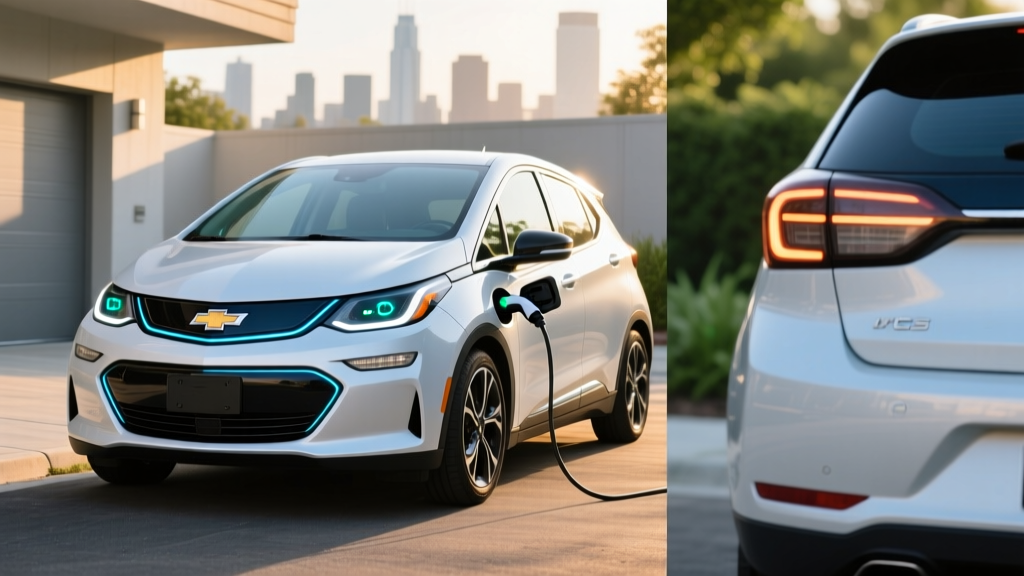
The Chevrolet Bolt EV was discontinued after the 2023 model year, but it remains one of the most compelling used electric vehicles on the market in 2026. With an EPA-estimated 259 miles of range, a practical hatchback body, and eligibility for the federal used-EV tax credit (up to $4,000 under IRS §25E), the 2023 Bolt EV punches far above its original price class. This review breaks down what you need to know before buying one on the pre-owned market.
Quick Verdict: The Budget-Range King Lives On
Chevrolet's final iteration of the first-generation Bolt EV delivered more usable range per dollar than almost anything else in its price bracket when new. In 2026, as a used vehicle, it's even more compelling. The 65 kWh NMC battery provides genuine daily-drivable range, the hatchback cargo area is surprisingly generous, and operating costs are minimal. The trade-off is DC fast-charging speed: at a peak of just 55 kW, road-trip charging stops take longer than in newer EVs. If your routine is commute-heavy with occasional weekend trips, the 2023 Bolt EV is outstanding. If you frequently drive 300+ miles in a day, you'll feel the charging limitations.
| Spec | Value |
|---|---|
| EPA Range | 259 miles |
| Battery Capacity | 65 kWh (usable), NMC lithium-ion |
| Motor / Drivetrain | Single front motor / FWD |
| Horsepower / Torque | 200 hp / 266 lb-ft |
| 0–60 mph | ~6.5 seconds |
| Max DC Fast Charge | 55 kW (CCS) |
| 10–80% DC Charge Time | ~62 minutes |
| Level 2 Home Charge Rate | 11.5 kW (48A) — ~39 mi/hr |
| EPA Efficiency | 120 MPGe combined (28 kWh/100 mi) |
| Cargo Volume | 16.3 cu ft (rear seats up) / 56.2 cu ft (folded) |
| Rear Legroom | 36.0 inches |
| Battery Warranty (Original) | 8 years / 100,000 miles |
| Original Base MSRP | $26,500 (1LT) / $31,000 (2LT) |
Range and Efficiency: 259 EPA Miles, But Plan for Reality
- EPA Combined: 259 miles
- City / Moderate Driving: 260–280 miles (regenerative braking helps significantly in stop-and-go traffic)
- Highway (70+ mph): 220–240 miles (aerodynamic drag cuts efficiency to ~32–34 kWh/100 mi)
- Cold Weather (below 32°F): 175–210 miles (NMC batteries lose 20–30% range in sustained cold; the Bolt EV lacks a heat pump, relying on resistive cabin heating)
The Bolt EV's efficiency is a genuine strength. At 120 MPGe combined (28 kWh per 100 miles), it sips electrons more frugally than larger crossovers like the Hyundai Ioniq 5 or Ford Mustang Mach-E. In temperate city driving, owners regularly report exceeding the EPA estimate thanks to aggressive regenerative braking — the Bolt's one-pedal driving mode is among the strongest in its class.
However, the absence of a heat pump is a meaningful drawback in cold climates. Resistive heating draws heavily from the 65 kWh pack. If you live in Minnesota or Maine, plan for 180–200 miles of winter range and precondition the battery while plugged in to mitigate losses. According to EPA data on fueleconomy.gov, the Bolt EV achieves 131 MPGe city and 109 MPGe highway — a reminder that EVs are more efficient at lower speeds, the inverse of gas cars.
Charging Speed: The Bolt EV's Biggest Compromise
DC fast charging is where the 2023 Bolt EV shows its age most clearly. Chevrolet equipped it with a 55 kW peak DC charge rate via the CCS connector. In an era where competitors like the Hyundai Kona Electric charge at 100+ kW and the Ioniq 5 peaks at 240 kW, 55 kW means longer stops.
| Charge Level | Power | Miles Added per Hour | Notes |
|---|---|---|---|
| Level 1 (120V) | ~1.4 kW | ~4 miles/hr | Emergency/trickle only; full charge in ~48+ hours |
| Level 2 (240V, 48A) | 11.5 kW | ~39 miles/hr | Full charge in ~7 hours; ideal for overnight home charging |
| DC Fast (CCS) | 55 kW peak | ~180 miles/hr (at peak) | 10–80% in ~62 minutes; tapers significantly above 80% |
The 11.5 kW onboard charger is a highlight — many competitors in this price range were limited to 7.2 kW. With a 48-amp Level 2 home charger (requiring a 60-amp circuit), you can fully replenish the Bolt EV overnight in about seven hours. This is excellent for daily use and means you'll rarely, if ever, need public charging for commuting.
On road trips, however, plan carefully. A 10–80% charge takes roughly 62 minutes, and the charging curve tapers hard above 80%. If you're adding 100–120 miles of range at a rest stop, expect 35–45 minutes. For context, that's roughly double the time a Hyundai Kona Electric or Tesla Model 3 would need at a comparable station. The Bolt EV uses the CCS1 connector, which remains widely available at Electrify America, EVgo, and ChargePoint stations — but note that GM has transitioned to NACS for newer models, so adapter availability for Tesla Superchargers should be confirmed for your specific vehicle.
Performance and Driving Dynamics
The 2023 Bolt EV's single front-mounted permanent-magnet motor produces 200 horsepower and 266 lb-ft of torque. That torque is available instantly from zero RPM, giving the Bolt a punchy, responsive feel around town. The 0–60 mph time of approximately 6.5 seconds is genuinely quick for a sub-$30,000 hatchback and makes highway merging effortless.
Driving dynamics are competent rather than sporty. The 3,563-pound curb weight (with the battery pack low in the chassis) gives it a planted feel, and the low center of gravity minimizes body roll. Steering is light and direct — ideal for urban driving but lacking feedback on twisty roads. The regenerative braking system offers two modes: standard (coasting feel) and one-pedal (aggressive regen that brings the car to a complete stop). Most owners quickly adapt to one-pedal mode and rarely touch the friction brakes.
The Bolt EV is front-wheel drive only — no all-wheel-drive option exists. In light snow with winter tires, it performs adequately, but the instant torque to the front wheels can cause traction slip on ice if you're not gentle with the accelerator.
Interior, Tech, and Practicality
Inside, the 2023 Bolt EV uses a 10.2-inch diagonal touchscreen running Chevrolet Infotainment 3 Plus with wireless Apple CarPlay and Android Auto. The system is responsive and straightforward, if not as polished as Tesla's or Hyundai's interfaces. A 8-inch digital driver cluster provides speed, range, and energy-flow information.
Notable tech features include:
- Chevy Safety Assist (standard): automatic emergency braking, forward collision alert, lane-keep assist, following-distance indicator, IntelliBeam auto high beams
- Adaptive cruise control (available on 2LT): camera-based, functional but not as refined as GM's Super Cruise (which is not offered on the Bolt)
- Surround Vision (2LT): 360-degree camera system — a useful option for tight parking
- Wireless phone charging pad (2LT)
- EV route planning: built-in navigation can suggest charging stops, though third-party apps like A Better Routeplanner are more accurate
Cargo space is a Bolt EV strength. With 16.3 cubic feet behind the rear seats and 56.2 cubic feet with the 60/40 split rear seats folded, it rivals small crossovers. Rear legroom of 36.0 inches is adequate for adults on shorter trips but tight for tall passengers on longer journeys. The flat load floor (thanks to the underfloor battery) makes it easy to slide in bulky items.
Notable drawbacks: The interior uses hard plastics throughout — expected at the original price point but noticeable compared to the Ioniq 5 or VW ID.4. Rear seats don't recline. There's no front trunk (frunk); the space under the hood is occupied by power electronics. Rear visibility is compromised by thick C-pillars, making the backup camera essential.
Pricing and Tax Credit Eligibility (Used Market, 2026)
The 2023 Bolt EV was sold new in two trims:
- 1LT: $26,500 MSRP (base)
- 2LT: $31,000 MSRP (added leather, Bose audio, surround vision, heated seats/steering wheel)
As of early 2026, used 2023 Bolt EVs typically list between $16,000 and $22,000 depending on mileage, condition, and trim. That's already excellent value, but the federal used-EV tax credit (IRS §25E) can make it even better.
| Scenario | Approx. Used Price | Federal Credit (§25E) | Net Cost |
|---|---|---|---|
| 2023 Bolt EV 1LT (~30k mi) | $17,500 | Up to $4,000 | ~$13,500 |
| 2023 Bolt EV 2LT (~20k mi) | $20,500 | Up to $4,000 | ~$16,500 |
§25E Used-EV Credit Rules (2026): The credit equals 30% of the sale price, capped at $4,000. Key eligibility requirements per the IRS:
- Vehicle price cap: Sale price must not exceed $25,000
- Buyer income limits: Modified AGI ≤ $75,000 (single), $112,500 (head of household), $150,000 (joint)
- Vehicle age: Must be at least 2 model years old (2023 model qualifies in 2026)
- Dealer requirement: Must be purchased from a licensed dealer (private-party sales do not qualify)
- One credit per buyer per 3-year period
- Battery capacity: Must have at least 7 kWh (the Bolt's 65 kWh easily qualifies)
Most used 2023 Bolt EVs fall under the $25,000 price cap, and many buyers will fall within the income limits. This makes the Bolt EV one of the most accessible ways to get into a 250+ mile EV for under $15,000 net. Consult a tax professional to confirm your eligibility before purchasing.
Battery Health, Warranty, and Longevity
The 2023 Bolt EV uses a 65 kWh (usable) NMC (nickel-manganese-cobalt) lithium-ion battery pack manufactured by LG Energy Solution. GM provides an 8-year/100,000-mile battery and powertrain warranty from the original in-service date, covering defects and capacity loss below approximately 60% of original capacity (though GM has historically replaced packs showing significant degradation well before that threshold).
For a 2023 model purchased in 2026, approximately 5–6 years of the original battery warranty remains. This is a significant advantage over buying older used EVs with shorter remaining coverage.
Battery degradation context: The Bolt EV's battery management system includes active liquid cooling and heating, which helps preserve long-term health. Real-world data from earlier Bolt model years (2017–2022) suggests typical degradation of 5–10% over the first 100,000 miles — meaning a 2023 Bolt with moderate mileage should still deliver 235–250 miles of range. You can check the battery's State of Health (SoH) using an OBD-II scanner with an app like Torque Pro or by requesting a diagnostic report from a Chevrolet dealer.
Recall note: Earlier Bolt models (2017–2022) were subject to a major battery recall due to fire risk from manufacturing defects in certain LG cells. The 2023 model year was produced after the recall remedy, and all affected vehicles were repaired or had battery packs replaced. When buying used, verify the recall status via NHTSA's VIN lookup tool to confirm the vehicle has no open recalls.
Who Should Buy the 2023 Bolt EV?
Choose the 2023 Bolt EV if:
- Your daily commute is under 80 miles round-trip and you can charge at home
- You want a 250+ mile EV for under $18,000 (after credit)
- You primarily drive in urban/suburban environments where efficiency and one-pedal driving shine
- You need hatchback cargo space but don't need an SUV
- You live in a moderate climate (or are willing to accept winter range reduction)
Look elsewhere if:
- You frequently take 300+ mile road trips (DC charging is too slow)
- You need AWD for heavy snow or off-pavement driving
- You want the latest infotainment or advanced driver-assist features (Super Cruise, etc.)
- You need seating for more than four adults comfortably
2023 Bolt EV vs. Key Used-EV Competitors
| Spec | 2023 Bolt EV | 2023 Kona Electric | 2022 Model 3 RWD | 2023 Leaf SV Plus |
|---|---|---|---|---|
| EPA Range | 259 mi | 258 mi | 272 mi | 212 mi |
| Battery | 65 kWh NMC | 64 kWh NMC | 60 kWh LFP | 62 kWh NMC |
| DC Fast Charge | 55 kW | 100 kW | 170 kW | 100 kW |
| 10–80% Time | ~62 min | ~47 min | ~30 min | ~45 min |
| Level 2 Rate | 11.5 kW | 7.2 kW | 11.5 kW | 6.6 kW |
| Approx. Used Price | $17k–$22k | $19k–$24k | $24k–$30k | $15k–$19k |
| Cargo (rear up) | 16.3 cu ft | 19.2 cu ft | 15.0 cu ft | 23.6 cu ft |
The Kona Electric charges nearly twice as fast on DC and offers slightly more cargo room, but costs $2,000–$4,000 more used. The Tesla Model 3 is faster and charges far more quickly, but commands a significant premium and has less cargo versatility. The Nissan Leaf is cheaper but offers 47 fewer miles of range and uses the aging CHAdeMO connector, which is being phased out at many public stations.
Pros and Cons at a Glance
Pros
- 259 miles of EPA range at a bargain used price
- Excellent efficiency (120 MPGe combined, 28 kWh/100 mi)
- Strong 11.5 kW Level 2 onboard charger for fast home replenishment
- Punchy 200 hp with instant torque; 0–60 in ~6.5 seconds
- Generous hatchback cargo (56.2 cu ft with seats folded)
- Remaining factory battery warranty (5–6 years left)
- Eligible for up to $4,000 federal used-EV tax credit
- One-pedal driving with strong regenerative braking
Cons
- Slow 55 kW DC fast charging — 62 minutes for 10–80%
- No heat pump — significant range loss in cold weather
- Interior plastics feel budget-grade
- No AWD option
- Rear seat legroom is tight for tall passengers
- No frunk (front trunk)
- CCS connector may need an adapter for Tesla Superchargers
- Discontinued — no future OTA updates or model-year refreshes
Frequently Asked Questions
What is the real-world range of the 2023 Bolt EV?
The EPA rates the 2023 Bolt EV at 259 miles combined. In real-world city driving with regenerative braking, owners commonly see 260–280 miles. On sustained highway driving at 70+ mph, expect 220–240 miles. In freezing temperatures, range can drop to 175–210 miles due to the lack of a heat pump and resistive cabin heating demands.
How fast does the 2023 Bolt EV charge?
On DC fast charging (CCS), the Bolt EV peaks at 55 kW, requiring approximately 62 minutes for a 10–80% charge. On a Level 2 home charger (240V, 48A), it charges at 11.5 kW, adding about 39 miles per hour and reaching a full charge in roughly 7 hours. Level 1 (120V) adds about 4 miles per hour and is only suitable for emergency topping off.
Does the 2023 Bolt EV qualify for a federal tax credit?
As a used vehicle in 2026, the 2023 Bolt EV may qualify for the IRS §25E used clean vehicle credit of up to $4,000 (30% of sale price, capped at $4,000). Eligibility requires: a sale price of $25,000 or less, buyer income below $75,000 (single) or $150,000 (joint), purchase from a licensed dealer, and the buyer hasn't claimed the credit in the past 3 years. It no longer qualifies for the §30D new-vehicle credit since it's sold used. Confirm eligibility with a tax professional.
Is the 2023 Bolt EV affected by the battery recall?
The major battery fire recall affected 2017–2022 Bolt EV and EUV models with certain LG-manufactured cells. The 2023 model year was produced after the recall remedy was implemented. However, always verify by entering the specific VIN at NHTSA.gov/recalls to confirm no open recalls exist on the individual vehicle you're considering.
How does the Bolt EV compare to the Bolt EUV?
The Bolt EUV (Electric Utility Vehicle) is a stretched version with 3.1 inches more rear legroom (39.1 vs 36.0 inches), a slightly larger footprint, and an EPA range of 247 miles (12 miles less due to greater weight). The EUV also offers GM's Super Cruise hands-free driving assist on certain trims — a significant tech advantage the standard Bolt EV lacks. Used EUV prices run $2,000–$4,000 higher than the standard Bolt EV.
Can I charge the 2023 Bolt EV at Tesla Superchargers?
The 2023 Bolt EV uses the CCS1 connector. Tesla has opened some Supercharger stations to non-Tesla EVs via the built-in Magic Dock adapter, and third-party CCS-to-NACS adapters are available. However, compatibility and availability vary by station. Check the Tesla app or PlugShare for CCS-compatible Supercharger locations in your area before relying on the network.
Is the 2023 Bolt EV worth buying in 2026 vs. newer EVs?
For budget-conscious buyers who primarily commute and can charge at home, the 2023 Bolt EV offers exceptional value — 259 miles of range for $13,500–$18,000 after the used-EV credit is hard to beat. If you frequently road-trip, need AWD, or want the latest tech, newer options like a used Ioniq 5 or Model 3 are worth the premium. The Bolt EV excels as a high-range daily driver at a rock-bottom price.