Quick Verdict: A Luxury Electric SUV That Actually Delivers
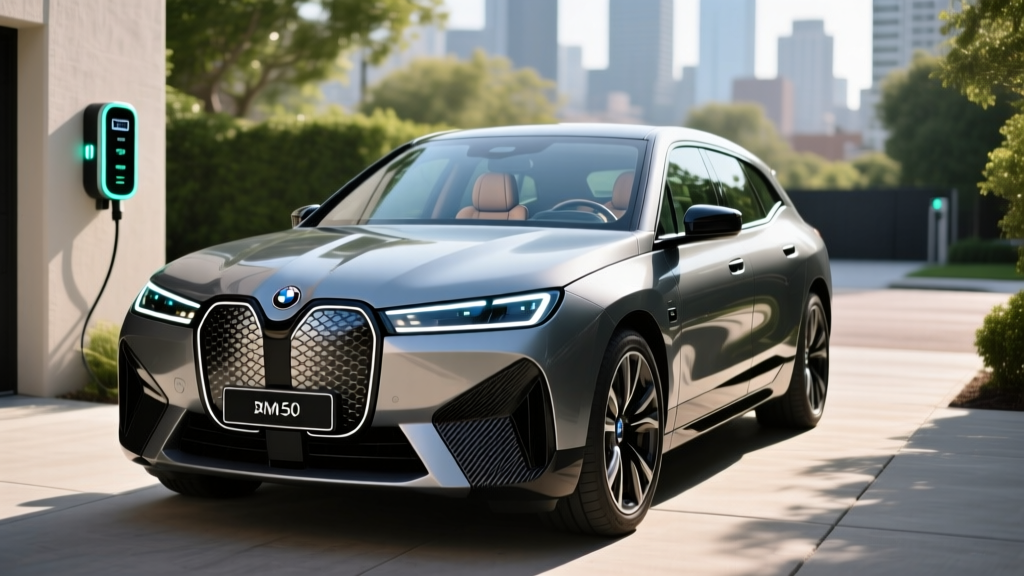
The 2023 BMW iX xDrive50 occupies a specific niche: a premium mid-size electric SUV that prioritizes driving refinement, cabin quality, and genuine long-range capability over outright performance theatrics. With an EPA-estimated 324 miles of range, a dual-motor all-wheel-drive powertrain producing 516 horsepower, and DC fast-charging that peaks at 200 kW, the iX xDrive50 makes a compelling case as a daily-driver luxury EV that can also handle road trips without constant charging stops.
But at a starting MSRP of $87,100 (before destination), the iX demands scrutiny. Does its real-world range match the sticker? How does charging actually work on the road? And with competitors like the Tesla Model X, Mercedes EQE SUV, and Audi Q8 e-tron all vying for the same buyer, where does the iX land? This review breaks down every number that matters.
| Specification | Value |
|---|---|
| EPA Range | 324 miles (20" wheels) / 305 miles (21" Sport wheels) |
| Battery (usable / gross) | 105.2 kWh usable / 111.5 kWh gross |
| Battery Chemistry | NMC (Nickel Manganese Cobalt) |
| Drivetrain | Dual-motor AWD (xDrive) |
| Horsepower / Torque | 516 hp / 564 lb-ft |
| 0–60 mph | 4.4 seconds |
| Max DC Fast Charge | 200 kW (CCS1) |
| 10–80% DC Charge Time | ~31 minutes |
| Level 2 AC Charge Rate | 11 kW (~35 mi/hr) |
| EPA Efficiency | 86 MPGe combined (2.9 kWh/mi) |
| Cargo Volume (rear seats up / folded) | 35.5 cu ft / 77.9 cu ft |
| Base MSRP (xDrive50) | $87,100 + $995 destination |
| Battery Warranty | 8 years / 100,000 miles |
Range and Efficiency: What the EPA Number Doesn't Tell You
The EPA rates the 2023 BMW iX xDrive50 at 324 miles of combined range when equipped with the standard 20-inch Aero wheels. Opt for the 21-inch Sport wheels, and that figure drops to 305 miles — a meaningful 19-mile difference driven entirely by rolling resistance and aerodynamic drag. According to fueleconomy.gov, the iX xDrive50 achieves 86 MPGe combined, translating to roughly 39 kWh per 100 miles driven.
EPA Sticker: 324 miles (20" wheels)
Highway (70–80 mph, moderate temps): Expect ~265–285 miles. The iX's tall SUV profile creates more aerodynamic drag than a sedan, and highway driving eliminates regenerative braking benefits.
City / Suburban (mixed regen opportunities): 310–340 miles — you may actually exceed the EPA estimate in stop-and-go traffic thanks to aggressive regen recovery.
Cold Weather (below 32°F / 0°C): Plan for 220–260 miles. NMC chemistry loses roughly 20–30% of usable capacity in deep cold, and cabin/battery heating draws significant energy. The iX includes a heat pump, which helps, but physics still applies.
Towing (max 3,500 lbs): Expect 160–200 miles depending on trailer weight and terrain. Towing an EV cuts range dramatically.
The iX's 105.2 kWh usable battery capacity is among the largest in its class. BMW uses a fifth-generation eDrive system with NMC (nickel manganese cobalt) cells — chosen for their high energy density, which is necessary to push a 5,600-pound SUV past 300 miles. The trade-off versus LFP (lithium iron phosphate) chemistry is that NMC degrades slightly faster over thousands of cycles and is more sensitive to sustained 100% states of charge. BMW recommends daily charging to 80–90% and reserving 100% for road trips.
Charging Speed: DC Fast, Level 2, and the Curve Reality
Charging infrastructure access is the single biggest factor in EV satisfaction, and the iX xDrive50 is equipped to handle both home and public charging competently — with one caveat about sustained speeds.
| Charging Level | Power (kW) | Speed | Notes |
|---|---|---|---|
| Level 1 (120V household) | ~1.4 kW | ~4–5 mi/hr | Emergency/trickle only; full charge in 3+ days |
| Level 2 (240V home/public) | 11 kW (48A) | ~35 mi/hr | 0–100% in ~11 hours; ideal overnight charge |
| DC Fast Charge (CCS1) | Peak 200 kW | 10–80% in ~31 min | Peak rate sustained to ~50% SoC, then tapers |
The charge curve matters more than peak kW. The iX can accept up to 200 kW at a CCS-equipped DC fast charger, but that peak only holds roughly from 10% to 50% state of charge. Beyond 50%, the rate progressively tapers — dropping to around 100 kW by 70% and further to roughly 50 kW above 85%. This is standard behavior for NMC batteries protecting cell longevity, but it means the advertised "31-minute 10–80%" time assumes ideal battery preconditioning and a charger capable of delivering the full 200 kW.
Preconditioning tip: Enter a DC fast-charger destination into the iX's navigation system while driving. The vehicle will automatically warm or cool the battery to its optimal charging temperature, which can shave 5–10 minutes off your session — especially in cold weather. Without preconditioning, cold-soaked batteries may initially accept only 50–80 kW before ramping up.
Home charging setup: The iX's 11 kW onboard charger means a 48-amp Level 2 circuit (hardwired, 60-amp breaker) delivers the maximum charge rate. Most owners report a full overnight charge from 20% to 100% takes roughly 9–10 hours. Installation costs for a Level 2 home charger typically range from $500 (simple outlet near panel) to $2,500+ (panel upgrade, long conduit runs). Always consult a licensed electrician for final specs.
For connector compatibility, the 2023 iX uses the CCS1 standard. BMW has committed to adopting NACS (Tesla's connector) for future models, and adapters are expected to allow CCS-equipped BMWs to access Tesla Supercharger stalls. Check BMW's official announcements for adapter availability.
Performance and Driving Dynamics
The xDrive50 is the volume variant of the iX lineup, and it doesn't feel like a compromise. Dual electric motors — one on each axle — produce a combined 516 horsepower and 564 lb-ft of torque, available instantly from zero RPM. The result is a 0–60 mph time of 4.4 seconds, verified by BMW and consistent with independent testing.
That acceleration figure places the iX xDrive50 in sports-sedan territory, but the real story is how the power is delivered. Unlike the higher-output iX M60 (610 hp, 3.6-second 0–60), the xDrive50 prioritizes smoothness over aggression. Throttle response is progressive and predictable — no head-snapping torque dumps that unsettle passengers. The dual-motor AWD system can shift torque front-to-rear in milliseconds, providing confident traction in rain and light snow without the mechanical complexity of a traditional transfer case.
Ride quality is where the iX justifies its luxury positioning. The available adaptive air suspension (standard on most trims) absorbs road imperfections with a compliance that rivals the Mercedes EQS SUV. Steering is precise if light — typical of electric BMWs — and the low center of gravity from the floor-mounted battery keeps body roll well-controlled for a vehicle of this height.
Regenerative braking: The iX offers adaptive regen that uses radar and navigation data to modulate deceleration based on traffic and upcoming curves. You can also select high, medium, or low regen manually. Unlike some competitors, the iX does not offer true one-pedal driving to a complete stop in all modes — BMW's philosophy is to let the vehicle coast freely when no obstacle is detected, which some drivers prefer for highway efficiency.
Interior, Cargo, and Technology
BMW redesigned its interior language for the iX, and the result is a cabin that feels distinctly more modern than the brand's recent ICE offerings — though not without controversy.
Infotainment: The iX runs BMW's iDrive 8 system on a curved display combining a 12.3-inch instrument cluster and a 14.9-inch central touchscreen. The system supports wireless Apple CarPlay and Android Auto, 5G connectivity, and over-the-air updates. Voice control via "Hey BMW" handles navigation, climate, and media competently. The hexagonal steering wheel is a polarizing design choice — it looks futuristic but offers no ergonomic advantage over a round wheel.
Passenger space: The iX seats five with generous dimensions. Rear legroom measures approximately 38.9 inches, comfortably accommodating adults on longer trips. The flat floor (no transmission tunnel) improves middle-seat usability. Front headroom is abundant thanks to the panoramic glass roof, which features an electrochromic shade that darkens electronically — a nice touch that eliminates the need for a physical sunshade.
Cargo capacity: With the rear seats upright, you get 35.5 cubic feet — competitive with the Audi Q8 e-tron (28.5 cu ft) and significantly more than the Mercedes EQE SUV (33.1 cu ft). Fold the 40/20/40 split rear seats and capacity expands to 77.9 cubic feet. Notably, the iX does not have a front trunk (frunk); the space under the hood houses power electronics and the HVAC system.
Driver assistance: The iX comes equipped with BMW's Driving Assistant Professional, which includes adaptive cruise control with stop-and-go, lane-keeping assist, automatic emergency braking, and blind-spot monitoring. This is an SAE Level 2 system — meaning the driver must remain fully engaged with hands on the wheel and eyes on the road at all times. It is not autonomous driving. The available Parking Assistant Professional adds a surround-view camera and automated parking maneuvers.
BMW's Driving Assistant Professional is a Level 2 driver-assistance system per SAE classification. It does NOT drive the vehicle autonomously. The driver must maintain steering-wheel contact, monitor the roadway, and be prepared to take over immediately. Hands-free systems like GM's Super Cruise are not available on the iX. Never treat Level 2 assist as a substitute for attentive driving.
Pricing, Trims, and Federal Tax Credit Eligibility
The 2023 BMW iX xDrive50 launched with a base MSRP of $87,100, plus a $995 destination charge, bringing the starting price to $88,095. BMW offered two primary configurations:
- iX xDrive50 (base): $87,100 — includes 20" Aero wheels, adaptive LED headlights, panoramic roof, heated front seats, iDrive 8, Driving Assistant Professional
- iX xDrive50 with Sport Line: Adds 21" wheels, sport seats, M Sport brakes, unique exterior trim — typically adds $4,000–$6,000 depending on options
Common options that push the as-tested price well above $95,000 include the Executive Package (massaging seats, soft-close doors, Bowers & Wilkins audio at ~$4,400), Dynamic Handling Package (active steering, rear-wheel steering at ~$3,500), and premium paint colors ($1,200–$1,950).
| Item | Amount |
|---|---|
| Base MSRP (xDrive50) | $87,100 |
| Destination | $995 |
| Typical As-Tested (with options) | $92,000 – $98,000 |
| Federal §30D Tax Credit (if eligible) | Up to $7,500 |
| Effective Price After Max Credit | ~$80,595 – $90,500 |
Federal tax credit eligibility is complex and not guaranteed. Under IRS §30D rules (see irs.gov), the 2023 iX xDrive50 qualifies as an SUV for the MSRP cap, which is $80,000 for SUVs. However, the base MSRP of $87,100 exceeds this cap — meaning the iX xDrive50 does not qualify for the federal §30D new-vehicle tax credit at its standard configuration.
Additionally, §30D imposes buyer income limits ($300,000 joint / $225,000 head of household / $150,000 single for modified AGI) and battery critical-mineral/battery-component sourcing requirements that phase in over 2023–2024. The iX's battery cells are manufactured in Europe, and critical-mineral sourcing may not meet all thresholds depending on the specific production batch.
Bottom line: Do not count on the $7,500 federal credit when budgeting for a new 2023 iX xDrive50. Consult a tax professional and verify current IRS guidance before making purchase decisions based on incentive eligibility. Some state-level incentives (California's CVRP, Colorado's state credit) may still apply — check your local DMV or energy office for specifics.
How the iX xDrive50 Compares to Key Rivals
| Spec | BMW iX xDrive50 | Mercedes EQE 350+ SUV | Audi Q8 55 e-tron | Tesla Model X LR |
|---|---|---|---|---|
| EPA Range | 324 mi | 305 mi | 285 mi | 348 mi |
| Battery (usable kWh) | 105.2 | 90.6 | 106.0 | ~100 |
| 0–60 mph | 4.4s | 6.4s | 5.4s | 3.8s |
| Max DC Charge (kW) | 200 | 170 | 150 | 250 |
| Base MSRP | $87,100 | $77,900 | $75,595 | $81,630 |
| Cargo (rear up, cu ft) | 35.5 | 33.1 | 28.5 | 37.1 |
Choose the BMW iX xDrive50 if: You want the best combination of range, cabin luxury, and driving refinement in this segment, and you prioritize ride quality and interior materials over maximum cargo space or the lowest price. The iX's 324-mile EPA range is second only to the Model X in this comparison, and its interior finish significantly outclasses the Tesla.
Choose the Mercedes EQE SUV if: You want a slightly more affordable entry point with comparable luxury, and 305 miles of range is sufficient for your needs. The EQE's MBUX infotainment is excellent, though the vehicle feels smaller inside.
Choose the Audi Q8 e-tron if: Budget is a primary concern and you value Audi's virtual cockpit and build quality. The Q8 e-tron's 285-mile range and slower 150 kW charging are meaningful compromises for road-trippers.
Choose the Tesla Model X if: Maximum range (348 mi), Supercharger network access, and falcon-wing novelty matter most. Accept that interior quality, ride refinement, and panel consistency lag behind the German competitors.
- Class-leading 324-mile EPA range (with 20" wheels)
- Exceptional ride quality with standard air suspension
- Quiet, well-insulated cabin at highway speeds
- 200 kW DC fast-charging capability
- Generous rear-seat legroom and flat floor
- Strong 0–60 performance (4.4s) without sacrificing comfort
- Base MSRP of $87,100 exceeds the §30D federal tax credit SUV cap
- No front trunk (frunk) for additional storage
- Polarizing hexagonal steering wheel and grille design
- iDrive 8 can feel menu-heavy for simple climate adjustments
- 21" wheels reduce range by 19 miles — a steep penalty for aesthetics
- Adaptive regen doesn't provide full one-pedal driving in all modes
Ownership Costs: Warranty, Maintenance, and Depreciation
BMW provides a comprehensive warranty package for the iX:
- Battery warranty: 8 years / 100,000 miles (whichever comes first), guaranteeing a minimum of 70% capacity retention. If the battery degrades below 70% within this period, BMW will repair or replace it.
- Basic vehicle warranty: 4 years / 50,000 miles
- Powertrain warranty: 4 years / 50,000 miles (electric motors and associated electronics)
- Complimentary maintenance: 3 years / 36,000 miles — covers brake fluid, cabin air filters, wiper inserts, and vehicle check-ups
- Roadside assistance: 4 years / unlimited miles
Maintenance reality: EVs eliminate oil changes, spark plugs, transmission fluid, and exhaust system repairs. The iX's primary recurring costs are tire rotation/replacement (EVs wear tires faster due to weight and instant torque — expect $300–$500 per tire for the OEM Pirelli P Zero or equivalent), cabin air filters, brake fluid flushes every two years, and wiper blades. Brake pad replacement is rare thanks to regenerative braking handling most deceleration.
Insurance: The iX xDrive50 typically costs 15–30% more to insure than a comparable BMW X5 xDrive40i, reflecting the higher repair costs associated with EV battery packs and aluminum body structures. Average annual premiums range from $2,800 to $4,200 depending on driver profile, location, and coverage levels. Get quotes before purchasing.
Depreciation: Luxury EVs have historically depreciated faster than their ICE counterparts, driven by rapid technology advancement, battery health uncertainty in the used market, and Tesla's aggressive price cuts cascading through the segment. Expect the iX to retain roughly 45–55% of its value after three years / 36,000 miles, based on current luxury EV trends. This is an area to monitor as the market matures.
Who Should Buy the 2023 BMW iX xDrive50?
- Premium commuter: You want a quiet, comfortable daily driver with more than enough range for a 60-mile round-trip commute, and you have access to Level 2 home charging.
- Luxury family hauler: You need room for two adults and two children with car seats, plus cargo space for strollers and groceries, without stepping up to a full-size SUV.
- Road-trip capable: You take 2–4 highway road trips per year and want a vehicle that can cover 250+ real-world highway miles between DC fast-charging stops of ~30 minutes each.
- Refinement over performance: You value ride quality, cabin silence, and material quality over 0–60 bragging rights (the M60 exists for that buyer).
- Budget is paramount: The Audi Q8 e-tron starts ~$12,000 lower and still offers a premium experience.
- You need three rows: The iX seats only five. Consider the Tesla Model X or Rivian R1S for three-row capability.
- You tow frequently: While rated for 3,500 lbs, towing cuts range to under 200 miles — impractical for long-distance hauling.
- You want the latest autonomous tech: BMW's Level 2 system is competent but doesn't offer hands-free highway driving like GM's Super Cruise or Ford's BlueCruise.
Frequently Asked Questions
What is the real-world range of the 2023 BMW iX xDrive50?
In mixed driving at moderate temperatures, expect 280–320 miles. Highway-only driving at 75 mph typically yields 265–285 miles. In sub-freezing winter conditions, plan for 220–260 miles. The EPA's 324-mile estimate is achievable in city/suburban driving with regenerative braking opportunities, but highway and cold-weather use will reduce it noticeably.
How fast does the iX xDrive50 charge at home and on the road?
At home on a 240V Level 2 charger (48 amps / 11 kW), the iX adds roughly 35 miles of range per hour, achieving a full 0–100% charge in about 11 hours. On a DC fast charger, it peaks at 200 kW and charges from 10% to 80% in approximately 31 minutes under ideal conditions (preconditioned battery, capable charger). Real-world sessions at 150 kW chargers may take 35–40 minutes for the same 10–80% span.
Does the 2023 BMW iX xDrive50 qualify for the $7,500 federal EV tax credit?
Likely not. The IRS §30D credit caps eligible SUVs at an $80,000 MSRP, and the iX xDrive50 starts at $87,100. Additionally, buyer income limits ($300K joint / $150K single modified AGI) and battery-sourcing requirements apply. Consult IRS guidelines and a tax professional before assuming eligibility. Some state incentives may still apply regardless of MSRP.
Is the BMW iX xDrive50 worth buying versus the Tesla Model X or Mercedes EQE SUV?
The iX wins on interior quality, ride comfort, and the balance of range-to-price. The Model X offers more range (348 mi), Supercharger access, and falcon-wing doors, but its interior finish and ride quality don't match BMW's standard. The EQE SUV is slightly less expensive with strong MBUX tech but offers less range and rear-seat space. If cabin refinement and daily comfort matter most, the iX is the strongest pick in this group.
What are the biggest drawbacks of the iX xDrive50?
The most significant cons are the MSRP that disqualifies it from the federal tax credit, the absence of a frunk, the polarizing design (hexagonal steering wheel, tall kidney grille), and the 19-mile range penalty for choosing the larger 21-inch wheels. Additionally, BMW's driver-assist system, while competent, doesn't offer true hands-free highway driving like some competitors.
How long will the iX battery last, and what does replacement cost?
BMW warranties the battery for 8 years / 100,000 miles with a 70% capacity-retention guarantee. Based on NMC degradation data from similar platforms, expect roughly 85–90% capacity retention at 100,000 miles under normal use (avoiding frequent 100% charges and deep discharges). Out-of-warranty battery replacement for the iX is estimated at $20,000–$30,000 including labor — a significant cost, though most owners will sell or trade the vehicle before reaching this point. Module-level repairs (replacing individual cell groups rather than the entire pack) may reduce costs as the repair market matures.
Can I charge the BMW iX at Tesla Superchargers?
As of the 2023 model year, the iX uses a CCS1 connector and cannot natively plug into Tesla's NACS-equipped Superchargers. BMW has announced plans to adopt NACS on future models, and a CCS-to-NACS adapter is expected to become available, enabling access to the Supercharger network. Check with BMW for official adapter availability and compatibility before relying on this for travel planning.