Quick Verdict: A Luxury EV SUV That Prioritizes Refinement Over Flash
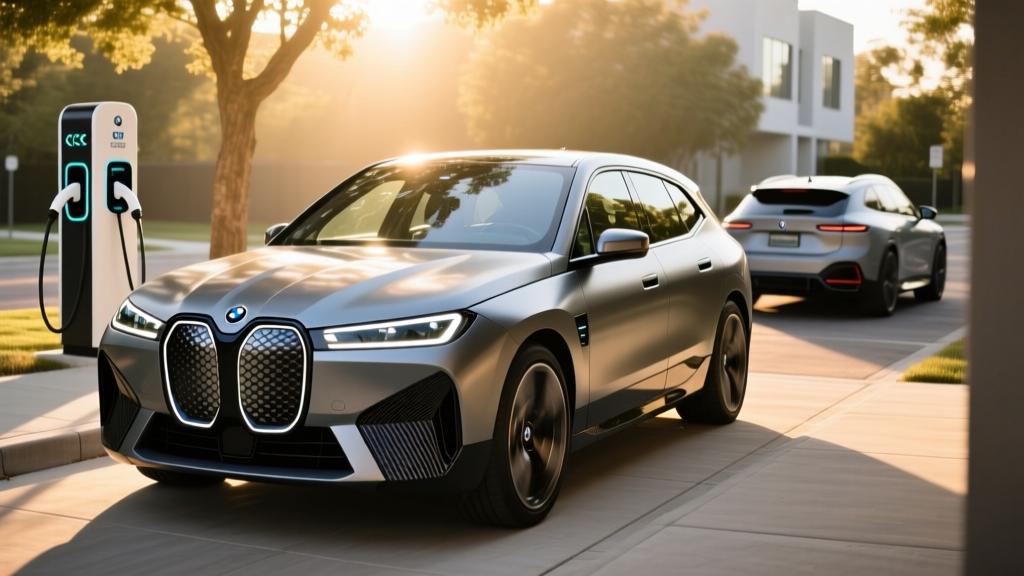
The 2023 BMW iX occupies a specific niche in the electric luxury SUV segment: it's the option for buyers who want whisper-quiet cabin isolation, premium materials, and sophisticated ride quality over the performance-first positioning of a Tesla Model X or the avant-garde styling of a Mercedes EQS SUV. With EPA-estimated ranges reaching 324 miles (xDrive50) and dual-motor all-wheel drive standard across the lineup, the iX delivers genuine long-distance capability wrapped in a package that feels more executive lounge than tech showcase.
But the iX isn't without compromises. Its polarizing exterior design, limited third-row availability, and the reality that federal tax credit eligibility depends on your income, the vehicle's MSRP, and battery sourcing rules all factor into the ownership equation. This review breaks down the exact numbers you need to decide whether the 2023 BMW iX fits your use case.
Range, Efficiency, and the Real-World Reality Check
EPA Estimates: xDrive50 (20-inch wheels): 324 miles | xDrive50 (21/22-inch wheels): 305-311 miles | M60: 288-296 miles
Real-World Expectations: In mixed driving with moderate climate control, expect 280-310 miles from the xDrive50. Sustained highway driving at 70-75 mph drops this to roughly 250-275 miles. In cold weather (below 32°F), plan for a 20-30% range reduction, bringing the xDrive50 down to 220-250 miles without preconditioning.
The 2023 BMW iX uses a 111.5 kWh gross battery pack (105.2 kWh usable) with NMC (nickel manganese cobalt) chemistry. This is a large battery by any measure, and it's the primary reason the iX achieves its strong EPA range figures despite weighing over 5,600 pounds. The pack sits low in the chassis, contributing to a center of gravity that helps the iX feel more planted than its SUV ride height suggests.
| Trim | EPA Range (mi) | MPGe (City/Hwy/Combined) | kWh/100 mi | Battery (Usable kWh) |
|---|---|---|---|---|
| xDrive50 (20" wheels) | 324 | 86 / 84 / 85 | 39 | 105.2 (NMC) |
| xDrive50 (21" wheels) | 311 | 82 / 80 / 81 | 41 | 105.2 (NMC) |
| M60 | 288-296 | 78 / 79 / 78 | 43 | 105.2 (NMC) |
Efficiency ranges from 81-85 MPGe combined depending on trim and wheel size. That translates to roughly 39-43 kWh per 100 miles. For context, the Tesla Model X Long Range achieves 102 MPGe combined, and the Rivian R1S Large Pack lands at 73 MPGe. The iX sits in the middle—respectable for its size and weight, but not class-leading.
Charging Speed: DC Fast Charging and Home Level 2
The 2023 iX supports DC fast charging at up to 195 kW via its CCS1 connector. On a compatible 350 kW charger (like Electrify America or EVgo stations), BMW claims a 10-80% charge time of approximately 31 minutes. In practice, peak charging speeds are typically sustained between 10-40% state of charge, after which the charge curve tapers to protect battery longevity. Expect actual 10-80% times closer to 34-38 minutes depending on battery temperature and charger availability.
| Charging Level | Power (kW) | Time / Rate | Typical Use Case |
|---|---|---|---|
| Level 1 (120V) | ~1.4 kW | ~2-3 miles/hour | Emergency top-ups only |
| Level 2 (240V, 48A) | 11.5 kW | ~27 miles/hour; 0-100% in ~11 hours | Overnight home charging |
| DC Fast Charge (peak) | 195 kW | 10-80% in ~31-38 minutes | Road trips, quick top-ups |
For home charging, the iX's onboard charger accepts up to 11.5 kW on a 240V Level 2 circuit (48 amps). This means a full 0-100% charge takes roughly 11 hours—fine for overnight replenishment. With a 200-mile daily commute and nightly charging, you'll rarely need a full charge cycle. Most owners will plug in at 30-40% state of charge and wake up at 80-90%, which is also better practice for NMC battery longevity.
Cold-weather charging note: The iX includes battery preconditioning when you navigate to a DC fast charger. This warms the pack to optimal temperature, reducing charge times in winter. Without preconditioning, cold-soaked batteries can see charge rates cut by 30-50%.
Performance: Dual-Motor AWD and Straight-Line Speed
Every 2023 iX comes with dual electric motors and xDrive all-wheel drive. The xDrive50 produces 516 horsepower and 564 lb-ft of torque, delivering a 0-60 mph time of 4.4 seconds. The M60 variant bumps output to 610 hp and 811 lb-ft, cutting the 0-60 sprint to 3.6 seconds. Both trims feel effortlessly quick in real-world driving, with instant torque delivery that makes highway merging and passing maneuvers trivial.
| Trim | Horsepower | Torque (lb-ft) | 0-60 mph (sec) | Top Speed (mph) | Drivetrain |
|---|---|---|---|---|---|
| xDrive50 | 516 | 564 | 4.4 | 124 (electronically limited) | Dual-motor AWD |
| M60 | 610 | 811 | 3.6 | 155 | Dual-motor AWD |
The iX's air suspension (standard on M60, optional on xDrive50) provides excellent ride isolation, and the available rear-wheel steering tightens the turning radius for urban maneuvering. Regenerative braking offers multiple modes, including an adaptive setting that uses radar and navigation data to adjust regen intensity based on traffic and upcoming intersections. One-pedal driving is available but not as aggressive as some competitors.
Pricing, Trims, and Federal Tax Credit Eligibility
The 2023 BMW iX launched with two trims, both positioned firmly in luxury territory:
- xDrive50: Base MSRP $87,100 (including destination)
- M60: Base MSRP $111,500 (including destination)
Options can push xDrive50 models past $100,000 quickly. The Premium Package, Driving Assistance Professional Package (for enhanced ADAS), and larger wheel selections are common add-ons.
The 2023 iX xDrive50 may qualify for up to $7,500 in federal tax credits, but eligibility depends on multiple factors that changed significantly with the Inflation Reduction Act:
- MSRP Cap: SUVs must have an MSRP below $80,000. The iX xDrive50 base price of $87,100 exceeds this cap, making it ineligible for the new-vehicle credit.
- Buyer Income Limits: Even if MSRP-eligible, adjusted gross income must not exceed $300,000 (joint filers), $225,000 (head of household), or $150,000 (single).
- Battery Sourcing Requirements: Credits are split into two $3,750 halves—one for critical minerals sourcing, one for battery component manufacturing. These requirements tightened annually from 2023 onward.
- Point-of-Sale Transfer: As of 2024, eligible credits can be transferred to the dealer at purchase, reducing the upfront price rather than waiting for tax filing.
Bottom line: The 2023 BMW iX does not qualify for the new-vehicle federal tax credit due to its MSRP exceeding the $80,000 SUV cap. However, if you're considering a used iX (model year 2022-2023), the used EV credit (§25E) offers up to $4,000 or 30% of the sale price (whichever is lower) for vehicles under $25,000—but the iX's used market pricing currently exceeds this threshold as well. Consult a tax professional and check IRS guidelines for your specific situation.
Interior Space, Cargo, and Daily Practicality
The 2023 iX is a midsize luxury SUV with seating for five. Interior dimensions are generous, with 40.2 inches of front legroom and 38.5 inches in the rear. The cabin materials are exceptional—BMW uses a mix of sustainable wood trim, recycled microfiber, and available leather. The curved display housing a 14.9-inch touchscreen and 12.3-inch instrument cluster dominates the dash, running BMW's iDrive 8 infotainment system.
| Measurement | Specification |
|---|---|
| Front Headroom | 40.2 inches |
| Front Legroom | 40.2 inches |
| Rear Headroom | 38.8 inches |
| Rear Legroom | 38.5 inches |
| Cargo Volume (rear seats up) | 35.5 cu ft |
| Cargo Volume (rear seats folded) | 77.9 cu ft |
Cargo space is competitive: 35.5 cubic feet behind the second row and 77.9 cubic feet with seats folded. The iX does not offer a front trunk (frunk), which is a missed opportunity for additional storage. Towing capacity is rated at 3,500 pounds when properly equipped—adequate for a small trailer or bike rack, but not heavy-duty hauling.
Technology, Driver Assistance, and Standout Features
The iX comes well-equipped with BMW's iDrive 8 system, which includes wireless Apple CarPlay and Android Auto, a head-up display, and over-the-air update capability. The available Driving Assistance Professional Package adds adaptive cruise control with stop-and-go, lane-keeping assist, and automatic lane-change functionality on highways.
The iX's driver-assist features are classified as SAE Level 2, meaning the system can control steering and acceleration simultaneously, but the driver must remain fully engaged and ready to take over at any time. This is not "self-driving"—it's an advanced cruise control and lane-centering system. Competitors like GM's Super Cruise offer similar Level 2 functionality with hands-off capability on mapped highways, while Tesla's FSD (Supervised) requires constant driver attention despite its name.
Unique features include available heated armrests (front and rear), a panoramic electrochromic roof that can switch between opaque and transparent modes, and a Bowers & Wilkins surround sound system with 30 speakers. The iX also supports digital key functionality, allowing your smartphone to act as the key fob.
Warranty, Battery Longevity, and Ownership Costs
BMW provides a 4-year/50,000-mile limited warranty and a 8-year/100,000-mile battery warranty that covers defects and excessive capacity degradation (typically defined as dropping below 70% state of health). The high-voltage battery and electric drive components are covered under the same 8-year term.
Real-world battery degradation data for the iX is still emerging (the model launched for the 2022 model year), but NMC chemistry in modern thermal-managed packs typically sees 10-15% degradation over 100,000-150,000 miles. BMW's battery management system includes a buffer to protect against deep cycling, which helps longevity.
Insurance costs for the iX are higher than average for the luxury SUV segment. Expect annual premiums in the $2,500-$3,500 range depending on your location, driving record, and coverage levels. Maintenance costs are lower than ICE equivalents (no oil changes, fewer brake replacements due to regen), but BMW's service labor rates remain premium.
Who Should Buy the 2023 BMW iX?
- You prioritize cabin quietness, ride comfort, and material quality over maximum performance or tech-forward branding
- You need 300+ miles of EPA range for regular 200-250 mile road trips without frequent charging stops
- You value dual-motor AWD for all-weather confidence but don't need truck-level towing capacity
- You have home Level 2 charging access and can accommodate overnight charging routines
- You're not dependent on federal tax credits to justify the purchase price
- You need third-row seating (consider the Rivian R1S or Tesla Model X)
- You want the most efficient EV SUV in the segment (Tesla Model X Long Range achieves 102 MPGe)
- Federal tax credit eligibility is essential to your purchase math
- You prefer a more conventional exterior design (the iX's styling is polarizing)
- You need a frunk for additional cargo flexibility
Pros and Cons: The Honest Assessment
- Excellent EPA range (324 mi for xDrive50 with 20" wheels)
- Whisper-quiet cabin and superb ride isolation
- Premium interior materials and build quality
- Strong 0-60 performance (4.4 sec xDrive50, 3.6 sec M60)
- 195 kW DC fast charging with preconditioning
- Generous rear-seat legroom (38.5 inches)
- 8-year/100,000-mile battery warranty
- No federal tax credit eligibility (MSRP exceeds $80K cap)
- Polarizing exterior design
- No front trunk (frunk)
- Efficiency lags some competitors (81-85 MPGe vs Model X's 102 MPGe)
- iDrive 8 learning curve for new BMW owners
- High insurance premiums
- Limited third-row or heavy-towing options
FAQ: Common Questions About the 2023 BMW iX
What is the real-world range of the 2023 BMW iX?
In mixed driving conditions with moderate climate control, expect 280-310 miles from the xDrive50 trim. Sustained highway driving at 70-75 mph reduces this to approximately 250-275 miles. In cold weather (below 32°F), plan for a 20-30% range reduction unless you precondition the battery while plugged in.
How fast does the iX charge at home and on the road?
On a Level 2 home charger (240V, 48A), the iX accepts up to 11.5 kW, adding roughly 27 miles of range per hour. A full 0-100% charge takes about 11 hours. For DC fast charging, the iX peaks at 195 kW and can charge from 10-80% in approximately 31-38 minutes on a compatible 350 kW station.
Does the 2023 BMW iX qualify for the federal EV tax credit?
No. The iX xDrive50's base MSRP of $87,100 exceeds the $80,000 cap for SUVs under IRS §30D rules. The M60 is even higher at $111,500. Even if pricing were eligible, you'd still need to meet income caps ($300K joint, $150K single) and battery sourcing requirements. The used EV credit (§25E) also doesn't apply, as used iX pricing currently exceeds the $25,000 cap.
Is the 2023 BMW iX worth buying vs. the Tesla Model X or Rivian R1S?
It depends on your priorities. The iX excels in cabin refinement, ride comfort, and traditional luxury execution. The Model X offers better efficiency (102 MPGe), faster charging, a frunk, and falcon-wing rear doors—but its interior quality and panel gaps lag BMW's standards. The Rivian R1S provides three-row seating, genuine off-road capability, and better ground clearance, but sacrifices some range and highway refinement. Test-drive all three to determine which execution matches your preferences.
What's the battery warranty on the 2023 iX?
BMW covers the high-voltage battery for 8 years or 100,000 miles, whichever comes first. The warranty covers defects and excessive capacity loss (typically defined as dropping below 70% of original capacity). The electric drive motors and power electronics are also covered under this term.
Can the iX tow a trailer?
Yes, but capacity is modest. The 2023 iX is rated for up to 3,500 pounds when properly equipped with the factory towing package. This is sufficient for a small utility trailer, bike rack, or light camper, but not for heavy boat trailers or large travel trailers. Competitors like the Rivian R1S offer up to 7,700 pounds of towing capacity.
Does the iX have a front trunk (frunk)?
No. The iX does not include a front trunk, which is a notable omission in a segment where most EVs (Model X, Rivian R1S, Ford Mustang Mach-E) offer frunk storage. BMW uses the front space for power electronics and the HVAC system.
For official EPA range and efficiency data, see fueleconomy.gov. For safety ratings, check NHTSA and IIHS.