Quick Verdict: The Performance EV SUV That Doesn't Forget Comfort
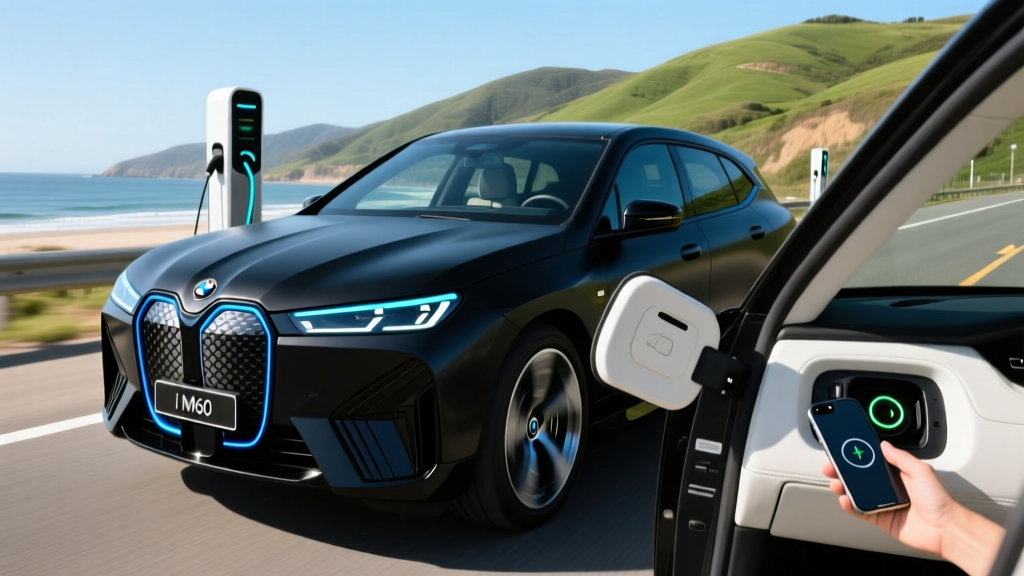
The 2023 BMW iX M60 occupies a rare position in the luxury electric SUV segment: it pairs genuine M-car performance with the refinement and daily-driver practicality that BMW's EV platform was engineered around. With 619 horsepower, a 288-mile EPA range estimate, and DC fast charging that peaks at 195 kW, the iX M60 asks a legitimate question — can a 5,600-pound electric SUV be both a track-day novelty and a credible family hauler?
After examining the specs, charging behavior, ownership economics, and competitive positioning, the answer is mostly yes — provided you understand the trade-offs inherent in choosing BMW's heaviest, most powerful EV over efficiency-focused alternatives. This review covers everything a prospective buyer needs: real-world range expectations, charging curve behavior, federal tax credit eligibility under current IRS §30D rules, and how the iX M60 stacks up against the Tesla Model X Plaid, Audi e-tron GT, and Mercedes EQS SUV.
| Spec | Value |
|---|---|
| EPA Range | 288 miles (with 21" wheels); 296 miles (20" aero wheels) |
| Battery (usable) | 105.2 kWh net / ~111.5 kWh gross — NMC chemistry |
| Drivetrain | Dual-motor AWD (eDrive) |
| Horsepower | 619 hp (532 hp without Launch Control) |
| Torque | 811 lb-ft (with Launch Control) |
| 0–60 mph | 3.6 seconds (BMW est.) |
| Top Speed | 155 mph (electronically limited) |
| Max DC Fast Charge | 195 kW (CCS1) |
| 10–80% DC Charge Time | ~34 minutes (BMW est.) |
| Level 2 Charge Rate | 11 kW (onboard charger) |
| MPGe (combined) | 82 MPGe (21" wheels) |
| Efficiency | 41 kWh/100 mi |
| Cargo Volume | 35.5 cu ft (rear seats up) / 77.9 cu ft (folded) |
| Base MSRP | $108,900 + $995 destination |
| Battery Warranty | 8 years / 100,000 miles |
Range & Efficiency: EPA Sticker vs. Real-World Expectations
The EPA rates the 2023 BMW iX M60 at 288 miles of combined range when equipped with the standard 21-inch Aero wheels. Opting for the available 22-inch performance wheels reduces that estimate to approximately 275 miles due to higher rolling resistance and increased aerodynamic drag. The 20-inch wheel option pushes the EPA estimate to 296 miles, though this configuration is less common on the M60 trim.
The 288-mile EPA figure assumes a mix of city and highway driving at moderate temperatures. Here is what to expect in practice:
- Highway cruising (70–75 mph, 65°F): Expect ~240–260 miles. The iX M60's 5,600-pound curb weight and tall SUV profile work against it at sustained speed.
- City/suburban mixed driving: 280–300 miles is achievable, thanks to regenerative braking recovering energy in stop-and-go traffic.
- Cold weather (below 32°F): Range drops 15–25%, putting realistic winter range at approximately 215–245 miles depending on cabin heating use. The iX uses a heat pump (standard), which mitigates some loss compared to resistive heating systems.
- Towing: With a 3,500-pound max tow rating, expect range to decrease 30–40% when pulling a loaded trailer.
Efficiency is rated at 82 MPGe combined (86 city / 79 highway with 21" wheels), which translates to approximately 41 kWh per 100 miles. That places the iX M60 behind efficiency leaders like the Tesla Model X (102 MPGe) but roughly in line with the Mercedes-AMG EQE SUV and Audi RS e-tron GT. The trade-off for 619 horsepower is real: every kilowatt-hour of that massive 105.2 kWh battery is working to move significant mass at speed.
Charging Speed: DC Fast Charging and Home Setup
The iX M60 uses a CCS1 connector for DC fast charging in North America — a critical detail as BMW has confirmed future models will adopt the NACS (Tesla) connector, but the 2023 iX remains on CCS. With BMW's included CCS-to-NACS adapter (or Tesla's Supercharger adapter available separately), owners can access the Tesla Supercharger network, though at reduced speeds due to adapter limitations.
| Charging Level | Power / Voltage | Speed | Notes |
|---|---|---|---|
| Level 1 (120V household) | ~1.4 kW | ~3–4 miles per hour | Emergency/trickle only; ~70+ hours for full charge |
| Level 2 (240V home/public) | Up to 11 kW | ~28–30 miles per hour | Full charge in ~10–11 hours; ideal overnight |
| DC Fast Charge (CCS1) | Peak 195 kW | 10–80% in ~34 min | Peak rate sustained to ~40% SoC; tapers significantly above 80% |
The 195 kW peak DC charge rate is competitive but not class-leading — the Hyundai Ioniq 5 and Kia EV6 can peak at 240+ kW on 800V architectures. The iX runs on a 400V system, which limits peak charge speed. However, BMW's charge curve management is well-calibrated: the iX M60 sustains close to peak rate through approximately 40% state of charge before tapering progressively. Charging from 80% to 100% on DC is notably slow — plan to unplug at 80% during road trips for the best time-to-miles ratio.
For home Level 2 charging, the iX M60's 11 kW onboard charger means you'll want a 48-amp or 60-amp hardwired Level 2 station (such as a ChargePoint Home Flex or Wallbox Pulsar Plus) paired with a NEMA 14-50 outlet or direct 240V circuit. Most EV owners with home charging report that a 10–11 hour full charge window is perfectly adequate for overnight replenishment. Installation costs for a dedicated 240V/60A circuit typically range from $800 to $2,500 depending on panel capacity and conduit run length — consult a licensed electrician for your specific situation.
Performance: 619 HP and the Weight Paradox
The iX M60's dual-motor all-wheel-drive powertrain produces 619 horsepower and a staggering 811 lb-ft of torque when Launch Control is engaged (532 hp / 749 lb-ft in standard driving mode). BMW quotes a 0–60 mph time of 3.6 seconds, and independent testing has validated figures in the 3.5–3.8 second range depending on surface and tire temperature.
What distinguishes the iX M60 from raw performance competitors is the quality of its acceleration. The electric motors deliver torque with no lag and no drama — there is no gear hunt, no turbo spool, just a relentless wave of thrust. BMW's xDrive system manages front/rear torque distribution continuously, and the M-specific tuning includes adaptive M suspension, rear-axle steering, and M Sport brakes with blue calipers.
The paradox is weight. At approximately 5,660 pounds, the iX M60 is heavy even by EV SUV standards. That mass is perceptible during aggressive cornering — the vehicle leans slightly more than a Model X and doesn't change direction with the eagerness of a lighter performance EV. However, for straight-line acceleration and highway composure, the iX M60 is exemplary. The adaptive air suspension absorbs road imperfections with a sophistication that reminds you this is, at heart, a luxury BMW first and an M car second.
Interior, Cargo & Technology
The iX cabin is one of BMW's most distinctive designs in a generation. A curved display panel houses a 14.9-inch infotainment touchscreen and a 12.3-inch digital instrument cluster, both running BMW's iDrive 8.5 operating system. The interior uses sustainable materials prominently — recycled microfiber, FSC-certified wood, and olive-leaf-tanned leather are standard. The hexagonal steering wheel and crystal iDrive controller give the cabin a concept-car quality that still reads as premium rather than gimmicky.
Cargo and passenger space:
- Rear legroom: 38.9 inches — generous for adults on longer trips
- Front headroom: 40.2 inches
- Cargo behind rear seats: 35.5 cubic feet
- Cargo with rear seats folded: 77.9 cubic feet
- No front trunk (frunk) — the space is occupied by HVAC and power electronics
The absence of a frunk is a notable omission compared to the Tesla Model X (which offers ~7 cu ft of front storage) and the Rivian R1S. However, the rear cargo area is well-shaped and includes a powered liftgate, a reversible cargo floor, and under-floor storage.
Driver-assistance technology: The iX M60 comes standard with BMW's Driving Assistant Professional, which includes adaptive cruise control with stop-and-go, lane-keeping assist, and automatic emergency braking. The available Highway Assistant (a Level 2 system) enables hands-free driving at speeds up to 85 mph on divided highways — but it requires the driver to keep eyes on the road, monitored via an infrared camera on the instrument cluster. This is not autonomous driving; it is an SAE Level 2 driver-assistance system. BMW's approach is conservative and confidence-inspiring compared to more aggressive (and sometimes erratic) competitor systems.
Pricing, Trims & Federal Tax Credit Eligibility
The 2023 BMW iX M60 starts at a base MSRP of $108,900 plus a $995 destination charge, bringing the total to $109,895. The iX M60 is a single-trim vehicle (unlike the iX xDrive50, which offers multiple configurations), though several option packages are available:
- Dynamic Handling Package ($3,400): Active roll stabilization, rear-axle steering
- Executive Package ($4,500): Sky Lounge panoramic roof, Bowers & Wilkins audio, heated rear seats
- Driving Assistant Professional ($2,500): Highway Assistant, extended traffic jam assistant
- 22-inch wheels ($2,000): Performance tires, reduced range
A well-optioned iX M60 with popular packages typically reaches $118,000–$125,000 before incentives.
| Item | Amount |
|---|---|
| Base MSRP + Destination | $109,895 |
| Typical As-Tested Price | $118,000–$125,000 |
| Federal §30D Tax Credit | Up to $7,500 (subject to eligibility — see below) |
| Estimated Net Cost (with max credit) | ~$102,395–$117,500 |
Federal EV tax credit eligibility (§30D): The 2023 BMW iX M60 qualifies as an SUV under IRS vehicle classifications, meaning the MSRP cap is $80,000 — wait, that cap applies to sedans. For SUVs, the MSRP cap is $80,000. At a base price of $108,900, the iX M60 exceeds the MSRP cap and does not qualify for the federal §30D new clean vehicle credit. This is a critical point for buyers cross-shopping against vehicles priced below the cap, such as certain Tesla Model Y configurations or the Cadillac Lyriq.
Additionally, §30D credit eligibility requires the buyer to meet income thresholds (modified AGI of $300,000 or less for joint filers, $225,000 for heads of household, $150,000 for single filers) and the vehicle must meet battery component and critical minerals sourcing requirements that phase in progressively. Always verify current-year eligibility on IRS.gov or consult a tax professional before relying on credit availability.
Some states offer additional EV rebates or HOV lane access that apply regardless of federal credit eligibility — check your state's energy office or DMV for current programs.
Warranty & Long-Term Battery Outlook
BMW provides the following warranty coverage for the 2023 iX M60:
- Basic vehicle warranty: 4 years / 50,000 miles
- Powertrain warranty: 4 years / 50,000 miles
- High-voltage battery warranty: 8 years / 100,000 miles (capacity retention above 70% of original)
- Corrosion protection: 12 years / unlimited miles
- Roadside assistance: 4 years / unlimited miles
The 8-year/100,000-mile battery warranty is industry-standard and matches the federal minimum. BMW guarantees the battery will retain at least 70% of its original usable capacity during the warranty period. The iX uses NMC (nickel manganese cobalt) lithium-ion cells supplied by CATL and Samsung SDI. NMC chemistry offers higher energy density than LFP (lithium iron phosphate), which is why BMW can pack 105.2 kWh into the iX's floor — but NMC cells are more sensitive to sustained high state-of-charge and extreme temperatures.
For long-term battery health, BMW recommends:
- Setting the daily charge limit to 80–90% for routine use (configurable in the iDrive menu)
- Charging to 100% only before long trips
- Using preconditioning before DC fast charging (the iX does this automatically when a fast charger is set as a navigation destination)
- Avoiding prolonged storage at very low or very high states of charge
Real-world degradation data for BMW's Gen5 eDrive platform is still accumulating (the iX launched for the 2022 model year), but early reports from high-mileage iX owners suggest 3–5% capacity loss over the first 30,000 miles, which is within normal parameters for NMC cells.
Pros, Cons & Who Should Buy the iX M60
- 619 hp delivers effortless, silent acceleration that belies the vehicle's weight
- Interior quality and materials are best-in-class for the luxury EV SUV segment
- 288-mile EPA range is practical for daily use and moderate road trips
- 11 kW Level 2 onboard charger is faster than many competitors (Tesla Model X: 11.5 kW; Audi e-tron: 9.6 kW)
- Heat pump is standard, improving cold-weather efficiency
- Quiet, compliant ride quality with adaptive air suspension
- Strong resale value relative to non-luxury EVs
- Exceeds $80,000 MSRP cap — ineligible for $7,500 federal §30D tax credit
- 195 kW peak DC charge rate trails 800V competitors (Ioniq 5, EV6, Taycan)
- No front trunk (frunk) reduces total cargo utility
- 5,660-lb curb weight is perceptible in corners and reduces efficiency
- CCS1 connector requires an adapter for Tesla Supercharger access
- Highway Assistant (Level 2) is capable but not class-leading vs. GM Super Cruise or Ford BlueCruise
- High insurance premiums typical of six-figure performance EVs
Who this EV suits best:
- Luxury commuters who prioritize cabin refinement and daily-driver comfort over outright efficiency
- Performance-oriented families who want M-badge acceleration in a practical 5-seat SUV
- Home-charging owners with a garage or dedicated parking spot — the iX M60's 11 kW onboard charger makes overnight replenishment fast and convenient
- BMW loyalists transitioning from an X5 M or X7 who want electric powertrain without sacrificing brand identity
Who should look elsewhere:
- Budget-conscious buyers — the $109K+ entry point and federal credit ineligibility make this a premium commitment
- Frequent long-distance road trippers — the 195 kW charge rate and 288-mile range mean more stops and longer dwell times vs. a Tesla Model X on Superchargers
- Towing-focused owners — the 3,500-lb tow rating is modest, and range loss while towing is severe
How the iX M60 Compares to Key Competitors
The 2023 BMW iX M60 competes in a narrow but growing segment of high-performance luxury electric SUVs. Here is how it stacks up on the metrics that matter:
| Spec | 2023 BMW iX M60 | 2023 Tesla Model X Plaid | 2023 Mercedes-AMG EQE SUV | 2023 Audi RS e-tron GT |
|---|---|---|---|---|
| EPA Range | 288 mi | 333 mi | 230 mi | 232 mi |
| Horsepower | 619 hp | 1,020 hp | 617 hp | 637 hp |
| 0–60 mph | 3.6 sec | 2.5 sec | 3.3 sec | 3.1 sec |
| Battery (usable) | 105.2 kWh | ~100 kWh | 90.6 kWh | 83.7 kWh |
| Peak DC Charge | 195 kW | 250 kW | 170 kW | 270 kW |
| Base MSRP | $108,900 | $109,990 | $106,900 | $147,500 |
| Federal §30D Credit | Not eligible (MSRP cap) | Eligible (SUV class) | Not eligible (MSRP cap) | Not eligible (sedan cap $55K) |
The Model X Plaid wins on raw performance and range but cannot match the iX M60's interior quality or ride refinement. The EQE SUV is slightly less expensive but offers significantly less range. The RS e-tron GT is a sedan, not an SUV, and costs substantially more — it competes on driving dynamics rather than practicality.
For buyers prioritizing a balance of performance, comfort, and daily usability in an SUV form factor, the iX M60 makes a compelling case — especially if federal tax credit eligibility is not a deciding factor in your purchase decision.
Frequently Asked Questions
What is the real-world range of the 2023 BMW iX M60?
The EPA estimates 288 miles of combined range (21" wheels). In real-world highway driving at 70–75 mph, expect approximately 240–260 miles. In cold weather below freezing, plan for 215–245 miles. City driving with regenerative braking can approach or slightly exceed the EPA figure.
How fast does the iX M60 charge at home and on the road?
At home on a 240V Level 2 charger, the iX M60 charges at up to 11 kW, adding approximately 28–30 miles of range per hour and reaching a full charge in about 10–11 hours. On a DC fast charger, it peaks at 195 kW and can charge from 10% to 80% in approximately 34 minutes. Charging above 80% slows significantly — plan road-trip stops around the 10–80% window for best efficiency.
Does the 2023 BMW iX M60 qualify for the federal EV tax credit?
No. The iX M60's base MSRP of $108,900 exceeds the $80,000 MSRP cap set by IRS §30D for new clean vehicles. Even though the iX is classified as an SUV (which has an $80,000 cap, versus $55,000 for sedans), it does not qualify. Some state-level incentives may still apply — check your state's energy office for current programs. Always verify eligibility on IRS.gov or with a tax professional.
Is the iX M60 worth buying vs. the Tesla Model X or Mercedes EQS SUV?
It depends on your priorities. The iX M60 offers superior interior quality, a more refined ride, and strong (if not class-leading) performance. The Tesla Model X Plaid is faster and has more range, but its interior build quality and suspension refinement trail BMW. The Mercedes EQS SUV offers more range than the iX M60 in its EQS 450+ form (305 mi) but less power. If cabin luxury and daily-driver comfort matter most, the iX M60 is the strongest choice in this group.
What are the biggest drawbacks of the iX M60?
The three most common owner complaints are: (1) the lack of a front trunk (frunk), which reduces total cargo utility; (2) the 195 kW peak DC charge rate, which is slower than 800V competitors on road trips; and (3) federal tax credit ineligibility, which adds $7,500 to the effective cost compared to qualifying competitors. The vehicle's 5,660-pound weight is also noticeable during spirited driving on twisty roads.
Does the iX M60 use LFP or NMC battery chemistry?
The iX M60 uses NMC (nickel manganese cobalt) lithium-ion cells. NMC offers higher energy density than LFP, which is necessary to achieve the iX's 105.2 kWh usable capacity in a manageable package. However, NMC cells benefit from daily charge limits of 80–90% to maximize long-term health, whereas LFP cells can be routinely charged to 100% without accelerated degradation.
Can I use Tesla Superchargers with the iX M60?
Yes, but with an adapter. The 2023 iX M60 uses a CCS1 connector natively. BMW provides a CCS-to-NACS adapter, and Tesla sells its own adapter for non-Tesla vehicles. When using a Supercharger through an adapter, charge speeds may be limited below the iX's 195 kW peak. Access to non-Tesla Supercharger stalls is expanding but not universal — check the Tesla app for station compatibility before relying on Superchargers for a road trip.
Sources: EPA fueleconomy.gov, BMW USA, IRS.gov §30D Clean Vehicle Credit. All specifications reflect the 2023 model year as published by the manufacturer. Tax credit rules are subject to change — verify current eligibility before purchase.