Quick Verdict: The Electric 3 Series That Doesn't Feel Like a Compromise
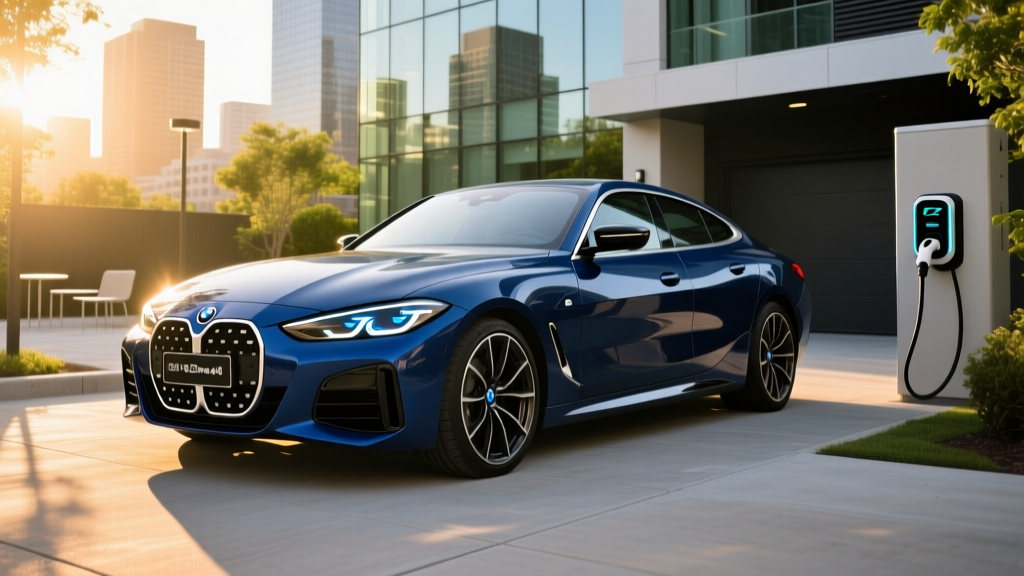
The 2023 BMW i4 eDrive40 occupies a rare position in the EV market: it's a premium electric gran coupe that looks, drives, and feels like a conventional BMW first and an EV second. Built on the same CLAR platform as the 4 Series Gran Coupe, the eDrive40 delivers 335 horsepower from a rear-mounted electric motor, an EPA-estimated 301 miles of range, and the kind of chassis tuning that reminds you why BMW built its reputation on driving dynamics. For buyers who want electric propulsion without the polarizing design of dedicated EV platforms, the i4 eDrive40 makes a compelling case—though its shared-architecture roots do exact some practicality compromises.
As a 2023 model year vehicle available on the used and certified pre-owned market in 2026, the i4 eDrive40 represents strong value, especially given BMW's strong reliability record for its Gen5 eDrive powertrain. Let's break down every number that matters.
Range, Battery & Efficiency: 301 Miles EPA, But What About the Real World?
The 2023 i4 eDrive40 pairs an 83.9 kWh usable battery pack (gross capacity 83.9 kWh, net usable approximately 80.7 kWh) with BMW's fifth-generation eDrive system. The battery uses NMC (nickel manganese cobalt) pouch cells supplied by CATL and Samsung SDI—a chemistry that prioritizes energy density over the extreme cycle life of LFP, though BMW's conservative buffer management has yielded strong long-term health data.
EPA Estimated: 301 miles (with 18" Aero wheels); 270 miles (with 19" wheels)
Real-World Expectation: In mixed driving at moderate temperatures (55-75°F), expect 270-290 miles. Sustained highway driving at 75+ mph drops this to approximately 240-260 miles. In cold weather (below 32°F), range can decrease 20-30%, yielding 190-230 miles depending on cabin heating use and whether you precondition the battery.
Efficiency: 109 MPGe combined / 31 kWh per 100 miles (18" wheels)
The i4's efficiency is competitive for its class. At 31 kWh/100mi, it's slightly less efficient than the Tesla Model 3 Long Range (~25 kWh/100mi) but in line with the Mercedes EQB and Audi Q4 e-tron. The heat pump is standard on the 2023 model, which helps mitigate cold-weather range loss compared to EVs without one.
| Spec | Value |
|---|---|
| EPA Range (18" wheels) | 301 miles |
| EPA Range (19" wheels) | 270 miles |
| Battery (Usable / Gross) | 80.7 kWh / 83.9 kWh (NMC) |
| Motor / Drivetrain | Single rear motor / RWD |
| Horsepower / Torque | 335 hp / 317 lb-ft |
| 0-60 mph | 5.5 seconds |
| Max DC Fast Charge | 200 kW (CCS1) |
| 10-80% DC Fast Charge | ~31 minutes |
| Level 2 Charge Rate | 11 kW (48A) / ~37 mi/hr |
| MPGe (Combined) | 109 MPGe |
| Efficiency | 31 kWh/100mi |
| Base MSRP (2023) | $55,900 |
| Battery Warranty | 8 years / 100,000 miles |
Source: EPA Fuel Economy
Charging Speed: 200 kW Peak With a Forgiving Charge Curve
The 2023 i4 eDrive40 supports DC fast charging at up to 200 kW via its CCS1 connector. While that peak rate trails the Hyundai Ioniq 5's 240 kW or the Lucid Air's 300 kW, BMW's charge-curve management is notably flat—meaning the car sustains high charge rates for a larger portion of the session rather than spiking and dropping immediately.
- 10-30% SoC: Sustains ~180-200 kW
- 30-60% SoC: Tapers gradually to ~150 kW
- 60-80% SoC: Drops to ~90-110 kW
- 80-100% SoC: Slow taper, ~30-50 kW (avoid for road-trip efficiency)
Practical result: 10-80% in approximately 31 minutes at a capable 200+ kW station. Expect ~200 miles of range added in 20 minutes under ideal conditions.
For home Level 2 charging, the i4's onboard charger accepts up to 11 kW (48 amps on a 240V circuit). That translates to roughly 37 miles of range per hour of charging, or a full 10-100% charge in about 8.25 hours. This is adequate for overnight replenishment on a NEMA 14-50 outlet or a hardwired Level 2 wallbox like the ChargePoint Home Flex or Emporia Vue.
| Level | Power | Miles Added/Hour | Full Charge Time |
|---|---|---|---|
| Level 1 (120V) | 1.4 kW | ~4 mi/hr | ~75 hours |
| Level 2 (240V/48A) | 11 kW | ~37 mi/hr | ~8.25 hours |
| DC Fast (CCS1) | 200 kW peak | ~600+ mi/hr (peak) | 10-80% in ~31 min |
Performance & Driving Dynamics: 335 HP of Rear-Wheel-Drive Poise
The eDrive40's single rear-mounted motor produces 335 horsepower and 317 lb-ft of torque, routing all of it through the rear wheels. The 0-60 mph sprint takes 5.5 seconds—quick enough for confident highway merging but deliberately a step below the dual-motor M50 variant (536 hp, 3.7 seconds). BMW tuned the eDrive40 for a balance of acceleration and efficiency rather than outright performance.
What distinguishes the i4 from competitors like the Tesla Model 3 or Polestar 2 is chassis character. The CLAR platform gives the i4 a 50/50 weight distribution, adaptive M suspension (optional), and a near-absence of torque steer. The regenerative braking system offers both a one-pedal driving mode (max regen) and an adaptive mode that uses radar and navigation data to modulate regen based on traffic and upcoming curves. The result is a car that rewards engaged driving while remaining effortless as a daily commuter.
Drive modes include Eco Pro, Comfort, Sport, and an individually configurable mode. Eco Pro can extend range by up to 10% through throttle mapping, climate system reduction, and coasting functions.
Interior, Cargo & Technology: Premium but Platform-Shared
The i4's cabin is essentially a 4 Series Gran Coupe interior with EV-specific displays. The curved BMW Curved Display houses a 12.3-inch instrument cluster and a 14.9-inch infotainment touchscreen running BMW iDrive 8. The system supports wireless Apple CarPlay and Android Auto, over-the-air updates, and the BMW Intelligent Personal Assistant voice control. The available Harman Kardon surround sound system (16 speakers) and the optional BMW IconicSounds Electric (composed by Hans Zimmer) round out the tech experience.
Driver-assistance features under the Active Driving Assistant Professional package include adaptive cruise control with stop-and-go, lane-keeping assist, and automatic lane-change capability. This is a SAE Level 2 system—the driver must remain attentive and keep hands near the wheel at all times. It is not a self-driving system.
- Front legroom: 42.3 inches
- Rear legroom: 34.9 inches (tight for tall passengers)
- Cargo volume (rear seats up): 16.6 cu ft
- Cargo volume (rear seats folded): 45.6 cu ft
- Frunk: None (ICE platform conversion — the motor occupies the front axle area)
The lack of a front trunk (frunk) and the somewhat snug rear seat are the primary practicality penalties of sharing a platform with the ICE 4 Series. If you regularly carry rear-seat passengers or need maximum cargo versatility, the Tesla Model 3 (23 cu ft trunk + 3.1 cu ft frunk) or Hyundai Ioniq 6 (hatchback design) offer more utility.
Pricing, Trims & Federal Tax Credit Eligibility
The 2023 BMW i4 eDrive40 launched with a base MSRP of $55,900 (including destination). The performance-oriented i4 M50 started at $67,795. By 2026, the eDrive40 is available on the used and certified pre-owned market, with typical listings ranging from $34,000 to $45,000 depending on mileage, condition, and options.
| Item | eDrive40 | M50 |
|---|---|---|
| Original Base MSRP (2023) | $55,900 | $67,795 |
| Typical Used Price (2026) | $34,000–$45,000 | $45,000–$58,000 |
| New-Vehicle §30D Credit (when new) | Eligibility varied by battery sourcing | Exceeds $55K sedan MSRP cap |
| Used EV Credit (§25E, 2026) | Up to $4,000 (30% of sale price) | Up to $4,000 |
Federal tax credit note: When purchased new, the i4 eDrive40's §30D eligibility depended on battery critical-mineral and component sourcing requirements that shifted throughout 2023-2024. The i4 M50, as a sedan priced above $55,000, was ineligible for the new-vehicle credit due to the MSRP cap. For 2026 buyers purchasing used, the IRS §25E used EV credit offers up to $4,000 (30% of the sale price, capped at $4,000) for qualified used EVs sold for $25,000 or less by a licensed dealer, subject to buyer income limits ($75,000 single / $150,000 joint AGI). Always confirm eligibility with a tax professional before purchase.
Warranty & Long-Term Ownership
BMW backs the 2023 i4 with its standard EV warranty package:
- Limited vehicle warranty: 4 years / 50,000 miles
- Battery & powertrain warranty: 8 years / 100,000 miles (covers battery capacity below 70% of original)
- Corrosion warranty: 12 years / unlimited miles
- Roadside assistance: 4 years / unlimited miles
The 70% capacity retention threshold over 8 years is standard for the industry. Early data from European i4 fleets (some surpassing 100,000 miles) suggests BMW's conservative battery management—maintaining a generous top and bottom buffer—results in degradation curves of approximately 5-8% over the first 60,000 miles, which is favorable. The NMC chemistry, combined with BMW's thermal management system, appears to age gracefully under normal use patterns.
Maintenance costs are low relative to ICE BMWs. There's no oil, no spark plugs, no transmission fluid. Brake wear is minimal thanks to regenerative braking. Expect cabin air filter replacement every 2 years and brake fluid service every 2 years. BMW includes 3 years / 36,000 miles of complimentary scheduled maintenance.
Pros, Cons & Who Should Buy the 2023 BMW i4 eDrive40
- Excellent driving dynamics and chassis balance for an EV
- Strong 301-mile EPA range (18" wheels)
- Sustained fast-charge curve—usable road-trip charging
- Premium interior with iDrive 8 and curved display
- Heat pump standard (better cold-weather efficiency)
- Quiet, refined ride quality
- Strong CPO availability in 2026 at significant discount from MSRP
- No frunk (front trunk) — ICE platform limitation
- Rear seat legroom is tight (34.9") for the class
- 200 kW max DC charge rate trails 800V competitors
- 19" wheels reduce range to 270 miles — a significant drop
- CCS1 connector (no native NACS; adapter required for Tesla Superchargers)
- Higher insurance premiums than comparable ICE sedans
Buy the i4 eDrive40 if: You want a premium electric sedan that prioritizes driving engagement, you have access to home Level 2 charging, and you value BMW's build quality and dealership network. It's ideal for commuters covering 30-60 miles daily who take occasional road trips and don't regularly haul rear-seat passengers.
Look elsewhere if: You need maximum cargo space (consider the Ioniq 5 or Model Y), you want the fastest possible DC charging (Ioniq 5/6 with 800V architecture), you need NACS native access without adapters, or you regularly carry adults in the rear seat.
How It Stacks Up Against Key Competitors
The i4 eDrive40 competes in the premium electric sedan segment. Here's how the numbers compare to rivals you'll cross-shop:
| Metric | BMW i4 eDrive40 | Tesla Model 3 LR | Polestar 2 LR SM | Hyundai Ioniq 6 SEL |
|---|---|---|---|---|
| EPA Range | 301 mi | 341 mi | 276 mi | 361 mi |
| Battery | 80.7 kWh NMC | ~75 kWh NMC | 75 kWh NMC | 77.4 kWh NMC |
| HP | 335 | 346 | 299 | 225 |
| 0-60 mph | 5.5s | 4.2s | 6.2s | 7.0s |
| Max DC Charge | 200 kW | 250 kW | 205 kW | 240 kW (800V) |
| Cargo | 16.6 cu ft | 23 cu ft + frunk | 14.4 cu ft | 12.3 cu ft |
The i4 trades maximum range and cargo space for ride quality, build materials, and driving engagement. The Model 3 wins on efficiency and Supercharger network access. The Ioniq 6 dominates range and charging speed but can't match the BMW's interior quality. The Polestar 2 is the closest rival in character but trails on range and acceleration.
Frequently Asked Questions
What is the real-world range of the 2023 BMW i4 eDrive40?
In moderate temperatures with mixed city/highway driving, expect 270-290 miles from a full charge. Highway-only driving at 75+ mph yields roughly 240-260 miles. In sub-freezing temperatures, range drops to approximately 190-230 miles. The standard heat pump helps, but cold weather always impacts lithium-ion batteries. Wheel choice matters significantly: the 18" Aero wheels deliver the full 301-mile EPA rating, while 19" options drop it to 270 miles.
How fast does the i4 eDrive40 charge at home and on the road?
At home on a Level 2 (240V/48A) charger, the i4 accepts up to 11 kW, adding roughly 37 miles of range per hour—a full charge takes about 8 hours. On DC fast chargers, it peaks at 200 kW (CCS1 connector) and achieves a 10-80% charge in approximately 31 minutes. The charge curve is notably flat through the mid-range, making it practical for road-trip stops of 20-25 minutes.
Does the 2023 BMW i4 eDrive40 qualify for the federal EV tax credit?
For new-vehicle purchases when it was sold, §30D eligibility depended on battery-sourcing requirements that changed frequently during 2023-2024. The i4 M50 was always ineligible due to the $55,000 sedan MSRP cap. For 2026 buyers purchasing a used i4, the IRS §25E used EV credit may provide up to $4,000 if the vehicle is sold by a licensed dealer for $25,000 or less, and the buyer's AGI is within limits ($75K single / $150K joint). Confirm with a tax professional before relying on credit eligibility.
Is the BMW i4 eDrive40 worth buying vs. the Tesla Model 3 or Hyundai Ioniq 6?
If you prioritize driving dynamics, interior build quality, and a traditional luxury sedan experience, the i4 is worth a serious look—especially at 2026 used prices. If maximum range, fast-charging speed, or cargo utility are your top concerns, the Ioniq 6 (361 mi EPA, 800V charging) or Model 3 Long Range (341 mi, Supercharger access) are stronger choices. The i4 is a driver's EV; its competitors are efficiency-first EVs.
Can the i4 eDrive40 use Tesla Superchargers?
Not natively. The 2023 i4 uses the CCS1 connector. BMW offers a NACS adapter for newer models, and third-party CCS-to-NACS adapters are available, but compatibility with Tesla's V3 and V4 Superchargers varies. For reliable road-trip charging, plan around Electrify America, EVgo, and ChargePoint DC fast-charging networks, which have robust CCS coverage along major corridors.
What is the battery replacement cost for the BMW i4?
Out-of-warranty battery replacement for the i4 is estimated at $12,000-$18,000 depending on labor rates and parts availability. However, early degradation data is encouraging—most i4 batteries retain 92-95% capacity after 60,000 miles. BMW's 8-year/100,000-mile warranty covers capacity loss below 70%, and the modular battery design may allow individual module replacement rather than a full pack swap, reducing potential costs.