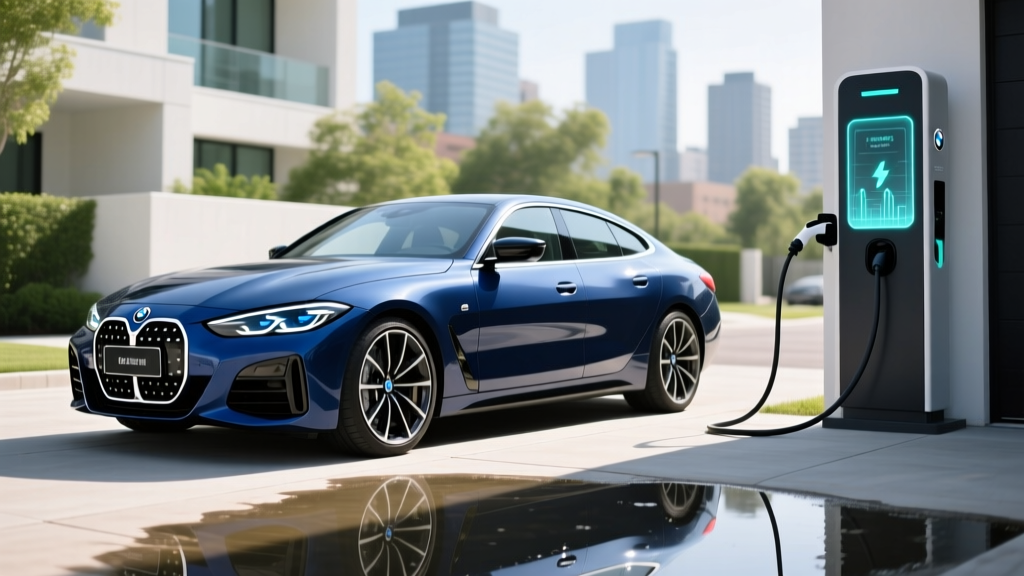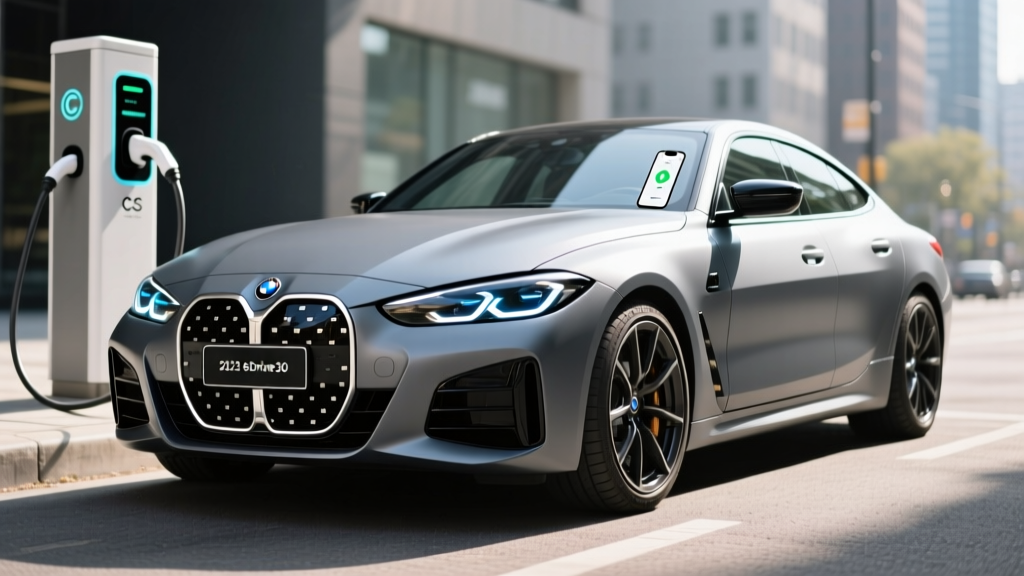
The 2023 BMW i4 eDrive35 occupies a specific niche in the electric sedan market: it's the most affordable entry point into BMW's electric Gran Coupe lineup, trading the dual-motor performance and larger battery of the eDrive40 and M50 for a lower sticker price and a still-respectable range figure. Now that the 2023 model year has settled into the used-EV market and BMW has moved on to refreshed i4 variants, this is the right moment to evaluate what the eDrive35 actually delivers — and where it falls short — for buyers considering one today.
As a single-motor, rear-wheel-drive EV built on BMW's CLAR platform (shared with the 4 Series Gran Coupe), the eDrive35 prioritizes driving refinement and BMW's signature interior quality over raw performance or maximum range. But with 260 miles of EPA-rated range and DC fast charging up to 180 kW, it remains a viable daily driver and occasional road-tripper. Here's the full data-driven breakdown.
Range, Battery, and Real-World Efficiency
The 2023 i4 eDrive35 carries a 70.2 kWh usable battery pack (81.1 kWh gross) using NMC (nickel manganese cobalt) cell chemistry. This is notably smaller than the eDrive40's 81.5 kWh usable pack, which accounts for the range difference between the two trims.
EPA Estimated Range: 260 miles (with 18-inch wheels; drops to ~252 miles with 19-inch sport wheels)
Real-World Highway (70 mph, mild weather): Expect 220–240 miles. The i4's aerodynamic sedan profile helps, but at sustained highway speeds, consumption rises to roughly 34–37 kWh/100mi.
Cold Weather (below 32°F): Plan for 185–210 miles. NMC chemistry loses roughly 20–30% range in freezing temperatures without preconditioning. The i4's heat pump (standard on 2023 models) mitigates cabin energy draw but cannot fully offset battery chemistry limitations.
City/Commuting: 255–270 miles is achievable thanks to regenerative braking and lower average speeds.
The EPA rates the eDrive35 at 99 MPGe combined (101 city / 98 highway), translating to approximately 34 kWh per 100 miles in mixed driving, per fueleconomy.gov. This is competitive but not class-leading — the Tesla Model 3 RWD achieves 132 MPGe combined, and the Hyundai Ioniq 6 SE hits 140 MPGe. The i4's heavier curb weight (~4,682 lbs) and less aerodynamic profile compared to the Ioniq 6 explain much of the gap.
Charging Speed: DC Fast, Level 2, and Level 1
The i4 eDrive35 supports a peak DC fast-charge rate of 180 kW via its CCS1 connector (2023 models predate BMW's NACS transition). BMW quotes a 10–80% charge time of approximately 31 minutes under ideal conditions. In practice, the charging curve is the critical detail:
| Charging Level | Power (kW) | Miles Added per Hour | 10–80% Time |
|---|---|---|---|
| Level 1 (120V household) | 1.4 kW | ~3–4 mi/hr | N/A (impractical for full charge) |
| Level 2 (240V home, 48A) | 11 kW (onboard charger max) | ~28–32 mi/hr | ~7 hours (0–100%) |
| DC Fast Charge (CCS1) | Peak 180 kW | ~500+ mi/hr (at peak) | ~31 min (10–80%) |
Charging curve reality check: The 180 kW peak is only sustained roughly between 10–35% state of charge (SoC). Above 50% SoC, the rate tapers to approximately 100–120 kW, and above 80% it drops sharply to under 50 kW. This means the last 20% of a DC fast charge can take nearly as long as the first 70%. For road trips, plan your stops around 10–80% increments and move on rather than waiting for a full charge.
At home, the i4's 11 kW onboard charger is solid — a full overnight charge on a 48-amp Level 2 circuit (like a ChargePoint Home Flex or BMW Wallbox) takes about 7 hours from near-empty, which is more than adequate for daily use. Note: you'll need a NEMA 14-50 outlet or hardwired 240V/60A circuit installed by a licensed electrician for optimal Level 2 speeds.
Performance and Drivetrain
The eDrive35 uses a single rear-mounted electric motor producing 281 horsepower and 295 lb-ft of torque. BMW quotes a 0–60 mph time of 5.8 seconds. For context, that's quick enough to merge confidently onto any highway and pass without hesitation, but it's a meaningful step below the eDrive40 (335 hp, 5.5 sec) and far below the M50 (536 hp, 3.7 sec).
| Specification | 2023 BMW i4 eDrive35 |
|---|---|
| Drivetrain | Rear-Wheel Drive (single motor) |
| Horsepower | 281 hp |
| Torque | 295 lb-ft |
| 0–60 mph | 5.8 seconds |
| Top Speed | 118 mph (electronically limited) |
| Battery (usable) | 70.2 kWh (NMC) |
| EPA Range | 260 miles (18" wheels) |
| MPGe (combined) | 99 MPGe |
| Max DC Charge Rate | 180 kW (CCS1) |
| Level 2 Onboard Charger | 11 kW |
| Cargo Volume | 16.6 cu ft (rear seats up) |
| Rear Legroom | 34.5 inches |
| Curb Weight | ~4,682 lbs |
| Towing Capacity | Not rated for towing |
On the road, the eDrive35 feels composed and planted — the low center of gravity from the floor-mounted battery pack gives it confident cornering for a 4,600+ lb sedan. The adaptive regenerative braking system (which adjusts regen intensity based on traffic ahead via radar) is one of BMW's better EV-specific features, though some drivers prefer the predictability of fixed regen levels. One-pedal driving is available but not as aggressive as Tesla or Hyundai/Kia implementations.
Interior, Tech, and Cargo
The i4's cabin is where BMW's value proposition becomes clearer. The BMW Curved Display — a 12.3-inch instrument cluster merged with a 14.9-inch touchscreen running iDrive 8 — is standard on the eDrive35. The system supports wireless Apple CarPlay and Android Auto, over-the-air updates, and BMW's digital assistant. Build quality is premium: soft-touch materials, real aluminum trim options, and excellent noise isolation.
Cargo space measures 16.6 cubic feet with the rear seats upright, expanding with a 40/20/40 split-folding rear seat. That's competitive with the Tesla Model 3's trunk (though the Model 3 lacks a hatchback liftgate, while the i4 is a liftback — a significant practical advantage for loading bulky items). There is no frunk (front trunk); the space under the hood houses ancillary electronics.
Rear legroom is 34.5 inches, which is adequate for adults on shorter trips but snug for taller passengers on long drives. The sloping roofline (Gran Coupe profile) cuts into rear headroom — a compromise for the sporty styling. Families with older children will manage; families needing car seats and stroller space should look at the iX or a crossover.
Driver Assistance: The eDrive35 comes with BMW's Active Driving Assistant, which includes adaptive cruise control with stop-and-go, lane-keeping assist, blind-spot monitoring, and front collision warning. This is a SAE Level 2 system — the driver must remain engaged and hands on (or near) the wheel at all times. BMW's Driving Assistant Professional package (optional) adds lane-change assist and extended traffic-jam assistance but does not elevate the system to any form of self-driving.
Pricing, Tax Credits, and Total Cost
The 2023 BMW i4 eDrive35 launched with a base MSRP of $52,200 (before destination). A well-equipped example with the Premium Package, Driving Assistant Professional, and 19-inch wheels typically landed in the $57,000–$62,000 range as-tested.
| Item | Amount |
|---|---|
| Base MSRP (eDrive35) | $52,200 |
| Destination Charge | $995 |
| Typical As-Tested (w/ options) | $57,000–$62,000 |
| Federal Tax Credit (§30D, new in 2023) | Up to $7,500 (subject to sourcing, income, MSRP rules) |
| Used EV Credit (§25E, 2026 purchase) | Up to $4,000 (30% of sale price, capped; income limits apply) |
Federal tax credit eligibility for the 2023 i4 eDrive35 (when purchased new): Under IRS §30D rules, the vehicle must meet battery component and critical mineral sourcing requirements, the buyer's adjusted gross income must not exceed $150,000 (single) / $300,000 (joint), and the vehicle's MSRP must be under $55,000 for sedans. The eDrive35's base MSRP of $52,200 clears the sedan cap, but optioned-up examples exceeding $55,000 would lose eligibility. Battery sourcing rules in 2023 were less restrictive than 2024–2026 phase-ins, and many 2023 i4 units qualified for the full $7,500. Always verify current eligibility via IRS.gov or a tax professional.
Buying used in 2026: The §25E previously-owned clean vehicle credit offers up to $4,000 (30% of the sale price, capped at $4,000) for qualified used EVs purchased from a dealer, with stricter income limits ($75,000 single / $150,000 joint). A 2023 i4 eDrive35 selling for $30,000–$38,000 on the used market in 2026 could yield the full $4,000 credit for eligible buyers — a strong value proposition.
Warranty and Battery Longevity
BMW backs the i4 eDrive35 with:
- Basic Vehicle Warranty: 4 years / 50,000 miles
- Battery & Electric Drive Components: 8 years / 100,000 miles (covers defects and capacity loss below 70% of original capacity)
- Corrosion Perforation: 12 years / unlimited miles
- Roadside Assistance: 4 years / unlimited miles
The 70% capacity retention threshold is industry-standard (matching Tesla, Hyundai, and others). Based on available NMC degradation data from BMW's earlier i3 and iX3 fleets, owners can expect roughly 8–12% total degradation over the first 100,000 miles, with the curve flattening significantly after the initial break-in period. Proper care — avoiding repeated 100% charges, minimizing DC fast charging when Level 2 is available, and preconditioning in cold weather — will extend battery health. BMW does not currently offer a published battery replacement cost for the i4, but industry estimates for a ~70–80 kWh NMC pack replacement (out of warranty) range from $12,000 to $18,000 including labor.
How It Compares: i4 eDrive35 vs. Key Competitors
| Metric | 2023 BMW i4 eDrive35 | 2023 Tesla Model 3 RWD | 2023 Hyundai Ioniq 6 SE |
|---|---|---|---|
| EPA Range | 260 mi | 272 mi | 361 mi |
| Battery (usable) | 70.2 kWh | 57.5 kWh (LFP) | 77.4 kWh |
| MPGe (combined) | 99 | 132 | 140 |
| Max DC Charge | 180 kW | 170 kW | 233 kW |
| 0–60 mph | 5.8 sec | 5.8 sec | 5.1 sec |
| Base MSRP (2023) | $52,200 | $40,240 | $41,600 |
| Body Style | Liftback sedan | Sedan (trunk) | Sedan (trunk) |
The numbers tell a clear story: the i4 eDrive35 costs significantly more than the Model 3 RWD and Ioniq 6 SE while delivering less range and lower efficiency. What it offers in return is build quality, cabin materials, the liftback practicality, and BMW's driving dynamics. This is a values trade-off, not a spec-sheet win.
- Premium interior quality and build — best in class for materials
- Liftback design with 16.6 cu ft cargo — more practical than traditional sedan trunks
- Composed, engaging ride and handling (BMW DNA)
- 180 kW DC fast charging is adequate for road trips
- iDrive 8 with Curved Display is responsive and feature-rich
- Heat pump standard (cold-weather efficiency)
- 260-mile EPA range trails Model 3 and significantly trails Ioniq 6
- 99 MPGe efficiency is below average for the segment
- Higher base price than direct competitors with more range
- Rear seat headroom and legroom compromised by Gran Coupe roofline
- No frunk for additional storage
- CCS1 connector (pre-NACS) limits Supercharger access without adapter
Who Should Buy the 2023 BMW i4 eDrive35?
- You prioritize cabin quality, materials, and BMW driving dynamics over maximum range-per-dollar
- Your daily commute is under 80 miles round-trip and you have reliable home Level 2 charging
- You want a liftback sedan with hatchback-level cargo flexibility
- You're buying used in 2026 and can stack the $4,000 used-EV credit against a depreciated price
- Range and efficiency are your top priorities (Ioniq 6 or Model 3 deliver more per dollar)
- You regularly drive 300+ mile highway trips and want to minimize charging stops
- You need spacious rear seating for adults or car seats (consider the iX or a crossover)
- You want NACS native access for Tesla Supercharger convenience without adapters
Frequently Asked Questions
What is the real-world range of the 2023 BMW i4 eDrive35?
The EPA rates it at 260 miles with 18-inch wheels. In real-world highway driving at 70 mph, expect 220–240 miles. In freezing winter conditions, plan for 185–210 miles. City commuters using regenerative braking can approach or slightly exceed the EPA figure.
How fast does the i4 eDrive35 charge at home and on the road?
On DC fast chargers, it peaks at 180 kW and charges from 10–80% in approximately 31 minutes (with taper above 50% SoC). At home on a 240V/48A Level 2 charger, it adds roughly 28–32 miles of range per hour, fully charging overnight in about 7 hours. Level 1 (120V) adds only 3–4 miles per hour and is impractical as a primary charging method.
Does the 2023 i4 eDrive35 qualify for the federal EV tax credit?
When purchased new in 2023, it was eligible for up to $7,500 under §30D, provided the buyer met income limits ($150K single/$300K joint), the MSRP stayed under $55,000 (sedan cap), and battery sourcing requirements were met. For used purchases in 2026, the §25E credit offers up to $4,000 for eligible buyers (income cap $75K single/$150K joint) buying from a dealer. Consult IRS.gov or a tax professional for your specific situation.
Is the i4 eDrive35 worth buying over a Tesla Model 3 or Hyundai Ioniq 6?
On specs alone, no — both competitors offer more range and better efficiency at lower prices. The i4 wins on interior quality, liftback cargo versatility, and BMW's driving refinement. If those intangibles matter to you and the price gap is acceptable (especially on the used market with credits), it's a compelling choice. If you're optimizing purely for range-per-dollar, the Ioniq 6 SE is the stronger pick.
What connector does the 2023 i4 eDrive35 use?
It uses a CCS1 connector for DC fast charging and a J1772 inlet for Level 2 AC charging. BMW began transitioning to NACS (Tesla's connector) for the 2025 model year, so the 2023 model requires a CCS-to-NACS adapter to access Tesla Supercharger stations that support non-Tesla vehicles.
How long will the i4's battery last?
BMW warranties the battery for 8 years/100,000 miles against capacity loss below 70%. Real-world NMC degradation data suggests 8–12% total loss over 100,000 miles, meaning the pack should retain 88–92% of its original capacity at that point. With proper charging habits, the battery should remain functional well beyond 150,000 miles before capacity loss becomes a daily inconvenience.