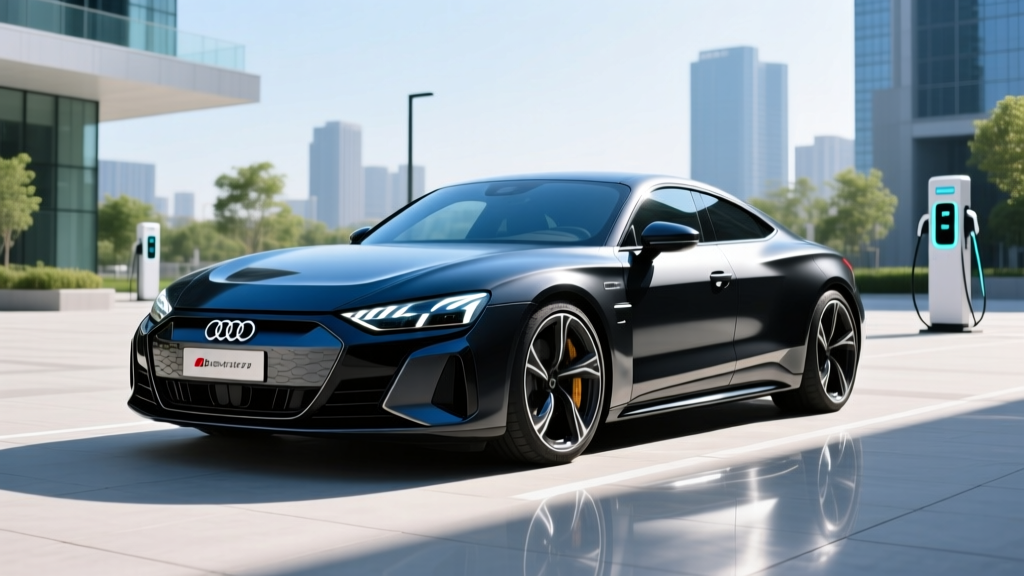
The 2023 Audi RS e-tron GT is a luxury electric grand tourer that shares its J1 performance platform with the Porsche Taycan Turbo, yet carves out a distinctly more refined, daily-drivable personality. With 646 horsepower on overboost, a 93.4 kWh battery, and 800-volt architecture enabling blistering DC fast charging, it's one of the most technically accomplished EVs Audi has ever built. But with a starting MSRP above $149,000 and an EPA range of just 232 miles, it demands buyers who prioritize performance and prestige over maximum efficiency.
Below, we break down every number that matters—from the 2023 Audi RS e-tron GT 0-60 time to real-world range expectations, charging-curve behavior, and federal tax credit eligibility under current IRS §30D rules.
Quick Verdict: Who Is the RS e-tron GT For?
The RS e-tron GT is built for the performance-luxury buyer who wants supercar acceleration, a hand-finished interior, and 800V fast-charging capability—but doesn't need 350+ miles of range or crossover practicality. It's a two-row grand tourer best suited for commuting, weekend canyon carving, and highway road trips where DC fast chargers are plentiful. Families needing maximum cargo space or buyers in remote charging deserts should look elsewhere.
Choose the RS e-tron GT if: You want sub-3.5-second 0-60 performance, premium build quality, and fast 270 kW charging on a proven 800V platform.
Look elsewhere if: You need over 300 miles of range, a third row, SUV cargo volume, or a sub-$80,000 price point.
2023 Audi RS e-tron GT 0-60, Horsepower & Performance Specs
The headline number is the one most buyers search for: the 2023 Audi RS e-tron GT 0-60 mph time. Audi quotes 3.1 seconds in launch-control mode (with overboost engaged), and independent testing by outlets like Car and Driver has confirmed times in the 3.0–3.3 second range depending on surface and temperature. That puts it squarely in supercar territory.
| Spec | 2023 Audi RS e-tron GT |
|---|---|
| Drivetrain | Dual-motor AWD (quattro) |
| Horsepower (overboost) | 646 hp |
| Torque (overboost) | 612 lb-ft |
| 0-60 mph | 3.1 seconds (launch control) |
| Top Speed | 155 mph (electronically limited) |
| Battery (gross / usable) | 93.4 kWh / ~85.0 kWh |
| Battery Chemistry | NMC (nickel manganese cobalt) |
| Platform Voltage | 800V nominal |
| Curb Weight | ~5,139 lbs |
The dual-motor setup provides a rear-biased torque split under normal driving, with the front motor engaging instantaneously when traction demands it. A two-speed transmission on the rear axle gives the RS e-tron GT a notably strong launch off the line—the first gear multiplies torque for that 3.1-second sprint, while second gear optimizes highway efficiency.
EPA Range, MPGe & Real-World Expectations
The EPA rates the 2023 RS e-tron GT at 232 miles of combined range. Efficiency comes in at 79 MPGe combined, which translates to roughly 42 kWh per 100 miles—competitive with the Porsche Taycan Turbo but thirstier than a Tesla Model S Long Range (405 mi EPA, ~28 kWh/100mi).
EPA Range: 232 miles (combined)
Real-World Expectation: Expect 195–215 miles on sustained highway driving at 70–80 mph. In cold weather (below 32°F), plan for 165–190 miles due to battery resistance and cabin heating loads. City driving with regen braking can push closer to the 232-mile sticker or slightly above.
Why the gap? The RS e-tron GT weighs over 5,100 pounds and pushes wide, sticky performance tires (245/45 front, 285/40 rear on the standard 20-inch wheels). Aerodynamic drag increases exponentially at highway speeds, and the car's performance tuning prioritizes responsiveness over hypermiling efficiency. If range is your top priority, the standard e-tron GT (non-RS) achieves 238 miles EPA with 522 hp—a modest trade-off.
Charging: 270 kW DC Fast Charging & Home Level 2
The RS e-tron GT's 800-volt architecture is its charging ace. On a compatible 350 kW DC fast charger, Audi claims a peak rate of 270 kW, enabling a 10–80% charge in approximately 22 minutes. In practice, peak rate is sustained only briefly—the charging curve tapers significantly above 60% SoC to protect the NMC cells, so your 60–80% segment will be noticeably slower than 10–40%.
| Charging Level | Power / Rate | Speed / Time |
|---|---|---|
| Level 1 (120V household) | ~1.4 kW | ~3–4 miles per hour |
| Level 2 (240V home, 48A) | 11.5 kW (onboard charger max) | ~25–28 miles per hour; full charge in ~9 hrs |
| DC Fast Charge (peak) | 270 kW (on 350 kW station) | 10–80% in ~22 minutes; ~185 miles in 22 min |
| DC Fast Charge (50 kW station) | 50 kW | 10–80% in ~75 minutes |
For home charging, the onboard AC charger accepts up to 11.5 kW (48 amps on a 240V/60A circuit). A full 0–100% charge overnight takes roughly 9 hours. Most owners will plug in at 20–30% SoC each evening and wake up fully topped off. Installation of a dedicated 60A Level 2 circuit typically costs $800–$2,500 depending on panel proximity and local permitting—factor this into your budget.
One practical note: the RS e-tron GT uses the CCS1 connector for DC fast charging. While the industry is shifting toward NACS (Tesla's connector), Audi has committed to NACS adoption on future models. For now, CCS1 gives you access to Electrify America, EVgo, ChargePoint, and Ionity networks, which cover most major US highway corridors.
Pricing, Trims & Federal Tax Credit Eligibility
The 2023 Audi RS e-tron GT launched with a single, well-equipped trim level. There is no "base" RS e-tron GT in the traditional sense—the RS badge itself is the top performance variant of the e-tron GT lineup.
| Item | Amount |
|---|---|
| Base MSRP (2023 RS e-tron GT) | $149,900 |
| Destination Charge | $1,095 |
| Typical As-Tested (with packages) | $155,000–$165,000 |
| Federal §30D Tax Credit (new EV) | $0 — does not qualify |
Why Doesn't It Qualify for the Federal Tax Credit?
Under current IRS §30D rules, new clean vehicle credits are subject to several hard caps:
- MSRP cap: Sedans must be priced at or below $55,000. The RS e-tron GT starts at $149,900—nearly 3× the limit.
- Buyer income cap: Modified AGI must not exceed $150,000 (single) / $300,000 (joint). Many RS e-tron GT buyers will exceed this.
- Battery sourcing & critical minerals: Phase-in requirements for North American assembly and mineral sourcing further restrict eligibility.
Bottom line: do not factor any federal tax credit into your RS e-tron GT purchase math. Check irs.gov for the latest §30D rules, and consult a tax professional for your specific situation. Some states offer separate luxury-EV incentives, but these vary by jurisdiction.
Interior, Cargo & Daily Practicality
The RS e-tron GT interior is one of its strongest selling points. Audi's build quality is exemplary—Nappa leather, available carbon-fiber or open-pore wood trim, and a flat floor (thanks to the skateboard battery layout) create a cockpit that feels more hand-assembled than anything from Tesla or Lucid.
However, the grand-tourer roofline imposes real compromises:
- Rear headroom: 36.6 inches — adequate for adults under 6'0", but the sloping roofline cuts into space for taller passengers.
- Rear legroom: 32.1 inches — tighter than a BMW i7 or Mercedes EQS. This is a 2+2 grand tourer, not a limousine.
- Trunk (rear cargo): 9.2 cubic feet — enough for two carry-on bags and a laptop bag. The trunk opening is narrow due to the coupe-like design.
- Frunk (front trunk): 2.9 cubic feet — fits a charging cable bag and small soft items. Not large enough for a full grocery run.
Total cargo capacity of roughly 12 cubic feet is modest. If you regularly haul four adults with luggage, consider the Audi e-tron SUV or the Porsche Taycan Cross Turismo (which offers a hatchback rear).
Technology, Driver Assistance & Notable Drawbacks
Standout Tech
- 10.1-inch MMI touchscreen with haptic feedback and wireless Apple CarPlay / Android Auto.
- 12.3-inch Virtual Cockit Plus digital instrument cluster with configurable EV-specific displays (energy flow, range, charge status).
- Matrix-design LED headlights with dynamic turn signals and available laser-light high beams (market-dependent).
- Audi adaptive air suspension with adjustable ride height and damping—lowers at highway speeds for aero efficiency.
- Rear-axle steering (available) reduces the turning circle and enhances low-speed maneuverability.
Driver Assistance (SAE Level 2)
The RS e-tron GT includes Audi adaptive cruise assist with lane-centering, which is an SAE Level 2 system. This means the car can manage steering, acceleration, and braking on highways—but the driver must remain fully engaged with hands on the wheel and eyes on the road. This is not autonomous driving. It is a convenience feature, not a replacement for an attentive driver.
Important: Audi's driver-assist systems are SAE Level 2. The vehicle does not drive itself. You are legally and operationally responsible at all times. Do not treat lane-centering as "self-driving."
Notable Drawbacks
- Infotainment learning curve: Audi's dual-touchscreen MMI system replaces most physical buttons. Climate controls are on the lower screen, which requires looking down—less intuitive than physical knobs.
- No one-pedal driving: Unlike many EVs, the RS e-tron GT does not offer true one-pedal mode with full stop via regen alone. You'll still use the brake pedal regularly.
- Regen braking feel: Regenerative braking is relatively mild compared to a Tesla or Hyundai Ioniq 5. Audi tuned it for a more traditional, coasting feel—which some EV veterans find disappointing.
- Charging port location: The charge port is on the driver's-side front fender (passenger side on some markets). This can be awkward at pull-through DC fast-charging stations.
Battery Warranty & Long-Term Ownership
Audi backs the RS e-tron GT's high-voltage battery with an 8-year / 100,000-mile warranty (whichever comes first), covering defects and capacity loss below 70% of original capacity. This is industry-standard and matches Porsche, BMW, and Mercedes-Benz.
The NMC chemistry in this battery prioritizes energy density and performance over the extreme cycle life of LFP (lithium iron phosphate) cells. In practice, NMC degradation on a liquid-cooled 800V system like this one tends to be moderate—expect roughly 5–8% capacity loss over the first 100,000 miles if you avoid habitual 100% charges and frequent DC fast-charging to full. Setting your daily charge limit to 80% and preconditioning before DC sessions will maximize longevity.
| Warranty Coverage | Term |
|---|---|
| High-Voltage Battery | 8 years / 100,000 miles (70% capacity threshold) |
| Powertrain (motors, inverters) | 8 years / 100,000 miles |
| Bumper-to-Bumper | 4 years / 50,000 miles |
| Corrosion Perforation | 12 years / unlimited miles |
| Roadside Assistance | 4 years / unlimited miles |
How It Compares: RS e-tron GT vs. Key Competitors
| Spec | 2023 Audi RS e-tron GT | 2023 Porsche Taycan Turbo | 2023 Tesla Model S Plaid | 2023 Lucid Air Grand Touring |
|---|---|---|---|---|
| 0-60 mph | 3.1s | 3.0s | 1.99s | 3.0s |
| Horsepower | 646 hp | 670 hp | 1,020 hp | 819 hp |
| EPA Range | 232 mi | 212 mi | 396 mi | 516 mi |
| Battery (usable) | ~85 kWh | ~83.7 kWh | ~95 kWh | ~112 kWh |
| Peak DC Charge | 270 kW | 270 kW | 250 kW | 300 kW |
| 10–80% DC Time | ~22 min | ~22 min | ~27 min | ~20 min |
| Base MSRP | $149,900 | $165,300 | $108,490 | $138,000 |
| Federal Tax Credit | $0 | $0 | $0 | $0 |
According to fueleconomy.gov, the RS e-tron GT's 79 MPGe combined trails the Model S (120 MPGe) and Lucid Air (131 MPGe) significantly. You're paying a premium for Audi's design, build quality, and driving dynamics—not for efficiency.
Pros and Cons at a Glance
Pros
- 3.1-second 0-60 with launch control — genuine supercar acceleration
- 270 kW DC fast charging on 800V architecture; 10–80% in ~22 min
- Exceptional interior build quality, materials, and fit-and-finish
- Air suspension + rear-axle steering for comfort and agility
- Quiet, composed highway cruiser with strong passing power
- Strong regenerative and friction braking integration
Cons
- 232-mile EPA range is modest for a $150K+ EV in 2023
- Rear seat and cargo space are tight for the price class
- No one-pedal driving; regen braking is mild
- Does not qualify for the federal EV tax credit
- Dual-screen infotainment is less intuitive than physical controls
- High insurance premiums typical of $150K+ performance EVs
Frequently Asked Questions
What is the real-world range of the 2023 Audi RS e-tron GT?
The EPA rates it at 232 miles combined. In real-world highway driving at 70–80 mph, expect 195–215 miles. Cold weather (below freezing) can drop that to 165–190 miles. City driving with moderate regen can match or slightly exceed the EPA sticker.
How fast does the RS e-tron GT charge?
On a 350 kW DC fast charger, it peaks at 270 kW and charges from 10–80% in approximately 22 minutes. At home on a 240V Level 2 charger (11.5 kW), a full charge takes about 9 hours. The 800V architecture is the key enabler—on older 50 kW chargers, expect 75+ minutes for the same 10–80% session.
Does the 2023 Audi RS e-tron GT qualify for the federal EV tax credit?
No. Under current IRS §30D rules, the $55,000 MSRP cap for sedans disqualifies the RS e-tron GT ($149,900 base). Buyer income caps and battery-sourcing requirements further restrict eligibility. Always verify current rules at irs.gov.
How does the RS e-tron GT 0-60 compare to the Porsche Taycan Turbo?
Very closely. The RS e-tron GT hits 0-60 in 3.1 seconds; the Taycan Turbo does it in 3.0 seconds. The difference is negligible in real-world driving. Both share the J1 platform and 800V architecture, but the Audi is tuned slightly more for comfort, while the Porsche leans into track capability.
Is the RS e-tron GT worth buying over a Tesla Model S Plaid?
It depends on your priorities. The Model S Plaid is faster (1.99s 0-60), has far more range (396 mi EPA), costs $40K less, and has a larger Supercharger network. But the RS e-tron GT offers dramatically better interior quality, more sophisticated suspension tuning, and a design that turns heads at every stoplight. If you value craftsmanship over raw spec-sheet dominance, the Audi makes a compelling case.
What's the battery replacement cost out of warranty?
Out-of-warranty high-voltage battery replacement for the RS e-tron GT is estimated at $20,000–$30,000+ based on current NMC cell pricing and labor. However, most owners will never need this—the 8-year/100,000-mile warranty and moderate NMC degradation curves suggest the battery should retain 85–90%+ capacity at the 100K-mile mark with reasonable care.
Can I tow with the RS e-tron GT?
No. The 2023 RS e-tron GT is not rated for towing. If towing capacity is a priority, look at the Audi Q8 e-tron (4,000 lbs) or the BMW iX (3,500 lbs).
The 2023 Audi RS e-tron GT is a thrilling, beautifully built electric grand tourer that delivers on its 3.1-second 0-60 promise and charges faster than most competitors thanks to its 800V architecture. Its 232-mile range and $150K price tag mean it isn't for everyone—but for buyers who want a hand-crafted performance EV that stands apart from the Tesla-dominated landscape, it remains one of the most rewarding choices on the road.