Quick Verdict: The Grand Tourer That Charges Like a Sports Car
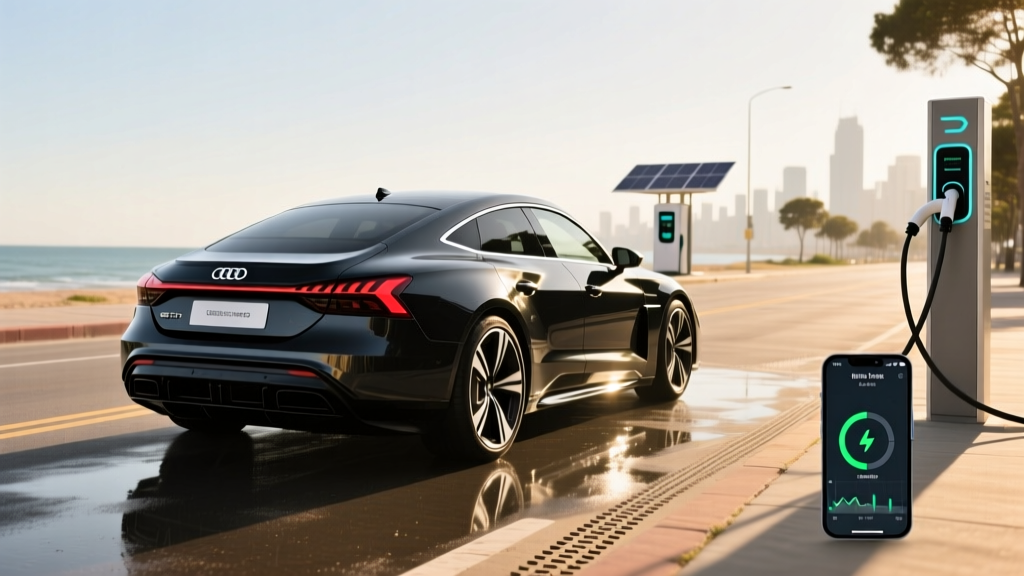
The 2023 Audi e-tron GT occupies a rare position in the EV landscape: it's a genuine luxury grand tourer that pairs Porsche Taycan underpinnings with Audi's design language and a blistering 270 kW DC fast-charging capability. Sharing the J1 performance platform with its Stuttgart cousin, the e-tron GT delivers 238 miles of EPA-estimated range in standard form and up to 232 miles in the performance-oriented RS variant. But the real story is how this car behaves on a road trip — where its 800-volt architecture and charge-curve discipline separate it from the luxury EV pack.
If you're cross-shopping a Tesla Model S, Porsche Taycan, or Mercedes EQS, the e-tron GT demands a closer look. Here's every number that matters.
| Spec | e-tron GT Premium Plus | e-tron GT Prestige | RS e-tron GT |
|---|---|---|---|
| EPA Range | 238 mi | 238 mi | 232 mi |
| Battery (usable) | 85 kWh (93.4 kWh gross) | 85 kWh | 85 kWh |
| Chemistry | NMC (Nickel Manganese Cobalt) | NMC | NMC |
| Horsepower | 469 hp (522 hp launch) | 469 hp (522 hp launch) | 590 hp (637 hp launch) |
| 0–60 mph | 3.9 sec | 3.9 sec | 3.1 sec |
| Drivetrain | Dual-motor AWD | Dual-motor AWD | Dual-motor AWD |
| Max DC Charge Rate | 270 kW | 270 kW | 270 kW |
| 10–80% DC Time | ~22 min | ~22 min | ~22 min |
| Level 2 Rate | 9.6 kW (AC) | 9.6 kW (AC) | 9.6 kW (AC) |
| MPGe (combined) | 82 MPGe | 82 MPGe | 79 MPGe |
| kWh/100 mi | 41 kWh | 41 kWh | 43 kWh |
| Base MSRP | $104,900 | $110,900 | $147,800 |
| Battery Warranty | 8 yr / 100,000 mi | 8 yr / 100,000 mi | 8 yr / 100,000 mi |
Real-World Range: What the EPA Sticker Doesn't Tell You
EPA Estimate: 238 miles (Premium Plus / Prestige), 232 miles (RS)
Real-World Highway (70–75 mph): Expect 195–215 miles
Cold Weather (below 32°F): Expect 160–190 miles depending on cabin heating use
Mixed Commute (city + suburban): 220–235 miles — regen-heavy driving recovers energy
The e-tron GT's 85 kWh usable battery (from a 93.4 kWh gross pack) provides respectable but not class-leading range. According to EPA data on fueleconomy.gov, the standard e-tron GT achieves 82 MPGe combined, which translates to roughly 41 kWh per 100 miles of driving.
In practice, the e-tron GT's efficiency is highly driving-style dependent. The dual-motor AWD system defaults to rear-biased operation, disconnecting the front motor during steady-state cruising to reduce parasitic drag. This helps in mixed driving, but sustained highway speeds above 75 mph erode range noticeably — the car's low, wide aero profile helps, but it's still a 5,100-pound vehicle pushing air.
Cold-weather impact is meaningful. Without a standard heat pump (Audi offers one as part of a cold-weather package on some trims), resistive cabin heating can pull 3–5 kW continuously, cutting range by 15–25% in sub-freezing conditions. If you live in the northern tier of the US, budget for roughly 170–180 miles of usable winter range on the highway and plan charging stops accordingly.
Charging Performance: The 800-Volt Advantage
This is where the e-tron GT's J1 platform earns its keep. The 800-volt electrical architecture enables a peak DC fast-charge rate of 270 kW — a figure that few EVs on the road can match, and one that translates into genuinely short charging stops.
| Charging Level | Power (kW) | Speed | Notes |
|---|---|---|---|
| Level 1 (120V household) | ~1.4 kW | ~4 mi/hr | Emergency/trickle only; full charge in ~60+ hours |
| Level 2 (240V home/public) | 9.6 kW | ~28 mi/hr | Full charge in ~9 hours; ideal overnight |
| DC Fast Charge (peak) | 270 kW | ~180 mi in 15 min (ideal) | 10–80% in ~22 min at compatible station |
| DC Fast Charge (typical 150 kW) | 150 kW | ~100 mi in 15 min | Common at Electrify America, EVgo stations |
Understanding the charge curve: Peak 270 kW is available only at compatible 350 kW chargers (Electrify America, select Ionity stations) and only when the battery is preconditioned and at a low state of charge (typically 10–30% SoC). The e-tron GT sustains above 200 kW through roughly 50% SoC, then tapers progressively. The 10–80% time of approximately 22 minutes is among the fastest in the luxury EV segment — comparable to the Porsche Taycan and significantly quicker than the Mercedes EQS sedan's ~31-minute 10–80% time at 200 kW peak.
Preconditioning matters. Navigate to a DC fast charger using the e-tron GT's built-in navigation, and the thermal management system will warm the battery to its optimal charging temperature window (roughly 30–35°C). Without preconditioning — for instance, if you pull into a charger without routing through nav — peak charge rates may be 30–50 kW lower in cold conditions.
CCS connector note: The 2023 e-tron GT uses the CCS1 (Combined Charging System) connector standard. It does not natively support Tesla's NACS connector. Adapters are becoming available from third-party manufacturers, but as of the 2023 model year, plan your public charging around CCS-compatible networks like Electrify America, EVgo, and ChargePoint.
Performance: Dual-Motor AWD With Launch Control Brutality
The e-tron GT's performance credentials are serious. The standard model's dual-motor setup produces 469 horsepower in normal driving, rising to 522 hp with launch control engaged. The RS e-tron GT bumps that to 590 hp (637 hp on launch), paired with a rear-mounted two-speed transmission that provides a short first gear for explosive off-the-line acceleration and a tall second gear for efficient highway cruising.
The standard e-tron GT hits 60 mph in 3.9 seconds, while the RS variant drops that to 3.1 seconds — territory that embarrasses most internal-combustion supercars from just a few years ago. But the more impressive characteristic is the repeatability: thanks to the J1 platform's thermal management, the e-tron GT can deliver multiple consecutive launch-control starts without significant power derating, something many EV competitors struggle with.
Adaptive air suspension is standard across all trims, providing a 90mm ride-height adjustment range. The car lowers itself at highway speeds for aerodynamic efficiency and raises for speed bumps and steep driveways. Rear-wheel steering (optional on Prestige, standard on RS) tightens the turning circle and adds agility at low speeds while improving stability during high-speed lane changes.
Interior, Cargo & Technology
The e-tron GT's cabin is unmistakably Audi — clean horizontal lines, high-quality materials, and the brand's dual-screen MMI touch response infotainment system (10.1-inch upper display, 8.6-inch lower climate/shortcut display). The 12.3-inch Virtual Cockit digital instrument cluster is standard, with an available head-up display on Prestige and RS trims.
Passenger space:
- Front headroom: 38.0 inches
- Front legroom: 41.7 inches
- Rear headroom: 37.0 inches
- Rear legroom: 33.5 inches
Rear-seat space is the e-tron GT's most significant compromise. The sloping roofline and floor-mounted battery create a "foot garage" cutout that helps, but adults over 6 feet will find rear headroom tight on longer journeys. This is a four-seat grand tourer (the rear center position is essentially a padded armrest), and it's best suited for children or occasional adult passengers in back.
Cargo volume:
- Rear trunk: 9.2 cubic feet
- Front trunk (frunk): 3.5 cubic feet
- Total: 12.7 cubic feet
Cargo capacity is modest — roughly equivalent to a compact sports sedan, not a crossover. The rear trunk opening is also relatively narrow due to the fastback design, limiting what you can load. If you regularly haul luggage for four on road trips, you'll need to pack strategically. A set of golf clubs fits; four full-size suitcases do not.
Driver assistance (SAE Level 2): The e-tron GT comes equipped with Audi adaptive cruise assist, which combines adaptive cruise control with lane-centering guidance. This is an SAE Level 2 system — you must keep your hands on the wheel and remain fully engaged. It works well on highways but does not offer hands-free operation like GM's Super Cruise or Ford's BlueCruise. Audi's system also includes intersection assist, turn assist, and a surround-view camera system on Prestige and RS trims.
Pricing, Trims & Federal Tax Credit Eligibility
| Trim | Base MSRP | Destination | Typical As-Tested |
|---|---|---|---|
| Premium Plus | $104,900 | $1,195 | $110,000–$118,000 |
| Prestige | $110,900 | $1,195 | $118,000–$128,000 |
| RS e-tron GT | $147,800 | $1,195 | $155,000–$168,000 |
Does the 2023 Audi e-tron GT Qualify for the Federal EV Tax Credit?
Under IRS §30D rules, the 2023 Audi e-tron GT faces significant hurdles for the full $7,500 federal tax credit. Here's what you need to know:
- MSRP Cap: Sedans must be ≤$55,000. The e-tron GT starts at $104,900 — does NOT qualify on MSRP grounds alone.
- Buyer Income Cap: MAGI ≤$150,000 (single), ≤$300,000 (joint). Even qualifying buyers cannot overcome the MSRP cap.
- Battery Sourcing: Critical mineral and battery component requirements must be met (phased in through 2023+). Moot given MSRP ineligibility.
- Assembly: Final assembly must occur in North America. The e-tron GT is built in Böllinger Höfe, Germany — does NOT qualify on assembly grounds.
Bottom line: The 2023 Audi e-tron GT does not qualify for the $7,500 federal purchase credit. Verify current rules at IRS.gov §30D or consult a tax professional.
However, leasing the e-tron GT may allow the dealer to capture the commercial clean vehicle credit (§45W) and pass savings through as a lease incentive — a workaround that some Audi dealerships have offered. Ask your dealer specifically about lease credit pass-through, as this varies by location and time.
Ownership Costs & Who This EV Suits Best
Battery and powertrain warranty: Audi covers the e-tron GT's high-voltage battery for 8 years or 100,000 miles, whichever comes first, with a capacity retention threshold of 70%. The general vehicle warranty is 4 years / 50,000 miles, and complimentary scheduled maintenance is included for the first year or 10,000 miles.
Charging cost estimate: At the US average residential electricity rate of ~$0.16/kWh (per EIA data), fully charging the 85 kWh usable battery at home costs approximately $13.60. Over 12,000 annual miles at 41 kWh/100mi, you'd use roughly 4,920 kWh annually — about $787 per year in home charging. Compare this to a gasoline car achieving 22 MPG at $3.50/gallon: ~$1,909 per year. Annual fuel savings of roughly $1,100 are realistic for a home-charging e-tron GT owner.
Insurance: Expect premiums 20–35% higher than a comparable ICE Audi A7 or A8, reflecting the e-tron GT's repair costs, battery replacement expense, and performance capability. Get quotes before purchasing.
Who should buy the 2023 Audi e-tron GT:
- Ideal buyer: A luxury sedan buyer who values design, build quality, and driving dynamics over maximum range. Commutes 40–80 miles daily with home Level 2 charging. Takes occasional road trips where 270 kW charging minimizes stops. Doesn't need large cargo space or frequent rear-seat adult passengers.
- Look elsewhere if: You need 300+ miles of range (consider the Lucid Air or Mercedes EQS), regularly carry four adults (the rear seat is tight), want the $7,500 federal credit (it doesn't qualify), or need practical cargo volume for family life.
Pros, Cons & Competitor Comparison
- Class-leading 270 kW DC fast charging — 10–80% in ~22 minutes
- Stunning design with genuine road presence
- RS variant's 3.1-second 0–60 with repeatable launches
- 800V architecture future-proofs charging infrastructure use
- Excellent build quality and cabin materials
- Air suspension provides ride comfort despite low stance
- Regen blending feels natural — no aggressive one-pedal lurch
- EPA range of 232–238 mi trails Model S, Lucid Air, EQS
- No federal §30D tax credit (MSRP + foreign assembly)
- Rear seat headroom and legroom tight for adults
- Only 12.7 cu ft total cargo — impractical for families
- CCS-only connector; no native NACS support
- Infotainment system feels dated vs. Tesla/Hyundai
- High insurance and potential out-of-warranty repair costs
Versus key competitors:
- vs. Porsche Taycan: Nearly identical mechanically; the Taycan has marginally sharper handling and a more driver-focused cockpit. The e-tron GT wins on design elegance and slightly lower entry pricing.
- vs. Tesla Model S: The Model S offers far more range (405 mi EPA), more cargo space, and Supercharger access, but can't match the Audi's build quality, ride refinement, or charging speed at CCS stations.
- vs. Mercedes EQS Sedan: The EQS provides 350 miles of range and a more spacious interior, but its 200 kW peak charge rate means longer road-trip stops. Different philosophies — EQS for comfort and range, e-tron GT for driving engagement and charging speed.
Frequently Asked Questions
What is the real-world highway range of the 2023 Audi e-tron GT?
Expect 195–215 miles at 70–75 mph in moderate temperatures. In cold weather (below freezing), plan for 160–190 miles. The EPA sticker says 238 miles for the standard model, but highway driving at speed is the most range-demanding scenario for any EV.
How fast does the e-tron GT charge at home?
On a Level 2 home charger (240V, 40A circuit), the e-tron GT accepts up to 9.6 kW, adding roughly 28 miles of range per hour. A full charge from 10% to 100% takes approximately 9 hours — easily achievable overnight. You'll need a NEMA 14-50 outlet or hardwired Level 2 EVSE installed by a licensed electrician.
Is the 2023 Audi e-tron GT worth buying in 2026?
As a used or certified pre-owned purchase, the e-tron GT has depreciated significantly from its $105K+ MSRP, making it a compelling value in the luxury performance EV space. The 270 kW charging capability remains best-in-class. However, verify battery State of Health (SoH) through an Audi dealer diagnostic before purchasing used, and confirm that software updates have been applied.
Does the e-tron GT have one-pedal driving?
Not in the way Tesla or Nissan implement it. The e-tron GT offers adjustable regenerative braking via steering-wheel paddles (off, low, medium, high), but even on the highest setting, the car will creep forward at stoplights rather than holding completely. Audi's approach prioritizes a natural, blended braking feel over aggressive one-pedal operation.
Can the e-tron GT use Tesla Superchargers?
Not natively. The 2023 e-tron GT has a CCS1 port. As Tesla opens Supercharger access to non-Tesla vehicles with CCS connectors (via the Magic Dock adapter at select stations or through NACS adapters), access is expanding — but check Tesla's station compatibility map before relying on Supercharger access for a road trip.
What does battery replacement cost?
Out-of-warranty high-voltage battery replacement for the e-tron GT is estimated at $20,000–$30,000+ based on current J1-platform parts pricing. However, NMC batteries in thermally managed packs like the e-tron GT's typically retain 85–90% capacity at 100,000 miles, and full replacement before 150,000 miles is uncommon. The 8-year/100,000-mile warranty with a 70% retention threshold provides meaningful protection.