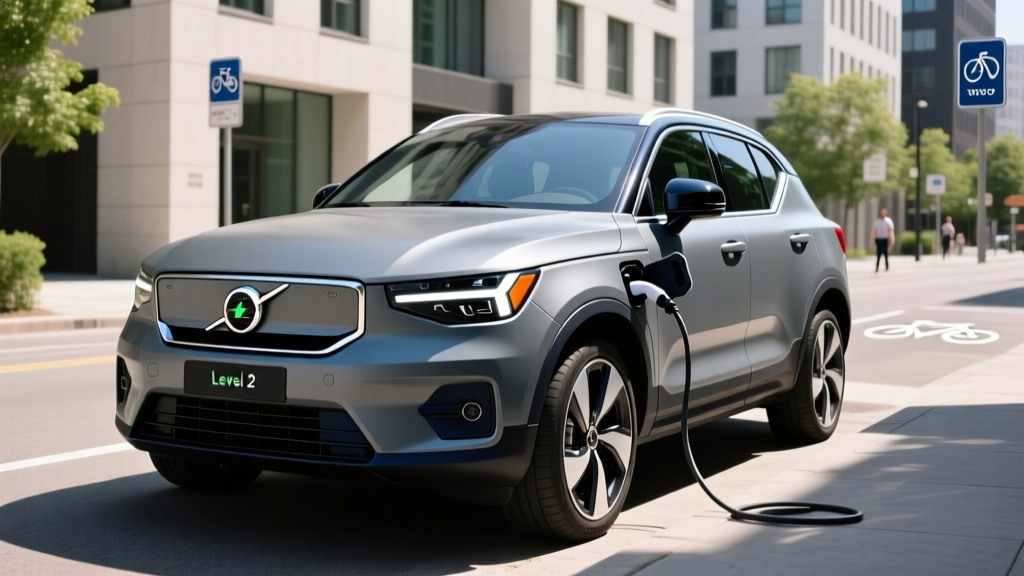
The 2022 Volvo XC40 Recharge was Volvo's first all-electric vehicle to reach US shores, and it arrived with a clear mission: pack serious performance and Scandinavian design into a compact luxury SUV. Built on the same CMA platform as the gas-powered XC40, this EV doesn't look or feel like a science experiment — it looks like a Volvo that happens to be electric. For used-EV shoppers in 2026, the 2022 model year represents a compelling value proposition, especially as depreciation has softened the entry price. But does the real-world range and charging speed hold up against newer rivals? Let's break down the numbers that matter.
Range and Efficiency: EPA vs. the Real World
The 2022 Volvo XC40 Recharge carries an EPA-estimated range of 223 miles on a full charge. That figure comes from a 78 kWh usable battery (out of 82 kWh total capacity) using NMC (nickel manganese cobalt) lithium-ion chemistry. Efficiency lands at 87 MPGe combined, which translates to roughly 39 kWh per 100 miles — on the thirstier side for a compact EV.
The EPA's 223-mile estimate assumes mixed driving. In our experience and consistent with third-party testing:
- Highway driving (70-75 mph): Expect 180–200 miles. The XC40 Recharge's boxy shape and 4,700+ lb curb weight hurt efficiency at speed.
- City/commuter driving: 220–235 miles is achievable thanks to regenerative braking and lower average speeds.
- Cold weather (below 32°F): Plan for 155–180 miles. The NMC battery loses capacity in the cold, and cabin heating draws significant power. A heat pump was not standard on the 2022 model year, which worsens winter range compared to competitors that include one.
Bottom line: if your daily round-trip commute exceeds 150 miles or you regularly drive highway stretches in winter, you'll want to plan charging stops carefully.
For context, the EPA's official fueleconomy.gov listing confirms the 223-mile combined figure and 87 MPGe rating. Competitors like the 2022 Ford Mustang Mach-E (230–305 mi depending on battery) and Hyundai Ioniq 5 (220–303 mi) offer more range in extended-battery trims, though the XC40 Recharge's all-wheel-drive performance comes with an efficiency trade-off.
Battery, Charging Speed, and Infrastructure
Understanding charging requires separating kW (power — how fast energy flows) from kWh (energy — how much the battery holds). The XC40 Recharge's 78 kWh usable battery is its energy tank; the charge rate in kW determines how quickly you refill it.
| Charging Level | Power / Rate | Time / Speed | Connector |
|---|---|---|---|
| Level 1 (120V household) | ~1.4 kW | ~3–4 miles per hour | J1772 |
| Level 2 (240V home/public) | Up to 11 kW (48A) | ~22 miles/hr; 0–100% in ~8 hours | J1772 |
| DC Fast Charge | Peak 150 kW | 10–80% in ~37 minutes | CCS1 |
Charging curve reality: The XC40 Recharge peaks near 150 kW only between roughly 10–30% state of charge (SoC). Above 50%, the rate tapers significantly, dropping below 75 kW by 70% SoC. This means the advertised 10–80% time of 37 minutes is accurate, but pushing from 80–100% on DC fast charge adds another 30+ minutes — so plan to unplug at 80% during road trips for the best time-to-miles ratio.
The 2022 model uses the CCS1 connector for DC fast charging. Volvo has since committed to the NACS (Tesla-style) connector for future models, but 2022 XC40 Recharge owners will rely on CCS networks like Electrify America, EVgo, and ChargePoint. A NACS adapter may become available through Volvo or third parties, though compatibility should be verified before purchasing one.
At home on a Level 2 charger, the 11 kW onboard charger is a strong point — it refills the battery faster overnight than many competitors limited to 7.2 or 9.6 kW. A full charge from empty takes roughly 8 hours, meaning a typical overnight session easily tops off the battery.
Performance and Drivetrain
The 2022 XC40 Recharge is genuinely quick. Its dual-motor all-wheel-drive powertrain produces 402 horsepower and 486 lb-ft of torque, launching from 0–60 mph in approximately 4.5 seconds. That puts it in the same acceleration bracket as a Porsche Macan GTS, though the Volvo carries its weight more obviously through corners.
| Specification | Value |
|---|---|
| EPA Range | 223 miles |
| Battery (usable) | 78 kWh, NMC chemistry |
| Drivetrain | Dual-motor AWD |
| Horsepower | 402 hp |
| Torque | 486 lb-ft |
| 0–60 mph | 4.5 seconds |
| Top Speed | 112 mph (electronically limited) |
| Efficiency | 87 MPGe / 39 kWh/100mi |
| Max DC Fast Charge | 150 kW (CCS1) |
| 10–80% DC Charge Time | ~37 minutes |
| Level 2 Charge Rate | 11 kW (48A) |
| Cargo Volume (rear seats up) | 16.0 cu ft (+ 1.4 cu ft frunk) |
| Cargo Volume (rear seats folded) | 47.2 cu ft |
| Rear Legroom | 36.1 inches |
| Curb Weight | ~4,725 lbs |
| Towing Capacity | Not rated for towing |
The single-pedal driving mode is available and well-calibrated, though it doesn't bring the car to a complete stop in all scenarios — you'll still need the brake pedal at very low speeds. The steering is precise if light, and the ride quality is firm but controlled, typical of Volvo's tuning philosophy.
Interior, Cargo, and Technology
The cabin follows Volvo's minimalist Scandinavian ethos. Materials are high quality — the XC40 Recharge uses wool-blend and recycled-material upholstery options rather than traditional leather, which aligns with Volvo's sustainability positioning. Front seats are comfortable and well-bolstered; the rear seat fits adults but the 36.1 inches of legroom is tight compared to rivals like the Hyundai Ioniq 5 (39.4 in).
Cargo space measures 16.0 cubic feet behind the rear seats, supplemented by a small 1.4 cubic foot frunk (front trunk) — enough for charging cables and a small bag. Fold the rear seats and you get 47.2 cubic feet, which is adequate for weekend trips but less than the Mach-E (59.7 cu ft max).
Infotainment: The 2022 model runs Google Built-in — a full Android Automotive OS with native Google Maps, Google Assistant, and the Play Store. Navigation is excellent because Google Maps factors in terrain, traffic, and charging stations natively. The 9-inch portrait touchscreen is responsive but can require too many taps for climate adjustments (there are no physical climate knobs).
Driver assistance: Volvo's Pilot Assist comes standard, offering adaptive cruise control with lane centering. This is a SAE Level 2 system — it assists with steering and speed but requires active driver supervision at all times. It performs competently on highways but doesn't match the hands-off convenience of GM's Super Cruise or Ford's BlueCruise on mapped roads. Volvo's Run-off Road Protection and standard automatic emergency braking with pedestrian/cyclist detection remain class-leading safety features.
Pricing, Tax Credits, and Used-EV Economics
When new, the 2022 XC40 Recharge launched with a base MSRP of $55,300 (Ultimate trim — Volvo simplified to a single well-equipped trim for the EV). With destination and typical options, as-tested prices ranged from $56,000 to $60,000+.
As a used vehicle in 2026, the 2022 XC40 Recharge has depreciated meaningfully. Expect to find examples in the $28,000–$36,000 range depending on mileage and condition.
As a used purchase in 2026, the 2022 XC40 Recharge may qualify for the Used Clean Vehicle Credit (§25E), which provides 30% of the sale price, up to $4,000. Requirements include:
- Sale price must be $25,000 or less (this is challenging for the XC40 Recharge — you'll need a high-mileage or lower-condition example)
- Buyer income caps: $75,000 single / $112,500 head of household / $150,000 joint (modified AGI)
- Vehicle must be at least 2 model years old (the 2022 qualifies in 2026)
- Must purchase from a licensed dealer
- Credit is non-refundable (you must owe taxes to benefit) unless transferred at point of sale
Source: IRS.gov — Used Clean Vehicle Credit. Consult a tax professional for personal eligibility.
For buyers who purchased new in 2022, the XC40 Recharge did qualify for the full $7,500 federal credit at the time (pre-2023 battery sourcing restrictions). This original credit benefit is already reflected in lower used prices today.
Warranty and Long-Term Ownership
Volvo backs the XC40 Recharge's battery and electric drivetrain with an 8-year/100,000-mile warranty, whichever comes first. This warranty covers battery capacity loss below 70% of original capacity — a standard threshold in the industry. The basic vehicle warranty is 4 years/50,000 miles, and complimentary scheduled maintenance is included for the first 3 years/36,000 miles.
NMC battery chemistry has proven generally reliable but tends to degrade slightly faster than LFP (lithium iron phosphate) over thousands of charge cycles. Best practices for longevity include:
- Keeping daily charge between 20–80% SoC (set the charge limit in the Volvo app)
- Avoiding frequent DC fast charging when Level 2 is available
- Preconditioning the battery before fast charging in cold weather (the car does this automatically when a charger is set as a navigation destination)
Insurance costs tend to run 15–25% higher than the gas XC40, which is typical for EVs. Get quotes before purchasing — premiums vary significantly by carrier and zip code.
How It Compares to Key Rivals
The 2022 XC40 Recharge competes in a crowded compact luxury EV space. Here's how it stacks up against two key alternatives from the same model year:
| Spec | Volvo XC40 Recharge | Ford Mustang Mach-E (AWD Ext.) | Hyundai Ioniq 5 (AWD) |
|---|---|---|---|
| EPA Range | 223 mi | 270 mi | 256 mi |
| 0–60 mph | 4.5 sec | 5.1 sec | 5.2 sec |
| Peak DC Charge | 150 kW | 115 kW | 235 kW |
| 10–80% Time | ~37 min | ~45 min | ~18 min |
| Cargo (max) | 47.2 cu ft | 59.7 cu ft | 59.3 cu ft |
| Heat Pump | Not standard | Optional | Standard |
| Original MSRP (AWD) | $55,300 | ~$55,000 | ~$52,200 |
The XC40 Recharge wins on: acceleration, interior material quality, Google-native infotainment, and Level 2 home charging speed (11 kW vs. 10.5 kW for the Mach-E and 10.9 kW for the Ioniq 5 — close, but the Volvo edges ahead).
It loses on: range (47 fewer miles than the Mach-E Extended Range), charging speed on DC (the Ioniq 5's 800V architecture is dramatically faster), cargo space, and cold-weather efficiency (no standard heat pump).
Choose the XC40 Recharge if: You prioritize acceleration and luxury feel over maximum range, you have reliable home Level 2 charging, your daily driving stays under 150 miles, and you value Volvo's safety engineering and Google-based infotainment.
Look elsewhere if: You regularly take road trips over 250 miles (the Ioniq 5 charges much faster), you need maximum cargo space (the Mach-E is roomier), you live in a very cold climate and need a heat pump for winter range preservation, or you want the lowest possible cost of entry.
Pros and Cons at a Glance
- 402 hp / 4.5-sec 0–60 is thrilling for the segment
- Google Built-in infotainment is intuitive and navigation-aware
- 11 kW Level 2 onboard charger speeds up home charging
- Excellent standard safety suite (AEB, run-off road protection)
- High-quality Scandinavian interior with sustainable materials
- Compact size is easy to park in urban environments
- 223-mile EPA range trails most competitors
- 150 kW DC fast charging is slow vs. 800V rivals (Ioniq 5, EV6)
- No standard heat pump hurts cold-weather range
- Rear seat legroom is tight (36.1 in)
- Cargo space is modest (16.0 cu ft rear up)
- No towing capacity
- Climate controls buried in touchscreen — no physical knobs
Frequently Asked Questions
What is the real-world range of the 2022 Volvo XC40 Recharge?
The EPA rates it at 223 miles combined. In real-world highway driving at 70+ mph, expect 180–200 miles. In city commuting with regenerative braking, 220–235 miles is realistic. Cold weather (below freezing) can drop range to 155–180 miles due to battery chemistry limitations and the absence of a standard heat pump.
How fast does the 2022 XC40 Recharge charge?
On a DC fast charger, it peaks at 150 kW and charges from 10–80% in approximately 37 minutes. The charge rate tapers significantly above 50% SoC. At home on a Level 2 (240V) charger, the 11 kW onboard charger adds about 22 miles per hour, filling the battery in roughly 8 hours from empty.
Does the 2022 XC40 Recharge qualify for a federal tax credit?
When purchased new in 2022, it qualified for the full $7,500 §30D credit. For used buyers in 2026, it may qualify for the §25E Used Clean Vehicle Credit (up to $4,000), but only if the sale price is $25,000 or less and the buyer meets income caps ($75K single / $150K joint). Verify current rules at IRS.gov and consult a tax professional.
Is the 2022 XC40 Recharge worth buying vs. competitors?
It depends on your priorities. If you want the fastest, most premium-feeling compact EV with good home charging and don't need 300+ miles of range, it's a strong choice — especially at depreciated used prices. If range, DC charging speed, or cargo space are paramount, the Hyundai Ioniq 5 or Ford Mustang Mach-E are more practical. The XC40 Recharge is best for urban/suburban luxury buyers who charge at home and value performance and design over maximum efficiency.
What is the battery warranty on the 2022 XC40 Recharge?
Volvo covers the high-voltage battery and electric drivetrain for 8 years or 100,000 miles, whichever comes first. The warranty guarantees the battery will retain at least 70% of its original capacity during that period. The basic bumper-to-bumper warranty is 4 years/50,000 miles.
Can the 2022 XC40 Recharge use Tesla Superchargers?
Not natively — the 2022 model has a CCS1 port, while Tesla Superchargers use the NACS connector. Volvo has announced NACS adoption for future models, and a CCS-to-NACS adapter may work for some Supercharger stations, but compatibility and charging speed are not guaranteed. Check Volvo's official guidance before using an adapter.
Does the XC40 Recharge have one-pedal driving?
Yes. The one-pedal driving mode provides strong regenerative braking that handles most deceleration, though it may not bring the car to a complete stop at very low speeds (under ~5 mph). You can toggle between one-pedal and standard driving modes in the settings.
Sources: EPA fueleconomy.gov, IRS Used Clean Vehicle Credit, Volvo Cars USA specifications. Always verify current incentive eligibility and vehicle specifications with official sources before purchasing.