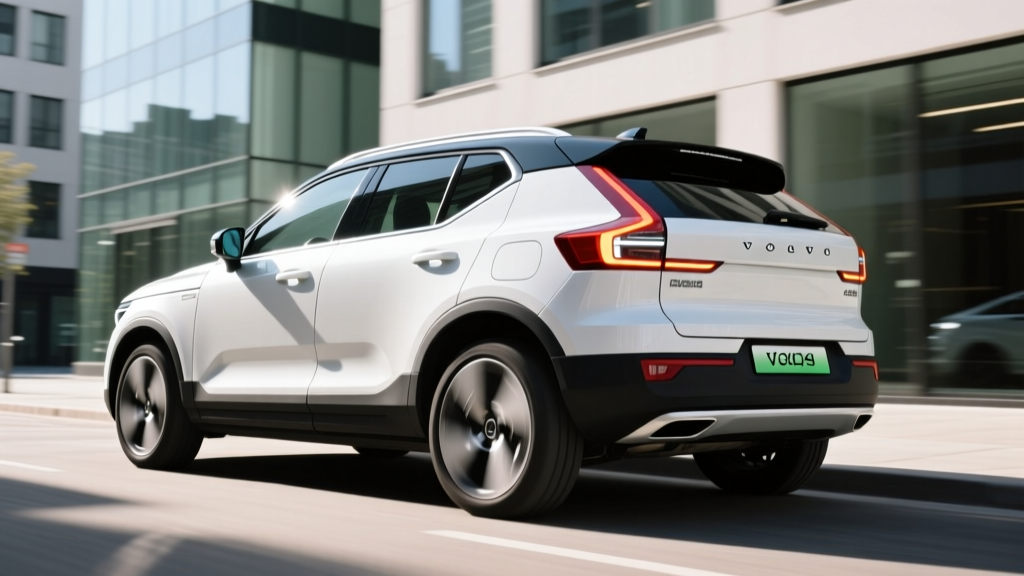
The Quick Answer: Is the 2022 XC40 Recharge Worth It in 2026?
Bottom line: The 2022 Volvo XC40 Recharge Pure Electric is a strong used compact luxury EV if you find one under $28,000–$32,000 and have reliable Level 2 home charging. Its 78 kWh battery (NMC chemistry) delivers an EPA-rated 223 miles of range, but expect 180–195 miles in real-world highway driving and as low as 150–165 miles in sub-freezing winter conditions. Peak DC fast charging hits 150 kW, adding 10–80% in roughly 37 minutes. The used-EV federal tax credit (§25E) can knock up to $4,000 off the purchase price if you buy from a dealer and meet income requirements.
Volvo's first all-electric vehicle arrived with dual motors, 402 horsepower, and a premium Scandinavian interior — but it also launched with a relatively small battery for its class and a price tag near $55,000. Four years later, depreciation has made the 2022 XC40 Recharge Pure Electric a compelling value proposition on the used market, but only if you understand exactly what you're getting. This guide gives you the numbers, the ownership math, and the decision framework to buy with confidence.
Specs That Matter: Range, Battery, and Charging
| Specification | 2022 XC40 Recharge Pure Electric |
|---|---|
| EPA Range | 223 miles |
| Real-World Range (highway, mild weather) | ~180–195 miles |
| Real-World Range (cold weather, <32°F) | ~150–165 miles |
| Battery Capacity (usable) | 78 kWh (NMC chemistry) |
| Peak DC Fast Charge Rate | 150 kW (CCS1 connector) |
| 10–80% DC Fast Charge Time | ~37 minutes |
| Level 2 AC Charge Rate | 11 kW (~33 miles/hr added) |
| Level 1 (120V) Charge Rate | ~1.4 kW (~4 miles/hr added) |
| 0–60 mph | 4.7 seconds |
| Horsepower / Torque | 402 hp / 486 lb-ft |
| EPA Efficiency | 85 MPGe combined |
| Drivetrain | Dual-motor AWD |
| Battery/Powertrain Warranty (original) | 8 years / 100,000 miles |
| Original MSRP (Core trim) | $55,085 (incl. destination) |
| Typical Used Price (2026) | $25,000–$32,000 |
Real-World Range Reality Check: The EPA rates the 2022 XC40 Recharge at 223 miles, per fueleconomy.gov. In practice, this SUV's boxy shape and 4,700+ lb curb weight work against highway efficiency. On a 70-mph interstate loop in 65°F weather, expect 180–195 miles before hitting 10% SoC. In winter (20–30°F), cabin heating and battery thermal management can drop usable range to 150–165 miles. The heat pump (standard on this model) helps mitigate cold-weather losses compared to resistive heating, but physics still wins. If your daily commute is under 60 miles round-trip and you charge at home nightly, this range is perfectly adequate.
Charging Curve Reality
The 150 kW peak charge rate sounds respectable, but like all EVs, the XC40 Recharge doesn't sustain peak speed throughout the session. The battery accepts close to 150 kW between roughly 10% and 35% SoC, then tapers to ~100 kW through 60%, and drops further to ~50 kW above 80%. That's why the 10–80% session takes about 37 minutes — the second half is significantly slower than the first. For road trips, plan charging stops around the 20–80% window to minimize time at the plug. On Electrify America or EVgo networks with 150+ kW CCS stalls, you'll add roughly 100 miles in 15 minutes during the fast portion of the curve.
Note: The 2022 model uses the CCS1 connector. With the industry's shift toward NACS (Tesla's standard), adapters are available from Volvo and third-party manufacturers to access Tesla Supercharger V3/V4 stalls. Volvo has confirmed NACS adapter compatibility for the XC40 Recharge, but verify adapter availability with your specific VIN before relying on Supercharger access.
EV vs. Gas: How Does the XC40 Recharge Compare?
The natural comparison for a used 2022 XC40 Recharge buyer is the gas-powered XC40 (B4/B5 mild-hybrid) or a competing luxury compact SUV. Here's how the numbers stack up over five years of ownership, assuming 12,000 miles/year.
| Metric | 2022 XC40 Recharge (EV) | 2022 XC40 B5 AWD (Gas) |
|---|---|---|
| EPA Combined Efficiency | 85 MPGe (35 kWh/100mi) | 25 MPG combined |
| Annual Fuel/Energy Cost | ~$588 (at $0.14/kWh avg) | ~$1,680 (at $3.50/gal avg) |
| 5-Year Fuel/Energy Cost | ~$2,940 | ~$8,400 |
| 5-Year Maintenance Estimate | ~$1,200 | ~$3,000 |
| Annual Insurance (avg) | ~$2,100 | ~$1,700 |
| 5-Year Insurance Total | ~$10,500 | ~$8,500 |
| 5-Year Total Operating Cost | ~$14,640 | ~$19,900 |
| 0–60 mph | 4.7 seconds | 6.2 seconds |
The EV saves roughly $5,260 in operating costs over five years, primarily from fuel and maintenance. However, insurance runs about $400/year higher for the electric version due to higher repair costs and parts pricing. The EV's advantage grows if you have access to cheap home electricity (under $0.12/kWh) or time-of-use rates, and shrinks if you rely entirely on public DC fast charging at $0.35–$0.50/kWh.
Full Cost Breakdown: Purchase, Charging, and Ownership
| Cost Category | Estimated Amount | Notes |
|---|---|---|
| Used Purchase Price | $25,000–$32,000 | Depends on mileage, condition, trim |
| Federal Used EV Tax Credit (§25E) | Up to $4,000 | 30% of sale price, max $4,000; income caps apply; dealer sale required; see IRS.gov |
| Effective Purchase Price (after credit) | $21,000–$28,000 | If eligible for full $4,000 credit |
| Home Level 2 Charger (hardware) | $350–$700 | Quality 32–48A unit (ChargePoint, Emporia, Wallbox) |
| Home Level 2 Installation | $500–$2,000 | Varies by panel capacity, conduit run, permit; may need 200A panel upgrade ($1,500–$3,000 additional) |
| Annual Electricity (home charging) | $500–$700 | At 12,000 mi/yr, $0.12–$0.16/kWh |
| Annual Insurance | $1,800–$2,400 | Get quotes before purchasing; varies by ZIP, driving record |
| Tires (replacement, every ~35,000 mi) | $800–$1,200/set | EV-specific tires recommended; heavier vehicle wears tires faster |
| Brake Pads | Rarely needed before 80,000+ mi | Regenerative braking drastically reduces wear |
| Battery Replacement (if needed out of warranty) | $12,000–$18,000 | Unlikely before 150,000+ mi based on current NMC degradation data |
The Used EV Tax Credit (§25E) Explained
If you buy a qualifying used 2022 XC40 Recharge from a licensed dealer (not a private party), you may be eligible for the federal used clean vehicle credit under §25E. This credit equals 30% of the sale price, capped at $4,000. Key requirements:
- Income caps: Modified adjusted gross income must not exceed $75,000 (single), $112,500 (head of household), or $150,000 (joint filers)
- Vehicle price cap: Sale price must be $25,000 or less to qualify
- Dealer sale required: Private-party and auction purchases do not qualify
- Vehicle age: Must be at least 2 model years old (the 2022 model qualifies)
- First used sale: The credit can only be claimed once per vehicle VIN after its original sale
- Non-refundable: You must have tax liability to benefit (no refund if credit exceeds taxes owed)
Critical nuance: The $25,000 sale price cap means you need to negotiate carefully. A car listed at $27,500 won't qualify at all, while one at $24,500 nets you a $4,000 credit (30% of $24,500 = $7,350, capped at $4,000). Always confirm current rules on IRS.gov and consult a tax professional, as incentive rules can change.
Real-World Ownership: What First-Time EV Buyers Must Know
Home Charging Is Non-Negotiable for This Vehicle
The 2022 XC40 Recharge's 223-mile EPA range and 150 kW charging speed make it a vehicle designed around home charging. With a Level 2 home charger (11 kW onboard), a full charge from 10% to 100% takes roughly 7 hours — plug in at night, wake up to a full battery every morning. Without home charging, you'll be visiting public chargers 2–3 times per week for a typical commute, and the cost advantage over gas evaporates quickly at public DC rates of $0.35–$0.50/kWh.
If you live in an apartment without charging access or park on the street, this vehicle becomes significantly less practical. Before buying, confirm you can install a Level 2 charger: you'll need a dedicated 240V circuit (typically 40–50A) and a licensed electrician. Have your electrical panel evaluated — older homes with 100A service may need a panel upgrade before adding an EV circuit.
Cold Weather and Range Planning
The XC40 Recharge's NMC battery loses capacity in cold weather, and the cabin heating system draws significant energy. In sustained temperatures below 30°F, expect 25–30% range reduction. Volvo includes a heat pump on the 2022 model, which is more efficient than resistive heating, but it can't eliminate cold-weather losses entirely. If you live in the upper Midwest or Northeast and regularly drive more than 120 miles one-way in winter, this vehicle's range will feel tight. Preconditioning the battery and cabin while plugged in at home mitigates some of this loss.
Software and Google Built-In
The 2022 XC40 Recharge was Volvo's first vehicle with Google Built-In (Android Automotive OS). This means Google Maps, Google Assistant, and the Play Store are native to the car. Navigation with live traffic and EV-aware routing (including charging stops) works well, but it requires a data subscription after the initial 4-year included period. Apple CarPlay was not available at launch on the 2022 model — Volvo added it via an OTA update later in 2022/2023. Verify that any used example you consider has received this update if iPhone integration matters to you.
| Common Misconception | Fact |
|---|---|
| "The battery will need replacing soon and cost a fortune." | NMC batteries in the XC40 Recharge are warrantied for 8 years/100,000 miles at 70% capacity retention. Real-world degradation data from similar Volvo/Polestar packs shows ~8–12% loss over 100,000 miles. A 2022 model with 40,000 miles likely still has 90%+ State of Health. |
| "It qualifies for the $7,500 federal tax credit." | The §30D new-vehicle credit no longer applies to used purchases. The used-vehicle credit (§25E) caps at $4,000 and has strict income and price requirements. |
| "150 kW charging means I'll get a full charge in 20 minutes." | Peak rate is only sustained briefly. The charge curve tapers significantly above 50% SoC. Plan for 37 minutes from 10–80%, and longer if charging past 80%. |
| "I don't need home charging — public chargers are everywhere." | Public DC charging at $0.40/kWh costs roughly $31 per full charge vs. ~$11 at home ($0.14/kWh). Over a year, that's $1,200+ extra. Public charger reliability also remains inconsistent. |
| "EV maintenance is basically zero." | No oil changes, but EVs still need tire rotations, cabin air filters, brake fluid checks, coolant service, and wiper replacements. Budget ~$200–$300/year for basic maintenance. |
Decision Framework: Should You Buy the 2022 XC40 Recharge?
Buy the 2022 XC40 Recharge Pure Electric IF:
- You can install a Level 2 home charger (240V, 40–50A circuit)
- Your daily driving is under 80 miles round-trip, with occasional 150-mile trips
- You find one priced at or below $25,000 from a dealer (to maximize the §25E credit)
- You want a luxury compact SUV with strong acceleration (4.7s 0–60) and AWD
- You value the Google Built-In infotainment system and Volvo's safety reputation
- You live in a moderate climate or your winter trips are short
Look elsewhere IF:
- You lack home charging access and would rely entirely on public infrastructure
- You regularly drive 200+ miles one-way and don't want to plan charging stops
- You live in an extreme cold climate (sustained sub-10°F) with long winter commutes
- You need more than 223 miles of EPA range — consider a used Hyundai Ioniq 5 (303 mi), Tesla Model Y Long Range (330 mi), or Chevrolet Bolt EUV (247 mi) at similar price points
- You want Apple CarPlay as a guaranteed feature — confirm the OTA update is applied
- The vehicle you're eyeing is priced above $28,000, making it hard to qualify for the used EV credit
Competitive Alternatives at Similar Used Prices (2026 Market)
The used EV market in the $22,000–$32,000 range offers several alternatives worth cross-shopping:
- Tesla Model Y Long Range (2021–2022): ~330 miles EPA, Supercharger network access, more cargo space. Less traditional luxury feel, but superior range and charging infrastructure.
- Hyundai Ioniq 5 (2022): ~303 miles EPA (RWD), 800V architecture enables 10–80% in ~18 minutes at 350 kW chargers. More futuristic design, slightly larger interior.
- Ford Mustang Mach-E (2021–2022): ~230–305 miles EPA depending on battery. Sporty driving dynamics, BlueCruise hands-free driving available on higher trims.
- Volkswagen ID.4 (2021–2022): ~260 miles EPA, more spacious rear seat, softer ride. Less power (201 hp RWD) and slower DC charging (~125 kW peak).
Frequently Asked Questions
What is the real-world range of the 2022 Volvo XC40 Recharge Pure Electric?
The EPA rates it at 223 miles combined. In real-world driving at highway speeds (65–75 mph) in mild weather, expect 180–195 miles. In cold weather below 32°F, that drops to roughly 150–165 miles. City driving with regenerative braking can push closer to or slightly above the EPA estimate.
How long does it take to charge the 2022 XC40 Recharge at home?
On a Level 2 home charger (240V, utilizing the full 11 kW onboard charger), a full charge from near-empty to 100% takes about 7–8 hours. Most owners charge from 20–80% overnight, which takes roughly 4–5 hours. On a standard 120V outlet (Level 1), expect about 4 miles of range per hour of charging — a full charge would take over 50 hours, making Level 1 impractical for daily use.
Does the 2022 XC40 Recharge qualify for any tax credits in 2026?
As a used vehicle, it does not qualify for the §30D new-vehicle credit. It may qualify for the §25E used clean vehicle credit of up to $4,000, but only if purchased from a licensed dealer for $25,000 or less, and only if the buyer meets income caps ($75K single / $150K joint). Verify current eligibility on IRS.gov before purchasing.
What is the battery warranty on a used 2022 XC40 Recharge?
Volvo's original high-voltage battery warranty is 8 years or 100,000 miles (whichever comes first), guaranteeing at least 70% capacity retention. For a 2022 model, that warranty extends through 2030 or 100,000 miles. If you're buying one with 45,000 miles, you still have roughly 5 years and 55,000 miles of battery coverage remaining. Ask the dealer or seller for a battery State of Health (SoH) report before purchase.
Can I use Tesla Superchargers with the 2022 XC40 Recharge?
The 2022 XC40 Recharge uses the CCS1 connector natively. Volvo has confirmed that a NACS adapter can be used to access Tesla Supercharger V3 and V4 stalls, but you must source the correct adapter (available through Volvo dealerships or approved third-party suppliers). Confirm adapter compatibility with your specific VIN before relying on Supercharger access for road trips.
How does insurance cost compare to the gas XC40?
Insurance for the electric XC40 Recharge typically runs 15–25% higher than the gas-powered XC40 B5, averaging $1,800–$2,400/year depending on your location, driving history, and coverage level. The higher cost reflects the vehicle's higher original MSRP, more expensive repair parts (especially body panels and sensors), and EV-specific repair training requirements. Get quotes from your insurer before committing to the purchase.
Is the Google Built-In system reliable, and does it support Apple CarPlay?
The Android Automotive OS (Google Built-In) in the 2022 XC40 Recharge is generally well-regarded for navigation and voice control. Google Maps with EV routing is a strong feature. Apple CarPlay was not available at launch but was added via an over-the-air (OTA) update in late 2022/early 2023. Before purchasing a used example, verify in the infotainment settings that the CarPlay update has been applied. The Google services subscription is included for the first 4 years; after that, a paid subscription is needed for connected navigation and app features, though basic Bluetooth and CarPlay/Android Auto projection continue to work.