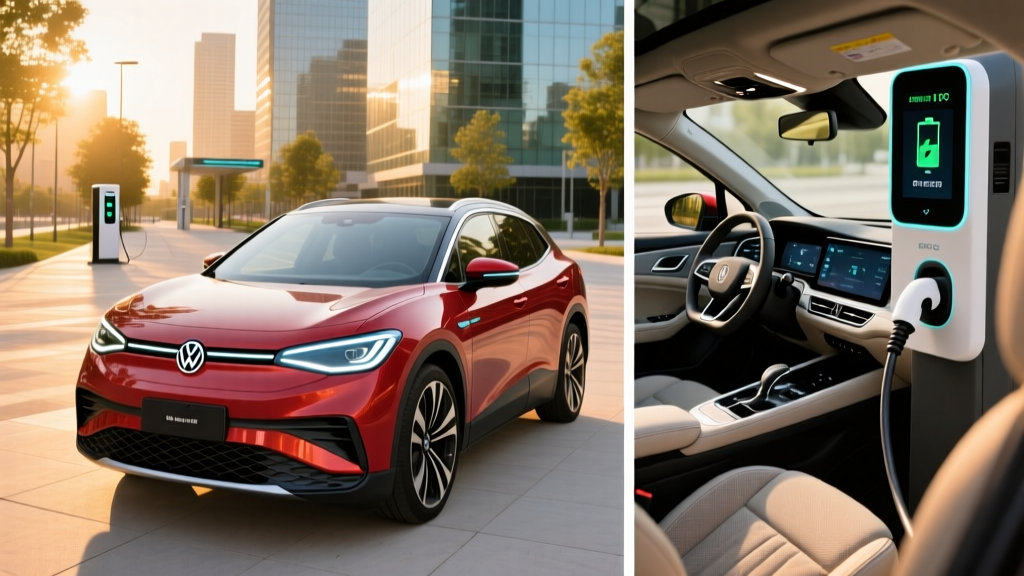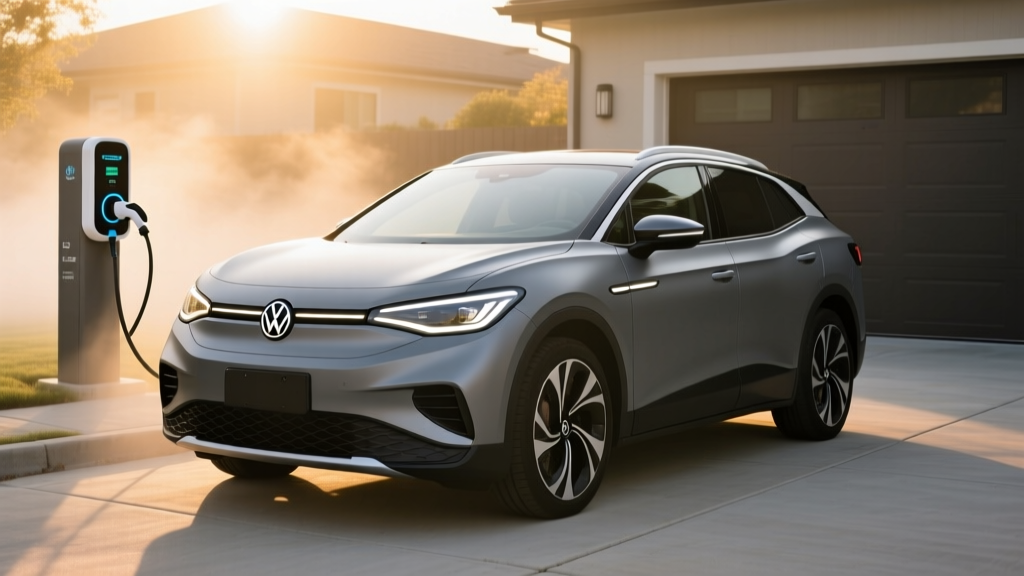
The 2022 Volkswagen ID.4 occupies a specific niche in the 2026 used-EV market: a practical, no-drama electric compact crossover that prioritizes comfort and daily usability over performance theatrics. With EPA range reaching 260 miles on rear-wheel-drive trims, a spacious cabin, and VW's strong warranty backing, the ID.4 appeals to buyers who want a sensible family EV without paying a Tesla premium. But sensible doesn't mean flawless — its charging speeds, infotainment quirks, and highway efficiency deserve honest scrutiny before you sign on a pre-owned example.
This review breaks down every number that matters for a 2026 used-car buyer: real-world range expectations, DC fast-charging behavior, home charging logistics, federal used-EV tax credit eligibility under IRS §25E, and how the ID.4 stacks up against competitors like the Hyundai Ioniq 5 and Ford Mustang Mach-E.
2022 Volkswagen ID.4: Key Specifications at a Glance
| Specification | RWD (Standard) | AWD Pro S |
|---|---|---|
| EPA Range | 260 miles | 249 miles |
| Battery (usable) | 77 kWh (82 kWh gross), NMC | 77 kWh (82 kWh gross), NMC |
| Max DC Fast Charge | 125 kW | 135 kW |
| 10–80% DC Time | ~38 minutes | ~36 minutes |
| Level 2 Home Charge Rate | 11 kW (AC) | 11 kW (AC) |
| Horsepower | 201 hp | 295 hp |
| 0–60 mph | 7.7 seconds | 5.4 seconds |
| Drivetrain | Rear-wheel drive | Dual-motor AWD |
| MPGe (combined) | 107 MPGe | 101 MPGe |
| Efficiency (kWh/100 mi) | 31 kWh/100 mi | 33 kWh/100 mi |
| Cargo (behind 2nd row) | 30.3 cu ft | 30.3 cu ft |
| Cargo (seats folded) | 64.2 cu ft | 64.2 cu ft |
| Original Base MSRP | $41,230 | $48,170 |
| Battery Warranty | 8 years / 100,000 miles (70% capacity retention) | |
Real-World Range: What to Actually Expect
Real-World Highway (70 mph, moderate temps): ~210–230 miles
Real-World Cold Weather (below 32°F, mixed driving): ~170–195 miles
City / Commuter Driving (mild temps): ~250–270 miles
The EPA numbers for the 2022 ID.4 are achievable, but primarily in city and suburban driving where regenerative braking recovers energy and speeds stay moderate. On a sustained 70-mph highway run in 65°F weather, expect the RWD model to deliver roughly 215–230 miles before you need to find a charger. The ID.4's aerodynamic profile (a bluff crossover shape, not a teardrop sedan) and 4,600+ lb curb weight work against it at highway speeds.
Cold weather is the ID.4's most significant range challenge. The 2022 model year uses a resistive PTC heater rather than a heat pump (VW added a heat pump on later model years in some markets). In sub-freezing conditions, cabin heating draws heavily from the 77 kWh usable battery, and you can expect a 25–35% range reduction. On a 20°F winter highway drive, plan for roughly 170–195 miles of real range. Preconditioning the battery while plugged in at home helps mitigate this, but it won't eliminate the physics of cold-weather lithium-ion chemistry.
According to EPA data on fueleconomy.gov, the RWD ID.4 achieves 107 MPGe combined (31 kWh/100 mi). That's competitive within its class but trails the Hyundai Ioniq 5's 114 MPGe and the Tesla Model Y's 122 MPGe combined.
Charging Performance: DC Fast and Home Level 2
| Charging Level | Power (kW) | Rate / Time | Notes |
|---|---|---|---|
| Level 1 (120V household) | ~1.4 kW | ~4 miles per hour | Emergency / overnight trickle only |
| Level 2 (240V, 48A home) | 11 kW (max) | ~32 miles per hour; 0–100% in ~7.5 hrs | Requires 60A dedicated circuit |
| DC Fast Charge (CCS) | 125 kW peak (RWD) / 135 kW (AWD) | 10–80% in ~36–38 min | Peak rate sustained to ~30% SoC, then tapers |
The ID.4's DC fast-charging capability is its most debated spec. A peak rate of 125 kW (RWD) or 135 kW (AWD) was middling at launch in 2022 and looks even more conservative in 2026, when competitors like the Ioniq 5 (peak 240 kW on 800V architecture) and the Kia EV6 (peak 235 kW) have moved the goalposts.
Here's what that means on a road trip: at a 150+ kW Electrify America or CCS-compatible station, the ID.4 will pull its peak ~125 kW from roughly 5% to 30% State of Charge. After that, the charge curve tapers progressively — dropping to ~80 kW around 50% SoC, ~50 kW around 70%, and crawling below 25 kW past 85%. A 10–80% session takes roughly 38 minutes in ideal conditions (warm battery, pre-conditioned). In practice, most road-trip stops will run 35–45 minutes if you're charging from 15% to 80%.
For home charging, the 11 kW onboard AC charger is a genuine strength. With a properly installed Level 2 wallbox (48-amp, hardwired, on a 60-amp breaker), you'll add roughly 32 miles of range per hour, meaning a depleted battery reaches full overnight in about 7.5 hours. This is faster than the base Ioniq 5's 10.9 kW and significantly faster than some older EVs limited to 7.2 kW. The key caveat: your home's electrical panel must support a 60-amp dedicated circuit. Panel upgrades can add $1,000–$3,000 to installation costs.
Driving Dynamics and Performance
The RWD ID.4's 201 horsepower and 7.7-second 0–60 time won't win drag races, but the electric powertrain's instant torque (229 lb-ft from 0 rpm) makes it feel brisk in city and suburban driving. Passing maneuvers on two-lane roads are confident, and the rear-mounted motor gives the ID.4 a surprisingly tight 31.5-foot turning circle — tighter than many compact gas crossovers.
The AWD Pro S model, with a front motor added for 295 combined horsepower and 339 lb-ft of torque, drops the 0–60 time to 5.4 seconds. It's genuinely quick and provides meaningful traction benefits in snow and rain. The 11-mile range penalty (249 vs. 260 EPA) is a reasonable trade-off for buyers in four-season climates.
Ride quality is where the ID.4 genuinely shines. VW tuned the suspension for comfort over sportiness, and the result is a composed, well-damped ride that absorbs potholes and highway expansion joints with minimal fuss. Road noise is well-suppressed. This is a crossover designed for relaxed cruising, not canyon carving — and that's exactly what most family-EV buyers want.
The ID.4's NHTSA safety rating includes a 5-star overall score, with 5 stars in frontal and side crash tests. Standard IQ.DRIVE driver-assistance features include adaptive cruise control, lane-keeping assist, automatic emergency braking, and a Travel Assist mode that combines lane centering with stop-and-go cruise. This is a Level 2 SAE driver-assist system — it requires continuous driver attention and hands-on-wheel supervision. It is not autonomous driving.
Interior, Cargo, and Daily Practicality
The 2022 ID.4's cabin is roomy for its class. Rear-seat legroom measures 37.6 inches — enough for adults on longer trips — and the flat floor (no transmission tunnel) makes the middle seat usable. Front legroom is generous at 41.1 inches. The panoramic glass roof on Pro S and Pro S Plus trims adds an airy feel, though it slightly reduces headroom compared to the steel-roof Pro trim.
Cargo space is competitive: 30.3 cubic feet behind the second row and 64.2 cubic feet with seats folded. That's less than a Tesla Model Y (30.2 / 76.2 cu ft with seats folded, plus a front trunk) but adequate for weekly groceries, a double stroller, or camping gear for a family of four. Notably, the ID.4 has no frunk (front trunk) — the space under the hood houses power electronics and the 12V battery.
The infotainment system is the ID.4's most polarizing feature. The 2022 model uses a 12-inch touchscreen (10-inch on base Pro trim) with a mostly touch-capacitive interface — including slider-style volume and climate controls that lack backlighting. Many owners find these frustrating to use at night and while driving. Wireless Apple CarPlay and Android Auto are standard and largely solve the interface issue by letting you use your phone's familiar UI on the car's screen. The small 5.3-inch digital instrument cluster behind the steering wheel is minimal but functional, showing speed, range, and navigation prompts.
Pricing, Trims, and Federal Tax Credit Eligibility
As a used vehicle in 2026, the 2022 ID.4's original MSRP is primarily relevant for context and tax-credit calculations. Here's the pricing landscape:
| Trim | Original MSRP | Typical 2026 Used Price | §25E Used-EV Credit | Effective Cost |
|---|---|---|---|---|
| Pro (RWD) | $41,230 | $22,000–$26,000 | Up to $4,000 (30% of sale price, capped) | ~$18,000–$22,000 |
| Pro S (RWD) | $45,670 | $24,000–$28,000 | Up to $4,000 | ~$20,000–$24,000 |
| Pro S (AWD) | $48,170 | $26,000–$30,000 | Up to $4,000 | ~$22,000–$26,000 |
| Pro S Plus (RWD) | $48,170 | $27,000–$31,000 | Up to $4,000 | ~$23,000–$27,000 |
| 1st Edition (AWD) | $49,170 | $27,000–$32,000 | Up to $4,000 | ~$23,000–$28,000 |
- Credit equals 30% of the sale price, capped at $4,000
- Vehicle must be purchased from a licensed dealer (private-party sales don't qualify)
- Sale price must be $25,000 or less — higher-priced used ID.4 trims may not qualify
- Buyer income caps: $75,000 single / $112,500 head of household / $150,000 joint (modified AGI)
- Vehicle must be at least 2 model years old (2022 ID.4 qualifies in 2026)
- Must be purchased for personal use, not resale
- Credit is non-refundable — you must have sufficient federal tax liability to claim it
- Check current rules at irs.gov — regulations can change
The $25,000 sale-price cap is the critical constraint for ID.4 buyers. A well-equipped Pro S or 1st Edition AWD selling for $27,000–$30,000 will not qualify for the §25E credit. Buyers targeting the credit should focus on Pro and Pro S RWD trims priced at or below $25,000 — which are available in the 2026 used market with moderate mileage (30,000–50,000 miles).
Warranty, Battery Longevity, and Maintenance
Volkswagen provides an 8-year / 100,000-mile battery warranty on the ID.4, guaranteeing the high-voltage battery will retain at least 70% of its original capacity. Given that 2022 models are now 4 years old in 2026, buyers still have approximately 4 years or 60,000+ miles of factory battery coverage remaining — a meaningful safety net for a used EV purchase.
The ID.4's battery uses NMC (nickel manganese cobalt) chemistry, which offers high energy density but is more sensitive to sustained high-SoC storage and extreme heat than LFP chemistry. Best practices for long-term health: avoid routinely charging to 100% (set daily limit to 80%), use DC fast charging sparingly (it's fine for road trips, but daily Level 2 is gentler), and precondition the battery in cold weather before fast charging.
The basic vehicle warranty is 4 years / 50,000 miles, which will have expired on most 2022 models by 2026. However, the powertrain (motors, reduction gear) falls under the same 8-year / 100,000-mile coverage as the battery. VW also provided 3 years / 36,000 miles of complimentary scheduled maintenance on new ID.4s, which has likely expired — but EV maintenance costs are minimal regardless (no oil changes, no spark plugs, brake pads last 100,000+ miles thanks to regenerative braking).
How the 2022 ID.4 Compares to Key Competitors
| Spec | 2022 VW ID.4 (RWD) | 2022 Hyundai Ioniq 5 (RWD Long Range) | 2022 Ford Mustang Mach-E (Select RWD) | 2022 Tesla Model Y (Long Range AWD) |
|---|---|---|---|---|
| EPA Range | 260 mi | 303 mi | 247 mi | 330 mi |
| Battery | 77 kWh usable, NMC | 72.6 kWh usable, NMC | 68 kWh usable, NMC | ~75 kWh usable, NMC |
| Peak DC Charge | 125 kW | 240 kW (800V) | 150 kW | 250 kW |
| 10–80% DC Time | ~38 min | ~18 min | ~38 min | ~25 min |
| 0–60 mph | 7.7 sec | 7.0 sec | 6.1 sec | 4.8 sec |
| MPGe (combined) | 107 | 114 | 101 | 122 |
| Cargo (rear seats up) | 30.3 cu ft | 27.2 cu ft | 29.7 cu ft | 30.2 cu ft |
| Original Base MSRP | $41,230 | $44,875 | $44,995 | $65,990 |
Pros and Cons: The Honest Assessment
- Comfortable, quiet ride quality that outclasses sportier competitors
- Spacious cabin with competitive cargo volume (30.3 cu ft)
- Strong 11 kW Level 2 home charging — full overnight replenishment
- Generous battery warranty (8 yr / 100k mi) with years of coverage remaining on 2022 models
- Tight turning circle (31.5 ft) makes it easy to park and maneuver
- Standard IQ.DRIVE safety suite with adaptive cruise and lane centering
- Available at attractive used prices; Pro/Pro S trims may qualify for $4,000 §25E credit
- DC fast charging peaks at only 125–135 kW — slow vs. Ioniq 5, EV6, and Tesla
- Touch-capacitive climate/volume controls are frustrating, especially at night
- No front trunk (frunk) — wasted space under the hood
- No heat pump on 2022 US models — significant cold-weather range loss
- Highway efficiency trails competitors (107 MPGe vs. Ioniq 5's 114, Model Y's 122)
- Infotainment can be sluggish; small instrument cluster feels dated
- AWD trims priced above $25,000 used won't qualify for §25E tax credit
Who Should Buy the 2022 Volkswagen ID.4?
- You primarily commute and drive locally, with occasional 200-mile road trips
- You have Level 2 home charging and can fully replenish overnight
- Ride comfort and cabin quietness matter more than acceleration and charging speed
- You want a well-built, safe family crossover at a used price under $25,000
- You live in a mild-to-moderate climate where cold-weather range loss is manageable
- You take frequent 300+ mile road trips and need the fastest possible DC charging (consider Ioniq 5 or Model Y)
- You live in a consistently cold climate and need a heat pump for winter range preservation
- You prioritize cutting-edge infotainment and tech-forward interiors (consider Tesla or Hyundai)
- You need maximum cargo capacity for large gear or towing (the ID.4 is not rated for towing in the US)
Frequently Asked Questions
What is the real-world range of the 2022 Volkswagen ID.4?
In mixed driving at moderate temperatures, expect 230–250 miles from the RWD model. Sustained highway driving at 70+ mph reduces this to roughly 210–230 miles. In freezing temperatures with cabin heat, plan for 170–195 miles. The 260-mile EPA figure is achievable primarily in city driving with regenerative braking.
How fast does the ID.4 charge at home and on the road?
At home on a Level 2 (240V, 48A) charger, the ID.4 accepts up to 11 kW, adding roughly 32 miles of range per hour — a full charge takes about 7.5 hours. On DC fast chargers, it peaks at 125 kW (RWD) or 135 kW (AWD), achieving a 10–80% charge in approximately 36–38 minutes. This is slower than the Hyundai Ioniq 5's 18-minute 10–80% time.
Does the 2022 ID.4 qualify for any federal tax credit in 2026?
As a used vehicle, the 2022 ID.4 may qualify for the IRS §25E Used Clean Vehicle Credit — up to $4,000 (30% of sale price). However, the sale price must be $25,000 or less, the buyer must meet income caps ($75K single / $150K joint), and the purchase must be through a licensed dealer. Many AWD and top-trim ID.4s sell above $25,000 and won't qualify. Verify current rules at irs.gov.
Is the 2022 ID.4 worth buying vs. the Hyundai Ioniq 5 or Tesla Model Y?
It depends on your priorities. The ID.4 offers the best ride comfort and a strong value proposition on the used market, especially with the §25E credit. The Ioniq 5 is superior for road-trip charging speed (240 kW vs. 125 kW) and efficiency. The Model Y leads in range (330 mi) and Supercharger network access. If you mostly drive locally and value comfort over tech, the ID.4 is a smart, budget-friendly pick.
How long will the ID.4's battery last?
VW warrants the battery for 8 years / 100,000 miles with at least 70% capacity retention. NMC batteries in liquid-cooled packs like the ID.4's typically degrade 1–2% per year under normal use. A well-maintained 2022 ID.4 in 2026 should still have 92–96% of its original capacity, with 4+ years of warranty coverage remaining.
Does the ID.4 have a heat pump for cold weather?
No. The 2022 US-market ID.4 uses a resistive PTC heater, which draws significantly more battery energy in cold weather than a heat pump would. This contributes to the ID.4's notable winter range reduction (25–35%). VW offered a heat pump on some European-market ID.4s, but it was not standard on 2022 US models.
Can the 2022 ID.4 tow?
The US-market 2022 ID.4 is not officially rated for towing by Volkswagen. European-spec ID.4s can tow up to 2,200 lbs (braked), but VW did not certify the US version for towing. If towing is a priority, consider the Ford Mustang Mach-E (up to 1,500 lbs with the factory hitch) or the Rivian R1S.
Sources: EPA / fueleconomy.gov, IRS §25E Used Clean Vehicle Credit, NHTSA Safety Ratings.