The Short Answer: Are There Any 2022 Electric Toyotas?
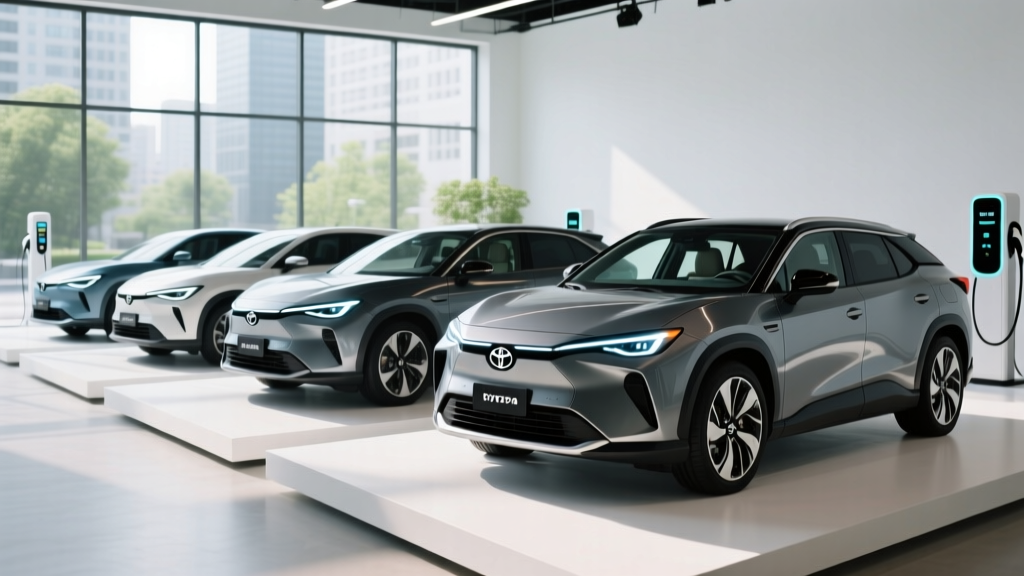
Yes — but only one. The 2022 Toyota bZ4X was Toyota's sole battery-electric vehicle (BEV) for that model year. It launched in the U.S. in late 2022 as a 2023 model-year vehicle in some markets, with limited 2022-model-year units sold primarily through lease programs. If you're shopping the used market for a "2022 electric Toyota," you'll almost certainly encounter the bZ4X — a compact electric SUV with an EPA-estimated range of up to 252 miles, a 71.4 kWh (usable) battery, and DC fast charging up to 150 kW. Toyota did not offer any other fully electric car, truck, or SUV in 2022.
Toyota's electrification strategy has leaned heavily on hybrids — the brand sells over a dozen hybrid and plug-in hybrid models. But for buyers specifically asking "are there any 2022 electric Toyotas?", the bZ4X is the answer. Here's everything you need to know about buying, owning, and evaluating this vehicle today.
2022 Toyota bZ4X: Full Spec Breakdown
| Specification | FWD | AWD |
|---|---|---|
| EPA Range | 252 miles | 228 miles |
| Usable Battery Capacity | 71.4 kWh (NMC lithium-ion) | |
| Horsepower | 201 hp | 214 hp |
| 0–60 mph | ~7.1 sec | ~6.5 sec |
| Peak DC Fast Charge Rate | 150 kW | 150 kW |
| 10–80% DC Charge Time | ~30 minutes (optimal conditions) | |
| Level 2 AC Charge Rate | 6.6 kW (~7 hours for full charge) | |
| EPA Efficiency (MPGe) | 119 MPGe combined | 104 MPGe combined |
| Cargo Volume (rear seats up) | 27.7 cu ft | |
| Original MSRP (base) | $42,000 | $44,080 |
| Battery Warranty | 8 years / 100,000 miles (70% capacity retention) | |
Real-World Range Expectations
The bZ4X FWD's 252-mile EPA sticker is a best-case composite. In real-world highway driving at 70–75 mph, expect approximately 200–220 miles. In cold weather (below 32°F), range can drop to 160–180 miles due to battery chemistry limitations and cabin heating demands. The AWD model's 228-mile EPA figure translates to roughly 185–200 miles highway and 150–170 miles in winter. These numbers matter for road-trip planning — a 250-mile drive in January may require a mid-route DC fast-charge stop.
How Does the bZ4X Compare to Gas and Hybrid Toyotas?
Toyota dominates the hybrid market, so the natural question is: does going fully electric save you more than a RAV4 Hybrid or RAV4 Prime PHEV? Here's the data.
| Metric | 2022 bZ4X (FWD) | 2022 RAV4 Hybrid (AWD) | 2022 RAV4 Prime (PHEV) |
|---|---|---|---|
| Powertrain | BEV (electric only) | HEV (gas + electric) | PHEV (plug-in hybrid) |
| EPA Range / MPG | 252 mi / 119 MPGe | 40 MPG combined | 42 mi electric + 38 MPG gas |
| Fuel/Energy Cost per Mile* | ~$0.04–$0.06 | ~$0.09 | ~$0.04 (EV mode) / ~$0.09 (gas) |
| Annual Fuel Cost (15k mi) | ~$600–$900 | ~$1,350 | ~$600–$1,350 (varies by EV vs gas ratio) |
| Original MSRP | $42,000 | $29,075 | $39,800 |
| Maintenance (5-year est.) | ~$1,500 | ~$3,500 | ~$3,200 |
| Federal Tax Credit (§30D) | Up to $7,500 (if eligible) | $0 | Up to $7,500 (if eligible) |
*Energy costs based on $0.14/kWh national average for home charging and $3.40/gallon regular unleaded. Actual costs vary by electricity rate and region. Source: fueleconomy.gov
The bottom line: The bZ4X costs significantly more upfront than a RAV4 Hybrid, but the per-mile energy cost is roughly half. Over five years and 75,000 miles, the bZ4X can save $2,500–$4,000 in fuel alone — but that saving may not fully offset the higher purchase price unless you qualify for the federal tax credit and charge primarily at home.
Real Costs of Owning a 2022 bZ4X
Buying a used 2022 bZ4X in 2026 means navigating depreciation, tax-credit transfer rules, and charging infrastructure realities. Here's a practical cost breakdown.
| Cost Category | Estimated Amount | Notes |
|---|---|---|
| Used Purchase Price (2026) | $22,000–$28,000 | Depends on mileage, condition, FWD vs AWD |
| Used EV Tax Credit (§25E) | Up to $4,000 | 30% of sale price, max $4,000; income caps apply; vehicle must be <$25,000 |
| Home Level 2 Charger Install | $500–$2,000 | Equipment $300–$600 + electrician labor; panel upgrade adds $1,500–$3,000 |
| Annual Electricity (15k mi) | $450–$700 | At $0.10–$0.16/kWh; public DC charging costs 2–3x more |
| Annual Insurance | $1,600–$2,200 | EVs typically cost 15–25% more to insure than gas equivalents |
| 5-Year Maintenance | $1,200–$1,800 | Tire rotation, cabin filter, brake fluid — no oil changes |
| Estimated 5-Year Total Cost | $34,000–$45,000 | Including purchase, energy, insurance, maintenance |
Tax Credit Reality Check for Used EV Buyers
The §25E used EV credit (up to $4,000) applies to used bZ4X purchases in 2026, but eligibility requires:
- Sale price must be $25,000 or less — this disqualifies many low-mileage examples
- Buyer AGI must not exceed $75,000 (single) / $150,000 (joint)
- Vehicle must be at least 2 model years old (a 2022 qualifies in 2026)
- Must purchase from a licensed dealer (private-party sales excluded)
Always verify current rules at irs.gov and consult a tax professional before relying on credit eligibility.
Charging the bZ4X: What You Need to Know
The bZ4X uses a CCS1 connector for DC fast charging and a J1772 connector for Level 2 AC charging. Toyota partnered with EVgo to provide bZ4X buyers with one year of complimentary public charging (expired for 2022 models by now), but long-term ownership requires a home or workplace charging strategy.
| Charging Level | Power | Connector | Miles Added per Hour | Use Case |
|---|---|---|---|---|
| Level 1 (120V) | ~1.2 kW | J1772 | ~4–5 miles | Overnight trickle; emergency only |
| Level 2 (240V) | 6.6 kW | J1772 | ~22–25 miles | Home/workplace daily charging |
| DC Fast Charge | Up to 150 kW | CCS1 | ~150+ miles in 30 min | Road trips; 10–80% in ~30 min |
Critical charging-curve note: The bZ4X peaks at 150 kW only briefly at low state-of-charge (around 10–20%). As the battery fills past 50%, charge rate tapers significantly — to roughly 60–80 kW by 70% SoC and below 40 kW past 80%. This is standard for NMC lithium-ion batteries but means a "10–80% in 30 minutes" claim assumes ideal battery temperature and preconditioning. In cold weather without preconditioning, expect 40–50 minutes for the same 10–80% session.
The bZ4X does not have a NACS (Tesla-style) connector. If you want Supercharger access, you'll need a CCS-to-NACS adapter — and even then, Toyota has not officially certified Supercharger compatibility for the 2022 bZ4X as of early 2026. Check Toyota's official site for the latest adapter approvals.
Common Misconceptions About the 2022 Electric Toyota
| Myth | Fact |
|---|---|
| "Toyota doesn't make electric cars." | Toyota launched the bZ4X as its first mass-market BEV. The 2022 model year was its debut. |
| "The bZ4X was recalled and is unsafe." | A 2022 recall addressed wheel-hub bolt issues on early production units. Toyota issued a fix, and later builds are unaffected. Check NHTSA VIN lookup before buying. |
| "EV batteries need replacing every 5 years." | Toyota warranties the bZ4X battery for 8 years/100,000 miles at 70% capacity retention. Real-world data from similar NMC packs shows ~10–15% degradation over 100,000 miles. |
| "You can't drive an EV in cold weather." | You can, but range drops 20–35% below freezing. The bZ4X has a heat pump (standard on some trims) that reduces winter range loss compared to resistive heating. |
| "Charging takes hours everywhere." | Level 2 home charging takes ~7 hours (overnight). DC fast charging adds 150+ miles in 30 minutes for road trips. |
Who Should Buy a 2022 bZ4X in 2026?
Buy the bZ4X If:
- You want a used EV under $25,000 from a mainstream brand with a large dealer network
- Your daily commute is under 80 miles round-trip (well within real-world range)
- You have access to Level 2 home or workplace charging
- You value Toyota's reliability reputation and 8-year battery warranty
- You qualify for the §25E used EV credit (income and price caps apply)
Look Elsewhere If:
- You regularly drive 300+ miles in a single day (the 228–252 mi EPA range requires stops)
- You live in extreme cold climates without garage parking (range loss is significant)
- You need Tesla Supercharger network access without adapter complications
- You want the fastest DC charging — rivals like the Hyundai Ioniq 5 charge at 240+ kW on 800V architecture
- You need a third row or large cargo capacity (bZ4X is a compact SUV with 27.7 cu ft)
How the bZ4X Stacks Up Against Used EV Rivals
At the $22,000–$28,000 used price point in 2026, the bZ4X competes with several other 2022–2023 model-year EVs:
- Hyundai Ioniq 5 (2022): 303 mi EPA (Long Range RWD), 240 kW DC charging, 800V architecture — faster charging and more range, but may cost $2,000–$4,000 more used
- Kia EV6 (2022): 310 mi EPA, same 800V platform as Ioniq 5 — sportier but pricier
- Volkswagen ID.4 (2022): 260 mi EPA, 125 kW DC charging, more cargo space (30.3 cu ft) — similar price range
- Chevrolet Bolt EUV (2022): 247 mi EPA, but only 55 kW DC charging — significantly slower road-trip charging, though often cheaper used
The bZ4X's main advantage is Toyota's brand cachet and dealer network. Its main weakness is charging speed — 150 kW peak is adequate but trails the Hyundai/Kia 800V platforms by a wide margin on road trips.
Frequently Asked Questions
Did Toyota make any other electric vehicles in 2022?
No. The bZ4X was Toyota's only fully electric vehicle for the 2022 model year. Toyota also sold the Prius Prime (PHEV) and RAV4 Prime (PHEV), which have electric-only driving modes but are not pure EVs. The bZ4X was co-developed with Subaru, which sells the nearly identical Solterra.
Is the 2022 bZ4X eligible for any tax credits in 2026?
As a new vehicle, it no longer qualifies for the §30D new EV credit. However, if purchased used from a dealer for $25,000 or less, it may qualify for the §25E used clean vehicle credit (up to $4,000), subject to buyer income limits. Verify at irs.gov.
What was the 2022 bZ4X recall about?
Early-production 2022 bZ4X vehicles were recalled because wheel-hub bolts could loosen under hard braking or sharp turns, potentially causing a wheel to detach. Toyota halted sales temporarily and issued a repair using redesigned hub bolts. Any used 2022 bZ4X should have this recall completed — verify with a VIN check at nhtsa.gov/recalls.
How much does it cost to charge a bZ4X at home?
A full charge from 0–100% on the 71.4 kWh battery at the U.S. average residential rate of $0.14/kWh costs approximately $10.00. For a typical 20–80% daily charge, expect around $6.00. This is roughly equivalent to $1.00–$1.50 per gallon of gasoline in cost-per-mile terms.
Can the bZ4X use Tesla Superchargers?
Not natively. The 2022 bZ4X has a CCS1 connector. Some automakers have approved CCS-to-NACS adapters for Supercharger access, but as of early 2026, Toyota has not officially certified this for the bZ4X. Check Toyota's official communications for updates before purchasing an adapter.
What's the real-world range in winter?
Expect 160–180 miles in the FWD model and 150–170 miles in the AWD when temperatures are consistently below 32°F. Using seat heaters instead of cabin heat, and preconditioning while plugged in, can recover 10–15 miles of range.
Sources: EPA fuel economy data from fueleconomy.gov; tax credit rules from irs.gov; recall information from nhtsa.gov.