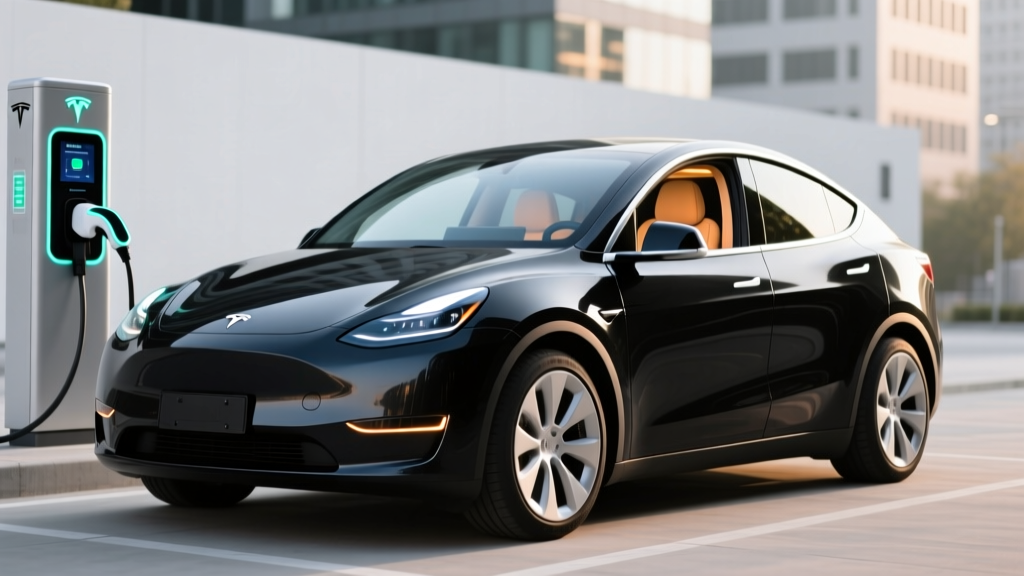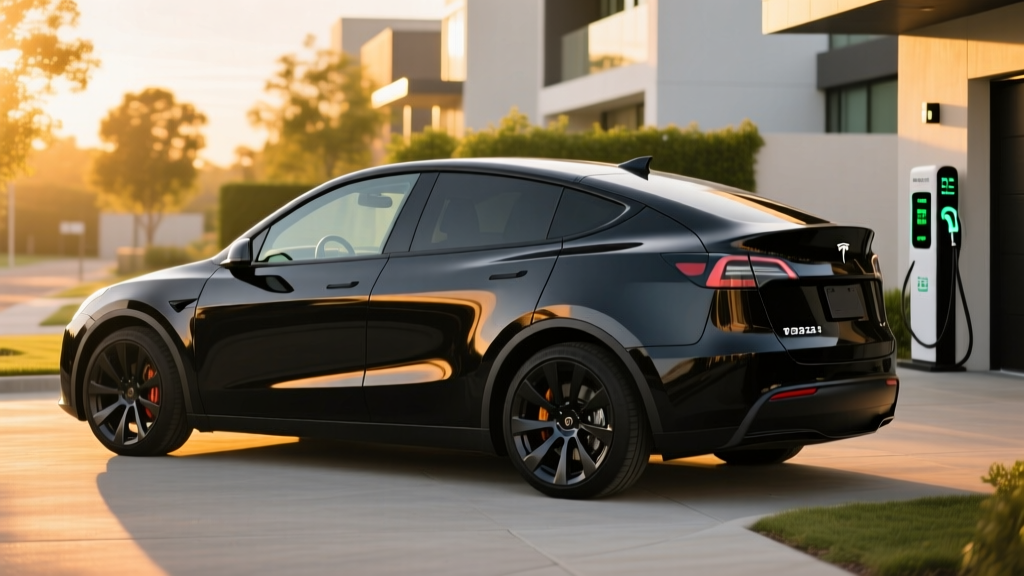
The 2022 Tesla Model Y Performance remains one of the most sought-after used electric SUVs in 2026. With blistering acceleration, access to the Supercharger network, and practical crossover packaging, it set the benchmark that competitors like the Ford Mustang Mach-E GT and Hyundai Ioniq 5 are still chasing. But buying a 2022 model year vehicle today means navigating used-EV market pricing, battery degradation questions, and a shifting federal tax credit landscape. This review breaks down every spec that matters — from real-world highway range to DC fast-charging curves — so you can decide if a used 2022 Model Y Performance is the right move.
Quick Verdict: Still a Benchmark in 2026
The 2022 Model Y Performance delivers 456 horsepower, a 3.5-second 0-60 mph time, and an EPA-estimated 303 miles of range from its 82 kWh (usable ~79 kWh) NMC lithium-ion battery. It charges at up to 250 kW on DC fast chargers, adding roughly 200 miles in 15 minutes under ideal conditions. In 2026, used examples typically list between $30,000 and $38,000 depending on mileage and condition. The main trade-offs are a firm ride quality, minimal physical controls, and Tesla's panel-gap variability. For buyers who prioritize acceleration, Supercharger access, and over-the-air updates, this remains a top-tier used EV.
Range, Efficiency & Real-World Expectations
Real-World Highway (70-75 mph): ~250–270 miles
Cold Weather (below 32°F): ~210–240 miles
Combined Efficiency: 122 MPGe / 28 kWh per 100 miles
The EPA's 303-mile figure is achievable in mixed city/suburban driving at moderate speeds with temperate weather. On a 75-mph highway run, expect to use roughly 30–32 kWh per 100 miles, which drops effective range to around 250–270 miles. In sub-freezing conditions, the heat pump (standard on 2022 models) helps, but battery chemistry and cabin heating still reduce range by 15–25%. Plan for ~220 miles of usable range on a cold winter road trip before needing a charge stop.
According to fueleconomy.gov, the 2022 Model Y Performance AWD achieves 122 MPGe combined (129 city / 115 highway). That's slightly lower than the Long Range variant (125 MPGe combined) due to the Performance model's stickier tires, sport-tuned suspension, and 21-inch Überturbine wheels.
| Specification | Value |
|---|---|
| EPA Range | 303 miles |
| Battery (Usable) | ~79 kWh (82 kWh gross), NMC chemistry |
| Drivetrain | Dual-motor AWD |
| Horsepower | 456 hp (combined) |
| Torque | 497 lb-ft |
| 0-60 mph | 3.5 seconds |
| Top Speed | 155 mph |
| Max DC Fast Charge | 250 kW (peak) |
| 10-80% DC Charge Time | ~27 minutes |
| Level 2 Home Charge Rate | 11.5 kW (~44 miles/hour) |
| EPA Efficiency | 122 MPGe / 28 kWh/100 mi |
| Cargo Volume (rear seats up) | 30.2 cu ft |
| Cargo Volume (rear seats folded) | 72.0 cu ft |
| Front Trunk (Frunk) | 4.1 cu ft |
| Rear Legroom | 37.7 inches |
| Battery Warranty | 8 years / 120,000 miles (70% retention) |
| Basic Vehicle Warranty | 4 years / 50,000 miles |
| Original MSRP (2022) | $65,990 (+$1,200 destination) |
Charging Speed: DC Fast, Level 2 & Home Setup
Charging speed is where the 2022 Model Y Performance still holds an edge over many used EV competitors. Here's what the numbers look like across charging levels:
| Charge Level | Power / Rate | Miles Added per Hour | Notes |
|---|---|---|---|
| Level 1 (120V) | ~1.4 kW | ~4–5 mi/hr | Emergency/trickle only |
| Level 2 (240V, 48A) | 11.5 kW | ~44 mi/hr | Full charge in ~7 hours |
| DC Fast (Tesla Supercharger V3) | Up to 250 kW | ~1,000+ mi/hr (peak) | 10-80% in ~27 min |
| DC Fast (CCS via adapter) | Up to ~150 kW | Varies | Requires Tesla CCS adapter |
Understanding the charge curve: The 250 kW peak rate only holds between roughly 10–30% State of Charge (SoC). From 30–60%, the rate tapers to ~150 kW, and above 80%, it drops below 50 kW to protect the NMC battery. This is why Tesla quotes a 10-80% time rather than 0-100%. On a road trip, plan your stops around 10-80% windows for maximum efficiency.
At home, a Tesla Wall Connector on a 60-amp circuit delivers the full 11.5 kW (48 amps). A typical overnight session of 8 hours adds roughly 350 miles — more than enough to replenish a full day's driving. Installation costs for a 240V/60A circuit typically range from $800 to $2,500 depending on panel proximity and whether a service upgrade is needed.
The 2022 Model Y uses Tesla's proprietary connector (now standardized as NACS). With Tesla's CCS adapter (sold separately for ~$250), you can access Electrify America, EVgo, and other CCS networks — expanding your public charging options significantly in 2026.
Performance & Driving Dynamics
The dual-motor all-wheel-drive powertrain produces 456 horsepower and 497 lb-ft of torque, launching the Model Y Performance to 60 mph in 3.5 seconds. That puts it in sports-car territory — quicker than a Porsche 718 Cayman and nearly matching a BMW M3. The instant torque delivery from the electric motors means there's no turbo lag or transmission shift delay; acceleration is immediate and relentless.
The sport-tuned suspension sits 0.6 inches lower than the Long Range variant and uses stiffer damping. The result is flatter cornering and sharper turn-in, but the ride is noticeably firmer over broken pavement. The 21-inch Überturbine wheels with Pirelli P Zero tires provide excellent grip but contribute to higher road noise and slightly reduced range compared to the 19-inch wheel option on the Long Range.
Regenerative braking is strong and enables one-pedal driving in most scenarios. The 2022 model year does not offer a user-adjustable regen setting — it's fixed at a strong level, which some drivers love and others find abrupt at low speeds.
Tech, Interior & Driver Assistance
The 2022 Model Y's interior follows Tesla's minimalist philosophy: a single 15-inch landscape touchscreen handles navigation, climate, media, vehicle settings, and even the speedometer. There are no physical buttons, no traditional instrument cluster, and no Apple CarPlay or Android Auto. Instead, Tesla's native infotainment includes Spotify, Netflix, YouTube (while parked), and a surprisingly good 14-speaker audio system.
Autopilot (standard): Includes Traffic-Aware Cruise Control and Autosteer (lane centering). This is an SAE Level 2 driver-assistance system — it does not drive the car autonomously. You must keep your hands on the wheel and eyes on the road. The system applies steering torque detection to monitor engagement.
Tesla Autopilot and Full Self-Driving (Supervised) require continuous driver supervision. The vehicle can steer, accelerate, and brake under certain conditions, but the driver is responsible at all times. This is not "self-driving" — that designation applies only to Level 4 systems like Waymo's driverless robotaxi service.
Full Self-Driving (Supervised): Available as a $12,000 option (or $199/month subscription in 2026), FSD adds automatic lane changes, Navigate on Autopilot (highway on/off-ramp handling), Autopark, Summon, and traffic light/stop sign recognition. As of 2026, FSD remains a Level 2 system. It is impressive on well-marked highways but requires active supervision and can behave unpredictably in construction zones, heavy rain, or complex urban intersections.
Notable drawbacks include the lack of a heads-up display, no physical climate controls, limited rear visibility (no rear wiper on 2022 models), and Tesla's inconsistent panel gaps and paint quality relative to legacy luxury brands.
Cargo, Passenger Space & Practicality
The Model Y is a practical family hauler. With 30.2 cubic feet behind the second row and 72.0 cubic feet with the rear seats folded, it rivals midsize gas SUVs. The 4.1-cubic-foot frunk adds space for charging cables or a small bag. Rear legroom of 37.7 inches is adequate for adults, though the sloping roofline limits headroom for taller passengers. The rear seats recline slightly and split 60/40 for flexible cargo configurations.
Towing capacity is rated at 3,500 pounds (with the optional tow hitch), sufficient for a small trailer or a pair of jet skis but not a large boat or camper. Tongue weight is limited to 350 pounds.
Pricing, Tax Credits & Used-EV Economics
The 2022 Model Y Performance originally stickered at $65,990 plus $1,200 destination. In the 2026 used market, expect to pay between $30,000 and $38,000 depending on mileage, condition, and whether FSD was purchased.
| Item | Amount |
|---|---|
| Original MSRP (2022) | $65,990 + $1,200 destination |
| Typical Used Price (2026, 30k–50k mi) | $30,000–$38,000 |
| Federal Used EV Tax Credit (§25E) | Up to $4,000 (30% of sale price, max $4,000) |
| Price After Max §25E Credit | ~$26,000–$34,000 |
Tax credit details: Because the 2022 Model Y is now a used vehicle, it qualifies for the IRS §25E Used Clean Vehicle Credit, not the §30D new-vehicle credit. The §25E credit provides 30% of the sale price up to a maximum of $4,000. Eligibility requirements include:
- Sale price must be $25,000 or less to receive the full $4,000 credit (30% of $25,000 = $7,500, but the cap is $4,000 — so the full credit applies to vehicles priced at ~$13,333 or above)
- Buyer income caps: $75,000 (single), $112,500 (head of household), $150,000 (joint filers) — based on modified AGI
- Vehicle must be at least 2 model years old (2022 qualifies in 2026)
- Must be purchased from a licensed dealer (private-party sales do not qualify)
- Vehicle must have a battery capacity of at least 7 kWh (Model Y's ~79 kWh easily qualifies)
- Credit can be transferred to the dealer at point of sale as a price reduction
- Can only be claimed once per vehicle (check VIN history via the IRS portal)
Note: Tax rules are subject to change. Consult a tax professional and verify current-year rules at IRS.gov before purchasing.
Pros, Cons & Who Should Buy
Pros
- 3.5-second 0-60 mph — supercar-level acceleration in a family SUV
- 303-mile EPA range covers most commutes and road trips without frequent stops
- 250 kW DC fast charging with access to 60,000+ Tesla Superchargers globally
- Over-the-air updates continue adding features years after purchase
- Practical cargo space (72 cu ft max) with frunk
- Eligible for up to $4,000 federal used-EV tax credit (§25E)
- Strong regenerative braking enables one-pedal driving
- Standard heat pump improves cold-weather efficiency
Cons
- Firm ride quality from sport suspension and 21-inch wheels
- No Apple CarPlay or Android Auto — Tesla-only infotainment
- Minimal physical controls; everything routed through the touchscreen
- Inconsistent build quality (panel gaps, paint) relative to German/Japanese rivals
- No rear wiper on 2022 models
- Autopilot/FSD remains Level 2 — not self-driving despite the name
- Insurance costs tend to run 15–25% higher than comparable non-Tesla SUVs
- 21-inch Überturbine wheels are expensive to replace if damaged
Who This EV Suits Best
Choose the 2022 Model Y Performance if:
- You want supercar acceleration in a practical daily driver
- You road-trip frequently and want reliable Supercharger access
- You have home Level 2 charging and a daily commute under 80 miles round-trip
- You value OTA software updates and Tesla's tech ecosystem
Consider a competitor instead if:
- You prioritize ride comfort and cabin quietness (look at the Genesis Electrified GV70 or BMW iX)
- You need Apple CarPlay for your workflow (look at the Ford Mustang Mach-E or Hyundai Ioniq 5)
- You want a traditional dealership service experience (look at legacy-brand EVs)
- You need more than 3,500 lbs of towing capacity
Warranty & Battery Longevity
Tesla covers the 2022 Model Y's battery and drive units for 8 years or 120,000 miles, whichever comes first, with a minimum 70% capacity retention threshold. If the battery degrades below 70% of its original capacity within that window, Tesla will repair or replace it. As of 2026, a 2022 Model Y would have up to 4 years or 70,000+ miles of battery warranty remaining (depending on when it was first sold and current odometer reading).
Real-world NMC battery degradation data from Tesla's fleet suggests approximately 10–12% capacity loss over the first 100,000 miles, after which the degradation curve flattens significantly. Owners who regularly charge to 100% and use frequent DC fast charging may see slightly higher degradation. Best practice for NMC chemistry: daily charge limit of 80%, with 100% reserved for road trips.
The basic vehicle warranty (4 years / 50,000 miles) has likely expired on most 2022 examples by 2026. Factor in potential out-of-warranty costs for items like the touchscreen, suspension components, and 12V battery replacement (the 2022 model year transitioned to a lithium-ion 12V auxiliary battery, which lasts longer than lead-acid but costs ~$500–$800 to replace).
Frequently Asked Questions
What is the real-world range of the 2022 Tesla Model Y Performance?
The EPA rates it at 303 miles, but real-world highway driving at 70-75 mph typically yields 250–270 miles. In cold weather (below 32°F), expect 210–240 miles. City driving with frequent regenerative braking can match or exceed the EPA estimate.
How fast does the 2022 Model Y Performance charge?
On a Tesla V3 Supercharger (250 kW peak), it charges from 10-80% in approximately 27 minutes. At home on a Level 2 Wall Connector (11.5 kW), a full charge takes about 7 hours, adding roughly 44 miles of range per hour. On non-Tesla DC fast chargers with the CCS adapter, expect peak rates around 150 kW.
How much does a used 2022 Model Y Performance cost after tax credits?
Used prices in 2026 range from $30,000 to $38,000. If you qualify for the §25E Used Clean Vehicle Credit (income caps apply, dealer purchase required), you can receive up to $4,000 off, bringing the effective price to roughly $26,000–$34,000. The vehicle must be sold for $25,000 or less to maximize the credit.
Is the 2022 Model Y Performance worth buying vs. competitors?
Against the Ford Mustang Mach-E GT (270-mi EPA range, 3.5s 0-60) and Hyundai Ioniq 5 (306-mi range on Long Range AWD), the Model Y Performance wins on Supercharger network access, cargo space, and software. The Mach-E GT offers a more engaging steering feel and Apple CarPlay. The Ioniq 5 charges faster on 800V architecture (10-80% in ~18 min) but has less cargo room. For road-trippers and Tesla ecosystem fans, the Model Y still leads.
Does the 2022 Model Y Performance qualify for the federal EV tax credit?
As a used vehicle in 2026, it qualifies for the §25E Used Clean Vehicle Credit — up to $4,000 (30% of sale price). It does not qualify for the §30D new-vehicle credit. Income caps apply ($75k single / $150k joint), the car must sell for $25,000 or below, and it must be purchased from a licensed dealer. Always verify eligibility at IRS.gov and with a tax professional.
How long will the battery last on a used 2022 Model Y?
Tesla's NMC batteries typically retain 88–90% capacity after 100,000 miles based on fleet data. The battery warranty covers 8 years / 120,000 miles with a 70% retention threshold. A well-maintained 2022 Model Y battery should provide reliable service well beyond 200,000 miles. Avoid frequent 100% charges and excessive DC fast charging to maximize longevity.
Is Tesla Autopilot self-driving?
No. Autopilot and Full Self-Driving (Supervised) are SAE Level 2 driver-assistance systems. They can steer, accelerate, and brake under certain conditions, but the driver must remain fully engaged and supervising at all times. True self-driving (Level 4) is currently only available in limited robotaxi services like Waymo.