The 2022 Tesla Model X Plaid remains one of the most polarizing vehicles in the electric-SUV segment: a 5,000-pound, three-row family hauler that hits 60 mph in 2.5 seconds while offering usable cargo space and access to the Supercharger network. Now that this model year has settled into the used-EV market, buyers can evaluate it on real-world data rather than launch hype. This review breaks down exactly what you get — and what you give up — when shopping for a 2022 Model X Plaid in 2026.
Range, Battery, and Real-World Efficiency
The 2022 Model X Plaid carries a 100 kWh battery pack (approximately 95 kWh usable) using NMC (nickel-manganese-cobalt) lithium-ion chemistry. The EPA rates it at 333 miles of combined range on the original 21-inch wheels, dropping to 311 miles with the optional 22-inch turbine wheels due to higher rolling resistance and weight.
- EPA Combined: 333 miles (21-inch wheels)
- Highway (70-80 mph, moderate temps): ~275–295 miles
- Cold weather (below 32°F, highway): ~220–255 miles (25–35% reduction)
- City/regenerative driving: ~310–340 miles
The Model X Plaid's tri-motor powertrain and heavy curb weight (5,185 lbs) penalize highway efficiency. On a 75-mph road trip in 70°F weather, plan for roughly 280 miles of usable range before needing to stop. In freezing temperatures with cabin heat running, that figure drops sharply. Tesla's heat pump helps mitigate cold-weather losses compared to resistive heating, but physics still wins.
Efficiency is rated at 100 MPGe combined (34 kWh per 100 miles) per fueleconomy.gov. That's middling for a large EV SUV — the Rivian R1S and BMW iX xDrive50 both achieve slightly better efficiency figures despite comparable size, largely due to lower curb weight and more aerodynamic tuning.
| Spec | Value |
|---|---|
| EPA Range (21" wheels) | 333 miles |
| EPA Range (22" wheels) | 311 miles |
| Battery Capacity (usable) | ~95 kWh (100 kWh gross), NMC |
| Efficiency | 100 MPGe / 34 kWh/100 mi |
| Drivetrain | Tri-Motor AWD |
| Horsepower | 1,020 hp |
| 0-60 mph | 2.5 seconds |
| Top Speed | 163 mph |
| Max DC Fast Charge | 250 kW (peak) |
| 10-80% DC Charge Time | ~32 minutes |
| Level 2 Home Charging | 11.5 kW / ~34 mi/hr |
| Curb Weight | 5,185 lbs |
| Seating | 5, 6, or 7 passengers |
| Cargo (behind 3rd row) | 15.0 cu ft |
| Cargo (all seats folded) | 81.5 cu ft |
| Frunk | 6.6 cu ft |
| Battery Warranty | 8 years / 150,000 miles (70% retention) |
| Basic Warranty | 4 years / 50,000 miles |
| Original MSRP | $138,890 (before destination) |
Charging: DC Fast, Level 2, and the Supercharger Advantage
The 2022 Model X Plaid supports up to 250 kW peak on a V3 Supercharger or compatible CCS1 DC fast charger (via Tesla's included CCS adapter, introduced for this model year in North America). However, peak rate is not sustained rate — a critical distinction many spec sheets obscure.
| Charging Level | Power (kW) | Speed (miles/hr added) | Notes |
|---|---|---|---|
| Level 1 (120V household) | ~1.4 kW | ~3 mi/hr | Emergency/trickle only |
| Level 2 (240V, 48A Wall Connector) | 11.5 kW | ~34 mi/hr | Full overnight charge in ~9 hrs |
| DC Fast (V3 Supercharger) | 250 kW peak | ~175 mi in 15 min | Tapers significantly above 60% SoC |
| DC Fast (CCS1, 350 kW station) | 250 kW peak | Same as V3 Supercharger | Requires CCS adapter (included) |
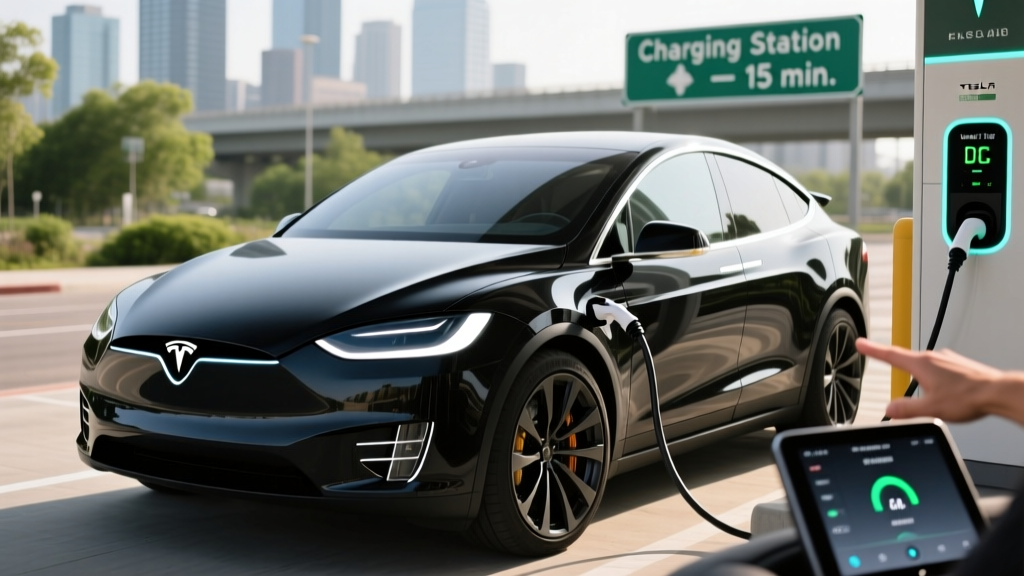
Charging curve reality: The 100 kWh pack accepts 250 kW only between roughly 10-30% state of charge. By 50%, the rate drops to approximately 150 kW, and above 80%, it falls to under 60 kW. A typical 10-80% session takes about 32 minutes at a V3 Supercharger. If you arrive at a charger at 20% SoC, you'll add roughly 175 miles in 15 minutes — enough for most road-trip legs, but not the "15-minute full charge" experience marketing sometimes implies.
For home charging, Tesla's Wall Connector at 48 amps delivers 11.5 kW, adding about 34 miles of range per hour. A full charge from 10% to 100% takes approximately 9 hours overnight. Most owners will need a 60-amp dedicated circuit; budget $500–$2,000 for professional installation depending on panel proximity and local permit requirements.
Performance and Driving Dynamics
The tri-motor Plaid powertrain produces 1,020 horsepower and rockets the Model X to 60 mph in 2.5 seconds — a figure that was exotic-supercar territory just a few years ago, now delivered in a vehicle with falcon-wing rear doors and a third-row seat. The single front motor and dual rear motors provide precise torque-vectoring all-wheel drive.
In real-world driving, the acceleration is genuinely startling and remains the Model X Plaid's most visceral differentiator. The adaptive air suspension adjusts ride height automatically, lowering at highway speeds for aerodynamic efficiency and raising for rough roads or steep driveways. Steering is quick but numb — a common Tesla trait — and the 5,185-pound curb weight is noticeable through corners. This is a straight-line monster, not a canyon carver.
Towing capacity is rated at 5,000 pounds when properly equipped, adequate for a small boat or utility trailer but below the Rivian R1S (7,700 lbs) and traditional body-on-frame SUVs.
Interior, Tech, and the Yoke Debate
The 2022 refresh introduced the horizontal 17-inch touchscreen, a rear-seat 8-inch display for climate and media controls, and Tesla's controversial yoke steering wheel as standard equipment (a conventional round wheel became a no-cost option later in the production run). Build quality improved over the pre-2021 Model X, though panel gaps and interior material quality still lag behind the BMW iX and Mercedes EQS SUV at this price point.
Standout tech features:
- 17-inch cinematics-capable touchscreen with gaming-grade processor
- HEPA air filtration with Bioweapon Defense Mode
- Over-the-air software updates adding features post-purchase
- Falcon-wing rear doors with ultrasonic obstacle sensing
- 22-speaker, 960-watt audio system
- Wireless phone charging (two pads)
Notable drawbacks:
- Yoke steering requires adaptation and is controversial for low-speed maneuvering (round wheel now available)
- No Apple CarPlay or Android Auto — Tesla's proprietary infotainment only
- Falcon-wing doors can be slow to open/close and occasionally struggle in heavy rain
- Rear-seat 8-inch screen is small and less responsive than the main display
- Limited physical controls — nearly everything routes through the touchscreen
Tesla's Autopilot (standard) and optional Full Self-Driving (Supervised) are SAE Level 2 driver-assistance systems. The driver must remain fully engaged, hands on the yoke/wheel, and eyes on the road at all times. Despite the "Full Self-Driving" name, this is not autonomous driving. FSD Supervised adds automatic lane changes, traffic light/stop sign recognition, and Navigate on Autopilot, but requires constant driver supervision. Only Level 4 services like Waymo operate without a human driver.
Pricing, Tax Credits, and the Used-EV Market
The 2022 Model X Plaid originally stickered at $138,890 (plus $1,390 destination), with common options like FSD ($12,000 at the time), premium interior colors, and 22-inch wheels pushing as-tested prices to $150,000+. In the 2026 used market, well-maintained examples typically list between $75,000 and $95,000 depending on mileage, condition, and FSD transfer status.
| Item | Amount |
|---|---|
| Original MSRP (base) | $138,890 |
| Typical 2026 Used Price | $75,000–$95,000 |
| Federal Used-EV Credit (§25E) | Up to $4,000 (30% of sale price, max $4,000) |
| Federal New-EV Credit (§30D) | Not eligible (MSRP exceeds $80,000 SUV cap when new) |
| Annual Insurance (est.) | $3,500–$5,500 |
Federal tax credit eligibility: When sold new, the Model X Plaid did not qualify for the §30D Clean Vehicle Credit because its MSRP exceeded the $80,000 SUV cap. However, as a used purchase in 2026, buyers may qualify for the §25E Previously Owned Clean Vehicle Credit — up to $4,000 (30% of the sale price, capped at $4,000). Key requirements per IRS §25E rules:
- Sale price must be $25,000 or less to maximize the full $4,000 (30% × $25,000 = $7,500, but capped at $4,000)
- Buyer income limits: $75,000 single / $112,500 head of household / $150,000 joint (modified AGI)
- Vehicle must be at least 2 model years old (2022 qualifies in 2026)
- Must purchase from a licensed dealer (private-party sales excluded)
- Credit is non-refundable — you must have sufficient tax liability
Given that most 2022 Model X Plaid examples sell well above $25,000, the practical credit is the full $4,000 cap — provided you meet the income thresholds. Consult a tax professional to confirm eligibility.
Ownership Costs: Insurance, Maintenance, and Battery Longevity
Tesla insurance premiums are among the highest in the EV segment due to repair costs, parts pricing, and performance classification. Expect $3,500–$5,500 annually for a 2022 Model X Plaid depending on your state, driving record, and coverage level. Tesla's own insurance product (available in select states) uses real-time driving data and may offer savings for cautious drivers.
Maintenance is minimal compared to ICE vehicles: no oil changes, no transmission fluid, and regenerative braking extends pad life significantly. Budget for cabin air filter replacement (~$150–$250 every 2 years), tire rotation, and wiper fluid. Tires are the biggest consumable — the heavy, high-torque Plaid wears through rear tires faster than most SUVs. Expect $1,200–$1,800 for a set of four 21- or 22-inch tires every 20,000–30,000 miles.
The battery and drive unit warranty covers 8 years or 150,000 miles, whichever comes first, with Tesla guaranteeing at least 70% capacity retention. Based on fleet data from high-mileage Model S/X vehicles, NMC packs in Tesla's thermal management system typically lose 10–15% capacity over the first 100,000 miles, with degradation slowing significantly thereafter. Out-of-warranty battery replacement costs $15,000–$22,000 if needed — rare but not impossible.
2022 Model X Plaid vs. Key Competitors
| Spec | Tesla Model X Plaid | Rivian R1S (Dual-Motor Max) | BMW iX M60 |
|---|---|---|---|
| EPA Range | 333 mi | 352 mi | 296 mi |
| 0-60 mph | 2.5 sec | 5.0 sec | 3.6 sec |
| Horsepower | 1,020 hp | 533 hp | 610 hp |
| Max DC Charge | 250 kW | 220 kW | 195 kW |
| Seating | 5/6/7 | 7 | 5 |
| Towing | 5,000 lbs | 7,700 lbs | 3,500 lbs |
| Cargo (max) | 81.5 cu ft | 88.2 cu ft | 77.9 cu ft |
| 2026 Used Price (est.) | $75K–$95K | $65K–$85K | $60K–$78K |
The Rivian R1S wins on towing, off-road capability, and third-row usability, but can't match the Plaid's performance. The BMW iX M60 delivers a more luxurious interior and refined ride, but seats only five and has less range. The Model X Plaid occupies a unique niche: supercar acceleration, Supercharger access, and genuine (if tight) seven-passenger seating.
- You prioritize straight-line performance above all else in a three-row SUV
- Supercharger network access matters for your road-trip patterns
- You want OTA software updates that add features over time
- You can accept higher insurance costs and Tesla's minimalist interior approach
- You need serious towing capacity (Rivian R1S: 7,700 lbs)
- Interior material quality and traditional luxury are priorities (BMW iX, Mercedes EQS SUV)
- You prefer physical buttons and CarPlay integration
- Off-road capability is on your list (Rivian R1S, Rivian R1T)
- 2.5-second 0-60 mph in a 7-seat SUV — unmatched in the segment
- Access to Tesla Supercharger network (most reliable DC fast-charging network)
- 333-mile EPA range is competitive for the performance class
- Over-the-air updates continuously improve the vehicle
- Falcon-wing doors are genuinely useful in tight parking spaces
- HEPA air filtration is best-in-class
- Insurance costs $3,500–$5,500/year — among the highest in the segment
- Yoke steering is divisive and requires an adaptation period
- No Apple CarPlay or Android Auto
- Build quality still trails German luxury rivals at this price point
- Falcon-wing doors can be slow and occasionally unreliable
- Third-row seat is tight for adults on long trips
- High tire wear due to weight and torque
Frequently Asked Questions
What is the real-world range of the 2022 Model X Plaid?
Expect approximately 275–295 miles at highway speeds (70-80 mph) in moderate temperatures. In freezing weather, that drops to 220–255 miles. City driving with regenerative braking can approach or slightly exceed the 333-mile EPA estimate.
How fast does the 2022 Model X Plaid charge?
On a 250 kW V3 Supercharger, the 10-80% charge takes approximately 32 minutes, with peak charge rate sustained only between 10-30% state of charge. At home on a Level 2 Wall Connector (11.5 kW), a full charge takes about 9 hours, adding ~34 miles of range per hour.
Does the 2022 Model X Plaid qualify for any federal EV tax credit?
Not the §30D new-vehicle credit — the original MSRP exceeded the $80,000 SUV cap. However, as a used purchase in 2026, buyers meeting income limits ($75K single / $150K joint) may qualify for the §25E used-EV credit of up to $4,000 when purchasing from a licensed dealer. Consult a tax professional for your specific situation.
Is the 2022 Model X Plaid worth buying in 2026 vs. newer EVs?
It depends on your priorities. The Plaid's performance remains unmatched in the three-row EV SUV segment, and Supercharger access is a major road-trip advantage. However, newer competitors like the Rivian R1S and BMW iX offer better interior quality, more competitive range, and in some cases lower used pricing. If you value acceleration and Tesla's software ecosystem, the Plaid holds up well. If luxury finish or towing matter more, shop the alternatives.
How long will the Model X Plaid battery last?
Tesla warranties the battery for 8 years or 150,000 miles with at least 70% capacity retention. Fleet data suggests NMC packs with Tesla's thermal management typically degrade 10-15% over 100,000 miles, with slower degradation thereafter. Many Model S/X vehicles exceed 200,000 miles on the original pack, though individual results vary based on charging habits and climate.
Does Autopilot or FSD make the Model X self-driving?
No. Both Autopilot and Full Self-Driving (Supervised) are SAE Level 2 driver-assistance systems. The driver must remain fully engaged with hands on the wheel and eyes on the road at all times. FSD adds features like automatic lane changes and stop-light recognition but does not replace the driver.