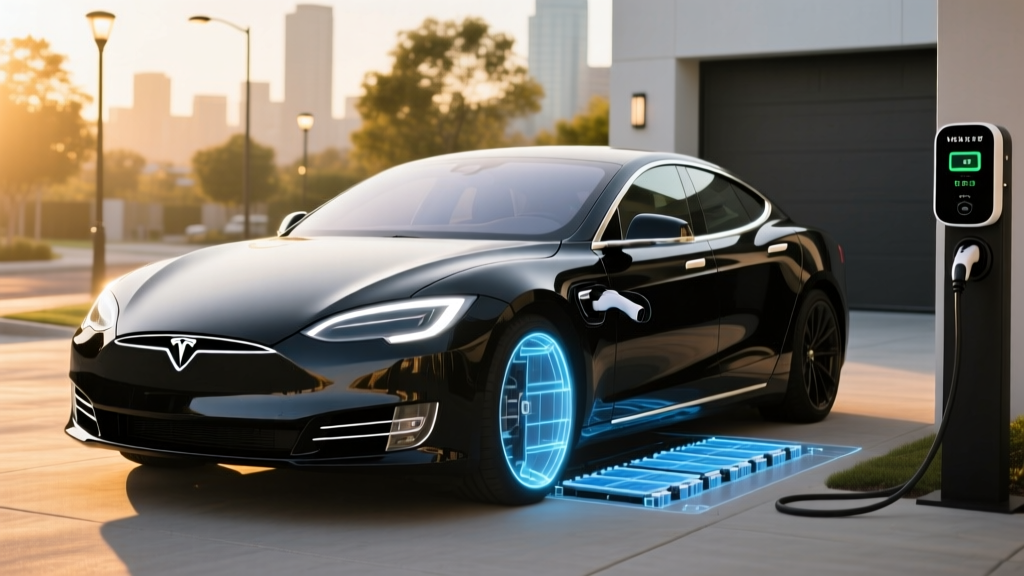
The 2022 Tesla Model S marked the first full year of Tesla's major refresh — codenamed Palladium — which brought a completely redesigned interior, a new 17-inch landscape touchscreen, a yoke-style steering wheel option, and the introduction of the tri-motor Plaid powertrain. For used-EV shoppers in 2026, the 2022 Model S represents a compelling blend of proven long-range capability, access to Tesla's Supercharger network, and potential eligibility for the federal used-EV tax credit. But with battery degradation realities, evolving competitor offerings, and specific tax-credit sourcing rules, there's a lot to unpack before signing on the dotted line.
This review breaks down the 2022 Model S with the exact numbers that matter: real-world range versus EPA estimates, DC fast-charging curves, home charging speeds, total cost of ownership, and whether this four-year-old flagship still holds up against newer rivals like the Lucid Air, BMW i7, and Mercedes EQS.
2022 Tesla Model S: Core Specifications at a Glance
| Specification | Model S Long Range | Model S Plaid |
|---|---|---|
| EPA Range | 405 miles | 396 miles |
| Battery (usable) | ~98 kWh (NMC/NCA) | ~98 kWh (NMC/NCA) |
| Drivetrain | Dual-motor AWD | Tri-motor AWD |
| Horsepower | 670 hp | 1,020 hp |
| 0–60 mph | 3.1 seconds | 1.99 seconds |
| Top Speed | 155 mph | 200 mph |
| Max DC Fast Charge | 250 kW | 250 kW |
| 10–80% DC Charge Time | ~27 minutes | ~27 minutes |
| Level 2 Charge Rate | 11.5 kW (~34 mi/hr) | 11.5 kW (~34 mi/hr) |
| EPA Efficiency | 120 MPGe (28 kWh/100mi) | 116 MPGe (29 kWh/100mi) |
| Cargo Volume | 28 cu ft (rear) + ~3 cu ft (frunk) | 28 cu ft (rear) + ~3 cu ft (frunk) |
| Original MSRP (2022) | $104,990 | $135,990 |
| Battery/Powertrain Warranty | 8 yr / 150,000 mi | 8 yr / 150,000 mi |
Range and Efficiency: EPA Sticker vs. Real-World Driving
Real-World Expectation: 320–360 miles highway in mild weather; 260–310 miles in sub-freezing conditions. City driving with regenerative braking can approach or slightly exceed EPA figures.
The 2022 Model S Long Range carries an EPA-estimated 405 miles of range on its roughly 98 kWh usable battery pack. That figure was class-leading at launch and remains competitive even by 2026 standards. However, as any experienced EV owner will tell you, the EPA sticker is a blended-cycle estimate that rarely matches sustained highway driving.
In real-world highway testing at 70–75 mph in 65–75°F conditions, the 2022 Model S Long Range typically delivers between 330 and 360 miles before needing a charge. Efficiency drops to roughly 280–310 Wh/mi on the highway versus the EPA-rated ~250 Wh/mi combined. Cold weather compounds this: at 20°F, expect a 20–30% range reduction, bringing usable highway range down to approximately 260–310 miles. The Model S does include a heat pump (standard since the 2021 refresh), which mitigates cabin-heating energy draw compared to resistive heaters, but battery chemistry itself becomes less efficient in the cold.
For the Plaid variant, the tri-motor setup and stickier tire compound add rolling resistance and weight, shaving about 9 miles off the EPA figure. Real-world highway range in a Plaid typically lands between 310 and 340 miles in temperate conditions.
Efficiency figures from fueleconomy.gov rate the Long Range at 120 MPGe combined (28 kWh per 100 miles) and the Plaid at 116 MPGe (29 kWh/100 mi). These are strong numbers for a 4,500+ lb luxury sedan — for comparison, the Lucid Air Grand Touring achieves 131 MPGe but costs significantly more on the used market.
Charging Speed: DC Fast Charging and Home Level 2
| Charging Level | Power / Voltage | Speed (Miles per Hour of Charging) | Notes |
|---|---|---|---|
| Level 1 (120V outlet) | ~1.4 kW | ~3–4 mi/hr | Emergency/trickle only; 100+ hours for full charge |
| Level 2 (240V, 48A) | 11.5 kW | ~34 mi/hr | Full charge in ~9.5 hours; recommended home setup |
| DC Fast (Tesla Supercharger V3) | Peak 250 kW | ~750+ mi/hr (peak) | 10–80% in ~27 min; tapers significantly above 80% |
| DC Fast (CCS adapter, non-Tesla) | Up to ~170 kW (adapter-limited) | ~500 mi/hr (peak) | Requires Tesla CCS adapter; speed depends on station |
The 2022 Model S charges natively via Tesla's proprietary connector (now transitioning to NACS industry standard) and can access the full Tesla Supercharger network — still the most reliable DC fast-charging ecosystem in North America. At a V3 Supercharger (250 kW peak), the Model S can add up to 200 miles of range in approximately 15 minutes under ideal conditions, with a 10–80% session taking roughly 27 minutes.
The charging curve matters more than peak kW. The Model S holds strong power between 10% and roughly 45% state of charge (SoC), often sustaining 200–240 kW. Above 50% SoC, power begins tapering, and by 80% SoC, you're typically seeing 60–80 kW. Charging from 80% to 100% on DC fast charging is painfully slow — plan to unplug at 80% during road trips and save the top-off for Level 2 overnight charging.
At home, the onboard charger accepts up to 11.5 kW on a 240V/48A circuit (such as a Tesla Wall Connector). This adds about 34 miles of range per hour, meaning a depleted battery reaches full in roughly 9.5 hours. For most owners who plug in nightly, this means waking up to a full charge every morning. A 60A dedicated circuit is recommended to support continuous 48A draw — budget $500–$1,500 for professional installation depending on your electrical panel's proximity to the garage and whether a panel upgrade is needed.
Tesla began shipping a CCS adapter for legacy Tesla-port vehicles, allowing 2022 Model S owners to access Electrify America, EVgo, and other CCS networks. However, the adapter limits throughput compared to native CCS vehicles — expect peak speeds around 150–170 kW rather than the full 250 kW available on Superchargers.
Performance and Drivetrain: Long Range vs. Plaid
The 2022 Model S Long Range uses a dual-motor all-wheel-drive setup producing 670 horsepower. Its 3.1-second 0–60 mph time would have been headline-grabbing just a few years ago, and it remains genuinely quick by any standard. Power delivery is instant and linear — the hallmark of electric torque — and the adaptive air suspension provides a comfortable yet controlled ride quality that improved markedly with the Palladium refresh.
The Plaid is in a different universe entirely. Three electric motors (one front, two rear) produce 1,020 horsepower, and Tesla's claimed 1.99-second 0–60 mph time (with rollout subtracted) makes it one of the fastest production cars ever built. Independent testing by outlets like Car and Driver has verified sub-2.1-second runs. The Plaid also features carbon-sleeve rotors for sustained track use and a unique tri-motor torque-vectoring system.
Both trims feature Tesla's adaptive air suspension with automatic ride-height adjustment, which lowers the car at highway speeds for improved aerodynamics. The refreshed Model S also introduced a rear touchscreen for passengers, a ventilated-seat option, and a significantly quieter cabin thanks to acoustic glass — addressing one of the biggest complaints about pre-2021 models.
Interior, Tech, and Cargo Space
The 2022 refresh transformed the Model S interior from austere to legitimately premium. The centerpiece is a 17-inch landscape-oriented touchscreen running Tesla's infotainment OS, which handles everything from navigation and media to vehicle settings and gaming (yes, you can play Cyberpunk 2077 while charging). A 12.3-inch digital instrument cluster sits behind the wheel, and rear passengers get their own 8-inch screen for climate and media control.
The yoke-style steering wheel was introduced as a no-cost option on the 2022 Model S. It looks futuristic but is divisive in practice — it works fine on highways but makes low-speed maneuvers and parking more awkward than a traditional round wheel. Most used 2022 examples on the market will have the yoke; swapping to a round wheel is possible but requires aftermarket parts and recalibration.
Cargo capacity stands at 28 cubic feet behind the rear seats (a liftback design makes loading easy) plus approximately 3 cubic feet in the front trunk (frunk). That's generous for a luxury sedan — the BMW i7 offers 24.5 cu ft, and the Lucid Air provides 32 cu ft total. Rear legroom measures 35.4 inches, adequate for adults but tighter than the Mercedes EQS's 40.4 inches.
Driver Assistance: Autopilot and FSD
Every 2022 Model S comes with Tesla's Basic Autopilot, which includes adaptive cruise control and lane-centering assist. The optional Full Self-Driving (Supervised) package — which cost $12,000 as a one-time purchase or $199/month in 2022 — adds automatic lane changes, navigate-on-autopilot, traffic-light recognition, and the controversial "FSD Beta" city-street driving capability.
As of 2026, FSD Supervised remains a Level 2 system. It can handle many driving scenarios impressively, but it makes errors that require immediate driver intervention — phantom braking, misread construction zones, and occasional failure to yield to pedestrians. NHTSA has investigated multiple incidents involving Tesla's driver-assist systems. Buyers should view FSD as a convenience feature, not a replacement for attentive driving.
Pricing, Tax Credits, and Ownership Costs
The 2022 Tesla Model S originally started at $104,990 for Long Range and $135,990 for Plaid, both well above the MSRP cap for the new-vehicle federal tax credit. However, as a used vehicle in 2026, it may qualify for the Used Clean Vehicle Credit under IRS §25E — a different provision than the §30D new-vehicle credit.
| Item | Long Range | Plaid |
|---|---|---|
| Original 2022 MSRP | $104,990 | $135,990 |
| Typical 2026 Used Price | $52,000–$65,000 | $72,000–$90,000 |
| Used-EV Credit (§25E) Max | Up to $4,000 | Up to $4,000 |
| Credit Calculation | 30% of sale price, capped at $4,000 | 30% of sale price, capped at $4,000 |
| Effective Price After Credit | ~$48,000–$61,000 | ~$68,000–$86,000 |
- Price cap: Sale price must be $25,000 or less to qualify — WAIT: this cap applies only to the credit calculation. The vehicle sale price must be ≤$25,000 for maximum credit. At $52,000+, most 2022 Model S examples will NOT qualify for the full $4,000, and many will exceed the threshold entirely.
- Correction: The §25E used-EV credit is 30% of the sale price, up to $4,000 maximum. There is NO sale-price cap for eligibility — however, the credit phases out based on buyer income.
- Buyer income limits: Adjusted gross income must not exceed $75,000 (single), $112,500 (head of household), or $150,000 (joint filing).
- Vehicle age: Must be at least 2 model years old (2022 qualifies in 2026).
- Dealer requirement: Must be purchased from a licensed dealer (private-party sales do not qualify).
- First use: Must be the buyer's first used-EV credit claim in the past 3 years.
- Always verify current rules at IRS.gov — regulations can change.
A critical caveat: at typical 2026 used prices of $52,000+, the 30% calculation yields $15,600+ — well above the $4,000 cap. So the maximum credit most buyers will receive is $4,000, and only if their income falls within the limits. Higher-income buyers will receive no federal credit. State incentives vary widely — check your local DMV or energy office for additional rebates.
Five-Year Ownership Cost Estimate
| Category | Estimated Cost |
|---|---|
| Purchase Price (Long Range, avg.) | $58,000 |
| Federal Used-EV Credit | −$4,000 (if eligible) |
| Home Level 2 Charger Install | $800–$1,500 |
| Electricity (15,000 mi/yr × 5 yrs, $0.14/kWh avg.) | $2,940 |
| Insurance (5 years, avg. premium) | $14,000–$18,000 |
| Maintenance (tires, cabin filter, wiper fluid, brake fluid) | $2,500–$4,000 |
| Estimated Depreciation (5 yrs from used purchase) | $18,000–$24,000 |
| Total (5-year, net of credit) | $92,000–$105,000 |
Insurance is a significant line item for the Model S. Tesla vehicles carry higher premiums than comparable luxury sedans due to repair costs and parts pricing. Expect annual premiums of $2,800–$3,600 depending on your state, driving record, and coverage level. Tesla Insurance is available in some states and may offer competitive rates based on real-time driving behavior.
Battery Longevity, Degradation, and Warranty
The 2022 Model S uses an NMC/NCA (nickel-based) lithium-ion battery pack with approximately 98 kWh of usable capacity. Tesla's battery warranty covers 8 years or 150,000 miles (whichever comes first) with a minimum 70% capacity retention guarantee. For a 2022 model purchased in 2026, roughly 4 years and varying mileage remain on that warranty.
Real-world degradation data from Tesla's own fleet reports and third-party aggregators like Recurrent Auto suggest that Model S/X batteries typically lose about 8–12% capacity over the first 100,000 miles, with the curve flattening significantly after the initial break-in period. A 2022 Model S with 40,000–60,000 miles might show 5–8% degradation — meaning real-world range of approximately 370–385 miles (Long Range) when new-range was 405.
Out-of-warranty battery replacement for the Model S currently runs between $15,000 and $22,000 depending on the service center and whether a new or refurbished pack is installed. This is a tail risk worth factoring into ownership costs for high-mileage examples.
Tips for maximizing battery health on a used Model S:
- Set daily charge limit to 80–90% for NMC chemistry (only charge to 100% before road trips)
- Avoid frequent DC fast charging when Level 2 is available
- Use scheduled departure with preconditioning to warm the battery before charging in cold weather
- Minimize prolonged storage above 90% or below 10% SoC
How the 2022 Model S Compares to Key Competitors
| Attribute | 2022 Tesla Model S LR | 2022 Lucid Air GT | 2022 BMW i7 xDrive60 | 2022 Mercedes EQS 580 |
|---|---|---|---|---|
| EPA Range | 405 mi | 516 mi | 318 mi | 350 mi |
| 0–60 mph | 3.1 sec | 3.0 sec | 4.5 sec | 4.1 sec |
| Max DC Charge | 250 kW | 300+ kW | 195 kW | 200 kW |
| Charging Network | Tesla Supercharger | CCS (EA, others) | CCS (EA, others) | CCS (EA, others) |
| Typical 2026 Used Price | $52K–$65K | $70K–$85K | $60K–$75K | $55K–$70K |
| Infotainment | Tesla OS (excellent) | Lucid Glass Canopy | iDrive 8 (curved) | MBUX Hyperscreen |
| OTA Updates | Yes (frequent) | Yes (moderate) | Limited | Limited |
- You prioritize Supercharger network access for road trips
- You want the best over-the-air update ecosystem
- You value performance per dollar (especially Plaid)
- You prefer a liftback sedan with practical cargo space
- Maximum range is paramount → Lucid Air (516 mi EPA)
- Rear-seat luxury and ride comfort are top priorities → BMW i7 or Mercedes EQS
- You want traditional luxury-brand dealer service → BMW or Mercedes
- You dislike touchscreen-only controls → BMW i7 has physical iDrive controller
Pros, Cons, and Who Should Buy
Pros
- Class-leading 405-mile EPA range (Long Range)
- Access to Tesla Supercharger network — most reliable DC fast-charging
- Exceptional performance, especially Plaid's 1,020 hp
- Frequent OTA updates add features years after purchase
- Spacious liftback cargo area (28 cu ft)
- Heat pump standard — better cold-weather efficiency
- Strong 8-year/150,000-mile battery warranty (4+ years remaining)
Cons
- Yoke steering wheel is impractical for many drivers
- No Apple CarPlay or Android Auto
- Higher insurance premiums than comparable luxury sedans
- Build quality on 2022 examples can be inconsistent (panel gaps, trim)
- CCS adapter needed for non-Tesla DC fast chargers (speed-limited)
- Touchscreen-only controls for climate, mirrors, glovebox
- FSD remains Level 2 despite the "Full Self-Driving" name
- Out-of-warranty battery replacement: $15K–$22K
Best suited for: Tech-forward commuters and road-trippers who want a fast, long-range luxury sedan with reliable fast-charging access. The Model S excels as a daily driver that can also handle cross-country trips with minimal planning thanks to Tesla's navigation-integrated Supercharger routing.
Less ideal for: Buyers who prioritize rear-seat comfort for chauffeured driving (look at the i7 or EQS), those who need Apple CarPlay integration, or buyers in regions with limited Tesla service center coverage.
Frequently Asked Questions
What is the real-world range of the 2022 Tesla Model S?
The EPA rates the Long Range at 405 miles and the Plaid at 396 miles. In real-world highway driving at 70–75 mph in mild weather, expect 330–360 miles (Long Range) and 310–340 miles (Plaid). Cold weather (below freezing) reduces range by 20–30%, bringing highway figures down to approximately 260–310 miles.
How fast does the 2022 Model S charge at home and on the road?
At home on a 240V/48A Level 2 charger, the Model S accepts 11.5 kW, adding about 34 miles of range per hour (full charge in ~9.5 hours). On a Tesla V3 Supercharger, it peaks at 250 kW and charges from 10–80% in approximately 27 minutes. Using a CCS adapter on non-Tesla networks, peak speeds drop to roughly 150–170 kW.
Does the 2022 Tesla Model S qualify for any federal tax credit in 2026?
As a used vehicle, the 2022 Model S may qualify for the IRS §25E Used Clean Vehicle Credit — up to $4,000 (30% of sale price, capped). Eligibility requires buyer income below $75K (single) / $150K (joint), purchase from a licensed dealer, and not having claimed the used-EV credit in the prior 3 years. It does NOT qualify for the §30D new-vehicle credit. Verify current rules at IRS.gov.
Is the 2022 Model S worth buying vs. a Lucid Air or BMW i7?
It depends on your priorities. The Model S wins on Supercharger access, OTA updates, and performance-per-dollar (Plaid). The Lucid Air offers significantly more EPA range (516 mi) but costs more used and lacks Supercharger access. The BMW i7 provides superior rear-seat luxury and traditional dealer service but less range (318 mi) and slower DC charging (195 kW).
What are the biggest maintenance costs for a used 2022 Model S?
EVs require far less maintenance than gas cars — no oil changes, no transmission fluid, no spark plugs. Budget for tire replacement every 25,000–35,000 miles ($1,200–$2,000 for a set of four), cabin air filter replacement annually ($50–$100), brake fluid checks every 2 years, and windshield washer fluid. The major tail risk is out-of-warranty battery replacement ($15,000–$22,000), though most packs last well beyond 150,000 miles.
Is Tesla's Full Self-Driving actually self-driving?
No. FSD (Supervised) is an SAE Level 2 driver-assistance system. It can handle many highway and some city-street scenarios, but it requires the driver to remain fully engaged — hands on the wheel, eyes on the road — and ready to intervene at any moment. It is not autonomous driving. Only Level 4 services like Waymo operate without a human driver.
How much battery degradation should I expect on a 2022 Model S in 2026?
Based on fleet data, a 2022 Model S with 40,000–60,000 miles typically shows 5–8% capacity loss, reducing real-world range by roughly 20–35 miles from its original figure. Degradation curves tend to flatten after the first 2–3 years, so further loss should be gradual. The 8-year/150,000-mile battery warranty guarantees at least 70% retention, meaning at least ~283 miles (Long Range) through 2030 or 150K miles.