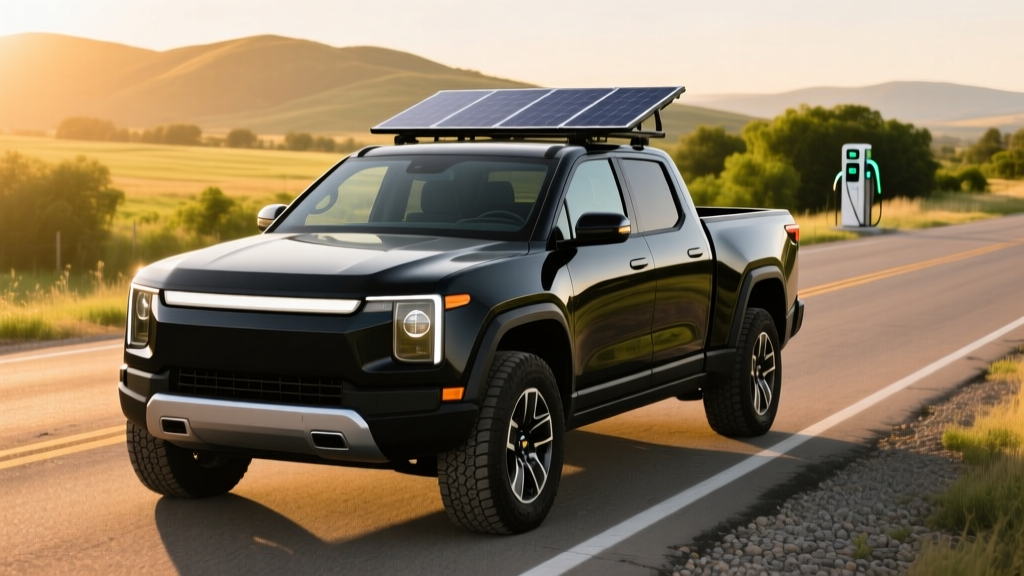
The 2022 Rivian R1T launched as the first mainstream electric pickup, beating the Ford F-150 Lightning and GMC Hummer EV to market. By 2026, it has matured into one of the most capable — and most interesting — used EVs on the market. With a massive 135 kWh battery, quad-motor AWD producing 835 horsepower, and a genuine off-road chassis, the R1T Adventure remains a compelling package for buyers who need truck utility without tailpipe emissions. But with newer dual-motor variants and competing electric trucks now available, is the original 2022 quad-motor R1T still the right buy? Here is the full spec breakdown, real-world ownership data, and tax-credit analysis you need before signing on the dotted line.
2022 Rivian R1T Quick Specs at a Glance
| Spec | 2022 R1T Adventure (Quad Motor, Large Pack) |
|---|---|
| EPA Range | 314 miles |
| Real-World Range (Highway/Cold) | ~230–270 miles |
| Battery Capacity | 135 kWh usable (NMC lithium-ion) |
| Drivetrain | Quad-motor AWD (one motor per wheel) |
| Horsepower | 835 hp |
| Torque | 908 lb-ft |
| 0–60 mph | 3.0 seconds |
| Max DC Fast Charge | ~190 kW peak |
| 10–80% DC Charge Time | ~42 minutes |
| Level 2 Home Charging | 11.5 kW (~25 mi/hr) |
| MPGe (Combined) | 70 MPGe |
| Efficiency | 48 kWh/100 mi |
| Towing Capacity | 11,000 lbs |
| Payload | 1,760 lbs |
| Base MSRP (2022) | $73,000 (Adventure) |
| Typical Used Price (2026) | $45,000–$60,000 |
| Battery/Powertrain Warranty | 8 yr / 125,000 mi |
| Bumper-to-Bumper Warranty | 5 yr / 60,000 mi |
Range and Efficiency: EPA vs. the Real World
Real-World Expectation: 260–280 miles mixed driving; 230–250 miles sustained highway at 75+ mph; 200–230 miles in freezing temperatures with cabin heat.
The 2022 R1T's EPA-rated 314 miles applies specifically to the Large Pack with 20-inch All-Season tires. Choose the 21-inch or 22-inch wheel packages and that number drops — the 22" Sport wheel/tire combo reduces the EPA estimate to roughly 272 miles.
In practice, the R1T's boxy aerodynamic profile and 7,148-pound curb weight exact a real toll on efficiency. Expect roughly 48 kWh per 100 miles in mixed driving, which translates to 70 MPGe combined. That is thirstier than the Ford F-150 Lightning Extended Range (around 66 MPGe combined) and significantly less efficient than a sedan like the Tesla Model 3. The physics are unavoidable: pushing a heavy, flat-fronted truck through air costs energy.
On highway-heavy road trips at 70–80 mph, plan for 230–250 miles of usable range before you want to find a charger. In winter conditions below 32°F, lithium-ion chemistry slows and cabin heating draws heavily from the pack — expect a 20–30% range reduction, bringing realistic cold-weather highway range down to roughly 200–230 miles. The R1T does not include a heat pump (it uses resistive PTC heating), which is less efficient than the heat-pump systems in newer EVs.
Charging Speed: DC Fast, Level 2, and the Curve Reality
| Charging Level | Power | Speed (Approx.) | Typical Use Case |
|---|---|---|---|
| Level 1 (120V) | ~1.4 kW | ~3 mi/hr | Emergency/trickle only |
| Level 2 (240V, 48A) | 11.5 kW | ~25 mi/hr | Overnight home charging |
| DC Fast Charge | ~190 kW peak | 10–80% in ~42 min | Road trips |
The 2022 R1T charges at a peak rate of approximately 190 kW on a compatible DC fast charger. That peak holds roughly from 10% to 30% State of Charge, then the charge curve tapers progressively. By 60% SoC, you are seeing roughly 120–130 kW; by 80%, it drops to around 60–70 kW. This taper is why the 10–80% session takes roughly 42 minutes rather than the ~25 minutes you might calculate from peak rate alone.
The R1T uses a CCS1 connector. As of 2026, Rivian has begun providing NACS adapters for access to Tesla's Supercharger network, and newer Rivian models ship with NACS ports natively. If you are buying a 2022 model used, confirm whether the seller has obtained the official Rivian NACS adapter — it is a significant convenience upgrade for road-trip charging.
At home on a Level 2 wall connector wired to a 60-amp circuit (48A continuous), the R1T's 11.5 kW onboard charger replenishes about 25 miles of range per hour. A full 10–100% charge takes roughly 13 hours — feasible overnight for most daily driving needs, but you will want to install the Level 2 circuit before the truck arrives. Budget $800–$2,000 for a professional Level 2 installation depending on your electrical panel capacity and run distance; a 200-amp panel upgrade, if needed, can add $1,500–$3,000.
Performance and Driving Dynamics
The quad-motor powertrain is where the 2022 R1T makes its strongest case. With an independent motor at each wheel, Rivian delivers 835 horsepower and 908 lb-ft of torque with precise torque vectoring. The result is a 0–60 mph time of 3.0 seconds — supercar territory in a vehicle that weighs over three and a half tons.
Beyond straight-line speed, the quad-motor setup enables genuine off-road capability. The R1T offers a tank-turn mode (spinning wheels on opposite sides in opposing directions for tight-radius turns), a gear-guardian crawl mode, and up to 14.9 inches of ground clearance via its air suspension. The air suspension also enables a "camp mode" that self-levels the truck on uneven ground — a thoughtful feature for overlanding.
On-road, the R1T rides with surprising composure for a body-on-frame truck. The low-mounted battery pack gives it a low center of gravity, and the steering is direct if slightly numb. The regenerative braking system supports one-pedal driving with strong deceleration, though it does not come to a complete stop without touching the brake pedal — a minor annoyance in stop-and-go traffic.
The maximum towing capacity is 11,000 pounds, which is competitive with full-size gas trucks. However, towing heavy trailers will slash range by 40–50%, realistically limiting you to 130–170 miles per charge when pulling a 7,000+ lb trailer. Plan accordingly.
Cargo, Passenger Space, and the Gear Tunnel
The R1T is a midsize crew-cab pickup, roughly the size of a Toyota Tacoma or Ford Ranger. Front-seat legroom measures 41.3 inches and rear-seat legroom is 36.6 inches — adequate for adults on longer trips, though not as spacious as a full-size F-150 Lightning.
The bed is 4.5 feet long (54.9 inches), which is shorter than a traditional six-foot truck bed. However, Rivian's signature Gear Tunnel — a 11.7-cubic-foot pass-through compartment running across the truck between the cab and bed — adds significant enclosed, lockable storage. It is ideal for camping gear, skis, or groceries and is accessible from both sides of the vehicle.
The R1T also includes an 11.0-cubic-foot front trunk (frunk) with a drain plug, making it usable as a cooler or wet-storage compartment. Combined storage (bed + Gear Tunnel + frunk + under-seat) gives the R1T more total enclosed cargo volume than most midsize trucks, even with its shorter bed.
Technology, Driver Assists, and Notable Drawbacks
The 2022 R1T runs Rivian's proprietary infotainment system on a 15.6-inch center touchscreen and a 12.3-inch digital driver display. The system is responsive, supports over-the-air updates, and includes built-in navigation with route planning that factors in charging stops. However, it lacks Apple CarPlay and Android Auto — a persistent complaint among owners who prefer phone-mirroring for music and navigation. Rivian has not added CarPlay support as of 2026.
Driver assistance is handled by Rivian's Driver+ system, which includes adaptive cruise control, lane-centering, and highway assist. This is an SAE Level 2 system — it requires the driver to remain fully attentive and keep hands on the wheel. It is competent for highway cruising but does not approach hands-free systems like GM's Super Cruise or Ford's BlueCruise on mapped highways. There is no driver-monitoring camera in the 2022 model (added in later model years), so the system relies on a steering-wheel torque sensor to verify driver engagement.
Notable drawbacks of the 2022 R1T include:
- No Apple CarPlay or Android Auto
- High energy consumption (48 kWh/100 mi) limits road-trip range
- No heat pump — less efficient cabin heating in cold climates
- DC fast-charging speed (190 kW peak) trails newer competitors like the Hyundai Ioniq 5 (240 kW) and the 2024+ R1T dual-motor (200+ kW)
- Ride quality on the 22-inch wheels can be firm over broken pavement
- Early-build 2022 models had more software bugs and panel-gap issues than later production runs
Pricing, Tax Credits, and the Used-EV Opportunity
When new, the 2022 R1T Adventure with the Large Pack started at $73,000 before destination, with most well-equipped examples window-sticking between $79,000 and $90,000 depending on wheel/tire packages, paint, and the Camp Kitchen or Gear Tunnel Kitchen accessories.
As of 2026, used 2022 R1Ts typically trade between $45,000 and $60,000 depending on mileage, condition, and equipment. That depreciation — roughly 30–40% off original MSRP — creates a significant opportunity under the IRS §25E Used Clean Vehicle Credit.
| Credit Rule | §25E Used EV Credit Requirement |
|---|---|
| Max Credit | $4,000 or 30% of sale price (whichever is lower) |
| Vehicle Sale Price Cap | $25,000 or less |
| Vehicle Age | Must be at least 2 model years old (2022 qualifies in 2026) |
| Buyer Income Cap (AGI) | $75K single / $112.5K head of household / $150K married filing jointly |
| Dealer Requirement | Must purchase from a licensed dealer (private-party sales do not qualify) |
| Battery Capacity | At least 7 kWh (R1T's 135 kWh easily qualifies) |
The $25,000 sale-price cap is the sticking point: most 2022 R1Ts sell well above that threshold. Unless you find a high-mileage or damaged example listed at or below $25,000, the §25E credit will not apply. For new-EV buyers considering a current-year Rivian, the §30D New Clean Vehicle Credit has its own MSRP caps ($80,000 for trucks), buyer income limits, and critical-mineral/battery-sourcing requirements that change annually — consult a tax professional before relying on credit estimates.
How the 2022 R1T Stacks Up Against Competitors
| Attribute | 2022 Rivian R1T (Quad Motor) | 2022 Ford F-150 Lightning (Ext. Range) | 2022 GMC Hummer EV |
|---|---|---|---|
| EPA Range | 314 mi | 320 mi | 329 mi |
| Battery | 135 kWh NMC | 131 kWh NMC | 246 kWh NMC |
| Horsepower | 835 hp | 580 hp | 1,000 hp |
| 0–60 mph | 3.0 sec | ~4.0 sec | ~3.0 sec |
| Towing | 11,000 lbs | 10,000 lbs | 7,500 lbs |
| Peak DC Charge | ~190 kW | ~150 kW | ~350 kW |
| Bed Length | 4.5 ft + Gear Tunnel | 5.5 ft | 5.0 ft |
| Used Price (2026) | $45K–$60K | $38K–$52K | $65K–$90K |
The F-150 Lightning is the pragmatic choice: more bed, more interior space, a more mature dealer/service network, and lower used pricing. The Hummer EV is a brute but is heavier, more expensive, and impractical for most buyers. The R1T wins on off-road capability, the Gear Tunnel's unique storage, driving dynamics, and the adventure-lifestyle ecosystem Rivian has built around the vehicle.
Choose the F-150 Lightning if: You need a full-size bed, want a broader dealer network for service, prefer CarPlay integration, or have a tighter budget.
Who the 2022 Rivian R1T Suits Best
The 2022 R1T is ideal for an outdoor-oriented owner who drives daily in a suburban or urban setting, has access to Level 2 home charging, and uses the truck for weekend adventures — camping, skiing, mountain biking, or light towing. Its combination of on-road performance, genuine off-road chops, and clever storage (Gear Tunnel, frunk) makes it uniquely versatile.
It is less ideal for high-mileage commuters in cold climates (no heat pump, high consumption), buyers who need a full-size bed for work, or those who cannot install a Level 2 charger at home. The 135 kWh battery takes a long time to fill on a standard 120V outlet — Level 1 charging adds only about 3 miles per hour, making a full recharge take over 45 hours.
Frequently Asked Questions
What is the real-world range of the 2022 Rivian R1T?
The EPA rates it at 314 miles with 20-inch All-Season tires. In real-world mixed driving, expect 260–280 miles. Sustained highway driving at 75+ mph drops that to 230–250 miles, and freezing temperatures can reduce range further to 200–230 miles.
How fast does the 2022 R1T charge?
On a DC fast charger, it peaks at roughly 190 kW and charges from 10–80% in approximately 42 minutes. At home on a Level 2 (240V, 48A) charger, it adds about 25 miles of range per hour, taking roughly 13 hours for a full charge.
Does the 2022 Rivian R1T qualify for the federal EV tax credit?
As a used vehicle in 2026, it may qualify for the §25E Used Clean Vehicle Credit of up to $4,000 — but only if the sale price is $25,000 or less and the buyer meets income caps ($75K single / $150K married). Most used R1Ts sell above this price cap, so eligibility is unlikely for typical listings. Always verify current rules at irs.gov and consult a tax professional.
Is the 2022 R1T worth buying in 2026 vs. newer electric trucks?
Yes, if you find a well-maintained example at a fair price ($45K–$55K). The quad-motor powertrain, off-road capability, and Gear Tunnel remain unique. However, newer dual-motor R1Ts and competitors like the F-150 Lightning offer better efficiency, faster charging, and CarPlay — weigh those trade-offs based on your priorities.
What are the biggest pros and cons of the 2022 R1T?
- 835 hp quad-motor performance (0–60 in 3.0s)
- 314-mile EPA range (20" wheels)
- Gear Tunnel + frunk = versatile storage
- Genuine off-road capability with air suspension
- 11,000-lb towing capacity
- Over-the-air software updates
- High energy consumption (48 kWh/100 mi)
- No Apple CarPlay or Android Auto
- No heat pump (cold-weather efficiency loss)
- 190 kW peak DC charging trails newer EVs
- Short 4.5-ft bed (vs. 5.5-ft on Lightning)
- Early-build quality issues on some 2022 units
How long will the R1T battery last?
Rivian warrants the battery pack for 8 years or 125,000 miles (whichever comes first) against defects and capacity loss below 70%. The NMC chemistry in the Large Pack is proven but will degrade gradually — expect roughly 85–90% capacity retention at 100,000 miles under normal use. Avoid frequent DC fast-charging to 100% and prolonged storage at very high or very low State of Charge to maximize longevity.
Can I tow with the 2022 R1T?
Yes — the R1T is rated for 11,000 lbs of towing. But be realistic: towing a heavy trailer (7,000+ lbs) will cut range by 40–50%, limiting you to roughly 130–170 miles per charge. For long-distance towing, plan charging stops carefully and use the Rivian app's integrated route planner.