Quick Verdict: The Driver's EV That Defies Its Range Sticker
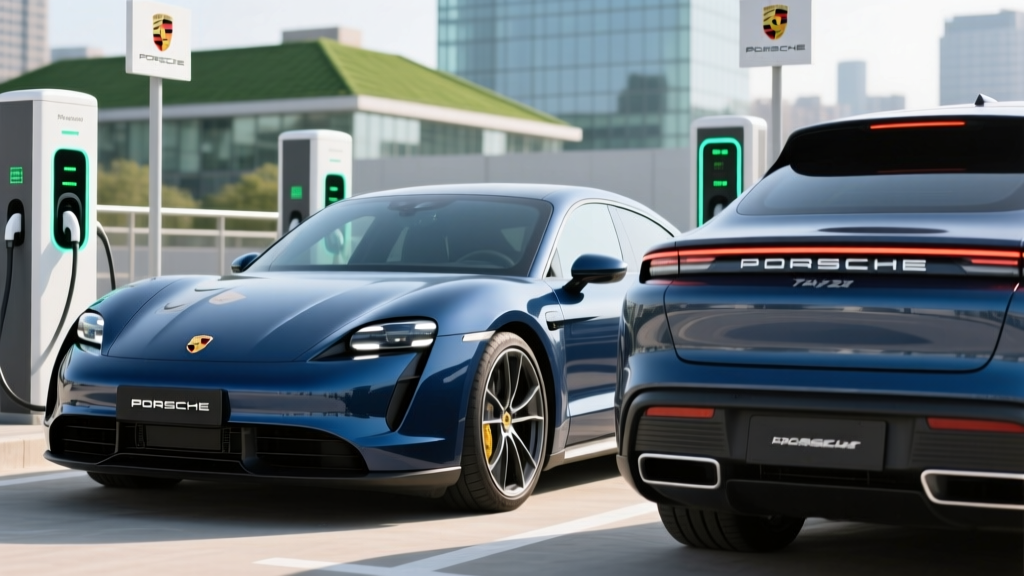
The 2022 Porsche Taycan remains the benchmark for what an electric sports sedan can feel like. While competitors chase 350-mile EPA stickers, Porsche prioritized driving dynamics, 800-volt charging architecture, and repeatable performance. The tradeoff is real: the Taycan's 200–227 mile EPA range (depending on trim and wheel size) falls short of the Tesla Model S and Lucid Air. But if you've ever felt the instant, relentless torque of a dual-motor Taycan Turbo S launching from a standstill, you understand why owners forgive the range compromise.
For 2026 buyers looking at the used or certified pre-owned market, the 2022 Taycan represents a critical model year. It introduced the GTS trim, received a larger Performance Battery Plus option across the lineup, and benefited from Porsche's mature 800V charging platform. Here's everything you need to know before signing.
Range & Efficiency: What the EPA Doesn't Tell You
EPA Combined: 200 mi (Taycan 4S, 20" wheels) to 227 mi (Taycan RWD, 19" wheels)
Real-World Highway (70-75 mph): Expect 175–195 mi in mild weather; 150–170 mi in sub-freezing temps
Real-World City/Mixed: 195–220 mi achievable with regenerative braking
Cold Weather Impact: 15–25% range loss below 32°F, less severe than many competitors thanks to standard heat pump
The 2022 Taycan lineup uses two battery configurations. The standard Performance Battery is a 79.2 kWh gross (71.0 kWh usable) NMC (nickel manganese cobalt) pack. The optional Performance Battery Plus bumps capacity to 93.4 kWh gross (83.7 kWh usable), also NMC chemistry. The Plus pack adds 12 cells in a second layer, increasing weight by roughly 170 lbs but extending range by 15–30 miles depending on trim.
Efficiency varies widely across the lineup. According to fueleconomy.gov, the Taycan RWD with the larger battery achieves 84 MPGe combined (40 kWh/100 mi), while the Turbo S drops to 68 MPGe combined (49 kWh/100 mi). The Taycan's 800-volt architecture reduces energy loss during power delivery, but the car's 5,000+ lb curb weight and performance-tuned powertrain work against efficiency.
| Trim | Battery (kWh usable) | EPA Range (mi) | MPGe Combined | kWh/100 mi |
|---|---|---|---|---|
| Taycan RWD (79.2 kWh) | 71.0 | 200 | 79 | 42 |
| Taycan RWD (93.4 kWh) | 83.7 | 225 | 84 | 40 |
| Taycan 4S (93.4 kWh) | 83.7 | 227 | 79 | 42 |
| Taycan GTS (93.4 kWh) | 83.7 | 227 | 75 | 45 |
| Taycan Turbo (93.4 kWh) | 83.7 | 212 | 73 | 46 |
| Taycan Turbo S (93.4 kWh) | 83.7 | 212 | 68 | 49 |
Charging: 800-Volt Architecture Pays Off at DC Fast Chargers
The Taycan's 800-volt electrical architecture is its most underappreciated advantage. While most 2022 EVs used 400V systems, the Taycan's higher voltage allows faster charging at lower current, reducing heat buildup and enabling sustained high charge rates.
| Charging Level | Max Power (kW) | 10–80% Time | Miles per Hour of Charging |
|---|---|---|---|
| Level 1 (120V, 12A) | 1.4 kW | ~50+ hours | ~3 mi/hr |
| Level 2 (240V, 48A) | 11.5 kW (onboard limit: 19.2 kW w/ optional charger) | ~8–9 hours (79.2 kWh) ~9–10 hours (93.4 kWh) |
~30–37 mi/hr |
| DC Fast Charge (CCS) | 225 kW (79.2 kWh) / 270 kW (93.4 kWh) | ~22.5 minutes | ~200+ mi in 20 min |
Charging curve reality check: The Taycan peaks at 270 kW (with the 93.4 kWh pack) but only sustains that rate from roughly 5–25% State of Charge (SoC). From 25–50%, the rate tapers to approximately 175–200 kW. From 50–80%, expect 100–130 kW. This is still best-in-class tapering behavior — the 800V system manages thermal load better than most competitors — but don't expect a linear 270 kW draw across the entire session.
One important note: the 2022 Taycan uses the CCS1 connector standard in North America. With Porsche's announcement to adopt NACS (Tesla's connector) for future models, 2022 Taycan owners will need a CCS-to-NACS adapter to access Tesla Supercharger stalls. Porsche has indicated adapter compatibility, but always verify with your specific model year and software version before relying on it.
The optional 19.2 kW onboard AC charger (a $1,620 option when new) is worth seeking on the used market. It cuts Level 2 charging time by roughly 30% and is invaluable if you have access to high-amperage Level 2 destinations like workplace chargers or premium public AC stations.
Performance: Repeatable Launches and Track-Capable Cooling
Every 2022 Taycan uses a permanently excited synchronous motor (PSM) on the rear axle. AWD models (4S, GTS, Turbo, Turbo S) add a second PSM on the front axle. The two-speed transmission on the rear axle — first gear for launch, second gear for highway efficiency — is unique in the EV world and a key reason the Taycan's acceleration feels relentless rather than merely quick.
| Trim | Drivetrain | Peak HP (Launch Control) | 0–60 mph (sec) | Top Speed (mph) |
|---|---|---|---|---|
| Taycan RWD | RWD | 402 | 5.1 | 143 |
| Taycan 4S | AWD | 562 | 3.8 | 155 |
| Taycan GTS | AWD | 590 | 3.5 | 155 |
| Taycan Turbo | AWD | 670 | 3.0 | 161 |
| Taycan Turbo S | AWD | 750 | 2.6 | 161 |
The Turbo S's 2.6-second 0–60 mph time was independently verified by multiple outlets, with some recording 2.4 seconds under optimal conditions. More importantly, Porsche engineered the Taycan's thermal management system for repeatable performance. Where some competitors experience power reduction after two or three hard launches, the Taycan's liquid-cooled battery and motor cooling loops maintain full output through repeated acceleration cycles — a critical distinction for track-day enthusiasts.
Regenerative braking on the 2022 Taycan maxes out at approximately 265 kW of recuperation, but Porsche deliberately chose not to implement true one-pedal driving. Lifting off the accelerator engages regen, but the car will not come to a complete stop without using the brake pedal. Porsche's rationale: blending regen with the mechanical brakes preserves pedal feel consistency. Some EV veterans find this frustrating; others appreciate the natural brake modulation.
Interior, Tech & Practicality
The Taycan's cabin is unmistakably Porsche — minimal, driver-focused, and built with materials quality that justifies its premium positioning. The 16.8-inch curved digital instrument cluster sits directly in the driver's sightline, while the central 10.9-inch touchscreen handles infotainment, navigation, and vehicle settings. An optional front-passenger display ($1,080 when new) adds a dedicated screen for the co-pilot.
The PCM (Porsche Communication Management) system in the 2022 model year supports wireless Apple CarPlay but requires wired Android Auto. The navigation system integrates charging stop planning, factoring in battery preconditioning — a critical feature that warms the battery to optimal temperature before arriving at a DC fast charger, maximizing charge speed.
Driver assistance: The 2022 Taycan comes standard with Porsche InnoDrive, which includes adaptive cruise control, lane-keeping assist, and traffic-sign recognition. InnoDrive is a Level 2 SAE system — meaning the driver must remain fully engaged with hands on the wheel and eyes on the road. It is not a self-driving system. The system is competent on highways but less aggressive and less feature-rich than Tesla's Autopilot or GM's Super Cruise in hands-free zones.
Cargo and passenger space is where the Taycan shows its sports-sedan priorities:
- Front trunk (frunk): 2.9 cu ft — enough for a charging cable bag and a small duffel
- Rear trunk: 14.3 cu ft — competitive with the BMW 5 Series but smaller than the Tesla Model S (28 cu ft)
- Rear legroom: 32.7 inches — adequate for adults under 6'0", tight for taller passengers
- Front headroom: 39.3 inches; rear headroom: 36.5 inches (the sloping roofline cuts into rear space)
The Taycan Cross Turismo (wagon variant, also available for 2022) increases rear cargo volume to 15.7 cu ft with seats up and 42.8 cu ft with seats folded, plus gains 1.8 inches of rear headroom. If cargo versatility matters, the Cross Turismo is the more practical choice.
Pricing, Trims & Federal Tax Credit Eligibility
The 2022 Taycan launched with aggressive pricing for the performance EV segment. Here's the original MSRP breakdown by trim:
| Trim | Base MSRP | Typical As-Tested / Well-Equipped |
|---|---|---|
| Taycan RWD | $84,050 | $95,000–$105,000 |
| Taycan 4S | $105,150 | $118,000–$130,000 |
| Taycan GTS | $133,150 | $145,000–$155,000 |
| Taycan Turbo | $152,250 | $165,000–$180,000 |
| Taycan Turbo S | $186,350 | $198,000–$215,000 |
The 2022 Porsche Taycan does NOT qualify for the full $7,500 federal tax credit when purchased new, and here's why:
- MSRP Cap: Under IRS §30D rules, sedars must have an MSRP at or below $55,000 to qualify. Every Taycan trim exceeds this cap.
- Battery Sourcing: The Taycan's battery cells are manufactured by LG Energy Solution, and the critical-minerals and battery-component sourcing requirements under the Inflation Reduction Act (effective 2023+) further complicate eligibility for any remaining new inventory.
- Income Caps: Even if the MSRP qualified, buyer AGI limits apply: $150,000 (single), $225,000 (head of household), $300,000 (joint filing).
Used EV Credit (§25E): If you're purchasing a 2022 Taycan on the used market in 2026, you may qualify for the up-to-$4,000 used EV credit (30% of the sale price, capped at $4,000) if the sale price is $25,000 or less from a licensed dealer, and your income falls below $75,000 (single) / $150,000 (joint). Given current Taycan resale values ($55,000–$90,000+ depending on trim and mileage), this credit is effectively unavailable for this model.
Always verify current eligibility with the IRS clean vehicle credit page and consult a tax professional before making purchase decisions based on credits.
Warranty, Battery Longevity & Ownership Costs
Porsche backs the 2022 Taycan with the following warranty coverage:
- New Vehicle Limited Warranty: 4 years / 50,000 miles
- Battery Warranty: 8 years / 100,000 miles, with a capacity retention guarantee of 70% minimum State of Health (SoH)
- Corrosion Perforation Warranty: 12 years, unlimited miles
- Roadside Assistance: 4 years / 50,000 miles
The 70% battery capacity retention threshold is industry-standard, matching Tesla, BMW, and Audi. Porsche's NMC chemistry has shown strong real-world longevity data. Early Taycan models (2020–2021) with 80,000+ miles have reported SoH figures between 88–94%, suggesting the thermal management system is effective at preserving cell health. However, NMC batteries degrade faster when routinely charged to 100% or depleted below 10% — Porsche recommends daily charging to 80–85% for optimal longevity and reserving 100% charges for road trips.
Battery replacement cost: If the battery falls outside warranty coverage, a full 93.4 kWh Performance Battery Plus replacement runs approximately $30,000–$35,000 including labor, based on current Porsche dealer pricing. The 79.2 kWh pack is slightly less at roughly $25,000–$28,000. Individual module replacement (the Taycan has 28 modules in the Plus pack) is possible and considerably cheaper if only a few cells degrade abnormally.
Insurance costs: Expect premiums 25–40% higher than a comparably priced gas-powered Porsche Panamera. Average annual insurance for a 2022 Taycan 4S ranges from $3,200–$4,800 depending on state, driving record, and coverage level. The Turbo S can exceed $5,500/year.
Pros, Cons & Who Should Buy
- Best-in-class driving dynamics and steering feel
- 800V architecture enables 270 kW peak DC charging
- Repeatable launch performance without thermal derating
- Exceptional build quality and interior materials
- Standard heat pump minimizes cold-weather range loss
- Two-speed rear transmission unique in the EV segment
- Strong battery SoH data from early high-mileage examples
- EPA range (200–227 mi) trails Model S, Lucid Air, and EQS
- No federal tax credit eligibility (new or used, at typical prices)
- Rear seat headroom and legroom are tight for a car at this price
- Small frunk (2.9 cu ft) and modest trunk (14.3 cu ft)
- Infotainment system is less intuitive than Tesla or Lucid UX
- No true one-pedal driving mode
- CCS connector requires adapter for Tesla Supercharger access
- Insurance premiums significantly above segment average
Choose the Taycan if:
- You prioritize driving engagement and handling over maximum range
- Your typical daily driving is under 150 miles and you can charge at home
- You value build quality, brand prestige, and track-capable performance
- You're buying used/CPO and want a proven 800V platform with strong battery longevity data
Look elsewhere if:
- You need 300+ miles of range for frequent road trips without charging stops
- Federal tax credit eligibility is a dealbreaker for your budget
- You regularly carry rear-seat passengers over 6'0" tall
- You want hands-free highway driving (consider GM Super Cruise vehicles instead)
Competitor Comparison: Taycan vs. Model S vs. EQS vs. e-tron GT
The 2022 Taycan competes directly with the Tesla Model S, Mercedes-Benz EQS, and Audi e-tron GT (which shares the Taycan's J1 platform and 800V architecture). Here's how they stack up on the metrics that matter:
| Metric | Porsche Taycan 4S | Tesla Model S LR | Mercedes EQS 580 | Audi e-tron GT Premium Plus |
|---|---|---|---|---|
| EPA Range | 227 mi | 405 mi | 350 mi | 238 mi |
| Battery (kWh usable) | 83.7 | ~95 | 107.8 | 83.7 |
| Peak DC Charge (kW) | 270 | 250 | 200 | 270 |
| 10–80% DC Time | ~22.5 min | ~27 min | ~31 min | ~22.5 min |
| 0–60 mph | 3.8 sec | 3.1 sec | 4.1 sec | 3.9 sec |
| Base MSRP (2022) | $105,150 | $104,990 | $120,050 | $103,900 |
| Cargo (cu ft) | 14.3 + 2.9 | 28 + 3.1 | 22 + 0 | 12.9 + 3.5 |
The Taycan wins on charging speed and driving dynamics. The Model S wins decisively on range and cargo. The EQS offers the most luxurious ride and best rear-seat comfort. The e-tron GT is the closest Taycan sibling — same platform, same battery, but with Audi styling and a slightly softer ride tune.
Frequently Asked Questions
What is the real-world highway range of the 2022 Porsche Taycan?
On a 70–75 mph highway drive in 60–75°F weather, expect 175–195 miles from the 93.4 kWh (Performance Battery Plus) models. The 79.2 kWh standard battery delivers approximately 155–175 miles at highway speeds. In cold weather (below 32°F), reduce those figures by 15–25%. The Taycan's heat pump helps, but high-speed driving in freezing temperatures is the worst-case scenario for any EV.
How fast does the 2022 Taycan charge at home and on the road?
At home on a 48-amp Level 2 charger (240V), the Taycan charges at up to 11.5 kW, adding roughly 30–37 miles of range per hour. A full overnight charge takes 8–10 hours. With the optional 19.2 kW onboard charger and a compatible high-amperage wallbox, that rate increases to approximately 50 miles per hour. On DC fast chargers, the Taycan peaks at 270 kW (93.4 kWh pack) and charges from 10–80% in approximately 22.5 minutes — one of the fastest production EVs available.
Does the 2022 Porsche Taycan qualify for any federal EV tax credits?
No. The Taycan's MSRP (starting at $84,050 for the base RWD) far exceeds the $55,000 sedan cap under IRS §30D rules for the new vehicle credit. The used EV credit (§25E, up to $4,000) requires a sale price of $25,000 or less — well below current Taycan resale values. Always check the IRS used vehicle credit page for the latest rules and consult a tax professional.
Is the 2022 Taycan worth buying over the Tesla Model S?
It depends on your priorities. If maximum range (405 mi EPA), over-the-air updates, and Supercharger network access matter most, the Model S is the rational choice. If driving engagement, build quality, 800V charging speed, and brand cachet are your criteria, the Taycan has no equal in the segment. The Taycan is a sports car that happens to be electric; the Model S is a tech platform that happens to be fast. Different philosophies, different buyers.
How long will the 2022 Taycan battery last?
Porsche warranties the battery for 8 years/100,000 miles with a 70% minimum capacity retention guarantee. Real-world data from early 2020–2021 Taycans shows 88–94% State of Health at 80,000+ miles when owners follow best practices (charging to 80–85% daily, avoiding prolonged storage at 100% or below 10%). With proper care, the battery should provide 150,000–200,000+ miles before approaching the 70% threshold. Full battery replacement costs $25,000–$35,000 out of warranty, though individual module repair is possible at lower cost.
Can the 2022 Taycan use Tesla Superchargers?
The 2022 Taycan uses the CCS1 connector. As Porsche transitions to NACS (expected for 2025+ model years), existing CCS vehicles like the 2022 Taycan can access Tesla Superchargers using a CCS-to-NACS adapter. Porsche has confirmed adapter compatibility, but always verify with your specific VIN and software version. As of 2026, Tesla's Supercharger network remains the most reliable and widespread DC fast-charging option in the U.S.