Quick Verdict: A Scandinavian EV That Punches Above Its Weight
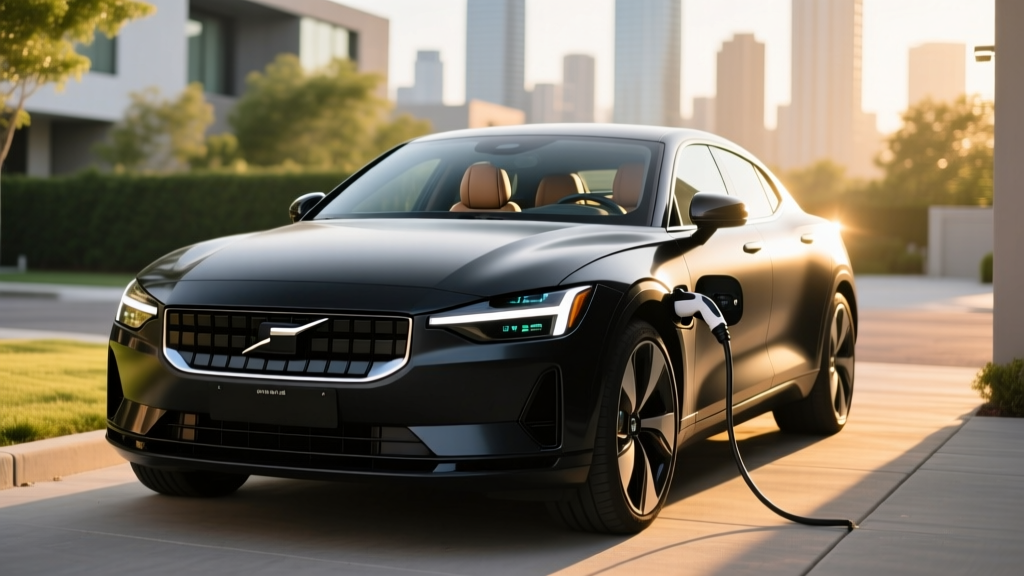
The 2022 Polestar 2 arrived as Volvo's electric sub-brand's first volume vehicle, and it made a deliberate statement: understated design, serious performance, and Google-built infotainment in a compact luxury fastback. For shoppers researching 2022 Polestar 2 specs, the headline numbers are compelling — up to 270 miles of EPA range, available dual-motor AWD with 408 horsepower, and DC fast charging up to 150 kW. But the real story lives in the details: how that range holds up on the highway, where the charging curve tapers, and whether this EV still makes sense on the used market in 2026 given shifting tax-credit rules and newer competition.
This review breaks down every spec that matters to an actual buyer or owner, with real-world context that spec sheets leave out.
2022 Polestar 2 Full Spec Sheet
| Spec | Long Range Single Motor | Long Range Dual Motor |
|---|---|---|
| Drivetrain | RWD | AWD (Dual Motor) |
| Horsepower | 231 hp | 408 hp (476 hp w/ Performance Pack) |
| Torque | 243 lb-ft | 487 lb-ft (502 lb-ft w/ Performance Pack) |
| 0-60 mph | 7.0 sec | 4.5 sec (4.1 sec w/ Performance Pack) |
| Battery (usable) | 75 kWh (78 kWh gross) | 75 kWh (78 kWh gross) |
| Battery Chemistry | NMC (Nickel Manganese Cobalt) | NMC |
| EPA Range | 270 miles | 249 miles |
| MPGe (combined) | 107 MPGe | 92 MPGe |
| Efficiency | 31 kWh/100 mi | 37 kWh/100 mi |
| Max DC Fast Charge | 150 kW | 150 kW |
| Level 2 Charge Rate | 11 kW (48A) | 11 kW (48A) |
| Cargo Volume (rear seats up) | 14.4 cu ft | 14.4 cu ft |
| Cargo Volume (seats folded) | 38.7 cu ft | 38.7 cu ft |
| Frunk | 1.4 cu ft | 1.4 cu ft |
| Base MSRP (2022) | $45,900 | $49,900 |
Sources: EPA Fueleconomy.gov, Polestar USA archival spec sheets.
Range and Efficiency: What the EPA Number Doesn't Tell You
EPA Estimate: 270 miles (Single Motor) / 249 miles (Dual Motor)
Real-World Highway (70-80 mph, moderate temps): ~230–250 miles (Single Motor), ~210–230 miles (Dual Motor)
Cold Weather (below 30°F, highway): Expect 20–30% reduction — roughly 180–215 miles for the Single Motor
City/Mixed Driving (regenerative braking active): Closer to EPA or slightly above in mild weather
The 78 kWh gross (75 kWh usable) NMC battery pack is shared across both trims. The Single Motor variant's 270-mile EPA rating was competitive at launch, though it now trails newer rivals like the Hyundai Ioniq 5 (303 mi) and Tesla Model 3 Long Range (358 mi). The Dual Motor's heavier curb weight and AWD drivetrain losses drop it to 249 miles.
In real-world highway testing at sustained 75 mph speeds, the Single Motor typically delivers 230–250 miles before needing a charge stop. Cold weather is the equalizer — the 2022 Polestar 2 uses a resistive PTC heater rather than a heat pump (a heat pump became optional on later model years). In sub-freezing conditions, plan for 180–215 miles of usable range and precondition the battery whenever possible before DC fast charging.
Efficiency figures from the EPA put the Single Motor at 31 kWh/100 miles (107 MPGe combined) and the Dual Motor at 37 kWh/100 miles (92 MPGe). These are middling numbers — the Tesla Model 3 RWD achieves roughly 25 kWh/100 miles thanks to lighter weight and superior thermal management.
Charging Speed: DC Fast, Level 2, and the Curve Reality
| Charging Level | Power / Rate | Miles Added per Hour | Notes |
|---|---|---|---|
| Level 1 (120V household) | ~1.4 kW | ~4–5 mi/hr | Emergency/trickle only |
| Level 2 (240V, 48A) | 11 kW | ~35–38 mi/hr | Full charge in ~7.5 hours |
| DC Fast Charge (CCS) | Peak 150 kW | ~150–170 mi in 30 min | 10–80% in ~35 minutes |
The 2022 Polestar 2 charges via CCS1 connector (the pre-NACS era standard) and peaks at 150 kW on DC fast chargers. Here's what that actually means in practice:
The charging curve matters more than peak kW. The Polestar 2 sustains roughly 130–150 kW from 10% to about 40% state of charge, then tapers progressively. From 40–60%, expect around 100 kW; from 60–80%, it drops to 60–70 kW. The result is a 10–80% session taking approximately 35 minutes at a 150+ kW Electrify America or EVgo station. That's adequate but noticeably slower than the Hyundai Ioniq 5's 18-minute 10–80% charge at 240 kW peak.
For home Level 2 charging, the onboard 11 kW charger is a strong point. On a 48-amp, 240V circuit, you'll add roughly 35–38 miles of range per hour, meaning a full overnight charge from near-empty takes about 7.5 hours. Most owners will arrive home at 30–50% SoC and wake up fully charged. If your home electrical panel supports a 60-amp circuit (for the 48-amp continuous draw), Level 2 home charging is the most practical and cheapest way to own this car.
Preconditioning note: The 2022 Polestar 2 does not have an automatic battery preconditioning function for navigation-routed DC charging (unlike Tesla or Porsche). To get the fastest charge, manually activate battery preconditioning through the infotainment system 15–20 minutes before arriving at the charger, or drive the car hard enough to warm the pack naturally.
Performance and Driving Dynamics
The Dual Motor Polestar 2 with the optional Performance Pack is genuinely quick. The software-unlocked upgrade (a $5,000 option at launch, later available as an OTA purchase) bumps output to 476 hp and 502 lb-ft of torque, dropping the 0–60 mph time to approximately 4.1 seconds. Even without it, the standard Dual Motor's 4.5-second run is brisk for a compact luxury fastback.
The Single Motor's 7.0-second 0–60 is leisurely by EV standards. It's perfectly adequate for commuting and merging but won't thrill anyone coming from a Tesla Model 3 Long Range (4.2 seconds) or even a base Model 3 RWD (5.8 seconds).
Where the Polestar 2 shines is ride quality and chassis composure. The optional Öhlins dampers (included with the Performance Pack) provide adjustable compression and rebound — 22 manual settings that let you dial between compliant grand-touring and firm track-day modes. The steering is precise if not communicative, and the low center of gravity from the floor-mounted battery makes the car feel planted through corners. Regenerative braking offers one-pedal driving capability, though it's not as aggressive as Nissan's e-Pedal or Chevrolet's one-pedal mode.
Interior, Tech, and Practical Space
The cabin reflects Polestar's Scandinavian roots: minimalist, material-forward, and almost devoid of physical buttons. The centerpiece is an 11.2-inch portrait touchscreen running Android Automotive OS — a full embedded operating system with native Google Maps, Google Assistant, and the Google Play Store for in-car apps. This was a first for a non-Google vehicle in 2022 and remains a standout feature. Google Maps navigation is excellent, with real-time traffic and EV-specific routing that factors in charging stops (though, as noted, without automatic battery preconditioning for those stops).
Notable interior specs:
- Front legroom: 42.2 inches
- Rear legroom: 33.4 inches — tight for taller passengers
- Rear headroom: 37.0 inches — the sloping roofline cuts into space
- Cargo (rear seats up): 14.4 cu ft (liftback design helps usability)
- Cargo (rear seats folded): 38.7 cu ft
- Frunk: 1.4 cu ft — enough for a charging cable, not much else
The rear seat is the Polestar 2's most commonly cited weakness. Compared to the Tesla Model 3 (35.3 inches rear legroom) or Hyundai Ioniq 5 (39.4 inches), the Polestar's 33.4 inches feels cramped on longer trips. The center tunnel hump (a legacy of the CMA platform shared with the Volvo XC40) further compromises the middle seat. This is a four-person car in practice, not five.
The standard 12.3-inch digital driver display is clean and configurable, and the available Harman Kardon audio system is a strong upgrade. Wireless Apple CarPlay was not available in the 2022 model year (wired only), though Android Auto is native through the embedded OS.
Driver Assistance and Safety
The 2022 Polestar 2 comes standard with Pilot Assist, a Level 2 driver-assistance system per SAE classification. It combines adaptive cruise control with lane-centering and operates at speeds up to the vehicle's limiter. This is not self-driving — the driver must keep hands on the wheel and eyes on the road at all times.
Pilot Assist is a Level 2 system. It does not drive autonomously. The driver remains fully responsible for vehicle control, must monitor the road continuously, and must be prepared to take over immediately. It will not stop at red lights, navigate construction zones, or handle unmapped roads without driver input.
Standard safety features include automatic emergency braking with pedestrian and cyclist detection, run-off-road protection (a Volvo/Polestar specialty), lane-keeping assist, blind-spot monitoring with rear cross-traffic alert, and a 360-degree camera on higher trims. The 2022 model earned the IIHS Top Safety Pick+ rating, the organization's highest honor, with Good ratings across all crashworthiness tests.
Pricing, Trims, and Federal Tax Credit Eligibility
| Trim | Base MSRP | Notable Packages | As-Tested Range |
|---|---|---|---|
| Long Range Single Motor | $45,900 | Plus ($4,000), Pilot ($3,200) | $45,900–$55,000 |
| Long Range Dual Motor | $49,900 | Plus, Pilot, Performance ($5,000) | $49,900–$63,000 |
Federal tax credit (§30D) — 2026 rules for used EV purchases:
If you're buying a 2022 Polestar 2 in 2026, you're likely looking at the used market. The IRS §25E used clean vehicle credit offers up to $4,000 (30% of the sale price, capped at $4,000) for qualifying pre-owned EVs. Key eligibility requirements:
- Sale price cap: The used vehicle must sell for $25,000 or less
- Buyer income limits: AGI ≤ $75,000 (single) / $112,500 (head of household) / $150,000 (joint)
- Vehicle age: Must be at least 2 model years old (2022 qualifies in 2026)
- Dealer requirement: Must be purchased from a licensed dealer
- One-time use: The specific VIN can only claim the used credit once every 3 years
If the original buyer claimed the full $7,500 new-vehicle credit in 2022, the used credit is still available to a subsequent buyer (different credit, different rules). However, at typical 2026 used-market prices for a 2022 Polestar 2 ($22,000–$30,000 depending on mileage and condition), many listings will exceed the $25,000 sale-price cap. If you find one at or below $25,000 and meet income requirements, the $4,000 credit effectively brings the price down to $18,000–$21,000 — strong value.
Battery Warranty and Long-Term Ownership
Polestar provides an 8-year/100,000-mile battery warranty that guarantees the 78 kWh NMC pack will retain at least 70% of its original capacity. The basic vehicle warranty is 4 years/50,000 miles, and roadside assistance runs 4 years with unlimited miles.
NMC chemistry in the Polestar 2 has shown moderate degradation in owner reports — typically 5–8% capacity loss over the first 50,000 miles, which is within industry norms. To maximize battery longevity, Polestar recommends:
- Keeping daily charge between 20–80% state of charge
- Avoiding repeated DC fast charging in extreme heat without preconditioning
- Plugging in during extreme cold to keep the thermal management system active
If battery replacement were ever needed out of warranty, expect a cost in the $12,000–$18,000 range based on current NMC pack pricing for this capacity class, though this is speculative and would vary by labor rates and parts availability.
Pros, Cons, and Who Should Buy
- Excellent build quality and premium interior materials
- Google Automotive OS is genuinely best-in-class for navigation and voice control
- IIHS Top Safety Pick+ rating
- Available Öhlins dampers for enthusiast-grade ride tuning
- 11 kW Level 2 onboard charger (faster than many rivals)
- Dual Motor Performance Pack is legitimately quick (4.1 sec 0–60)
- Cramped rear seat (33.4" legroom) — not family-friendly
- No heat pump in 2022 — cold-weather range suffers
- 150 kW peak DC charge is slower than newer 800V competitors
- No automatic battery preconditioning for nav-routed charging
- CCS1 connector (Tesla Supercharger access requires adapter, limited availability)
- Small frunk (1.4 cu ft)
- Ideal buyer: Single professionals or couples who commute 30–60 miles daily, value Scandinavian design and build quality, want Google-native tech, and charge primarily at home.
- Decent fit: Two-person households who take occasional 200-mile road trips and don't mind a 35-minute charge stop.
- Poor fit: Families needing rear-seat space, frequent long-distance travelers who want 300+ mile range, cold-climate drivers without garage charging (no heat pump hurts), or anyone who wants Tesla Supercharger convenience.
Frequently Asked Questions
What is the real-world range of the 2022 Polestar 2?
Expect 230–250 miles on the highway in moderate temperatures for the Single Motor (EPA 270 mi), and 210–230 miles for the Dual Motor (EPA 249 mi). In cold weather below 30°F, plan for 180–215 miles due to the lack of a heat pump and battery energy used for cabin heating.
How fast does the 2022 Polestar 2 charge?
On DC fast charging (CCS1), it peaks at 150 kW with a 10–80% time of approximately 35 minutes. At home on Level 2 (240V, 48A), the 11 kW onboard charger adds about 35–38 miles per hour, fully recharging in roughly 7.5 hours.
Does the 2022 Polestar 2 qualify for the federal EV tax credit in 2026?
As a used vehicle purchase in 2026, it may qualify for the §25E used clean vehicle credit of up to $4,000 — but only if the sale price is $25,000 or less, the buyer meets income caps ($75K single / $150K joint), and the purchase is through a licensed dealer. Check current rules at IRS.gov.
Is the 2022 Polestar 2 worth buying vs. competitors?
If you value build quality, safety ratings, and Google-native tech over maximum range or charging speed, yes — especially on the used market at $22,000–$28,000. If range and charging speed are your top priorities, the Hyundai Ioniq 5 (303 mi, 240 kW charging) or Tesla Model 3 Long Range (358 mi, Supercharger access) are stronger choices. If rear-seat space matters, the Ioniq 5 or VW ID.4 are significantly roomier.
Can I charge a 2022 Polestar 2 at Tesla Superchargers?
The 2022 Polestar 2 uses a CCS1 connector. Tesla has begun opening select Supercharger stalls to non-Tesla EVs via the built-in Magic Dock CCS adapter, but availability is limited and station-dependent. Polestar has not issued a NACS retrofit adapter for the 2022 model. For reliable public fast charging, rely on Electrify America, EVgo, and ChargePoint CCS stations.