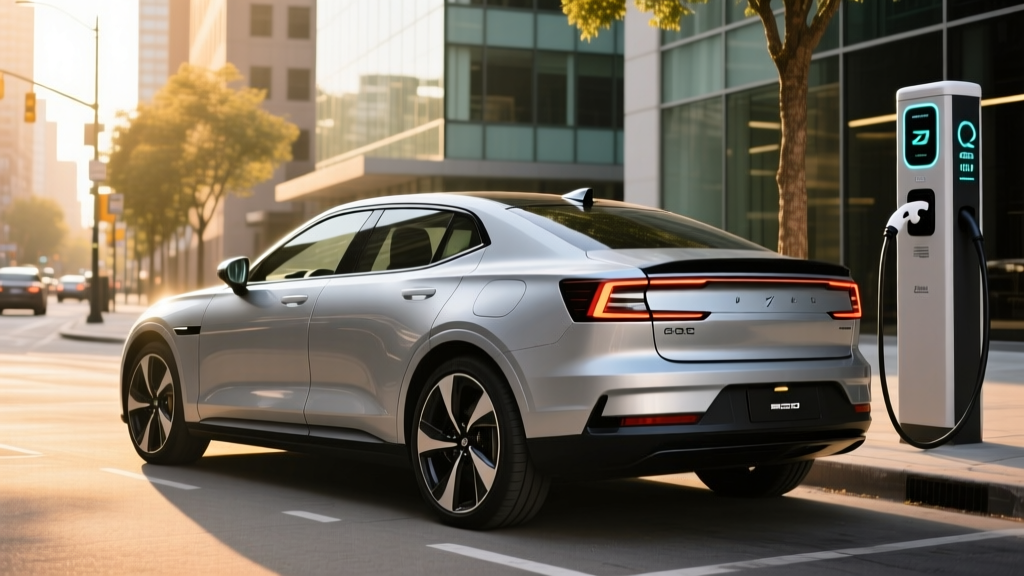
The 2022 Polestar 2 was Volvo's electrified spin-off brand's first serious bid at the premium compact EV sedan market — a direct shot at the Tesla Model 3 and BMW i4. Now a few years into its lifecycle, the 2022 model year remains a popular entry point on the used EV market, offering Scandinavian design, a Google-powered infotainment stack, and solid build quality. But how does it hold up in 2026 against newer rivals with faster charging and longer range? This review breaks down every spec that matters to a real buyer.
Quick Verdict: Who Should Consider the 2022 Polestar 2?
The 2022 Polestar 2 is best suited for design-conscious commuters and urban professionals who value build quality, minimalist interiors, and a premium driving experience over maximum range or cutting-edge charging speed. If you primarily drive under 200 miles daily, have reliable home Level 2 charging, and appreciate a car that doesn't look like every other EV on the road, the 2022 Polestar 2 remains compelling on the used market. It is not the best choice for frequent long-distance road trippers or buyers in extreme cold climates who need maximum range buffer.
Range and Efficiency: EPA Numbers vs. Real-World Driving
The 2022 Polestar 2 was offered in two primary configurations, each with distinctly different range profiles. Understanding which version you're looking at is critical when shopping used.
| Trim / Drivetrain | EPA Range | MPGe (Combined) | kWh/100 mi | Battery (Usable) |
|---|---|---|---|---|
| Long Range Single Motor (FWD) | 270 mi | 107 MPGe | 31 | 75 kWh (78 kWh gross) |
| Long Range Dual Motor (AWD) | 249 mi | 92 MPGe | 36 | 75 kWh (78 kWh gross) |
Source: EPA fueleconomy.gov
The EPA's 270-mile estimate for the Single Motor applies to mixed driving. In real-world conditions:
• Highway (70-75 mph, flat terrain): Expect 225–245 miles. The Polestar 2's boxy fastback shape creates more aerodynamic drag than a sleek sedan like the Ioniq 6.
• City/suburban with regen: 260–280 miles is achievable thanks to strong regenerative braking recapturing energy.
• Cold weather (below 32°F): Plan for 20–30% range reduction, yielding roughly 190–215 miles on the Single Motor. The 2022 model year lacks a standard heat pump in the U.S. market (it was part of the optional Plus Pack), which significantly impacts winter efficiency compared to competitors with standard heat pumps.
• With Performance Pack (Dual Motor): The Öhlins dampers and 20-inch forged wheels reduce range by an additional 5–10 miles vs. the standard Dual Motor.
The 78 kWh gross (75 kWh usable) lithium-ion battery pack uses NMC (nickel manganese cobalt) chemistry supplied primarily by LG Energy Solution and CATL depending on production batch. NMC offers higher energy density than LFP, which is why Polestar achieved 270 miles in a relatively compact package, but it also means owners should avoid regularly charging to 100% or depleting below 10% to maximize long-term battery health. Set your daily charge limit to 80–90% for routine use.
Charging Speed: DC Fast Charging and Home Level 2
Charging speed was one area where the 2022 Polestar 2 showed its age even at launch, and the gap has only widened by 2026 standards. Here's exactly what to expect.
| Charging Level | Max Rate | Speed (Miles/Hour) | Notes |
|---|---|---|---|
| Level 1 (120V household) | 1.4 kW | ~3–4 mi/hr | Emergency/trickle only; full charge in 50+ hours |
| Level 2 (240V home/public) | 11 kW (onboard charger) | ~32–36 mi/hr | 0–100% in ~8 hours on a 48A circuit |
| DC Fast Charge (CCS) | 150 kW peak | ~10–80% in ~35 min | Sustained rate drops to ~75 kW above 60% SoC |
The 150 kW peak DC fast-charge rate is the 2022 Polestar 2's most notable limitation for road-trippers. While competitors like the Hyundai Ioniq 5 (peak 235 kW, 10–80% in ~18 minutes) and the updated Tesla Model 3 (peak 250 kW, 10–80% in ~25 minutes) can add range significantly faster, the Polestar 2's charge curve is relatively conservative. You'll see 150 kW only briefly between roughly 15–35% State of Charge. Above 60%, the rate tapers sharply to under 75 kW, meaning that last 20% from 80 to 100% takes disproportionately long.
Practical road-trip implication: On a 400-mile journey, plan for two 30–35 minute charging stops (10–80%) rather than one quick top-up. The CCS1 connector means you'll use Electrify America, EVgo, and ChargePoint DC stations — no native access to the Tesla Supercharger network without an adapter, and even then, the Polestar 2's lower charge rate means you won't benefit from V3/V4 Supercharger speeds.
At home, the 11 kW onboard AC charger is a genuine strength. On a properly installed 240V/48A Level 2 circuit (such as a ChargePoint Home Flex or Wallbox Pulsar Plus), you'll recover a full battery overnight in about 8 hours. This is faster than the base Model 3's 7.6 kW onboard charger (though Tesla upgraded this in later model years). Most owners will wake up with a full charge every morning with minimal planning.
Performance and Driving Dynamics
The 2022 Polestar 2 delivers two very different driving personalities depending on which powertrain you choose.
| Spec | Single Motor (FWD) | Dual Motor (AWD) |
|---|---|---|
| Horsepower | 231 hp | 408 hp |
| Torque | 243 lb-ft | 487 lb-ft |
| 0–60 mph | 7.0 sec | 4.5 sec |
| Top Speed | 100 mph | 127 mph |
| Drivetrain | Front-Wheel Drive | All-Wheel Drive |
The Dual Motor's 4.5-second 0–60 time puts it in legitimate sports-sedan territory, and the instant torque delivery makes it feel even quicker in real-world passing situations. The optional Performance Pack ($5,000 when new) adds manually adjustable Öhlins dual-flow dampers, Brembo front brakes with gold calipers, and 20-inch forged alloy wheels. The Öhlins setup is a genuine enthusiast feature — you can adjust damping stiffness yourself with a knob, something rarely offered at any price point.
The Single Motor is more sedate but perfectly adequate for daily commuting. Its 7.0-second 0–60 time is comparable to a well-equipped Toyota Camry V6, and the front-wheel-drive layout provides predictable, safe handling. For most buyers, the Single Motor is the smarter choice — you gain 21 miles of EPA range, lower weight, and reduced tire wear compared to the Dual Motor.
Interior, Cargo, and Technology
The Polestar 2's interior is where Volvo's DNA shows most clearly. Materials are excellent — a vegan "WeaveTech" upholstery is standard, with available Nappa leather. The minimalist Scandinavian aesthetic is clean, though some may find it austere compared to the screen-heavy interiors of Tesla or Mercedes.
Key dimensions:
- Cargo (rear hatch): 14.4 cu ft behind rear seats; 37.0 cu ft with seats folded
- Frunk (front trunk): 1.2 cu ft — enough for charging cables and a small bag
- Front legroom: 42.2 inches
- Rear legroom: 34.0 inches — noticeably tighter than a Tesla Model 3 (35.3 in) and significantly less than a Hyundai Ioniq 5 (39.4 in)
- Ground clearance: 5.3 inches — low for an EV crossover, more sedan-like
The rear seat is the Polestar 2's most common criticism. The raised floor (due to the battery pack's "T-shape" layout with cells running through the center tunnel) creates a high hip point in the back, resulting in a knees-up seating position that's uncomfortable for adults on longer trips. This is a carryover from the car's CMA platform, which was designed to accommodate both ICE and EV powertrains. Families with older children or adults who regularly carry rear passengers should test this carefully.
Infotainment: The 11.2-inch portrait touchscreen runs Android Automotive OS with Google built-in — meaning Google Maps, Google Assistant, and the Google Play Store are native to the car. This was a standout feature at launch and remains one of the best infotainment implementations in any EV. Google Maps with live traffic and integrated EV route planning (factoring in charging stops) is genuinely useful. Wireless Apple CarPlay was added via OTA update in late 2022.
Driver Assistance: The Polestar 2 comes standard with Pilot Assist, a SAE Level 2 driver-assistance system combining adaptive cruise control and lane-centering. It works well on highways but requires hands on the wheel at all times. The optional Pilot Pack ($3,200) adds Pilot Assist with Navi (curve speed adaptation), a 360-degree camera, and Park Assist Pilot. Unlike Tesla's FSD or GM's Super Cruise, there is no hands-free or automated lane-change capability. This is a straightforward, competent Level 2 system — not an autonomous driving feature.
Pricing, Tax Credits, and Used Market Value
When new, the 2022 Polestar 2 started at $47,200 (Single Motor) and $51,200 (Dual Motor), before destination. Well-equipped examples with the Plus and Pilot packs pushed past $58,000.
As of early 2026, used 2022 Polestar 2 pricing has depreciated significantly — a trend common to most EVs from this era. Expect to find:
- Single Motor, average miles: $22,000–$28,000
- Dual Motor, average miles: $25,000–$32,000
- Dual Motor with Performance Pack, low miles: $30,000–$36,000
Federal Tax Credit Eligibility (Used EV Credit — IRS §25E)
Because the 2022 Polestar 2 is now purchased as a used vehicle, it may qualify for the Used Clean Vehicle Credit (IRS §25E) — not the new-vehicle §30D credit. Here are the key requirements:
- Credit amount: 30% of sale price, up to a maximum of $4,000
- Vehicle price cap: Sale price must be $25,000 or less
- Buyer income limits (MAGI): $75,000 single / $112,500 head of household / $150,000 joint
- Vehicle age: Must be at least 2 model years old (2022 qualifies in 2026)
- Dealer requirement: Must be purchased from a licensed dealer (private sales don't qualify)
- Point-of-sale transfer: Credit can be applied at purchase to reduce the price immediately
Source: IRS.gov — Used Clean Vehicle Credit
Practical implication: A 2022 Polestar 2 Single Motor priced at $24,500 from a dealer would qualify for the full $4,000 credit (30% of $24,500 = $7,350, capped at $4,000), bringing your effective cost to $20,500 — making it one of the best-value premium EVs on the used market. However, if the car is priced at $25,500, it exceeds the $25,000 sale-price cap and receives no credit at all. Negotiate accordingly.
Note: The original 2022 Polestar 2 did not qualify for the $7,500 new-vehicle §30D credit when sold new, as it was assembled in China (Luqiao) and did not meet North American battery-sourcing requirements. This is irrelevant for used purchases under §25E, which has no manufacturing-location requirement.
Warranty and Long-Term Battery Health
Polestar provides the following warranty coverage for the 2022 Polestar 2:
- Basic vehicle warranty: 4 years / 50,000 miles
- Battery & drive unit warranty: 8 years / 100,000 miles (whichever comes first)
- Battery capacity retention threshold: 70% of original capacity within the warranty period
- Corrosion warranty: 12 years, unlimited miles
- Roadside assistance: 4 years / unlimited miles
For a 2022 model purchased in 2026, approximately 4 years and significant mileage remain on the battery/drive-unit warranty. This is important context: if you buy a 2022 model with 40,000 miles, you still have 60,000 miles and roughly 4 years of powertrain coverage remaining.
NMC battery degradation data for the Polestar 2's LG/CATL pack is still accumulating, but early owner reports and industry data suggest typical degradation of 8–12% over the first 100,000 miles with normal use. This means a 270-mile new battery might offer roughly 240–248 miles of range at 100,000 miles — well above the 70% (189-mile) warranty threshold. To maximize longevity, avoid frequent DC fast charging above 150 kW, don't store the car at 100% SoC for extended periods, and use preconditioning when available.
How It Compares: 2022 Polestar 2 vs. Key Rivals
| Metric | 2022 Polestar 2 SM | 2022 Tesla Model 3 LR | 2022 BMW i4 eDrive40 | 2022 Hyundai Ioniq 5 SEL |
|---|---|---|---|---|
| EPA Range | 270 mi | 358 mi | 301 mi | 303 mi |
| Peak DC Charge | 150 kW | 250 kW | 205 kW | 235 kW |
| 10–80% DC Time | ~35 min | ~25 min | ~31 min | ~18 min |
| 0–60 mph | 7.0 sec | 4.2 sec | 5.5 sec | 7.4 sec (RWD) |
| Used Price (2026) | $22K–$28K | $24K–$32K | $28K–$38K | $22K–$30K |
| Rear Seat Comfort | Tight | Adequate | Good | Excellent |
- You value distinctive Scandinavian design over ubiquity
- Google Automotive OS is your preferred infotainment
- You want a premium interior at a sub-$25K used price
- Most of your driving is under 180 miles/day with home charging
- You appreciate the optional Öhlins Performance Pack
- You need 300+ miles of range for frequent road trips
- Fast DC charging (sub-20 min 10–80%) is a priority
- You regularly carry adult rear passengers
- Winter driving without a heat pump concerns you
- You want Supercharger network access without an adapter
Pros and Cons at a Glance
- Excellent build quality and materials
- Google Automotive OS is best-in-class
- Strong value on the used market (post-$4K credit: ~$20K)
- 11 kW onboard AC charging is faster than many rivals
- Performance Pack with Öhlins is a genuine enthusiast option
- Standard Pilot Assist is competent and reliable
- Hatchback practicality with 37 cu ft max cargo
- 270-mile max EPA range trails most competitors
- 150 kW peak DC charging is slow for 2026 standards
- Rear seat is cramped with poor floor height
- No standard heat pump (optional Plus Pack only)
- CCS1 connector — no native Tesla Supercharger access
- Relatively low ground clearance (5.3 in)
- Small 1.2 cu ft frunk
Frequently Asked Questions
What is the real-world range of the 2022 Polestar 2?
The EPA rates the Single Motor at 270 miles and the Dual Motor at 249 miles. In real-world highway driving at 70–75 mph, expect 225–245 miles (Single Motor) and 210–230 miles (Dual Motor). In cold weather below freezing, reduce these figures by 20–30%. City driving with regenerative braking can approach or slightly exceed EPA estimates.
How fast does the 2022 Polestar 2 charge?
On a DC fast charger, it peaks at 150 kW and takes approximately 35 minutes from 10–80% State of Charge. At home on a 240V Level 2 charger (48 amps), the 11 kW onboard charger delivers roughly 32–36 miles of range per hour, fully recharging overnight in about 8 hours. Level 1 (120V) adds only 3–4 miles per hour.
Does the 2022 Polestar 2 qualify for a federal tax credit?
As a used vehicle in 2026, the 2022 Polestar 2 may qualify for the IRS §25E Used Clean Vehicle Credit of up to $4,000, provided the sale price is $25,000 or less, the buyer's income is under the threshold ($75K single / $150K joint), and it's purchased from a licensed dealer. It did not qualify for the $7,500 new-vehicle §30D credit when sold new due to Chinese assembly and battery-sourcing requirements. Always verify current rules at IRS.gov and consult a tax professional.
Is the 2022 Polestar 2 worth buying in 2026 vs. competitors?
At used prices of $22,000–$28,000 (and potentially $18,000–$24,000 after the $4,000 used EV credit), the 2022 Polestar 2 offers exceptional value for a premium EV with Google Automotive OS, strong build quality, and a distinctive design. However, if range and charging speed are your top priorities, a used 2022 Tesla Model 3 Long Range (358 mi EPA, 250 kW charging) or 2022 Hyundai Ioniq 5 (303 mi, 235 kW, 18-min 10–80%) are objectively more capable road-trip vehicles at similar price points.
Does the 2022 Polestar 2 have a heat pump?
Not as standard equipment. The heat pump was included only with the optional Plus Pack ($4,000 when new), which also added a panoramic glass roof, heated rear seats, a heated steering wheel, and a Harman Kardon audio system. When shopping used, check the window sticker or vehicle settings to confirm whether the Plus Pack was equipped — it makes a significant difference in cold-weather range and cabin comfort.
What is the battery warranty on a used 2022 Polestar 2?
Polestar covers the high-voltage battery and drive units for 8 years or 100,000 miles (whichever comes first), guaranteeing at least 70% capacity retention. For a 2022 model purchased in 2026, you'll have approximately 2–4 years and up to 60,000+ miles of battery warranty remaining, depending on the vehicle's current odometer reading.