Quick Verdict: The Benchmark Compact Electric SUV, Four Years In
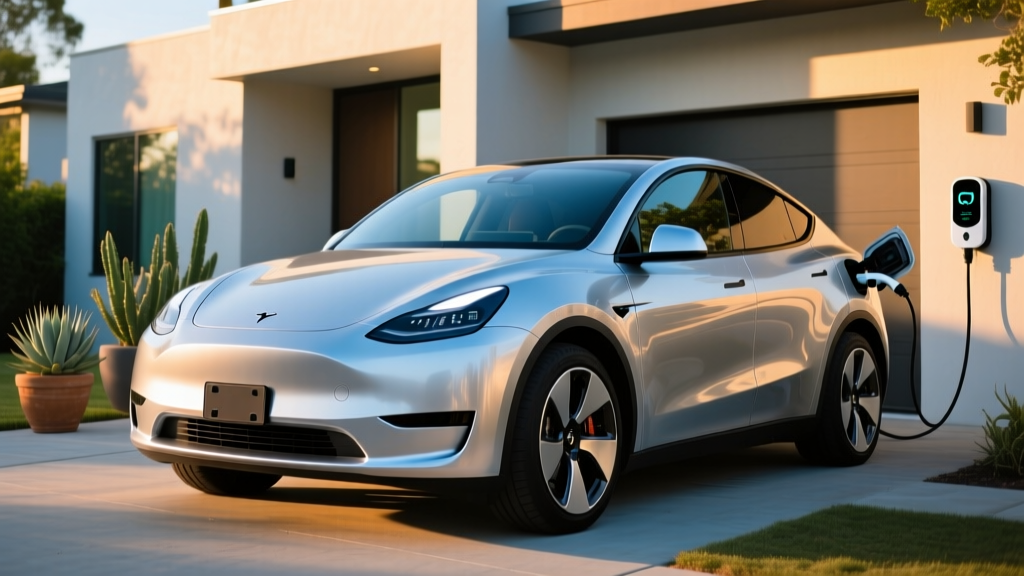
Even in 2026, the 2022 Tesla Model Y remains the single most consequential electric vehicle on the used market. It outsold every other EV in its launch year and continues to anchor Tesla's volume strategy. For used-EV shoppers, it offers a compelling mix of 300+ mile EPA range, access to the Supercharger network, and class-leading efficiency — but battery chemistry varies by trim, charging curves taper aggressively past 80%, and the minimalist interior isn't for everyone. This guide breaks down exactly what you're getting with a 2022 Model Y today.
Range and Efficiency: EPA Sticker vs. Real-World Reality
| Trim | Drivetrain | EPA Range | MPGe (Combined) | kWh/100 mi |
|---|---|---|---|---|
| Standard Range (RWD) | Rear-Wheel Drive | 303 mi | 123 MPGe | 27 kWh |
| Long Range (AWD) | Dual Motor AWD | 330 mi | 122 MPGe | 28 kWh |
| Performance (AWD) | Dual Motor AWD | 303 mi | 117 MPGe | 29 kWh |
Real-World Range Expectations
EPA Sticker: 303–330 miles depending on trim.
Real-World Highway (70 mph, mild weather): Expect 260–290 miles. The Model Y's boxy crossover shape creates more drag at speed than a sedan, and sustained highway driving reduces range by roughly 10–15% versus the EPA combined figure.
Cold Weather (below 32°F): Plan for 200–240 miles. LFP batteries in the Standard Range trim lose a larger percentage of usable capacity in cold conditions than the NMC packs in Long Range/Performance models. Preconditioning while plugged in recovers some of this loss.
Source: fueleconomy.gov — 2022 Tesla Model Y
The 2022 Model Y Long Range's 330-mile EPA rating was class-leading at launch, and it still holds up against 2026 competitors like the Hyundai Ioniq 5 (303 mi) and Ford Mustang Mach-E Extended Range (312 mi). Efficiency is where Tesla's engineering advantage shows: 27–29 kWh per 100 miles means you spend less per mile at any charger compared to heavier, less aerodynamic rivals.
Battery Chemistry: LFP vs. NMC — Know What You're Buying
| Attribute | Standard Range (LFP) | Long Range / Performance (NMC) |
|---|---|---|
| Chemistry | Lithium Iron Phosphate (LFP) | Nickel Manganese Cobalt (NMC) |
| Usable Capacity | ~60 kWh | ~75 kWh |
| Recommended Daily Charge | 100% (LFP benefits from full charges) | 80–90% daily; 100% for trips only |
| Cycle Life | Higher — 3,000+ cycles typical | Lower — 1,500–2,000 cycles typical |
| Cold-Weather Performance | Weaker — more range loss in freezing temps | Better — less capacity reduction in cold |
| Energy Density | Lower — heavier pack for same capacity | Higher — lighter pack, more range |
| Manufacturing Origin (2022) | CATL cells (China), assembled in Fremont/Austin | Panasonic cells, assembled in Fremont |
This distinction matters enormously for used buyers. If you're eyeing a 2022 Model Y Standard Range (sometimes badged simply as "Model Y" or "RWD" on later listings), you're getting an LFP pack built by CATL. LFP degrades more slowly over thousands of charge cycles and can be charged to 100% daily without harm — a major advantage for commuters. The tradeoff is reduced cold-weather range and slightly slower fast-charging speeds.
The Long Range and Performance trims use NMC cells from Panasonic. These offer superior energy density and cold-weather resilience but degrade faster if routinely charged to 100%. Tesla's battery management system includes a top-end buffer, so real-world degradation on 2022 NMC packs in 2026 is typically 6–10% based on owner fleet data — meaning a Long Range that stickered at 330 miles may now show 297–310 miles at full charge.
Charging: DC Fast-Charge Curve and Home Level 2
| Charging Method | Standard Range (LFP) | Long Range / Performance (NMC) |
|---|---|---|
| Max DC Fast-Charge Rate | 170 kW peak | 250 kW peak |
| 10–80% DCFC Time | ~30 minutes | ~27 minutes (V3 Supercharger) |
| Level 2 Home (11.5 kW / 48A) | ~32 miles/hour | ~44 miles/hour |
| Level 1 (120V / 12A) | ~3 miles/hour | ~4 miles/hour |
| Connector | NACS (Tesla proprietary) | NACS (Tesla proprietary) |
Understanding the charge curve: The 250 kW peak on Long Range/Performance models is only sustained between roughly 10–30% State of Charge. By 50% SoC, the rate tapers to approximately 150 kW, and above 80% it drops below 50 kW. This is why Tesla (and every EV maker) quotes 10–80% times rather than 0–100%. If you arrive at a V3 Supercharger at 15% SoC and charge to 80%, plan on roughly 25–30 minutes — not the 15 minutes that peak-kW marketing might imply.
The Standard Range LFP model's 170 kW peak is noticeably slower. On a road trip, this adds 5–8 minutes per charging stop compared to the Long Range. For daily commuters who charge at home overnight, the difference is irrelevant.
For home charging, the onboard charger accepts up to 11.5 kW (48 amps) on Level 2. A full overnight charge from 20% to 100% takes roughly 6–8 hours depending on trim. Installing a 240V / 60A circuit with a Tesla Wall Connector ($475 for the hardware) typically costs $800–$2,000 total with a licensed electrician, depending on panel proximity and local permit fees. Homes with older 100A electrical panels may need a $1,500–$3,000 panel upgrade to support a 48A continuous draw.
Performance and Drivetrain
| Spec | Standard Range (RWD) | Long Range (AWD) | Performance (AWD) |
|---|---|---|---|
| 0–60 mph | 6.6 sec | 4.8 sec | 3.5 sec |
| Horsepower | ~346 hp | ~384 hp | ~456 hp |
| Torque | ~310 lb-ft | ~376 lb-ft | ~471 lb-ft |
| Drivetrain | Single motor RWD | Dual motor AWD | Dual motor AWD |
| Top Speed | 135 mph | 135 mph | 155 mph |
| Towing Capacity | 3,500 lbs | 3,500 lbs | 3,500 lbs |
Even the base Standard Range model delivers brisk acceleration that outpaces most gas-powered compact SUVs. The Long Range's 4.8-second 0–60 time is genuinely quick for a family vehicle, and the Performance trim's 3.5 seconds enters sports-car territory. Dual-motor AWD models provide confident traction in rain and snow, with torque vectoring between the front and rear motors managed entirely by software.
Towing is rated at 3,500 pounds across all trims — adequate for a small utility trailer or a pair of jet skis, but not enough for a mid-size camper. Expect a 30–40% range reduction when towing near max capacity at highway speeds.
Interior, Cargo, and Technology
The 2022 Model Y's interior remains polarizing. Everything runs through a single 15-inch center touchscreen — there is no instrument cluster, no physical buttons, and no Apple CarPlay or Android Auto. Navigation, media, climate, and vehicle settings all live on the screen. Some owners love the minimalism; others find it distracting.
| Measurement | Specification |
|---|---|
| Front Headroom | 41.0 in |
| Rear Headroom | 39.4 in |
| Front Legroom | 41.8 in |
| Rear Legroom | 37.3 in |
| Cargo Volume (rear seats up) | 30.2 cu ft |
| Cargo Volume (rear seats folded) | 72.1 cu ft |
| Frunk (front trunk) | 4.1 cu ft |
| Seating Capacity | 5 standard; 7 optional (third row, Long Range only) |
Cargo space is generous for the class, and the rear hatch opening is wide and practical. The optional third-row seat (Long Range only) is very small — suitable only for children under about 5'4" — and it eliminates the rear under-floor storage compartment.
Driver Assistance: Every 2022 Model Y ships with Basic Autopilot (adaptive cruise control and lane centering). Enhanced Autopilot ($6,000 at the time) added auto lane change, autosteer on highways, and Summon. Full Self-Driving (FSD) capability was a $12,000 add-on. Crucially, all of these are SAE Level 2 systems — the driver must remain engaged, hands on or near the wheel, and eyes on the road at all times. None of these constitute autonomous or "self-driving" capability.
SAE Automation Level: Level 2
Tesla Autopilot and FSD (Supervised) are Level 2 driver-assistance systems. The vehicle can steer, accelerate, and brake under certain conditions, but the human driver is fully responsible for monitoring the environment and intervening at any moment. This is fundamentally different from Level 4 robotaxi services like Waymo, which operate without a human driver in geofenced areas.
Pricing, Used Market, and Federal Tax Credit
| Trim | 2022 Base MSRP | Typical 2026 Used Price (30–50k mi) | Federal Used EV Credit (§25E) |
|---|---|---|---|
| Standard Range (RWD) | $52,990 | $28,000–$33,000 | Up to $4,000 (30% of sale price, max $4,000) |
| Long Range (AWD) | $58,990 | $32,000–$38,000 | Up to $4,000 |
| Performance (AWD) | $65,990 | $35,000–$42,000 | Up to $4,000 |
Important tax credit distinction for 2026 buyers: Because the 2022 Model Y is now a used vehicle, it no longer qualifies for the new-vehicle §30D credit (up to $7,500). Instead, it may qualify for the §25E Previously Owned Clean Vehicle Credit, which provides 30% of the sale price up to a maximum of $4,000. This credit has its own eligibility requirements:
- Vehicle price cap: Sale price must be $25,000 or less to qualify for the full credit. Many 2022 Model Y listings exceed this threshold, which may reduce or eliminate the credit.
- Buyer income limits: Modified adjusted gross income must not exceed $75,000 (single), $112,500 (head of household), or $150,000 (married filing jointly).
- Dealer requirement: The sale must be processed through a licensed dealer registered with the IRS — private-party sales do not qualify.
- First transfer rule: The vehicle must be transferred for the first time since August 16, 2022 (when the IRA was signed). Most 2022 Model Ys sold new before that date will not qualify on their first resale.
- Claim frequency: You can only claim the §25E credit once every three years.
Always verify current rules at IRS.gov and consult a tax professional before relying on credit eligibility in your purchase decision.
Warranty and Long-Term Battery Outlook
| Coverage | Term |
|---|---|
| Basic Vehicle Limited Warranty | 4 years / 50,000 miles |
| Battery & Drive Unit Warranty | 8 years / 120,000 miles (Long Range/Performance) |
| Battery & Drive Unit Warranty | 8 years / 100,000 miles (Standard Range) |
| Capacity Retention Threshold | 70% of original capacity during warranty period |
By 2026, most 2022 Model Ys have exited their basic 4-year/50,000-mile bumper-to-bumper warranty. However, the battery and drive unit remain covered until 2030 or 100,000–120,000 miles, whichever comes first. Tesla's warranty guarantees that the battery will retain at least 70% of its original capacity. If a 2022 Long Range with 75 kWh usable drops below ~52.5 kWh (translating to roughly 231 miles of range), Tesla will repair or replace the pack at no cost.
Real-world fleet data from high-mileage Tesla owners suggests that 2022 NMC packs typically retain 90–94% capacity after 50,000 miles and 85–92% after 100,000 miles. LFP packs show slower degradation curves, often retaining 93–96% at 50,000 miles. These figures are averages — individual results vary based on charging habits, climate exposure, and Supercharger frequency.
2022 Model Y vs. Key 2022–2023 Competitors
| Spec | 2022 Tesla Model Y LR | 2022 Ford Mach-E ER AWD | 2022 Hyundai Ioniq 5 AWD | 2023 BMW iX xDrive50 |
|---|---|---|---|---|
| EPA Range | 330 mi | 312 mi | 256 mi | 324 mi |
| Battery (usable) | ~75 kWh (NMC) | ~88 kWh (NMC) | ~72.6 kWh (NMC) | ~105 kWh (NMC) |
| DCFC Peak | 250 kW | 150 kW | 235 kW | 150 kW |
| 10–80% Time | ~27 min | ~45 min | ~18 min | ~35 min |
| 0–60 mph | 4.8 sec | 5.2 sec | 5.2 sec | 4.6 sec |
| Cargo (seats up) | 30.2 cu ft | 29.7 cu ft | 27.2 cu ft | 35.5 cu ft |
| Typical 2026 Used Price | $32k–$38k | $28k–$34k | $27k–$33k | $45k–$55k |
The Model Y Long Range still leads on range and charging infrastructure access (Supercharger network). The Ioniq 5 charges faster in absolute minutes thanks to its 800V architecture. The Mach-E offers a more traditional interior with physical controls and CarPlay. The iX is a luxury segment above in price and refinement. Your choice depends on priorities: maximum range and network reliability favor the Model Y; charging speed favors the Ioniq 5; interior familiarity favors the Mach-E.
Pros
- Class-leading 330-mile EPA range (Long Range)
- Supercharger network reliability remains best-in-class for road trips
- Best-in-class efficiency (27–29 kWh/100 mi)
- LFP option (Standard Range) offers exceptional cycle life and 100% daily charging
- Over-the-air updates continue to add features years after purchase
- Strong cargo capacity with practical hatchback design
- Excellent safety ratings — IIHS Top Safety Pick+, NHTSA 5-star
Cons
- No Apple CarPlay or Android Auto — Tesla's ecosystem only
- Minimalist interior lacks physical buttons; all climate controls on touchscreen
- Ride quality is firm — road imperfections are noticeable on rough pavement
- No instrument cluster or head-up display
- LFP Standard Range has slower DCFC (170 kW peak) and worse cold-weather range
- Build quality inconsistencies (panel gaps, trim alignment) reported on 2022 Fremont units
- Insurance premiums tend to be higher than comparable non-Tesla EVs
Who Should Buy a 2022 Model Y in 2026?
Choose the 2022 Model Y Long Range if:
- You take regular road trips and want the most reliable DC fast-charging network
- You need 300+ real-world miles of range in mild weather for daily commuting without home charging
- You live in a cold climate and need AWD with strong cold-weather battery performance (NMC)
- You want the best efficiency (lowest cost per mile) in the compact electric SUV segment
Choose the 2022 Model Y Standard Range if:
- You're a daily commuter with reliable home Level 2 charging and rarely road-trip
- You want the longest-lasting battery chemistry (LFP) and plan to keep the car 8+ years
- You prefer charging to 100% daily without worrying about NMC degradation
- Budget is a priority and you can find one under $30,000
Look elsewhere if:
- You need Apple CarPlay/Android Auto for navigation or media
- You prefer physical buttons and a traditional driver instrument display
- You want a plush, luxury-grade ride — consider the BMW iX or Mercedes EQB instead
- You need to tow more than 3,500 lbs — the Rivian R1S or Ford F-150 Lightning are better suited
Frequently Asked Questions
What is the real-world range of a 2022 Model Y Long Range?
The EPA rates it at 330 miles. In real-world highway driving at 70 mph in moderate temperatures, expect 270–295 miles. In freezing weather, plan for 220–250 miles. Preconditioning the battery while plugged in can recover 15–20 miles of cold-weather range.
How fast does the 2022 Model Y charge at home and on the road?
On a V3 Supercharger (250 kW capable), the Long Range charges from 10–80% in approximately 27 minutes. At home on a 48-amp Level 2 charger (11.5 kW), it adds about 44 miles of range per hour, fully charging overnight in 7–8 hours. The Standard Range LFP model peaks at 170 kW DC and adds ~32 miles per hour on Level 2.
Does a used 2022 Model Y qualify for a federal tax credit in 2026?
It may qualify for the §25E Previously Owned Clean Vehicle Credit (up to $4,000), but only if the sale price is $25,000 or less, the buyer meets income caps, and the sale is through an IRS-registered dealer. Many 2022 Model Y listings exceed the $25,000 price cap, reducing or eliminating eligibility. Verify current rules at IRS.gov.
Is a 2022 Model Y still worth buying vs. newer 2025–2026 EVs?
Yes, if value is your priority. A 2022 Long Range at $32,000–$38,000 delivers range, efficiency, and charging infrastructure that still competes with new EVs costing $15,000+ more. The tradeoffs are older interior materials, no structural battery pack (introduced in later Austin-built models), and potential build-quality variance from the Fremont factory. If you want the latest in 800V charging architecture or a luxury interior, newer rivals like the 2025 Ioniq 5 N or BMW iX are compelling — but at a steep premium.
How much does it cost to replace a 2022 Model Y battery out of warranty?
Out-of-warranty battery replacement for the Model Y typically ranges from $12,000 to $16,000 including labor, based on current Tesla service center pricing. However, complete pack failures are rare — most degradation claims involve individual module replacement at significantly lower cost. The 8-year/120,000-mile battery warranty (Long Range) still covers most 2022 examples through 2030.
Can I use non-Tesla chargers with a 2022 Model Y?
The 2022 Model Y uses the NACS (North American Charging Standard) connector natively. As of 2026, most major charging networks (Electrify America, EVgo, ChargePoint) have added NACS cables or offer adapters. Tesla also sells a CCS adapter (~$250) that enables charging at legacy CCS stations. The Supercharger network remains the most reliable option for road trips, with over 30,000 stalls in North America.