Quick Verdict: Still the Benchmark Sports Sedan
The 2022 Tesla Model 3 Performance remains one of the sharpest electric sports sedans on the used market. With 450 horsepower, a 3.1-second 0-60 mph time, and an EPA-estimated 312 miles of range, it delivers a combination of acceleration and efficiency that few rivals matched in its model year. Now that these vehicles are entering the used-EV market in volume, buyers are getting a proven dual-motor platform with access to the Tesla Supercharger network — but understanding real-world range, charging behavior, and battery longevity is essential before signing the paperwork.
This profile covers the 2022 Model 3 Performance specifically, using original EPA data, Tesla's published specs, and real-world ownership patterns observed through 2026. If you're evaluating one as a used purchase or comparing it against newer alternatives, the numbers below will ground your decision.
Range and Efficiency: EPA vs. Reality
Real-World Expectation: 260–285 miles in mixed highway driving at 70–75 mph; 220–250 miles in sub-30°F winter conditions with cabin heat. City/regenerative driving can push closer to the 300-mile mark.
The 2022 Model 3 Performance carries an 82 kWh battery pack (approximately 75 kWh usable) using NMC (nickel manganese cobalt) chemistry. Tesla's thermal management system — one of the best in the industry — helps preserve range in temperature extremes, but physics still applies. NMC cells lose roughly 15–25% of accessible capacity in sustained cold below freezing, even with preconditioning active.
On the efficiency side, the EPA rates the 2022 Model 3 Performance at 113 MPGe combined (126 city / 105 highway), which translates to roughly 30 kWh per 100 miles. That's slightly thirstier than the Long Range AWD variant (134 MPGe) because the Performance trim's stickier 20" Überturbine wheels, lower ride height, and more aggressive powertrain tuning increase rolling resistance and energy draw at speed.
For context, fueleconomy.gov lists the 2022 Model 3 Performance's combined range at 312 miles with a fuel cost estimate of roughly $600–$700 per year at average U.S. electricity rates — a fraction of what a comparable BMW M3 or Audi S4 would consume in gasoline.
Charging Speed: DC Fast, Level 2, and Level 1
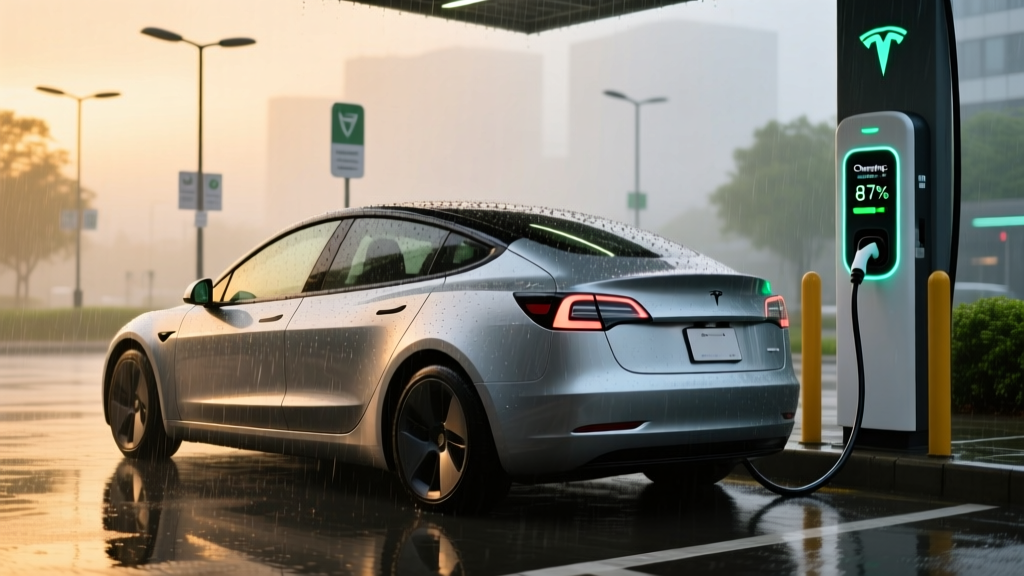
Charging speed is where the 2022 Model 3 Performance still holds up well against newer competitors. Tesla's V3 Supercharger network supports the vehicle's peak charge rate, and the onboard charger is robust enough for fast home replenishment.
| Charge Level | Power (kW) | Speed / Time | Connector |
|---|---|---|---|
| DC Fast Charge (V3 Supercharger) | Peak 250 kW | 10–80% in ~25 minutes; ~170 miles in 15 min | NACS (Tesla proprietary) |
| DC Fast Charge (CCS adapter) | Up to ~150 kW (adapter-limited) | 10–80% in ~35 minutes | CCS1 via Tesla adapter |
| Level 2 Home (Wall Connector) | 11.5 kW (48A) | ~44 miles per hour of charging | NACS |
| Level 2 Home (Standard 240V/32A) | 7.7 kW | ~30 miles per hour of charging | NACS (J1772 adapter included) |
| Level 1 (120V household) | ~1.4 kW | ~4–5 miles per hour | NACS (mobile connector) |
Charging curve reality: The 250 kW peak rate is only sustained between approximately 10–30% State of Charge (SoC). Above 50%, the rate tapers to roughly 100 kW, and above 80% it drops below 50 kW. Plan your road-trip stops around 10–80% increments for the fastest throughput — charging from 80–100% can add 15+ minutes for relatively few gained miles.
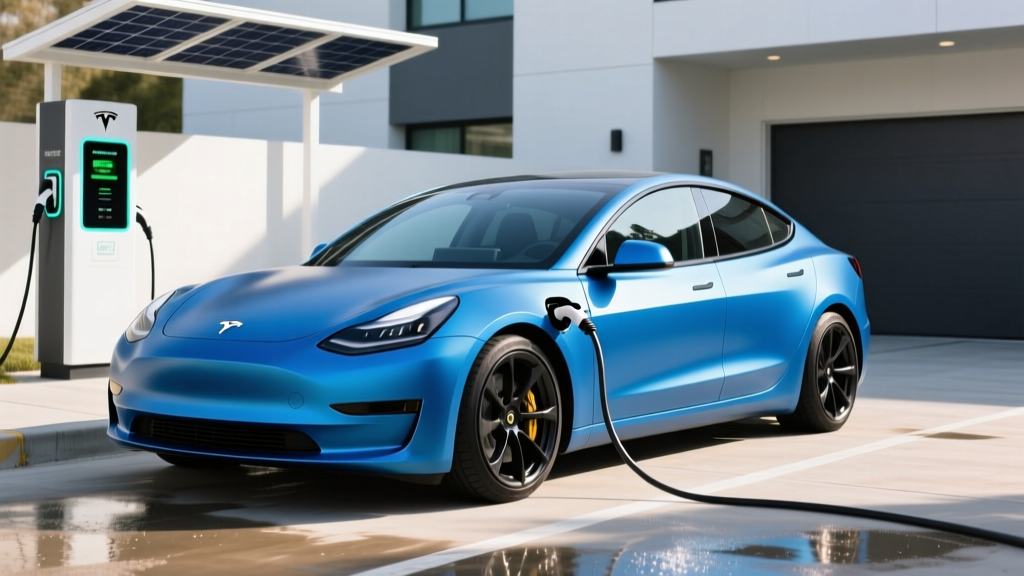
For home charging, Tesla's Wall Connector at 48 amps (11.5 kW) is the ideal setup. A full overnight charge from 20% to 80% takes roughly 5–6 hours, which covers virtually any daily commute. Installation typically requires a 60-amp dedicated circuit; budget $500–$1,500 for electrician labor depending on panel proximity, plus $475 for the Wall Connector itself.
Performance and Drivetrain
| Specification | 2022 Model 3 Performance |
|---|---|
| Drivetrain | Dual-Motor AWD |
| Horsepower | 450 hp |
| Torque | 471 lb-ft |
| 0–60 mph | 3.1 seconds |
| Top Speed | 162 mph |
| Battery (Usable) | ~75 kWh (NMC chemistry) |
| EPA Range | 312 miles |
| MPGe (Combined) | 113 MPGe |
| Curb Weight | 4,065 lbs |
The dual-motor all-wheel-drive setup puts an induction motor on the front axle and a permanent-magnet synchronous reluctance motor on the rear. This combination provides instant torque vectoring and excellent traction in wet or light snow conditions. The 3.1-second 0-60 time puts it in supercar territory — a Porsche 911 Carrera of the same era hits 60 in roughly 3.4 seconds, for comparison.
Track Mode, a Performance-exclusive feature, allows adjustable front/rear torque distribution and customizable regenerative braking intensity. It also enables the car's stability control to be loosened for closed-course driving. The lowered sport suspension and performance brakes (larger front rotors, red calipers) give it legitimate cornering ability beyond straight-line acceleration.
Interior, Cargo, and Technology
The 2022 Model 3 interior is minimalist by design — a single 15-inch center touchscreen handles navigation, climate, media, and vehicle settings. There is no instrument cluster; speed and range data appear on the left side of the touchscreen. This layout polarizes buyers: some appreciate the clean aesthetic, while others miss physical controls for climate and wipers.
Passenger and cargo dimensions:
- Front legroom: 42.7 inches
- Rear legroom: 35.2 inches
- Trunk (rear): 23.0 cubic feet
- Frunk (front trunk): 3.1 cubic feet
- Total cargo: 26.1 cubic feet
The rear seat is adequate for adults on shorter trips but tighter than a midsize sedan like the Toyota Camry. The glass roof creates an airy cabin but contributes to noticeable cabin heat in summer — many owners apply ceramic tint film to the roof and rear window.
Standout tech features:
- Over-the-air (OTA) software updates that add features post-purchase
- Tesla app with remote preconditioning, location tracking, and Sentry Mode camera access
- Sentry Mode (dashcam-based parking surveillance)
- Heated front and rear seats, heated steering wheel
- 15-speaker premium audio system
- Autopilot (basic) included: lane-keeping, traffic-aware cruise control
Notable drawbacks: No Apple CarPlay or Android Auto, no heads-up display, limited rear-seat amenities (no dedicated climate zone), and the all-touchscreen interface requires a learning curve for new EV owners.
Autopilot and Driver Assistance: SAE Level 2
The 2022 Model 3 Performance came standard with basic Autopilot, which includes Traffic-Aware Cruise Control and Autosteer (lane-centering). The optional Full Self-Driving (FSD) package — priced at $12,000 or $199/month at the time — added Navigate on Autopilot (highway on-ramp to off-ramp), Auto Lane Change, Autopark, Summon, and Traffic Light and Stop Sign Control.
As of 2026, Tesla's FSD (Supervised) has improved significantly over the 2022-era version through OTA updates, but it remains a Level 2 system. For comparison, GM's Super Cruise on approved highways offers a more polished hands-off experience (still Level 2, but with a driver-monitoring camera that allows hands-free operation on mapped routes).
Pricing, Tax Credits, and Ownership Costs
| Item | Amount |
|---|---|
| Original 2022 MSRP (Performance AWD) | $58,990 (before options/destination) |
| Destination fee | |
| Typical as-tested (with FSD, red paint) | $68,000–$72,000 |
| Used market price (2026, ~40k miles) | $30,000–$38,000 |
| Federal Used EV Tax Credit (§25E) | Up to $4,000 (30% of sale price, capped) |
| Estimated price after §25E credit | $26,000–$34,000 |
Federal tax credit eligibility (used EV purchase in 2026): The 2022 Model 3 Performance is no longer eligible for the new-vehicle §30D credit (which applied at original purchase). However, buying one used from a licensed dealer may qualify you for the §25E Used Clean Vehicle Credit — up to $4,000 or 30% of the sale price, whichever is lower. Requirements include:
- Vehicle must be purchased from a licensed dealer (not private party)
- Sale price must be $25,000 or less to qualify for the full $4,000
- Buyer income caps: $75,000 single / $112,500 head of household / $150,000 joint (modified AGI)
- Vehicle must be at least 2 model years old (2022 qualifies in 2024+)
- Credit is non-refundable but can be transferred to the dealer as a point-of-sale discount
5-Year Ownership Cost Estimate (Used Purchase):
| Category | Estimated 5-Year Cost |
|---|---|
| Purchase price (after credit) | $28,000–$34,000 |
| Electricity (15,000 mi/yr, $0.14/kWh avg) | $3,150 |
| Insurance (avg) | $12,000–$15,000 |
| Maintenance (tires, cabin filter, fluid top-off) | $2,500–$3,500 |
| Estimated depreciation | $8,000–$12,000 |
| Total estimated 5-year cost | $54,000–$68,000 |
Insurance is notably higher than average for the Model 3 Performance — expect $2,400–$3,200/year depending on your state and driving record. Tesla's own insurance product (available in select states) uses real-time driving data and can be 15–25% cheaper for safe drivers.
Warranty and Battery Longevity
Tesla's warranty coverage for the 2022 Model 3 Performance:
- Basic Vehicle Limited Warranty: 4 years / 50,000 miles (expired for most used examples)
- Battery and Drive Unit Warranty: 8 years / 120,000 miles, whichever comes first, with minimum 70% capacity retention
- What this means in 2026: A 2022 model with 40,000 miles still has ~4 years and ~80,000 miles of battery/drive unit coverage remaining
NMC battery degradation in Tesla's Model 3 fleet averages roughly 8–12% loss of total capacity after 100,000 miles, based on aggregated owner data. The 2022 Performance's battery management system is mature, and Tesla's thermal preconditioning helps minimize long-term degradation. Best practices for longevity: avoid frequent 100% charges (set daily limit to 80–90%), minimize DC fast charging when Level 2 is available, and precondition the battery before Supercharging in cold weather.
Out-of-warranty battery replacement for a Model 3 runs approximately $13,000–$16,000 at a Tesla Service Center as of 2026, though complete replacements remain rare before 150,000 miles.
Pros, Cons, and Who Should Buy
Pros
- Supercar-rivaling 3.1s 0-60 acceleration
- Access to Tesla Supercharger network (17,000+ stalls in North America)
- 312-mile EPA range covers most road trips with one stop
- OTA updates continue to add features years after purchase
- Low running costs vs. gas performance sedans
- Strong resale demand and parts availability
Cons
- Firm ride quality on rough roads (sport suspension)
- Rear seat is tight for tall adults on long trips
- No Apple CarPlay / Android Auto
- All-touchscreen controls frustrate some drivers
- Insurance premiums significantly above average
- 20" wheels increase tire replacement cost ($300–$400 per tire)
Who This EV Suits Best
Choose the 2022 Model 3 Performance if: You want a daily-drivable sports sedan that can hit a track on weekends, you have home Level 2 charging access, and you value acceleration and tech over rear-seat comfort. It's ideal for single professionals or couples without rear-seat car-seat needs who commute 30–80 miles daily and take occasional 200–400 mile road trips.
Look elsewhere if: You regularly carry rear-seat passengers (consider the Model Y or Hyundai Ioniq 5), you need towing capability (Model 3 is not rated for towing), you live in a charging desert with no home charging option, or you prefer physical buttons and traditional infotainment.
Frequently Asked Questions
What is the real-world range of the 2022 Model 3 Performance?
Expect 260–285 miles in warm-weather highway driving at 70–75 mph, and 220–250 miles in winter conditions below freezing. City driving with frequent regenerative braking can approach the 312-mile EPA estimate. The NMC battery's usable 75 kWh and Tesla's efficient heat pump (standard on 2022 models) help mitigate cold-weather losses compared to earlier Model 3 years.
How fast does the 2022 Model 3 Performance charge?
On a Tesla V3 Supercharger, it peaks at 250 kW and charges from 10–80% in approximately 25 minutes, adding up to 170 miles of range in 15 minutes. At home on a 48-amp Level 2 Wall Connector (11.5 kW), it gains about 44 miles per hour of charging — a full overnight session easily replenishes a day's driving. Using a CCS adapter at non-Tesla fast chargers, expect peak rates around 150 kW due to adapter limitations.
Does the 2022 Model 3 Performance qualify for the federal EV tax credit?
Not as a new-vehicle purchase (the §30D credit applied at original sale). However, buying a used 2022 Model 3 Performance from a licensed dealer in 2026 may qualify you for the §25E Used Clean Vehicle Credit of up to $4,000, provided the sale price is $25,000 or less and your income falls within the IRS caps ($75k single / $150k joint). Consult a tax professional to confirm your eligibility.
Is the 2022 Model 3 Performance worth buying vs. competitors?
Against the 2022 BMW i4 M50 (530 hp, 270-mi range, ~$45k used), the Model 3 wins on range, Supercharger access, and lower running costs, but the i4 offers a more traditional luxury interior and Apple CarPlay. Against the 2022 Polestar 2 Dual Motor (408 hp, 249-mi range, ~$28k used), the Model 3 is faster, more efficient, and has better charging infrastructure. The Model 3 Performance's combination of speed, range, and network access remains hard to beat at its used-market price point.
What are the biggest ownership costs to watch for?
Insurance is the standout expense — budget $2,400–$3,200 annually. Tire wear on the Performance trim is higher than average due to the sticky P Zero summer tires and heavy torque; expect replacement every 25,000–35,000 miles at $1,200–$1,600 for a set of four. Beyond that, maintenance is minimal: cabin air filter replacement every 2 years (~$100–$150), brake fluid checks, and wiper fluid. The regenerative braking system extends brake pad life significantly — many owners exceed 80,000 miles on original pads.
Is Tesla's Autopilot safe?
Basic Autopilot (standard) is a competent SAE Level 2 driver-assist system for highway use, but it requires active driver supervision. Tesla's NHTSA safety data shows that Autopilot-engaged driving has a lower crash rate per million miles than the U.S. average, but these statistics include highway-only miles where crash rates are naturally lower. Never treat Autopilot or FSD as a substitute for an attentive driver.