Quick Verdict: Still the Benchmark Sports Sedan?
The 2022 Tesla Model 3 Performance remains one of the quickest production sedans ever built for the money. With a factory-claimed 3.1-second 0-60 mph time, dual-motor all-wheel drive, and access to the Supercharger network, it delivers sports-car acceleration paired with genuine daily-driver practicality. For 2026 buyers shopping the used EV market, the Model 3 Performance represents a compelling value proposition — especially if you qualify for the up-to-$4,000 used-EV federal tax credit under IRS §25E rules.
But raw speed only tells part of the story. How does the real-world range hold up on highway road trips? What does the charging curve actually look like past 80%? And how does the 2022 model year compare to the refreshed "Highland" Model 3 that arrived for 2024? This review covers every number that matters.
Full Specifications at a Glance
| Specification | 2022 Model 3 Performance |
|---|---|
| EPA Range | 315 miles |
| Battery Capacity (usable) | ~75 kWh (NMC, LG M50 cells) |
| Drivetrain | Dual-Motor AWD |
| Horsepower | ~450 hp (combined) |
| Torque | ~471 lb-ft |
| 0-60 mph | 3.1 seconds (manufacturer, rollout subtracted) |
| Top Speed | 162 mph |
| EPA Efficiency | 125 MPGe combined / 25 kWh/100 mi |
| Max DC Fast Charge | 250 kW (peak) |
| 10-80% DC Fast Charge | ~27 minutes |
| Level 2 Home Charging | 11.5 kW / ~44 miles per hour |
| Cargo Volume | 23 cu ft (trunk + frunk combined) |
| Seating | 5 passengers |
| Rear Legroom | 35.2 inches |
| Curb Weight | 4,065 lbs |
| Original Base MSRP (2022) | ~$58,990 (before incentives) |
| Basic Warranty | 4 years / 50,000 miles |
| Battery & Drive Unit Warranty | 8 years / 120,000 miles |
The 2022 Model 3 Performance 0-60 Experience
The headline number is 3.1 seconds from 0-60 mph, and in real-world driving, the Model 3 Performance consistently delivers. Tesla's 1-foot rollout subtraction methodology (common in drag racing) accounts for roughly 0.1-0.2 seconds of the claimed figure, so expect approximately 3.2-3.3 seconds in a typical roll-out launch. Independent testers at outlets like Motor Trend and Car and Driver have recorded 0-60 times between 3.1 and 3.5 seconds depending on surface temperature, tire condition, and state of charge.
What makes the acceleration remarkable isn't just the number — it's the instant torque delivery. There's no transmission kickdown, no turbo spool-up, no hesitation. The dual-motor setup sends power to all four wheels simultaneously, which is why the Model 3 Performance launches harder than many internal-combustion sports cars producing far more horsepower.
The dual-motor AWD system pairs a permanent-magnet rear motor with an induction front motor. The front motor can freewheel (disconnect) during light-load cruising to reduce drag and improve efficiency — a detail that contributes to the Model 3's class-leading MPGe rating. In Track Mode (available on the Performance trim), torque distribution shifts rear-biased for oversteer-friendly handling on closed courses, and the system can even apply individual brake-based torque vectoring.
Real-World Range: Beyond the 315-Mile EPA Sticker
Real-World Highway (70-75 mph): ~250-275 miles
Real-World Cold Weather (below 32°F): ~210-250 miles
Real-World City/Commuting: ~285-310 miles
The EPA rates the 2022 Model 3 Performance at 315 miles on a full charge. That number is achievable in moderate temperatures at city and suburban speeds where regenerative braking recovers energy. But as with every EV, real-world range varies significantly based on speed, temperature, and terrain.
At sustained highway speeds of 70-75 mph, expect to use roughly 27-30 kWh/100 mi (compared to the EPA's 25 kWh/100 mi combined rating), which translates to approximately 250-275 miles before the battery is depleted. This is consistent with data from fueleconomy.gov and real-world owner logs.
Cold weather hits EV range harder. In temperatures below freezing, the Model 3's ~75 kWh NMC battery loses capacity temporarily, and energy is consumed heating the cabin and battery pack. Expect a 20-30% range reduction in sustained sub-freezing conditions. Tesla's heat pump (standard on the 2022 model year) mitigates this somewhat compared to older resistance-heated EVs, but physics is physics. Preconditioning the battery while plugged in before departure recovers some of this loss.
The 2022 Model 3 Performance uses an NMC (nickel manganese cobalt) lithium-ion battery pack with LG M50 2170 cells. NMC chemistry offers higher energy density than LFP (lithium iron phosphate), which is why the Performance trim achieves 315 miles despite the dual-motor weight penalty. The trade-off is that NMC batteries degrade slightly faster than LFP over many charge cycles and Tesla recommends daily charging to 80% for longevity (reserving 100% for trips).
Charging Speed: DC Fast, Level 2, and the Charge Curve
| Charging Level | Power | Speed | Notes |
|---|---|---|---|
| Level 1 (120V household) | ~1.4 kW | ~5 miles per hour | Emergency/trickle only |
| Level 2 (240V home, 48A) | 11.5 kW | ~44 miles per hour | Full charge in ~7-8 hours |
| Level 2 (240V, 32A Mobile Connector) | 7.7 kW | ~30 miles per hour | Standard Tesla Mobile Connector |
| DC Fast (Tesla Supercharger V3) | 250 kW peak | ~170 miles in 15 min | 10-80% in ~27 minutes |
| DC Fast (CCS adapter, non-Tesla) | Up to 250 kW peak | Similar to Supercharger | Requires Tesla CCS adapter |
The 2022 Model 3 Performance supports a peak DC fast-charge rate of 250 kW on Tesla V3 Superchargers. In practice, this peak rate is sustained only between approximately 10-30% state of charge. The charging curve tapers progressively: expect roughly 175 kW through 50%, dropping to around 100 kW at 65%, and falling below 50 kW above 80%.
This taper is why Tesla quotes 10-80% in approximately 27 minutes rather than a full 0-100% time. Charging from 80-100% can take an additional 25-35 minutes at rapidly decreasing power levels. For road trips, the optimal strategy is to charge to 80% and drive on — the time penalty of charging past 80% almost never makes sense unless you're at your final destination.
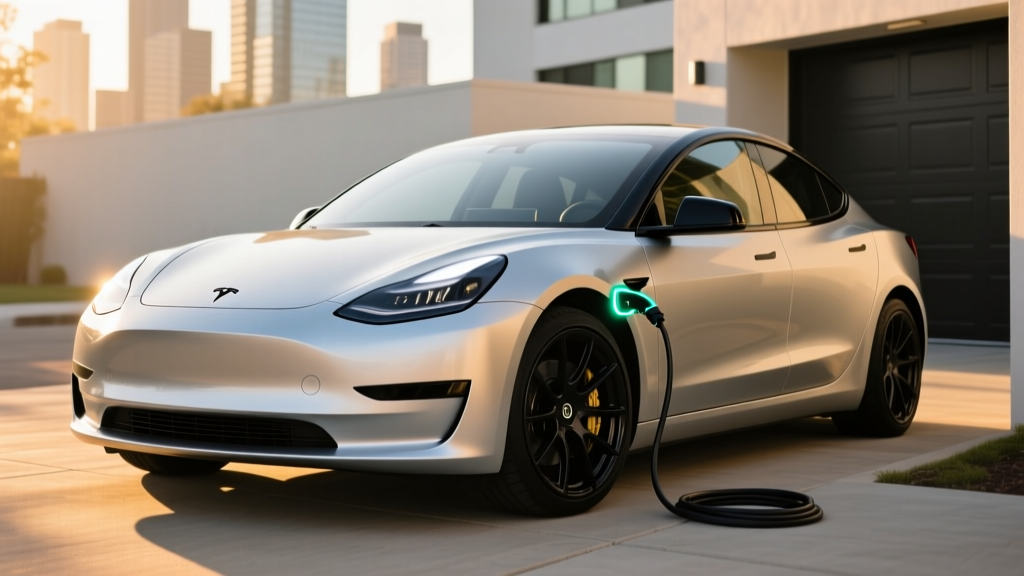
For home charging, the Model 3's onboard charger accepts up to 11.5 kW (48 amps) on a Level 2 circuit. With a Tesla Wall Connector on a 60-amp breaker, you'll add approximately 44 miles of range per hour of charging, meaning a full overnight session easily replenishes a day's worth of driving. A full 0-100% Level 2 charge takes roughly 7-8 hours.
Battery preconditioning matters here: when you navigate to a Supercharger in the Tesla app or in-car navigation, the car warms or cools the battery to optimal temperature before you arrive. Without preconditioning (e.g., arriving at a charger without navigation routing), peak charge rates can be 30-50% lower, especially in cold weather.
Pricing, Tax Credits, and the Used-EV Opportunity
The 2022 Model 3 Performance originally carried an MSRP of approximately $58,990 (including destination), before any options. Adding FSD Capability ($12,000 at the time) or premium paint colors pushed as-tested prices above $70,000.
As a used vehicle in 2026, the 2022 Model 3 Performance typically trades between $30,000 and $38,000 depending on mileage, condition, and whether FSD is included (FSD transfers with the vehicle if it was purchased outright, but not if it was subscribed).
| Cost Factor | Amount |
|---|---|
| Original MSRP (2022) | ~$58,990 |
| Typical Used Price (2026, avg mileage) | $30,000 - $38,000 |
| Federal Used EV Credit (§25E, max) | Up to $4,000 (30% of sale price) |
| Estimated Price After Credit | $26,000 - $34,000 |
Federal tax credit eligibility for used EVs operates under IRS §25E, which is different from the new-vehicle §30D credit. Key requirements for the used-EV credit include:
- The vehicle must be purchased from a licensed dealer (private-party sales don't qualify)
- The sale price must be $25,000 or less — meaning most 2022 Model 3 Performance examples will not qualify at current market prices, though some higher-mileage units may fall under the cap
- The credit equals 30% of the sale price, capped at $4,000
- Buyer income limits apply: $75,000 single / $112,500 head of household / $150,000 joint (modified adjusted gross income)
- The vehicle must be at least two model years old (the 2022 model qualifies in 2026)
- The credit can be transferred to the dealer at point of sale as an immediate discount
For current credit rules and income thresholds, always verify with the IRS used clean vehicle credit page and consult a tax professional. Rules and eligible vehicle lists are updated periodically.
Interior, Tech, and Daily Practicality
The 2022 Model 3 interior is defined by minimalism. A single 15-inch center touchscreen handles all vehicle functions — there are no physical buttons, no instrument cluster, and no heads-up display. Speed and navigation information appears in the upper-left corner of the touchscreen. This design is polarizing: some owners love the clean aesthetic, while others find the lack of physical controls frustrating for simple tasks like adjusting climate or wipers.
Standout tech features:
- Over-the-air (OTA) software updates that add features and improve performance post-purchase
- Tesla Supercharger network with 5,000+ V3/V4 stalls across North America (as of 2026)
- Sentry Mode dashcam recording and remote app monitoring
- Phone-as-key with automatic walk-up unlock
- 15-speaker premium audio system with immersive sound
- Glass roof with UV and infrared tinting
- Heated front and rear seats, heated steering wheel
Notable drawbacks:
- No physical buttons or knobs — all controls are touchscreen-based
- Rear seat comfort is adequate but not class-leading; the floor is high due to the battery pack, creating a "knees-up" seating position
- Rear visibility is limited by the small rear window and thick C-pillars
- No Apple CarPlay or Android Auto — Tesla uses its proprietary infotainment system
- Build quality on 2022 models is improved over early years but still draws complaints about panel gaps and paint imperfections
- Road and tire noise is more noticeable than in luxury competitors (the 2024 "Highland" refresh added acoustic glass to address this)
Cargo space totals 23 cubic feet between the rear trunk (15 cu ft) and the front trunk/frunk (8 cu ft). The trunk opening is a traditional sedan lid rather than a hatchback, which limits practicality for bulky items compared to the Model Y or competitors like the Hyundai Ioniq 6.
Warranty and Long-Term Ownership
Tesla covers the 2022 Model 3 Performance with:
- Basic Vehicle Warranty: 4 years / 50,000 miles
- Battery & Drive Unit Warranty: 8 years / 120,000 miles (whichever comes first), with a minimum 70% capacity retention guaranteed during the warranty period
For a 2022 model purchased in 2026, approximately 4 years and varying mileage remain on the battery/drive unit warranty. This is a critical factor when buying used — always check the odometer and warranty start date (available in the Tesla app or via Tesla support with the VIN).
NMC battery degradation in the Model 3 is well-documented through owner data. Expect approximately 5-8% capacity loss over the first 50,000 miles, after which the degradation curve flattens significantly. Many high-mileage Model 3 owners report 85-90% state of health (SoH) at 100,000+ miles. You can monitor your battery's estimated SoH through the Tesla app's range estimation versus the original EPA figure, or through third-party OBD-II tools.
Replacement battery costs for the Model 3 (out of warranty) currently range from $12,000 to $16,000 depending on the pack configuration and whether Tesla uses a new or remanufactured unit. Drive unit replacements run approximately $5,000-$8,000. These are worst-case scenarios — most Model 3 batteries and motors last well beyond the warranty period.
Model 3 Performance vs. Key Competitors
For 2026 buyers considering the used 2022 Model 3 Performance, the most direct comparisons include:
- BMW i4 M50 (2022): Similar 0-60 time (~3.7 sec), more luxurious interior, less range (EPA 270 mi), no Supercharger access. Used prices typically $35,000-$42,000.
- Polestar 2 Performance (2022): 0-60 in 4.2 sec, EPA 249 mi, more conventional interior with physical controls, Google-based infotainment. Used prices ~$28,000-$34,000.
- Hyundai Ioniq 6 Limited AWD (2023): 0-60 in 5.1 sec, EPA 316 mi, 800V architecture charges faster (10-80% in 18 min), more spacious rear seat. Used prices ~$30,000-$36,000.
- 2024+ Tesla Model 3 Long Range AWD ("Highland"): Refreshed design, acoustic glass, ventilated seats, ambient lighting, EPA 341 mi. New pricing starts around $47,740; used examples $38,000-$44,000. Slower 0-60 (4.2 sec) but more refined daily driver.
- Acceleration and driving dynamics are your top priorities
- You want Supercharger network access for road trips
- You prefer Tesla's software ecosystem and OTA updates
- You value the lowest cost-per-mile-of-range in the used EV market
- You want a hatchback or liftback for cargo versatility (consider Model Y or Ioniq 5)
- You prefer physical buttons and traditional luxury trim (consider BMW i4)
- You need Apple CarPlay (no Tesla currently supports it)
- You want the latest Highland refinements and don't need sub-3.5-second acceleration
Pros and Cons
Pros
- 3.1-second 0-60 mph — supercar territory at sedan pricing
- 315-mile EPA range covers most daily and road-trip needs
- Tesla Supercharger network remains the most reliable DC fast-charging ecosystem
- OTA updates continue to add features years after purchase
- Class-leading efficiency (125 MPGe combined)
- Strong safety ratings (NHTSA 5-star, IIHS Top Safety Pick+)
- Low center of gravity and near 50/50 weight distribution for sharp handling
- Minimal maintenance costs (no oil changes, minimal brake wear from regen)
Cons
- All-touchscreen interface frustrates some drivers
- Sedan trunk limits cargo versatility vs hatchback/SUV competitors
- Rear seat comfort and headroom are merely adequate
- No Apple CarPlay or Android Auto
- 2024 Highland refresh makes the 2022 interior feel dated
- NMC battery requires 80% daily charge limit for longevity
- Insurance costs tend to be higher than average for the segment
- Build quality inconsistency (panel gaps, paint) on some 2022 examples
Frequently Asked Questions
What is the real-world range of the 2022 Model 3 Performance?
The EPA rates it at 315 miles, but real-world highway driving at 70-75 mph typically yields 250-275 miles. In freezing temperatures, expect 210-250 miles. City driving with regenerative braking gets closest to the EPA number, around 285-310 miles.
How fast does the 2022 Model 3 Performance charge?
On a Tesla V3 Supercharger, it peaks at 250 kW and charges from 10-80% in approximately 27 minutes. At home on a Level 2 Wall Connector (11.5 kW), it adds about 44 miles of range per hour, fully charging overnight in 7-8 hours.
Does the 2022 Model 3 Performance qualify for a federal tax credit?
As a used vehicle, it may qualify for the IRS §25E used clean vehicle credit (up to $4,000 or 30% of sale price). However, the sale price must be $25,000 or less, and buyer income caps apply ($75K single / $150K joint). Most 2022 Model 3 Performance examples currently sell above the $25,000 threshold, so eligibility is limited to higher-mileage or lower-priced examples. Always check the IRS guidelines and consult a tax professional.
How does the 2022 Model 3 Performance compare to the 2024 Highland refresh?
The 2024+ Highland Model 3 adds acoustic glass (quieter cabin), ventilated front seats, ambient lighting, a rear passenger touchscreen, improved suspension tuning, and slightly more range (341 mi for Long Range AWD). However, the Highland dropped the Performance variant initially — the 2022 remains the quickest Model 3 you can buy until Tesla reintroduces a Highland Performance variant.
Is the 2022 Model 3 Performance worth buying in 2026?
At used prices of $30,000-$38,000, it offers extraordinary performance per dollar, access to the best charging network, and proven battery longevity. It's an excellent choice for driving enthusiasts who need a daily driver. If you prioritize cabin refinement, cargo space, or the latest design, the refreshed Highland or a competitor like the BMW i4 may be a better fit.
What should I check before buying a used 2022 Model 3 Performance?
Verify remaining battery/drive unit warranty (8 years/120,000 miles from original delivery date), check the battery state of health via the Tesla app or service center, confirm whether FSD was purchased outright (not a subscription that expired), inspect panel gaps and paint quality, and review the vehicle's service history in the Tesla app. A pre-purchase inspection at a Tesla Service Center is strongly recommended.