Quick Verdict: The Electric S-Class Sets a Luxury EV Benchmark
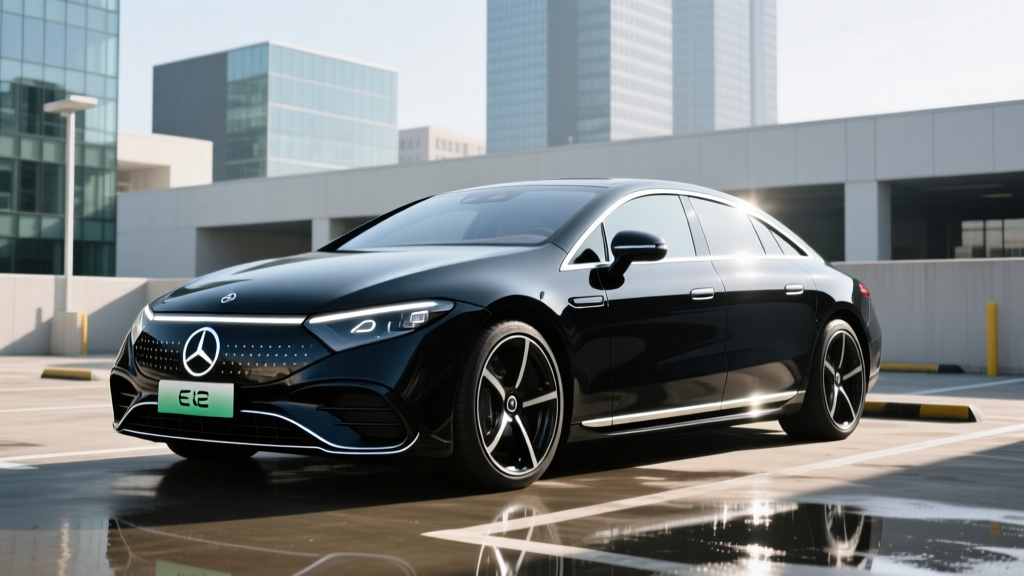
The 2022 Mercedes-Benz EQS sedan arrived as the brand's flagship electric vehicle, built on a dedicated EV architecture (not a converted ICE platform) and packed with technology that still holds up in 2026. With an EPA-estimated range of up to 350 miles, a 107.8 kWh usable battery, and 200 kW DC fast-charging capability, the EQS 450+ and EQS 580 4MATIC established Mercedes as a serious contender in the luxury EV sedan segment. For buyers evaluating a used 2022 EQS today, it remains one of the most refined long-range electric sedans available — though its pricing, depreciation curve, and tax credit limitations require careful consideration.
| Spec | EQS 450+ (RWD) | EQS 580 4MATIC (AWD) |
|---|---|---|
| EPA Range | 350 miles | 340 miles |
| Battery (usable) | 107.8 kWh (NMC) | 107.8 kWh (NMC) |
| Horsepower | 329 hp | 516 hp |
| 0–60 mph | 5.5 seconds | 4.1 seconds |
| Drivetrain | Rear-wheel drive | Dual-motor AWD |
| Max DC Fast Charge | 200 kW | 200 kW |
| 10–80% DC Time | ~31 minutes | ~31 minutes |
| Level 2 Charge Rate | 9.6 kW (~30 mi/hr) | 9.6 kW (~30 mi/hr) |
| MPGe (combined) | 97 MPGe | 92 MPGe |
| kWh/100 mi | 35 kWh | 37 kWh |
| Cargo Volume | 22.0 cu ft (rear seats up) | 22.0 cu ft (rear seats up) |
| Rear Legroom | 41.7 inches | 41.7 inches |
| Battery Warranty | 10 yr / 155,000 mi | 10 yr / 155,000 mi |
| Original Base MSRP | $102,310 | $119,110 |
Real-World Range: Beyond the 350-Mile EPA Sticker
EPA Estimate: 350 miles (EQS 450+) / 340 miles (EQS 580 4MATIC)
Real-World Expectation: 290–320 miles highway driving at 70+ mph; 310–340 miles mixed city/highway; expect a 20–30% reduction in freezing temperatures (240–270 miles in sub-30°F conditions).
The EQS 450+ earned its 350-mile EPA rating through a combination of the largest usable battery in its class (107.8 kWh) and a drag coefficient of just 0.20 — one of the lowest of any production vehicle. That aerodynamic efficiency translates directly into real-world highway range, where the EQS outperforms many competitors whose EPA numbers rely more heavily on city-cycle regen braking.
In independent testing by outlets like Edmunds and Consumer Reports, the EQS 450+ consistently delivered 310–330 miles in mixed driving at moderate temperatures. Highway-only loops at sustained 75 mph speeds typically yielded 290–310 miles before reaching a 10% state of charge. Cold-weather testing in temperatures below freezing showed range reductions of 20–30%, consistent with most NMC-based EVs lacking aggressive heat-pump preconditioning strategies.
The 107.8 kWh usable capacity sits within a gross battery pack rated at approximately 120 kWh. Mercedes reserves roughly 12 kWh as a top and bottom buffer to protect long-term cell health — a generous buffer that helps explain the industry-leading 10-year/155,000-mile battery warranty.
Charging Speed: 200 kW Peak With a Predictable Taper
The EQS supports DC fast charging at a peak rate of 200 kW via its CCS1 connector. Under ideal conditions — battery preconditioned to optimal temperature and starting from a low state of charge — the EQS can sustain close to 200 kW through roughly 40% SoC before tapering.
| Charging Level | Power / Rate | Speed / Time |
|---|---|---|
| Level 1 (120V household) | ~1.4 kW | ~4–5 miles per hour |
| Level 2 (240V home/public) | 9.6 kW (40A) | ~30 miles per hour; full charge ~11.5 hours |
| DC Fast Charge (CCS) | Up to 200 kW peak | 10–80% in ~31 minutes; 15-minute session adds ~150 miles |
The 10–80% charge time of approximately 31 minutes is competitive but not class-leading — the Porsche Taycan and Hyundai Ioniq 5 (with 800V architectures) can complete the same window in 18–22 minutes. The EQS uses a 400V architecture, which limits its peak charge rate relative to 800V competitors, though 200 kW is still brisk enough for road-trip practicality.
At home on a Level 2 charger (9.6 kW), a full charge from empty takes roughly 11.5 hours. Most owners charging overnight from 20–80% will need about 7 hours — easily manageable with a standard overnight plug-in routine. Mercedes includes a mobile charger with the vehicle, but a dedicated Level 2 wallbox (such as the ChargePoint Home Flex or Mercedes-branded wallbox) is strongly recommended for daily use.
One ownership note: the EQS does support battery preconditioning for DC fast charging when a charging station is set as the navigation destination. This warms the NMC cells to the optimal temperature range, ensuring you hit the 200 kW peak rather than being throttled to 100–120 kW on a cold battery. Always navigate to your charger — don't just drive there.
Performance and Driving Dynamics
The EQS 450+ delivers 329 horsepower and 406 lb-ft of torque from a single rear-mounted motor, reaching 60 mph in 5.5 seconds. That's brisk for a 5,600-pound luxury sedan, and the instant torque delivery makes it feel quicker than the numbers suggest in urban driving.
The EQS 580 4MATIC adds a front motor for dual-motor all-wheel drive, bumping output to 516 hp and 631 lb-ft. The 0–60 time drops to 4.1 seconds — firmly in performance-sedan territory. Both variants are electronically limited to 130 mph.
Ride quality is where the EQS truly distinguishes itself. Standard AIRMATIC air suspension with adaptive damping delivers a compliant, isolated ride that absorbs road imperfections with the composure expected of a Mercedes flagship. Optional rear-axle steering (up to 10 degrees) dramatically shrinks the turning circle to 35.8 feet, making this 207-inch sedan surprisingly maneuverable in parking structures and tight city streets.
Regenerative braking is adjustable via steering-wheel paddles across four levels, including a strong one-pedal mode (D Auto) that uses navigation and sensor data to modulate regen automatically. The system is among the most intuitive in the industry, adapting to traffic ahead and speed limits without driver intervention.
Interior, Tech, and Cargo
The EQS cabin centers on the available MBUX Hyperscreen — a 56-inch curved glass panel spanning the entire dashboard, integrating a 17.7-inch central OLED touchscreen, a 12.3-inch driver cluster, and a 12.3-inch passenger display. The Hyperscreen runs Mercedes' latest MBUX software with over-the-air update capability, wireless Apple CarPlay and Android Auto, and a fingerprint reader for driver profile authentication.
Standard equipment on the base EQS 450+ includes a 12.3-inch digital cluster and a 12.8-inch central OLED touchscreen (without the Hyperscreen), 64-color ambient lighting, heated front seats, a Burmester sound system, and a HEPA-filtered climate system that Mercedes claims can filter out fine particulates and odors.
Cargo space is generous for a sedan: 22.0 cubic feet behind the rear seats, expandable via 60/40-split folding rear seatbacks. The hatchback-style liftgate (despite the sedan silhouette) provides a wide opening that makes loading bulky items easier than in traditional trunk sedans like the BMW 7 Series or Audi A8. There is no front trunk (frunk) — the space under the hood houses HVAC and power electronics components.
Driver-assistance technology includes Mercedes' Driver Assistance Package as standard: adaptive cruise control with stop-and-go, active lane-keeping assist, blind-spot monitoring, and evasive steering assist. The optional DRIVE PILOT system (available in select markets) offers conditional Level 3 automation in heavy traffic at speeds up to 40 mph on suitable highways — a meaningful step above Level 2 systems, though with strict operational design limits.
SAE Automation Note: The EQS's standard driver-assist features are Level 2 — the driver must remain attentive and keep hands on the wheel. The optional DRIVE PILOT is a certified Level 3 system (in approved conditions), meaning the vehicle assumes driving responsibility under specific constraints. Neither system is "self-driving" in the Level 4/5 sense.
Pricing, Tax Credits, and Ownership Economics
When new, the 2022 EQS 450+ started at $102,310 (including destination), while the EQS 580 4MATIC opened at $119,110. Well-optioned examples with the Hyperscreen, AMG Line package, Executive rear seating, and DRIVER ASSISTANCE PLUS packages regularly exceeded $130,000.
As a used purchase in 2026, expect 2022 EQS 450+ models to trade between $55,000 and $72,000 depending on mileage, condition, and equipment — reflecting the steep depreciation typical of six-figure luxury EVs. The EQS 580 4MATIC typically lists between $65,000 and $85,000 on the used market.
| Trim | Original MSRP | Estimated Used Price (2026) | Used EV Tax Credit (§25E) |
|---|---|---|---|
| EQS 450+ | $102,310 | $55,000–$72,000 | Up to $4,000 (if eligible) |
| EQS 580 4MATIC | $119,110 | $65,000–$85,000 | Up to $4,000 (if eligible) |
Federal tax credit note: The 2022 EQS did not qualify for the full $7,500 new-vehicle credit (§30D) at the time of sale due to battery component and critical mineral sourcing requirements that phased in during 2023. However, as a used purchase in 2026, the EQS may qualify for the §25E used-EV tax credit — up to $4,000 or 30% of the sale price (whichever is less), subject to buyer income caps ($75,000 single / $150,000 joint) and a sale-price cap of $25,000 for the credit to apply. Because many used EQS units trade above $25,000, most buyers will not qualify for the used credit. Always verify current rules at IRS.gov and consult a tax professional.
Operating costs are favorable compared to the gas-powered S-Class. At a national average electricity rate of $0.16/kWh and the EQS 450+'s consumption of 35 kWh/100 miles, fuel cost is approximately $5.60 per 100 miles. An equivalent S 500 (22 mpg combined, $3.80/gallon) costs roughly $17.27 per 100 miles — a savings of nearly $11.70 per 100 miles, or roughly $1,400 per year at 12,000 miles driven annually.
Warranty Coverage and Battery Longevity
Mercedes provides the following warranty coverage for the 2022 EQS:
- New-vehicle limited warranty: 4 years / 50,000 miles
- High-voltage battery warranty: 10 years / 155,000 miles (whichever comes first), covering capacity loss below 70% of original capacity
- Powertrain warranty: 4 years / 50,000 miles
The 10-year/155,000-mile battery warranty is among the most generous in the luxury EV segment, matching or exceeding BMW, Audi, and Porsche coverage. The 70% capacity-retention threshold is industry-standard. Real-world data from high-mileage EQS owners suggests NMC degradation is tracking well — most 2022 models showing 94–97% state of health after 30,000–50,000 miles, consistent with the large buffer Mercedes engineers into the pack.
A full battery replacement out of warranty would be costly — estimated at $25,000–$35,000 for the 107.8 kWh pack, based on current Mercedes parts pricing. This is a consideration for long-term ownership planning beyond the warranty period.
Competitive Landscape: EQS vs. BMW i7, Lucid Air, and Tesla Model S
The 2022 EQS competes against a handful of luxury electric sedans, each with distinct strengths:
| Attribute | 2022 Mercedes EQS 450+ | 2022 BMW i7 xDrive60 | 2022 Lucid Air Pure | 2022 Tesla Model S LR |
|---|---|---|---|---|
| EPA Range | 350 mi | 318 mi | 410 mi | 405 mi |
| Battery (usable) | 107.8 kWh | 101.7 kWh | 88 kWh | ~100 kWh |
| Peak DC Charge | 200 kW | 195 kW | ~220 kW | 250 kW |
| 0–60 mph | 5.5 sec | 4.5 sec | ~5.0 sec | 3.1 sec |
| Original MSRP | $102,310 | $119,300 | $87,400 | $104,990 |
The Lucid Air Pure offers the most range (410 miles) at the lowest entry price, with superior efficiency. The Tesla Model S Long Range delivers unmatched performance and Supercharger network access. The BMW i7 offers a more traditional luxury-sedan experience with a slightly smaller battery. The EQS differentiates on cabin refinement, ride quality, and the most comprehensive luxury features — it is the most "S-Class-like" of the group, which is precisely what its target buyer wants.
Choose the 2022 EQS if: You prioritize cabin luxury, ride comfort, and flagship Mercedes technology over outright range or performance. You want a dedicated EV platform with a massive battery and best-in-class warranty.
Look elsewhere if: Maximum range is your top priority (Lucid Air), you need the fastest acceleration (Tesla Model S Plaid), or you want access to the Tesla Supercharger network without adapters (though NACS adapters now largely solve this).
Pros and Cons
Pros
- Class-leading 350-mile EPA range among luxury sedans
- Exceptionally quiet, refined cabin with premium materials
- 10-year/155,000-mile battery warranty
- Standard air suspension delivers outstanding ride quality
- Hatchback-style liftgate for practical cargo access
- Low 0.20 drag coefficient aids real-world highway efficiency
- Rear-axle steering dramatically improves maneuverability
Cons
- Steep depreciation from six-figure MSRP
- 400V architecture means slower DC charging than 800V rivals
- No front trunk (frunk)
- Hyperscreen is expensive and can be distracting
- Heavy at 5,600+ lbs — tire wear and brake maintenance costs add up
- Used-EV tax credit (§25E) unlikely to apply due to $25,000 sale-price cap
- Complex MBUX software has a learning curve
Frequently Asked Questions
What is the real-world range of the 2022 Mercedes-Benz EQS sedan?
The EPA rates the EQS 450+ at 350 miles and the EQS 580 4MATIC at 340 miles. In real-world highway driving at 70–75 mph, expect 290–320 miles. In cold weather (below 30°F), range drops to roughly 240–270 miles due to NMC battery chemistry sensitivity and cabin heating demands. The EQS's exceptional aerodynamics (0.20 Cd) help it retain range on the highway better than most competitors.
How fast does the 2022 EQS charge?
On a DC fast charger, the EQS peaks at 200 kW and can charge from 10–80% in approximately 31 minutes. A 15-minute session at peak rate adds roughly 150 miles. At home on a Level 2 charger (9.6 kW / 40A), expect about 30 miles of range per hour of charging, with a full charge taking about 11.5 hours. Always precondition the battery by navigating to your DC charger for best results.
Does the 2022 EQS qualify for a federal EV tax credit?
As a new vehicle, the 2022 EQS largely did not qualify for the full $7,500 §30D credit due to evolving battery-sourcing rules. As a used purchase in 2026, the §25E used-EV credit offers up to $4,000, but only on vehicles sold for $25,000 or less — and most used 2022 EQS sedans trade well above that threshold. Check IRS guidelines and consult a tax professional for your specific situation.
Is the 2022 EQS worth buying vs. the Lucid Air or Tesla Model S?
It depends on priorities. The EQS wins on cabin luxury, ride refinement, and warranty coverage. The Lucid Air Pure offers more range (410 miles EPA) at a lower price, and the Tesla Model S delivers superior performance and Supercharger convenience. If flagship Mercedes comfort is your primary goal, the EQS is the strongest choice in its segment.
How long will the EQS battery last?
The 107.8 kWh NMC battery is covered for 10 years or 155,000 miles against capacity loss below 70%. Real-world data from 2022 models shows 94–97% state of health at 30,000–50,000 miles, suggesting the large buffer (roughly 12 kWh reserved) is effectively protecting long-term cell health. Out-of-warranty replacement is estimated at $25,000–$35,000.
What does it cost to charge the EQS at home?
At the national average electricity rate of $0.16/kWh, a full charge of the 107.8 kWh usable battery costs approximately $17.25. That's roughly $5.60 per 100 miles driven — about one-third the per-mile cost of an equivalent gasoline S-Class. Actual costs vary by local utility rates and time-of-use plans.