Quick Verdict: A Stylish City EV With a Hard Range Ceiling
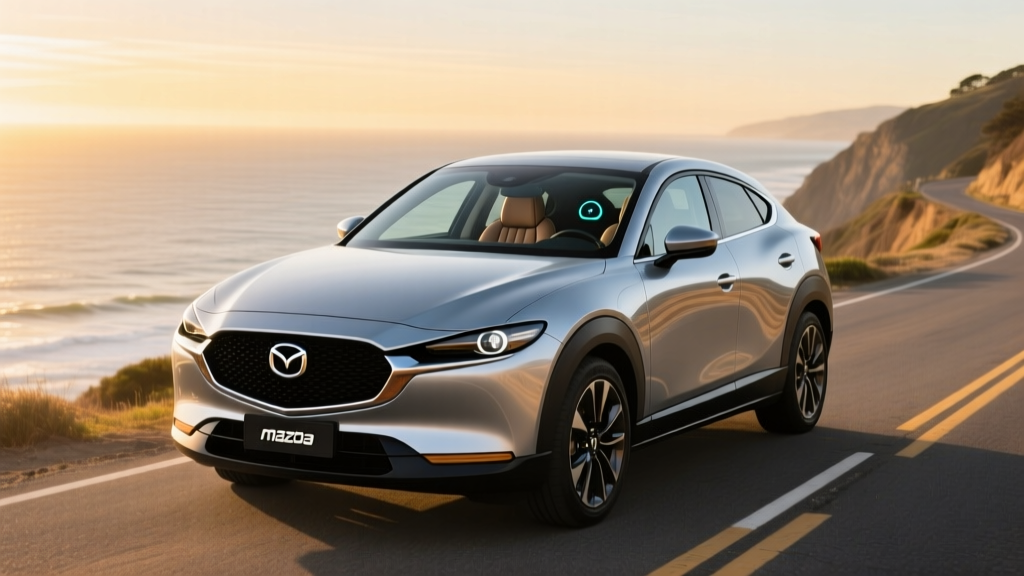
The 2022 Mazda MX-30 is the automotive equivalent of a beautifully designed studio apartment: impeccably crafted, thoughtfully appointed, and fundamentally limited by its footprint. With just 100 miles of EPA-estimated range and a battery barely larger than some plug-in hybrids, Mazda's first mass-market battery electric vehicle was never intended to compete with the Tesla Model Y or Chevrolet Bolt EUV on capability. Instead, it targets a narrow slice of buyers who prioritize design, interior materials, and urban maneuverability over road-trip readiness.
Sold exclusively in California for the 2022 model year, the MX-30 has since been discontinued in the U.S. market, making this review essential for used-EV shoppers and anyone curious about Mazda's electrification philosophy. If you're considering one on the pre-owned market, understanding its real-world limitations — and its genuine strengths — is critical before signing any paperwork.
Range, Battery, and Efficiency: The Numbers Behind the Controversy
Real-World Expectation: 75–90 miles at highway speeds (70+ mph); 85–100 miles in mixed city driving. In cold weather (below 40°F), expect a 20–30% reduction, dropping effective range to roughly 60–75 miles without preconditioning.
The MX-30's 35.5 kWh lithium-ion battery pack uses NMC (nickel-manganese-cobalt) chemistry — a choice that prioritizes energy density and cost over the longer cycle life of LFP (lithium iron phosphate). Usable capacity is approximately 32 kWh after accounting for the top and bottom buffer that protects long-term battery health. Mazda deliberately chose a smaller pack to reduce vehicle weight (the MX-30 tips the scales at roughly 3,655 lbs) and minimize the environmental footprint of battery production, a philosophy outlined in Mazda's well-to-wheel lifecycle analysis.
Efficiency is respectable at 92 MPGe combined (city 98 / highway 85) per EPA data on fueleconomy.gov, translating to roughly 36 kWh per 100 miles. That's competitive with larger EVs, but the small battery means those efficiency gains don't translate into meaningful range.
| Spec | Value |
|---|---|
| EPA Range | 100 miles |
| Battery Capacity (Total / Usable) | 35.5 kWh / ~32 kWh |
| Battery Chemistry | NMC (Nickel-Manganese-Cobalt) |
| Efficiency | 92 MPGe combined (36 kWh/100 mi) |
| Motor Output | 143 hp / 200 lb-ft torque |
| Drivetrain | FWD (single front motor) |
| 0–60 mph | ~8.7 seconds |
| Curb Weight | ~3,655 lbs |
| Cargo Volume | 21.0 cu ft (rear seats up) |
| Rear Legroom | 33.1 inches |
Charging Speed: Where the Small Battery Actually Helps
Here's the counterintuitive upside of a tiny battery: it charges quickly. The MX-30 accepts a peak DC fast-charge rate of 50 kW via its CCS1 connector. While 50 kW sounds painfully slow compared to the 250 kW peak of a Hyundai Ioniq 5, the MX-30's small pack means that rate is actually meaningful relative to its capacity — roughly a 1.4C charge rate.
| Charge Level | Power / Rate | Time / Miles Added |
|---|---|---|
| Level 1 (120V household) | ~1.2 kW | ~3–4 miles per hour; full charge in ~28 hrs |
| Level 2 (240V home/public) | 6.6 kW (max onboard) | ~20 miles per hour; full charge in ~5 hrs |
| DC Fast Charge (CCS1) | 50 kW peak | 10–80% in ~36 minutes |
The 6.6 kW onboard charger is adequate for overnight home replenishment. Plug in at 10 PM with a depleted battery, and you'll wake up fully charged by 5 AM — more than enough for the MX-30's intended daily-commuter use case. The DC fast-charge curve holds relatively steady to about 60% SoC before tapering, which is typical for NMC packs at this capacity.
Practical charging reality: On a road trip, a 36-minute stop gets you from 10% to 80%, adding roughly 70 miles of range. That's enough to continue, but the frequency of stops makes the MX-30 a poor choice for anyone regularly driving beyond a 60-mile radius from home.
Performance, Ride, and the Freestyle Doors
The MX-30's single front-mounted e-SKYACTIV motor delivers 143 horsepower and 200 lb-ft of torque to the front wheels. The 0–60 mph sprint takes approximately 8.7 seconds — leisurely by modern EV standards (a Tesla Model Y Long Range does it in 4.8 seconds), but perfectly adequate for merging and city driving. Throttle response is linear and predictable, and Mazda has tuned the regen braking to feel natural rather than aggressively one-pedal. There's a regen paddle behind the steering wheel that lets you toggle between five levels of deceleration.
Ride quality is a genuine highlight. The MX-30 is composed, quiet, and handles with the subtle precision Mazda is known for. The low center of gravity from the underfloor battery pack keeps body roll minimal through corners. At 3,655 lbs, it's lighter than most compact EVs, which helps braking distances and tire wear.
The MX-30's most polarizing design feature is its freestyle rear doors — rear-hinged half-doors (similar to the BMW i3 or a Mazda RX-8) that open backward to reveal the rear cabin. They look dramatic but require the front door to be open first, making rear-seat access a two-step process. Rear-seat passengers get just 33.1 inches of legroom (tight for adults over 5'10"), and the small rear windows create a somewhat claustrophobic atmosphere. Cargo space is 21.0 cubic feet behind the rear seats — competitive with the Hyundai Kona Electric but less than the Kia Niro EV.
Pricing, Tax Credits, and Used-Market Value
When new, the 2022 MX-30 launched in two trims, sold exclusively through California dealerships:
| Trim | Original MSRP | Est. Used Price (2026) | Used EV Credit (§25E) |
|---|---|---|---|
| Base | $34,110 | $16,000–$20,000 | Up to $4,000 (30% of sale price, max $4,000) |
| Premium Plus | $37,280 | $18,000–$22,000 | Up to $4,000 |
The original §30D new EV federal tax credit of up to $7,500 was available to qualifying buyers at purchase, subject to IRS income caps ($150K single / $300K joint) and battery-sourcing requirements that were still phasing in during 2022. Since the MX-30 is no longer sold new, buyers today are looking at the §25E used EV credit, which provides 30% of the sale price up to $4,000 for qualifying used EVs purchased from a dealer. Per IRS guidelines, income caps for §25E are $75K single / $150K joint, the vehicle must be under $25,000, and the sale must go through a licensed dealer. Always verify current eligibility with a tax professional before relying on this credit.
The used-market value of the MX-30 has depreciated significantly — a common fate for low-range EVs as battery technology rapidly advances. That depreciation is actually an opportunity: a well-maintained MX-30 at $16,000–$20,000, potentially dropping to $12,000–$16,000 after the §25E credit, is an affordable entry into EV ownership for the right buyer.
Interior, Tech, and Driver Assistance
The MX-30's cabin is where Mazda's premium aspirations are most evident. Sustainable materials dominate: door trim incorporates recycled plastic bottles, the center console uses cork harvested from tree bark (a nod to Mazda's origins as a cork manufacturer in the 1920s), and seat upholstery uses a leatherette made from recycled materials. The result is an interior that feels more upscale than its price suggests — a meaningful step above the plasticky cabins of similarly priced competitors like the Nissan Leaf.
Tech highlights include:
- 8.8-inch infotainment display controlled by a rotary dial (no touchscreen — Mazda's deliberate choice to reduce driver distraction)
- Apple CarPlay and Android Auto (wired)
- 12-speaker Bose audio system (Premium Plus trim)
- Head-up display with speed and navigation prompts
- i-Activsense safety suite: adaptive cruise control, lane-keep assist, blind-spot monitoring, rear cross-traffic alert, automatic emergency braking with pedestrian detection
The driver-assistance features are competent SAE Level 2 systems — they support lane centering and adaptive cruise but require continuous driver engagement. This is not autonomous driving, and Mazda makes no such claims. The system is less aggressive than Tesla Autopilot or GM Super Cruise but feels predictable and confidence-inspiring.
Notable drawbacks include the absence of a heat pump (resistance heating is used for cabin warmth, which reduces winter range more than a heat pump would), no over-the-air software updates, and the infotainment system's lack of native navigation — you'll rely on phone projection for directions.
Pros
- Premium interior with unique sustainable materials
- Composed, quiet ride quality
- Quick home Level 2 charging (~5 hours for full)
- Distinctive freestyle-door design
- Affordable on the used market with §25E credit eligibility
- Comprehensive i-Activsense driver-assist suite
Cons
- 100-mile EPA range is the lowest of any modern EV sold in the U.S.
- 50 kW DC fast charging is slow by current standards
- Rear freestyle doors are impractical for daily passenger use
- Tight rear-seat legroom (33.1 in)
- No heat pump — significant cold-weather range loss
- FWD only; no AWD option
- California-only original sale limits used availability
Who Should Buy the 2022 Mazda MX-30 (Used)?
- Your daily round-trip commute is under 50 miles and you have reliable home Level 2 charging
- You want an affordable, design-forward EV as a second car
- You value interior quality and ride refinement over range and tech
- You live in a mild climate (Southern California, coastal areas) where cold-weather range loss is minimal
- You regularly drive more than 60 miles one-way
- You need to carry rear-seat passengers frequently
- You live in a cold-winter climate
- You want DC fast charging capable of road-trip use
- You need a single-vehicle household solution
The MX-30's closest used-market competitors include the Nissan Leaf (150–226 mile range depending on battery, but CHAdeMO charging), the Chevrolet Bolt EV (259 miles, far more practical), and the Hyundai Kona Electric (258 miles, more cargo room). All offer substantially more range, though none match the MX-30's interior ambiance or ride quality at a similar price point.
Battery Warranty and Long-Term Ownership
Mazda provided an 8-year/100,000-mile battery warranty (whichever comes first) covering defects and capacity loss below 70% of original capacity. For a 2022 model, that warranty remains active until 2030 or 100,000 miles — a meaningful safety net for used buyers. The general powertrain warranty is 5 years/60,000 miles, which may have expired on higher-mileage examples.
Long-term battery degradation data specific to the MX-30 is limited given its low sales volume and short time on the road. However, the 35.5 kWh NMC pack is a well-understood chemistry, and Mazda's conservative buffer strategy (roughly 3.5 kWh locked at top and bottom) should limit degradation to 10–15% over 100,000 miles based on comparable NMC packs from other manufacturers. A replacement battery, should it ever be needed outside warranty, would likely cost $8,000–$12,000 based on current NMC pack pricing for this capacity class.
Frequently Asked Questions
What is the real-world range of the 2022 Mazda MX-30?
The EPA rates the MX-30 at 100 miles, but real-world driving typically yields 75–90 miles at highway speeds and 85–100 miles in city driving. In cold weather (below 40°F), expect as little as 60–75 miles due to the lack of a heat pump and the battery's reduced efficiency at low temperatures.
How fast does the MX-30 charge at home and on DC fast chargers?
At home on a 240V Level 2 charger (6.6 kW), the MX-30 gains about 20 miles of range per hour and charges fully in approximately 5 hours. On a DC fast charger, it peaks at 50 kW and charges from 10% to 80% in about 36 minutes.
Does the 2022 Mazda MX-30 qualify for any federal tax credit today?
As a used vehicle, the MX-30 may qualify for the §25E Used Clean Vehicle Credit: 30% of the dealer sale price, up to $4,000. Buyer income must be under $75,000 (single) or $150,000 (joint), and the sale price must be under $25,000. Consult a tax professional and review IRS §25E guidance before purchasing.
Is the MX-30 worth buying over a used Chevrolet Bolt EV or Nissan Leaf?
If range and practicality are priorities, no — the Bolt EV offers 259 miles of range and more cargo space for a similar used price. The MX-30 makes sense only if you value its premium interior, composed ride, and distinctive design, and your daily driving stays under 50 miles with home charging available.
Why did Mazda make an EV with only 100 miles of range?
Mazda's stated philosophy was to minimize the environmental impact of battery production by using a smaller pack, targeting buyers with short commutes and home charging access. The company has since pivoted toward plug-in hybrid and larger-battery EV strategies for future models.
Does the MX-30 support Apple CarPlay and Android Auto?
Yes, both are supported via wired USB connection. The 8.8-inch display is controlled by a center-console rotary dial, not by touch.