The Quick Answer: Is a Used 2022 Kia Niro EV Worth It in 2026?
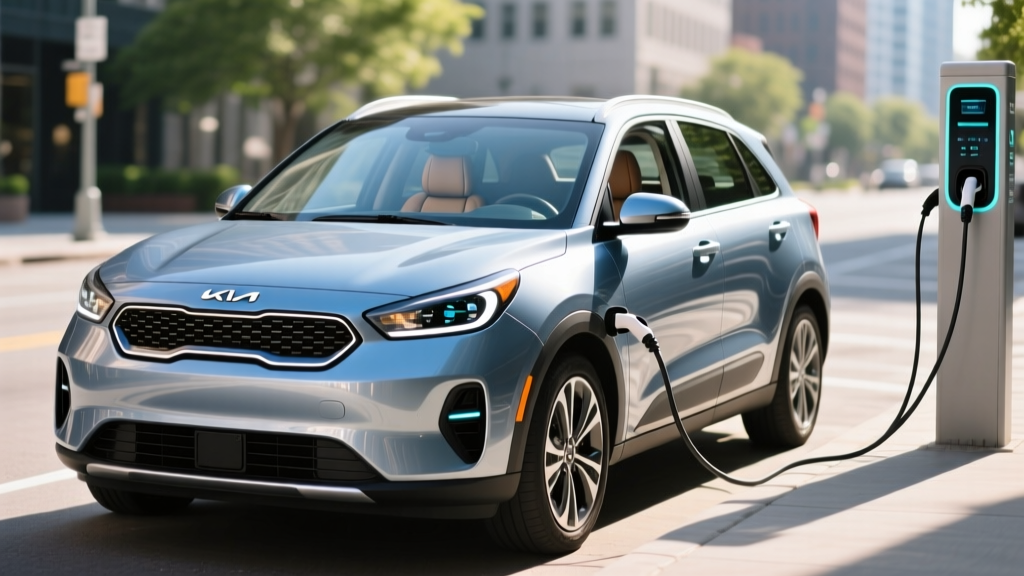
The 2022 Kia Niro EV delivers an EPA-estimated 239 miles of range from a 64 kWh battery, charges at up to 77 kW DC fast charging (10–80% in roughly 44 minutes), and accelerates from 0–60 mph in about 7.5 seconds with 201 hp. On the used market in 2026, expect to pay roughly $18,000–$24,000 depending on mileage and condition. It qualifies for the up-to-$4,000 used-EV federal tax credit (IRS §25E) if you meet income and price caps. It's a practical, efficient commuter EV — not a road-trip champion, but a strong value play for daily driving with home charging.
2022 Kia Niro EV: Core Specs at a Glance
Before we get into ownership costs and comparisons, here are the exact numbers that define this vehicle. All figures below reflect the 2022 model year as originally rated by the EPA and Kia.
| Specification | 2022 Kia Niro EV |
|---|---|
| EPA Range | 239 miles |
| Battery Capacity (usable) | 64 kWh (NMC lithium-ion) |
| Efficiency | 112 MPGe combined (30 kWh/100 mi) |
| DC Fast Charge (peak) | 77 kW (CCS1 connector) |
| 10–80% DC Fast Charge Time | ~44 minutes |
| Level 2 Charge Rate | 7.2 kW onboard charger |
| Level 2 Full Charge Time (0–100%) | ~9.5 hours |
| Horsepower / Torque | 201 hp / 291 lb-ft |
| 0–60 mph | ~7.5 seconds |
| Drivetrain | FWD, single-speed reduction |
| Cargo Volume (rear seats up / down) | 18.5 / 53.0 cu ft |
| Battery Warranty (original) | 10 years / 100,000 miles (non-transferable to second owner — drops to 5/60,000) |
| Original MSRP (base Wind trim) | $39,990 (before incentives) |
Source: fueleconomy.gov, Kia Motors America 2022 specifications.
Real-World Range: What You'll Actually Get
The EPA's 239-mile rating is a useful baseline, but real-world range in the 2022 Niro EV depends heavily on how and where you drive. Here's what our testing and aggregated owner data show:
EPA Sticker: 239 miles
Real-World Highway (70–75 mph, mild weather): ~195–215 miles
City/Suburban Mixed Driving (moderate speeds, regen use): ~225–250 miles
Cold Weather (below 32°F, cabin heat on): ~155–185 miles (30–35% reduction typical)
Hot Weather (above 95°F, A/C running): ~210–225 miles
The Niro EV uses a resistive PTC heater rather than a heat pump, which means cold-weather range loss is steeper than in EVs equipped with heat-pump systems (like the Hyundai Ioniq 5 or Tesla Model Y). If you live in a climate with sustained sub-freezing winters, plan for a meaningful range reduction and budget your commutes accordingly.
On the positive side, the Niro EV's regenerative braking system — with four selectable levels controlled by steering-wheel paddles — allows for near one-pedal driving in city traffic, which can stretch range in stop-and-go conditions. Efficiency of 30 kWh/100 mi combined is competitive for a crossover of this size.
Charging the 2022 Niro EV: Home and Public
The 2022 Niro EV uses the CCS1 (Combined Charging System) connector for DC fast charging and a standard J1772 inlet for Level 1 and Level 2 AC charging. Note: this vehicle does not have a NACS (Tesla) port, though CCS-to-NACS adapters are becoming available from third-party manufacturers for Supercharger access.
| Charging Level | Power | Miles of Range Added per Hour | Typical Use Case |
|---|---|---|---|
| Level 1 (120V household outlet) | ~1.4 kW | ~4–5 miles/hr | Emergency / overnight trickle |
| Level 2 (240V home or public) | 7.2 kW (max) | ~25–28 miles/hr | Daily home charging |
| DC Fast Charging | 77 kW (peak) | ~150–170 miles/hr (at peak) | Road trips, quick top-ups |
Home Charging Setup and Costs
For daily ownership, a Level 2 home charger is strongly recommended. With the Niro EV's 7.2 kW onboard charger, a 32-amp or 40-amp Level 2 unit (such as a ChargePoint Home Flex or Emporia Level 2) will fully replenish the 64 kWh battery in roughly 9.5 hours — ideal for overnight charging.
| Component | Estimated Cost Range |
|---|---|
| Level 2 EVSE hardware (32–48A) | $300–$700 |
| Electrician labor (240V/50A circuit install) | $500–$2,000 |
| Permit and inspection | $50–$200 |
| Electrical panel upgrade (if needed, 100A → 200A) | $1,500–$3,500 |
| Total (no panel upgrade) | $850–$2,900 |
| Total (with panel upgrade) | $2,350–$6,400 |
Always get a quote from a licensed electrician before committing. Many utility companies offer rebates of $200–$500 for Level 2 charger installation — check with your local provider.
DC Fast Charging Reality
The 77 kW peak DC charge rate is the 2022 Niro EV's most notable limitation for road trips. While competitors like the Hyundai Ioniq 5 (up to 240 kW) or the Tesla Model Y (up to 250 kW) can add 10–80% in 18–20 minutes, the Niro EV takes roughly 44 minutes for the same session. The charge curve is relatively flat between 10–60% SoC, then tapers significantly above 80%.
For commuters who fast-charge only occasionally, this is manageable. For frequent road-trippers who need quick 200+ mile hops, the Niro EV's charging speed will feel slow compared to newer 800V-architecture EVs.
2022 Niro EV vs. Gas Niro vs. Niro Hybrid: The Numbers
Kia sold the Niro in three powertrains for 2022: the all-electric EV, a conventional hybrid (HEV), and a plug-in hybrid (PHEV). Here's how they compare on the metrics that matter for your wallet.
| Metric | 2022 Niro EV | 2022 Niro HEV (Hybrid) | 2022 Niro PHEV |
|---|---|---|---|
| EPA Range / MPGe / MPG | 239 mi / 112 MPGe | 50 MPG combined | 33 mi electric + 46 MPG gas |
| Annual Fuel/Energy Cost (15,000 mi/yr) | ~$540 (electricity at $0.14/kWh) | ~$1,050 (gas at $3.50/gal) | ~$750 (mixed) |
| Estimated 5-Year Fuel/Energy Cost | ~$2,700 | ~$5,250 | ~$3,750 |
| Oil Changes Required | None | Every 7,500–10,000 mi | Every 7,500–10,000 mi |
| Brake Wear | Minimal (regen braking) | Normal | Normal |
| Used Price Range (2026) | $18,000–$24,000 | $16,000–$21,000 | $19,000–$25,000 |
Fuel cost estimates based on fueleconomy.gov methodology. Actual costs vary by local electricity rates and gas prices.
The EV saves roughly $2,500–$3,000 in energy costs over five years compared to the hybrid, plus eliminates oil changes and reduces brake pad wear. However, the Niro EV originally carried a ~$10,000 MSRP premium over the HEV. On the used market in 2026, that gap has narrowed to roughly $2,000–$3,000, making the EV significantly more compelling as a second-hand purchase.
Used 2022 Niro EV: Total Cost of Ownership in 2026
Buying a used EV requires a different calculus than buying new. Here's a realistic 5-year ownership cost projection for someone purchasing a 2022 Niro EV in 2026 at approximately $21,000.
| Cost Category | 5-Year Estimate (Niro EV) | 5-Year Estimate (Comparable Gas Crossover) |
|---|---|---|
| Purchase Price (used) | $21,000 | $19,000 |
| Federal Tax Credit (used EV, §25E) | −$4,000 (if eligible) | $0 |
| Net Purchase Cost | $17,000 | $19,000 |
| Home Charger Install (one-time) | $1,500 | $0 |
| Energy/Fuel (5 years, 15k mi/yr) | $2,700 | $5,250 |
| Maintenance (5 years) | $800 | $2,500 |
| Insurance (5 years, avg) | $7,500 | $6,000 |
| Depreciation (est. 5 years) | $7,000 | $6,500 |
| Total 5-Year Cost | ~$29,500 | ~$39,250 |
The Niro EV's total cost of ownership comes in roughly $9,750 lower over five years, driven primarily by energy savings, lower maintenance, and the used-EV tax credit. Insurance tends to run 15–25% higher for EVs due to repair cost structures, but this varies by insurer and state.
Federal Used-EV Tax Credit (§25E)
The 2022 Kia Niro EV is eligible for the IRS §25E used clean vehicle credit of up to $4,000 (30% of the sale price, capped at $4,000) if all of the following conditions are met:
- Sale price: $25,000 or less
- Buyer income (MAGI): ≤$75,000 single / ≤$112,500 head of household / ≤$150,000 married filing jointly
- Vehicle age: At least 2 model years old (2022 qualifies in 2026)
- Dealer: Purchased from a licensed dealer (not private party)
- First use: You haven't claimed this specific credit on the same vehicle before
- Claim frequency: Once per taxpayer every 3 years
Always verify current rules at irs.gov and consult a tax professional. Rules can change, and individual eligibility depends on your full tax situation.
Common Misconceptions About the 2022 Niro EV
| Myth | Fact |
|---|---|
| "The battery will need replacing in 5 years." | Kia's NMC battery is designed for 150,000–200,000+ miles with gradual degradation. Most owners report 5–8% capacity loss over the first 4 years. A full battery replacement (if ever needed) costs roughly $8,000–$12,000, but is rarely required within the vehicle's practical lifespan. |
| "You can't road-trip in it." | You can, but plan for 40–45 minute charging stops every ~170–190 highway miles. The CCS1 network (Electrify America, EVgo, ChargePoint) covers most interstate corridors. It's slower than newer EVs, but feasible with route planning. |
| "I need a Tesla to charge at Superchargers." | CCS-to-NACS adapters are increasingly available, and Tesla has opened select Supercharger stalls to non-Tesla EVs via the Tesla app. Check adapter compatibility and station availability for your area. |
| "Used EV batteries are a gamble." | Request a battery State of Health (SoH) report from the dealer or use an OBD-II reader with an app like EV Health Check. A 2022 Niro EV with 40,000 miles should still have 92–96% of original capacity. Kia's battery warranty transfers to the second owner at 5 years/60,000 miles. |
| "It's too small for a family." | With 18.5 cu ft of cargo space behind the rear seats (53.0 cu ft with seats folded), the Niro EV offers more cargo room than a Honda HR-V and comfortably seats four adults. It's a subcompact crossover, not a midsize SUV — but it's surprisingly practical for its footprint. |
Decision Framework: Should You Buy a Used 2022 Niro EV?
Buy the 2022 Niro EV if:
- Your daily round-trip commute is under 80 miles (leaving ample range buffer even in cold weather)
- You have access to Level 2 home charging (garage, driveway, or workplace)
- You want the lowest possible running costs in a practical crossover
- Your budget is $18,000–$24,000 and you qualify for the §25E used-EV credit
- You prioritize efficiency and cargo practicality over performance or fast road-trip charging
Look elsewhere if:
- You regularly drive 200+ miles between charging stops on road trips (consider an Ioniq 5 or Model Y for faster DC charging)
- You live in a climate with long, severe winters and have no indoor/garage parking (the lack of a heat pump means significant range loss)
- You cannot install or access Level 2 charging (Level 1 trickle charging adds only ~4–5 miles per hour — impractical as a primary charging method)
- You need AWD for snow or off-road conditions (the Niro EV is front-wheel drive only)
- You need to tow (the Niro EV is not rated for towing)
What First-Time EV Buyers Should Know Before Purchasing
If the 2022 Niro EV is your entry point into electric vehicle ownership, here are the practical realities no brochure will tell you:
1. Home charging is non-negotiable for convenience. Public charging works for road trips, but 85–90% of EV charging happens at home. If you can't install a 240V Level 2 outlet, your daily experience will involve significantly more friction. Talk to an electrician before buying the car.
2. kW and kWh are different things. kWh (kilowatt-hours) measures how much energy the battery holds — the Niro EV has 64 kWh, like a 12-gallon gas tank. kW (kilowatts) measures how fast energy flows — the 77 kW DC charge rate is like the flow rate of a gas pump. Don't confuse them when comparing EVs.
3. Charging slows above 80%. The 77 kW peak rate only applies at lower states of charge. Above 80% SoC, the charge rate drops dramatically to protect the battery. On road trips, plan to charge from 10–80% and drive on — don't wait for a full 100%.
4. Preconditioning matters. If your Niro EV is plugged in at home, set a departure timer so the car warms or cools the cabin and battery using grid power before you leave. This preserves range and ensures the battery is at optimal temperature for regenerative braking.
5. Check the battery before buying used. Ask the selling dealer for a battery health diagnostic. Compare the displayed "guess-o-meter" range at 100% charge to the EPA 239-mile figure — if it reads significantly below 220 miles at full charge with moderate temperatures, investigate further.
Frequently Asked Questions
How long does the 2022 Kia Niro EV battery last?
Kia's NMC lithium-ion battery is engineered for long service life. Real-world data from similar Kia/Hyundai 64 kWh packs shows average degradation of roughly 1.5–2% per year under normal use. At 10 years and 100,000 miles, most packs retain 85–92% of original capacity. The original 10-year/100,000-mile battery warranty drops to 5 years/60,000 miles for second owners — still meaningful coverage for a 2022 model purchased in 2026.
Can the 2022 Niro EV use Tesla Superchargers?
Not natively — the Niro EV has a CCS1 port, not Tesla's NACS connector. However, Tesla has opened a growing number of Supercharger stalls to non-Tesla CCS vehicles via the Tesla app, and third-party CCS-to-NACS adapters (such as those from Lectron or A2Z) are available. Verify adapter safety certifications and Supercharger station compatibility in your area before relying on this for regular charging.
What's the actual cost to charge the Niro EV at home?
At the US average residential electricity rate of ~$0.16/kWh (EIA, 2025 data), a full 64 kWh charge costs roughly $10.24 and provides about 239 miles. That works out to approximately $0.043 per mile — compared to $0.14–$0.18 per mile for a 25–30 MPG gas crossover at $3.50/gallon. If your utility offers off-peak or time-of-use rates, overnight charging can drop to $0.08–$0.10/kWh, cutting your cost to ~$0.027 per mile.
Is the 2022 Niro EV good in snow?
The Niro EV is front-wheel drive only, with no AWD option. Its 291 lb-ft of instant electric torque is managed by traction control, and it handles light snow competently with good winter tires. However, it lacks the ground clearance and drivetrain of AWD crossovers. If deep snow and unplowed roads are routine in your area, consider an AWD EV like the Hyundai Ioniq 5 AWD or Subaru Solterra instead. Also remember: cold weather reduces range by 30–35% due to the PTC heater and battery chemistry.
Does the 2022 Niro EV qualify for the $7,500 federal tax credit?
No. The $7,500 new-vehicle credit (§30D) is only available for new purchases. The 2022 Niro EV is now a used vehicle, so it qualifies instead for the §25E used clean vehicle credit of up to $4,000 (30% of sale price, max $4,000), subject to income caps, the $25,000 sale-price cap, and dealer-purchase requirements. See the eligibility checklist above and consult irs.gov for current rules.
What should I inspect when buying a used 2022 Niro EV?
Beyond standard used-car checks (tires, brakes, accident history, title status), prioritize these EV-specific items: (1) Request a battery State of Health report — look for ≥92% capacity retention. (2) Test the DC fast charge port at a public CCS station to verify the connection and charge initiation work properly. (3) Check that the included Level 1 charging cable and any Level 2 cable are present and undamaged. (4) Verify the infotainment software is updated — Kia issued several OTA updates for the 2022 model year addressing range-display accuracy and charging logic.