Quick Verdict: The 2022 Kia Niro EV as a Used Buy in 2026
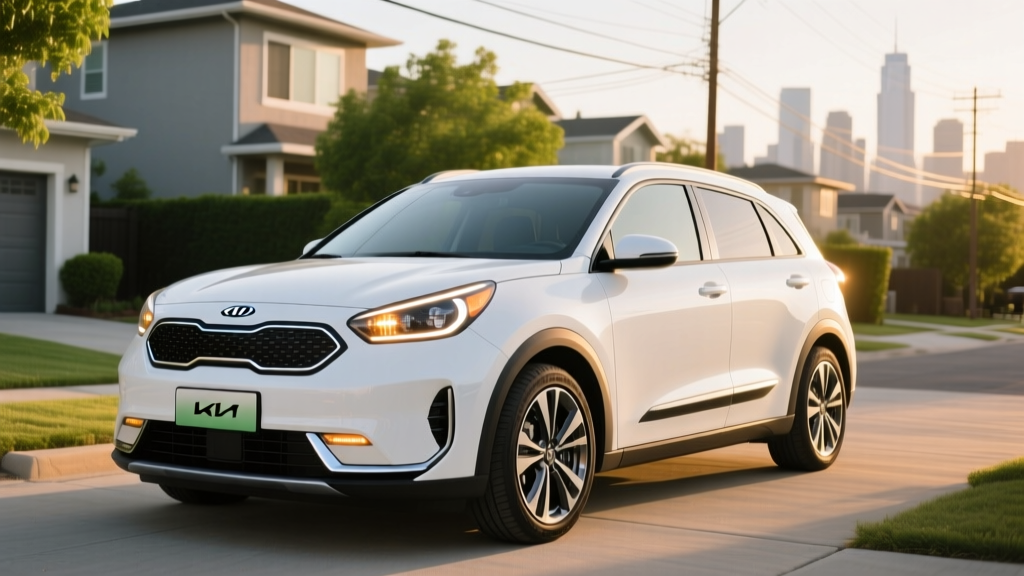
The 2022 Kia Niro EV is a practical, comfortable small crossover with a 239-mile EPA range and a 64 kWh NMC battery. On the used market in 2026, expect to pay between $16,000 and $22,000 depending on mileage and condition. It's best suited for buyers with home Level 2 charging who commute under 60 miles daily and want a no-drama entry into EV ownership. Its 77 kW DC fast-charging cap means road trips require patience, but daily driving and overnight charging are effortless. If you can charge at home and don't regularly drive 300+ mile routes, the Niro EV delivers some of the lowest per-mile costs in the used EV market.
Range, Battery, and Real-World Efficiency
The 2022 Niro EV carries a 64 kWh lithium-ion battery pack using NMC (nickel-manganese-cobalt) chemistry. The EPA rates it at 239 miles of combined range, with a combined efficiency of 112 MPGe (30 kWh per 100 miles). Those numbers hold up well against contemporaries like the Chevrolet Bolt EUV (247 miles) and the Hyundai Kona Electric (258 miles).
Real-World Range Expectations
EPA Sticker: 239 miles
Highway driving (70-75 mph, mild weather): ~200-215 miles
Cold weather (below 32°F, mixed driving): ~165-190 miles
City/regenerative-heavy driving (55-65°F): ~240-255 miles
The Niro EV lacks a heat pump for 2022 — it uses resistive cabin heating. This means winter range loss is more pronounced than in EVs with heat pumps (like the Hyundai Ioniq 5). Budget 25-35% range reduction in freezing conditions if you live in the upper Midwest or Northeast.
According to fueleconomy.gov, the 2022 Niro EV achieves 120 MPGe city / 102 MPGe highway. That highway drop is typical for a crossover-shaped EV — the Niro's taller profile creates more aerodynamic drag than a sedan at sustained speeds above 70 mph.
| Spec | Value |
|---|---|
| EPA Range | 239 miles |
| Battery Capacity | 64 kWh (NMC chemistry) |
| Motor Output | 201 hp / 291 lb-ft torque |
| 0-60 mph | ~6.8 seconds |
| Max DC Fast Charge Rate | 77 kW (peak) |
| 10-80% DC Fast Charge | ~54 minutes |
| Level 2 Charge Rate | 7.2 kW (onboard charger) |
| Level 2 Full Charge (0-100%) | ~9.5 hours |
| Combined MPGe | 112 MPGe |
| Efficiency | 30 kWh / 100 mi |
| Original MSRP (EX trim) | $39,990 (before incentives) |
| Battery Warranty | 10 years / 100,000 miles |
| Connector (2022 model year) | CCS1 (Combo) |
Charging Speed: The Niro EV's Main Limitation
Here's where the 2022 Niro EV shows its age. Its peak DC fast-charging rate is 77 kW — well below the 150-250 kW rates common on 2024+ EVs. On a 150 kW or 350 kW Electrify America or EVgo station, you'll see the Niro peak around 77 kW in the 10-40% state-of-charge (SoC) window, then taper progressively. The 10-80% charge takes approximately 54 minutes.
For context, a Hyundai Ioniq 5 on the same charger will go from 10-80% in roughly 18 minutes at up to 240 kW. That's a significant difference on road trips. If you take 300+ mile highway trips more than a few times a year, the Niro EV's slow charging curve will test your patience.
| Charge Level | Power (kW) | Miles Added Per Hour | Typical Use Case |
|---|---|---|---|
| Level 1 (120V household) | ~1.4 kW | ~4-5 mi/hr | Emergency / trickle top-up |
| Level 2 (240V, 32A) | 7.2 kW | ~24-26 mi/hr | Home overnight charging |
| DC Fast Charge (CCS) | 77 kW (peak) | ~170 mi/hr (at peak) | Road trips; expect ~54 min for 10-80% |
For daily use, Level 2 home charging is all you need. A full 0-100% charge takes about 9.5 hours on a 7.2 kW Level 2 station, but since most owners arrive home with 40-60% remaining, a typical overnight session of 4-6 hours easily restores a full battery by morning.
2022 Niro EV vs. Gas Niro vs. Niro PHEV: Cost Comparison
Kia sold the Niro in three flavors for 2022: a conventional hybrid (HEV), a plug-in hybrid (PHEV), and the full EV. Here's how they stack up on running costs, using 15,000 miles/year and national averages for fuel and electricity.
| Model | EPA Efficiency | Energy Cost (Annual, 15k mi) | 5-Year Energy Cost |
|---|---|---|---|
| Niro EV (BEV) | 30 kWh/100 mi | $630 (at $0.14/kWh national avg) | $3,150 |
| Niro HEV (Gas Hybrid) | 50 MPG combined | $1,050 (at $3.50/gal) | $5,250 |
| Niro PHEV | 33 mi electric + 46 MPG gas | $780 (mixed, 60% electric driving) | $3,900 |
The EV saves roughly $420/year over the gas hybrid and $150/year over the PHEV in energy costs alone — more if your local electricity rate is below the national average or if you have access to solar or off-peak utility rates. Over five years, the BEV saves about $2,100 versus the gas hybrid. Factor in the elimination of oil changes, transmission fluid, and exhaust system maintenance, and the total ownership advantage widens further.
However, the used purchase price matters. In early 2026, a 2022 Niro EV with 30,000-45,000 miles typically lists between $17,000 and $21,000. A comparable 2022 Niro HEV sells for $19,000-$23,000. The gap has narrowed significantly from their original MSRPs ($39,990 for the EV vs. ~$27,000 for the HEV), making the EV the better value play for buyers with charging access.
Total Cost of Ownership: 5-Year Breakdown
| Category | Estimated Cost | Notes |
|---|---|---|
| Purchase Price | $18,000-$21,000 | Avg. used market, 30k-45k miles |
| Home Level 2 Charger Install | $800-$2,000 | 240V/40A circuit; varies by panel condition |
| Energy (5 years) | $3,150 | At $0.14/kWh, 15,000 mi/yr |
| Maintenance (5 years) | $1,200-$1,800 | Tires, cabin filter, brake fluid, wipers |
| Insurance (5 years) | $7,500-$9,500 | EVs typically 10-15% higher premiums |
| Federal Tax Credit (§30D) | Up to $4,000 (used) | Used EV credit: 30% of sale price, max $4,000 |
| Net 5-Year Cost (after credit) | $27,650-$34,850 | Assuming $4,000 used-EV credit applied |
Tax credit note: The IRS §30D used clean vehicle credit covers 30% of the sale price up to $4,000 for qualified used EVs. Income caps apply ($75,000 single / $150,000 joint filer). The vehicle must be purchased from a licensed dealer and the sale price must be $25,000 or less. Verify current eligibility on irs.gov, as sourcing and model-year rules can shift. The 2022 Niro EV generally qualifies when purchased from a dealer under the price cap.
Common Misconceptions: Myths vs. Facts
| Myth | Fact |
|---|---|
| "The battery will need replacing soon and cost $15,000." | Kia's battery warranty covers 10 years/100,000 miles against degradation below 70% capacity. A 2022 model is covered through 2032. NMC batteries in Kia/Hyundai packs typically lose 8-12% capacity over 100,000 miles based on fleet data. |
| "239 miles of range isn't enough for real life." | The average American drives 37 miles per day (FHWA NHTS data). A full charge covers nearly a week of average driving. Range only becomes a constraint on long road trips. |
| "I can't charge at home, so an EV won't work." | Public Level 2 chargers at workplaces, apartments, and grocery stores can sustain daily driving. However, relying solely on DC fast charging is more expensive and harder on the battery. Home access is strongly preferred. |
| "Used EVs are risky — I don't know how the battery was treated." | Request a battery State of Health (SoH) report from a Kia dealer. The BMS logs degradation data. Most 2022 Niros at 30k-40k miles show 92-96% SoH — well within normal parameters. |
| "It charges at CCS stations, but everything is switching to NACS." | CCS1 remains widely supported at Electrify America, EVgo, and ChargePoint stations in 2026. Kia offers a NACS adapter for newer models, and third-party CCS-to-NACS adapters are available for legacy vehicles. You won't be stranded. |
What First-Time EV Buyers Should Know Before Purchasing
If the 2022 Niro EV is your first electric vehicle, here's what matters beyond the spec sheet:
Home Charging Is Non-Negotiable for Most Owners
Over 80% of EV charging happens at home. Before buying, confirm you can install a 240V Level 2 charger. This requires a dedicated 40A or 50A circuit on a 200A electrical panel. If your home has a 100A panel (common in older homes), a panel upgrade adds $1,500-$3,000 to your install cost. Get a quote from a licensed electrician before committing to the car.
Winter Range Loss Is Real and Predictable
The 2022 Niro EV's resistive heater draws significant energy in cold weather. Owners in Minnesota, Michigan, or New England should plan for 165-190 miles of usable range in sub-freezing temperatures. If your round-trip commute exceeds 120 miles in winter, you'll need midday charging access. Preconditioning the cabin while plugged in mitigates some of this loss.
Insurance Costs More for EVs
Expect EV insurance premiums 10-15% higher than equivalent gas vehicles. The Niro EV's total-loss repair costs are higher due to battery replacement expense. Shop quotes from Geico, Progressive, and State Farm before buying — the spread can be $200-$400/year depending on your zip code and driving record.
Maintenance Is Minimal but Not Zero
EVs eliminate oil changes, spark plugs, timing belts, and transmission fluid. You'll still need tire rotations (EVs wear tires faster due to instant torque and heavier weight), cabin air filter replacement, brake fluid checks, and windshield washer fluid. Budget roughly $300-$400/year for routine maintenance.
Decision Framework: Should You Buy a Used 2022 Niro EV?
Choose the 2022 Niro EV If:
- You have access to Level 2 home charging (garage, driveway, or apartment building with EV infrastructure)
- Your daily round-trip commute is under 80 miles
- You take road trips of 250+ miles fewer than 4-5 times per year
- You want the lowest possible per-mile energy cost
- You find a used example under $21,000 and qualify for the $4,000 used-EV tax credit
- You live in a mild-to-moderate climate, or accept winter range trade-offs
Look Elsewhere If:
- You cannot install or access Level 2 charging at home or work
- You regularly drive 300+ miles in a single day and can't tolerate 50+ minute charge stops
- You need all-wheel drive (the Niro EV is front-wheel drive only)
- You tow — the Niro EV is not rated for towing
- You live in an extreme cold climate where 165 miles of winter range won't cover your needs
- You need more cargo space — the Niro EV offers 18.5 cu ft behind the rear seats, modest for a crossover
Frequently Asked Questions
Does the 2022 Kia Niro EV qualify for any tax credits in 2026?
As a new vehicle, the 2022 Niro EV no longer qualifies for the $7,500 new-vehicle §30D credit (that applied at original purchase). However, if you buy one used from a licensed dealer for $25,000 or less, you may qualify for the used clean vehicle credit: 30% of the sale price, capped at $4,000. Buyer income limits apply ($75,000 single / $150,000 joint). Confirm current rules at irs.gov before purchasing.
What connector does the 2022 Niro EV use, and will it work at Tesla Superchargers?
The 2022 Niro EV uses a CCS1 (Combined Charging System) connector. It will work at Electrify America, EVgo, ChargePoint, and other CCS networks. It cannot natively plug into Tesla Superchargers (which use the NACS connector). However, CCS-to-NACS adapters are available from third-party manufacturers, and Kia has been expanding adapter compatibility for older models. Check Kia's official adapter program for the latest compatibility.
How long will the 2022 Niro EV battery last?
Kia warranties the high-voltage battery for 10 years or 100,000 miles against capacity loss below 70%. Based on degradation data from similar Hyundai/Kia NMC packs, expect approximately 8-12% capacity loss at 100,000 miles under normal use. That means a 239-mile new range becomes roughly 210-220 miles at 100,000 miles — still very usable. Full battery replacement, if ever needed outside warranty, runs $8,000-$12,000 at a Kia dealer.
Can I road-trip the 2022 Niro EV cross-country?
Yes, but with caveats. The 77 kW peak DC charging speed means 10-80% stops take about 54 minutes — roughly three times longer than a modern 250 kW-capable EV. Plan for a charge stop every 180-200 highway miles. Apps like A Better Routeplanner (ABRP) can map CCS charger locations along your route. It's doable, but not as seamless as in faster-charging EVs.
Is the 2022 Niro EV safe?
The 2022 Niro EV earned a Top Safety Pick+ rating from the IIHS with Good ratings across all crash test categories. It comes standard with forward collision warning, automatic emergency braking, lane-keeping assist, and blind-spot monitoring. It does not offer hands-free highway driving — the standard driver-assist features are SAE Level 1-2 and require full driver attention at all times.
How does the 2022 Niro EV compare to a used Tesla Model 3 from the same era?
A 2022 Tesla Model 3 (Standard Range Plus) offers ~272 miles of EPA range, 170 kW DC fast charging, access to the Supercharger network, and a more minimalist interior. Used Model 3s typically list $22,000-$27,000 — a premium over the Niro EV. The Model 3 is faster, charges quicker, and has better road-trip infrastructure. The Niro EV wins on ride comfort (softer suspension), physical controls, hatchback practicality, and lower entry price. If charging speed and range are top priorities, the Model 3 is the stronger EV. If you want a comfortable, affordable daily driver with crossover seating height, the Niro EV is the value pick.