Quick Verdict: The 800-Volt Sleeper That Still Holds Up
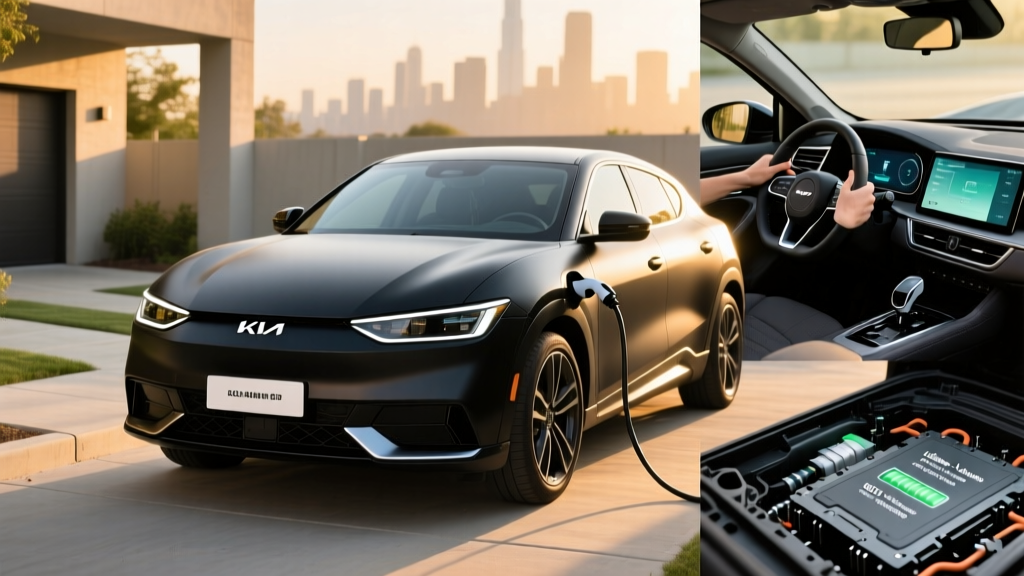
The 2022 Kia EV6 was Kia's first dedicated electric vehicle built on the Hyundai Motor Group's E-GMP platform, and it arrived with a party trick that still matters in 2026: an 800-volt electrical architecture capable of accepting up to 239 kW at a DC fast charger. For used-EV shoppers or anyone evaluating a remaining 2022 model on a dealer lot, the EV6 delivers a rare combination of fast charging, engaging driving dynamics, and practical crossover packaging — though rear headroom and Kia's early infotainment software remain sore points.
This review covers the 2022 model year specifically, with notes on how it stacks up against its refreshed successors and key competitors in today's market.
| Spec | Light Wind RWD | Wind RWD | GT-Line AWD |
|---|---|---|---|
| Battery (usable) | 58.0 kWh (NMC) | 77.4 kWh (NMC) | 77.4 kWh (NMC) |
| EPA Range | 232 mi | 310 mi | 274 mi |
| Horsepower | 167 hp | 225 hp | 320 hp |
| 0-60 mph | 7.7 sec | 6.7 sec | 4.5 sec |
| Drivetrain | RWD single motor | RWD single motor | AWD dual motor |
| Max DC Charge Rate | ~180 kW | 239 kW | 239 kW |
| 10-80% DCFC Time | ~25 min | ~18 min | ~18 min |
| Level 2 Rate | 10.9 kW | 10.9 kW | 10.9 kW |
| Combined MPGe | 117 MPGe | 117 MPGe | 106 MPGe |
| EPA Efficiency | 29 kWh/100 mi | 29 kWh/100 mi | 32 kWh/100 mi |
| Base MSRP (2022) | $40,900 | $47,000 | $51,200 |
Sources: fueleconomy.gov, Kia America press archives.
Range & Efficiency: What the EPA Sticker Doesn't Tell You
The headline number for most buyers is the Wind RWD's EPA-estimated 310 miles, which made the 2022 EV6 one of the longest-range mainstream crossovers at launch. The entry-level Light Wind with its smaller 58.0 kWh battery delivers 232 miles, while the dual-motor GT-Line AWD drops to 274 miles due to the added weight and front motor losses.
EPA sticker: 310 mi (Wind RWD)
Mixed driving (55-70 mph, 65°F+): Expect 275-295 mi in temperate conditions. The EV6's efficiency of 29 kWh/100 mi is genuinely good for the segment.
Sustained highway (75+ mph): Aerodynamic drag cuts range to roughly 250-265 mi. The EV6's sloped roofline helps, but it's still a crossover.
Cold weather (below 30°F): Expect 20-30% reduction, putting real range around 215-250 mi. The EV6 uses a resistance heater on most 2022 trims rather than a full heat pump (standard only on certain markets/trims), which amplifies winter losses.
Bottom line: Plan road trips around ~240 usable miles to keep a safety buffer and avoid the steep charge-curve taper above 80% SoC.
The battery chemistry across all 2022 EV6 trims is NMC (nickel manganese cobalt), supplied primarily by SK Innovation. NMC offers higher energy density than LFP, which is how Kia fit 77.4 kWh of usable capacity into a relatively compact pack — but it also means you should avoid routinely charging to 100% or sitting at low SoC for extended periods to minimize long-term degradation.
Charging Speed: The 800V Advantage in Practice
This is where the 2022 EV6 separates itself from most competitors in its price bracket. The E-GMP platform supports 800-volt DC fast charging, which means the EV6 can accept peak rates up to 239 kW on the long-range trims — provided you find a compatible 350 kW charger (Electrify America, EVgo, and select Tesla Superchargers with the Magic Dock adapter).
| Charge Level | Power | Connector | Speed / Time |
|---|---|---|---|
| Level 1 (120V) | ~1.4 kW | Standard outlet | ~4-5 mi/hr (adds ~50 mi overnight) |
| Level 2 (240V, 48A) | 10.9 kW | J1772 / NACS (with adapter) | ~35 mi/hr; 10-100% in ~7.5 hr (77.4 kWh pack) |
| DC Fast Charge | Peak 239 kW | CCS1 (native) | 10-80% in ~18 min (long-range); tapers sharply above 80% |
| DC Fast (50 kW station) | 50 kW | CCS1 | 10-80% in ~65 min (long-range) |
Charging-curve reality: The 239 kW peak is not sustained. In real-world testing, the EV6 holds roughly 220-235 kW from 10-40% SoC, then begins a gradual taper. By 70% it drops to ~150 kW, and above 80% it falls to ~60-80 kW. This is typical for NMC packs with aggressive thermal management, but it means charging from 80-100% can take nearly as long as 10-80%. For road trips, the 10-80% window is where the EV6 shines — 18 minutes is competitive with the Hyundai Ioniq 5 and faster than the Tesla Model Y on most networks.
Home charging note: The onboard charger is 10.9 kW, which means a standard 48-amp Level 2 home charger (hardwired, 60A circuit) will replenish the 77.4 kWh pack in about 7-7.5 hours. If your electrical panel only supports a 40A circuit (32A EVSE), expect ~7.7 kW and roughly 10 hours for a full charge. Budget $500-$1,500 for Level 2 installation depending on panel proximity and local permit costs.
Connector compatibility: The 2022 EV6 shipped with a CCS1 port. Kia now provides a NACS adapter for access to Tesla Superchargers, though charging speeds on V3 Superchargers (150 kW max for non-Tesla vehicles via adapter) won't match what you'll see at a 350 kW Electrify America station.
Performance & Driving Dynamics
The 2022 EV6 GT-Line AWD delivers a genuinely quick 4.5-second 0-60 mph time from its 320 hp dual-motor setup, with torque-vectoring that makes it feel planted through corners. The RWD Wind trim (225 hp, 6.7 sec to 60) prioritizes efficiency and is the sweet spot for most buyers — it's responsive off the line without the range penalty of the dual-motor configuration.
Ride quality is firm but controlled, tuned more for European-style composure than soft isolation. The steering is quick and well-weighted for an EV, and the low center of gravity from the floor-mounted battery pack keeps body roll minimal. Regenerative braking offers four levels adjustable via steering-wheel paddles, including a strong i-Pedal mode for one-pedal driving.
Towing: The 2022 EV6 is rated for 2,200 lb (braked) on AWD trims and 1,600 lb on RWD — enough for a small utility trailer or a pair of dirt bikes, but not a camper. Towing cuts range by roughly 35-50%.
Interior, Cargo & Technology
The EV6's cabin uses a dual 12.3-inch curved display layout that looks modern, though the 2022 model year's infotainment software can feel sluggish compared to Kia's 2024+ updates. Wireless Apple CarPlay and Android Auto are standard. A head-up display with augmented-reality navigation is available on GT-Line trims.
Passenger space:
- Front headroom: 39.1 in | Front legroom: 41.7 in
- Rear headroom: 37.8 in | Rear legroom: 39.5 in
Rear legroom is generous thanks to the flat floor and long 114.2-inch wheelbase, but the sloping roofline cuts rear headroom for taller passengers — a common complaint among owners over 6'2".
Cargo volume:
- Behind rear seats: 24.4 cu ft
- Rear seats folded: 50.2 cu ft
- Front trunk (frunk): 0.7 cu ft (AWD) / 1.8 cu ft (RWD)
The frunk is disappointingly small — essentially a glorified cable-storage cubby. The rear cargo area is well-shaped but smaller than a Tesla Model Y's 30.2 cu ft behind the rear seats.
Driver assistance: The 2022 EV6 includes Highway Driving Assist 2 (HDA2), which provides adaptive cruise control with stop-and-go, lane centering, and lane-change assist. This is an SAE Level 2 system — you must keep your hands on the wheel and eyes on the road at all times. It's competent on interstates but not a substitute for attention.
Highway Driving Assist 2 is an SAE Level 2 driver-assistance system. It does NOT make the EV6 self-driving. The driver must remain actively engaged, monitor the road, and be prepared to take over at any moment. Hands-off operation is not supported and is not legal on public roads.
Pricing, Trims & Federal Tax Credit Eligibility
The 2022 EV6 launched with three primary trims. Here's how pricing looked at introduction, and what to expect on the used market in 2026:
| Trim | Original MSRP | Est. Used Price (2026) | §30D New Credit (2022 rules) | Used EV Credit (§25E) |
|---|---|---|---|---|
| Light Wind RWD | $40,900 | $22,000-$27,000 | Up to $7,500 (if eligible) | Up to $4,000 (30% of sale price) |
| Wind RWD | $47,000 | $26,000-$32,000 | Up to $7,500 (if eligible) | Up to $4,000 |
| GT-Line AWD | $51,200 | $29,000-$36,000 | Up to $7,500 (if eligible) | Up to $4,000 |
| GT (performance) | $61,600 | $35,000-$42,000 | Up to $7,500 (if eligible) | Up to $4,000 |
Important tax credit context: When new in 2022, the EV6's eligibility for the full $7,500 federal tax credit under IRS §30D depended on battery-component and critical-mineral sourcing requirements that evolved significantly after the Inflation Reduction Act took effect in August 2022. Early 2022 purchasers may have qualified for the credit under pre-IRA rules; later purchasers faced stricter sourcing requirements that the Korea-built EV6 struggled to meet.
For 2026 used-EV buyers: The §25E used clean vehicle credit offers up to $4,000 (30% of the sale price, capped at $4,000) for qualifying used EVs purchased from a dealer. Income caps apply: $75,000 single / $150,000 joint filers. The vehicle must be at least two model years old, sold for $25,000 or less, and purchased from a licensed dealer. A 2022 EV6 Wind RWD selling for $24,500 could qualify for the full $4,000, bringing effective cost to $20,500 — but verify eligibility with your tax professional and the dealer's point-of-sale documentation.
Warranty & Long-Term Battery Outlook
Kia backs the 2022 EV6 with one of the strongest warranty packages in the segment:
- Basic warranty: 5 years / 60,000 miles
- Powertrain warranty: 10 years / 100,000 miles
- Battery warranty: 10 years / 100,000 miles (covers capacity below 70% of original)
- Roadside assistance: 5 years / 60,000 miles
The 70% battery-capacity retention threshold is industry-standard but worth noting: if your 77.4 kWh pack degrades to 54.2 kWh (usable) within the warranty period, Kia will repair or replace it. Real-world data from E-GMP vehicles suggests most packs retain 90-93% capacity after 60,000 miles under normal use. NMC chemistry is more sensitive to extreme SoC and temperature than LFP, so owners who regularly charge to 100% or live in hot climates may see slightly faster degradation.
Battery replacement cost (out of warranty): Current estimates for the 77.4 kWh pack run $14,000-$20,000 including labor, though prices are expected to decline as the supply chain matures and refurbishment options expand.
How the 2022 EV6 Compares to Key Rivals
| Spec | Kia EV6 Wind RWD | Hyundai Ioniq 5 SEL RWD | Tesla Model Y LR AWD | Ford Mustang Mach-E Prem. RWD |
|---|---|---|---|---|
| EPA Range | 310 mi | 303 mi | 330 mi | 306 mi (ext. range) |
| Battery | 77.4 kWh NMC | 77.4 kWh NMC | ~81 kWh NMC | 91 kWh NMC |
| Max DC Charge | 239 kW | 239 kW | ~170 kW | ~150 kW |
| 10-80% DCFC | ~18 min | ~18 min | ~28 min | ~38 min |
| 0-60 mph | 6.7 sec | 7.4 sec | 4.8 sec | 6.1 sec |
| Cargo (rear seats up) | 24.4 cu ft | 27.2 cu ft | 30.2 cu ft | 29.7 cu ft |
| 2022 Base MSRP | $47,000 | $44,875 | $65,990 | $48,175 |
- Class-leading 800V DC fast charging (~18 min 10-80%)
- 310-mile EPA range on Wind RWD is highly competitive
- Engaging driving dynamics with sharp steering
- 10-year/100,000-mile battery warranty
- Distinctive styling stands out in the crossover segment
- Strong used-market value with potential §25E credit
- Rear headroom tight for taller passengers (37.8 in)
- Frunk is nearly useless (0.7-1.8 cu ft)
- Cargo space smaller than Model Y and Mach-E
- 2022 infotainment software can be sluggish
- No heat pump on most US trims (hurts cold-weather range)
- CCS1-only port requires adapter for Tesla Superchargers
Who Should Buy the 2022 Kia EV6?
Choose the 2022 EV6 Wind RWD if: You prioritize fast DC charging for road trips, want a stylish and engaging daily driver, and don't need maximum cargo space. The 310-mile range and 18-minute 10-80% charge time make it one of the best road-trip EVs in its class.
Choose the GT-Line AWD if: You need all-weather traction and want sub-5-second acceleration, and you're willing to sacrifice ~36 miles of range for it.
Look elsewhere if: You need maximum cargo room (Model Y), you want a larger frunk, you regularly carry tall rear-seat passengers, or you live in a cold climate where the lack of a heat pump will meaningfully impact your winter range.
Best for: Commuters and couples who take occasional road trips and value charging speed over maximum interior volume. The Wind RWD is the value sweet spot.
Frequently Asked Questions
What is the real-world range of the 2022 Kia EV6?
The Wind RWD carries a 310-mile EPA estimate. In real-world mixed driving at moderate temperatures, expect 275-295 miles. Sustained highway driving at 75+ mph drops this to roughly 250-265 miles, and cold weather below 30°F can cut range to 215-250 miles due to battery chemistry limitations and the lack of a standard heat pump on US-spec models.
How fast does the 2022 EV6 charge at home and on the road?
At home on a Level 2 (240V, 48A) charger, the EV6 charges at 10.9 kW, adding about 35 miles per hour and filling the 77.4 kWh pack in roughly 7.5 hours. On a 350 kW DC fast charger, the long-range EV6 peaks at 239 kW and charges from 10-80% in approximately 18 minutes — among the fastest in its class thanks to the 800-volt architecture.
Does the 2022 Kia EV6 qualify for the federal EV tax credit?
When purchased new, eligibility for the §30D credit depended on the purchase date and evolving battery-sourcing rules under the Inflation Reduction Act. The Korea-built EV6 faced challenges meeting critical-mineral and battery-component requirements for the full $7,500 after August 2022. For used purchases in 2026, the §25E credit offers up to $4,000 if the sale price is $25,000 or less, the buyer's income is under $75,000 (single) or $150,000 (joint), and the vehicle is purchased from a licensed dealer. Always verify with a tax professional and consult the IRS used vehicle credit page.
Is the 2022 EV6 worth buying vs. the Ioniq 5 or Model Y?
The EV6 and Ioniq 5 share the same E-GMP platform and battery, so charging speed and efficiency are nearly identical. The EV6 edges ahead on sporty driving dynamics and rear-seat legroom; the Ioniq 5 wins on cargo space and a more practical hatchback design. The Tesla Model Y offers more cargo room, access to the Supercharger network natively, and longer range, but charges slower on DC and costs significantly more on the used market. If fast charging and driving engagement matter most, the EV6 is the pick.
What are the biggest pros and cons of the 2022 EV6?
Top pros: 800V fast charging (~18 min 10-80%), 310-mile EPA range, engaging handling, strong battery warranty, and competitive used pricing with potential tax credits. Top cons: tight rear headroom, tiny frunk, less cargo space than rivals, no standard heat pump for cold climates, and 2022-era infotainment that feels dated compared to newer models.
How long will the 2022 EV6 battery last?
Kia warranties the battery for 10 years or 100,000 miles against capacity loss below 70%. Based on early E-GMP fleet data, most packs retain 90%+ capacity after 60,000 miles under normal charging habits. To maximize longevity, avoid routinely charging to 100%, minimize DC fast charging when Level 2 is available, and use the vehicle's built-in charge-limit settings to cap daily charging at 80-90%.