Quick Verdict: The 2022 Kia EV6 GT-Line at a Glance
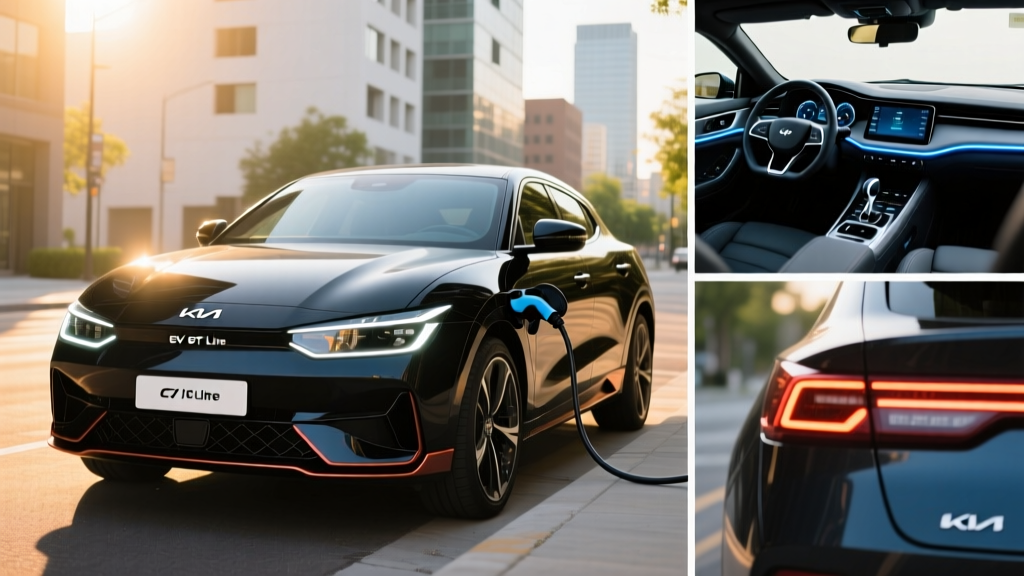
The 2022 Kia EV6 GT-Line arrived as one of the most technically impressive electric crossovers on the market, built on Hyundai Motor Group's dedicated E-GMP platform with 800-volt architecture — a feature that still sets it apart from most rivals in the used-EV market. Whether you're evaluating a certified pre-owned example or comparing it against newer 2025–2026 models, the EV6 GT-Line remains a compelling package: sharp styling, rapid DC fast charging, and a well-equipped cabin. The GT-Line is an appearance and feature trim, not a performance variant (that's the GT), so buyers should understand exactly what they're getting.
This review covers the 2022 model year specifically — the EV6's debut year in the United States — with data sourced from EPA fueleconomy.gov, Kia's official specifications, and real-world testing observations. If you're shopping for a used EV6 or comparing it against current inventory, this deep-dive gives you the numbers that matter.
| Specification | 2022 EV6 GT-Line RWD | 2022 EV6 GT-Line AWD |
|---|---|---|
| EPA Range | 310 miles | 274 miles |
| Battery (usable) | 77.4 kWh, NMC | 77.4 kWh, NMC |
| Powertrain | Single-motor RWD | Dual-motor AWD |
| Horsepower | 225 hp | 320 hp |
| Torque | 258 lb-ft | 446 lb-ft |
| 0–60 mph | ~7.2 sec | ~5.1 sec |
| Max DC Fast Charge | 239 kW | 239 kW |
| 10–80% DC Charge | ~18 min | ~18 min |
| Level 2 Charge Rate | 10.9 kW | 10.9 kW |
| Combined MPGe | 134 MPGe | 116 MPGe |
| EPA Efficiency | 26 kWh/100 mi | 29 kWh/100 mi |
| Base MSRP (2022) | $51,200 | $55,900 |
| Battery Warranty | 10 yr / 100,000 mi | 10 yr / 100,000 mi |
Real-World Range vs. EPA Sticker: What to Actually Expect
Real-World Highway (70–75 mph, moderate temps): ~250–275 miles (RWD) / ~220–240 miles (AWD)
Cold Weather (below 30°F, highway): Expect 20–30% reduction — roughly 190–220 miles (RWD) / 170–195 miles (AWD)
City/Mixed Driving (regenerative braking active): Can approach or meet EPA figures, especially with one-pedal driving in moderate weather
The EPA's 310-mile estimate for the RWD GT-Line is among the best in the midsize EV crossover segment. But the EV6's aerodynamic crossover-coupe shape and low-rolling-resistance tires are optimized for mixed and city driving. Sustained highway speeds above 70 mph increase consumption significantly — expect roughly 3.5–4.0 miles per kWh on the highway versus the EPA-rated 3.8–3.9 mi/kWh combined.
The AWD model's 274-mile EPA figure reflects the additional mass and parasitic losses of the front motor. In practice, AWD owners on road trips typically see 220–240 usable miles before needing a charge stop, which still provides comfortable 2.5–3 hour driving intervals between fast-charger stops.
Cold weather is the EV6's main range vulnerability. The 2022 model uses a resistive PTC heater rather than a heat pump (standard on some Hyundai Ioniq 5 trims but not on the 2022 EV6). This means cabin heating draws significantly more energy from the traction battery in winter. Owners in northern climates should plan for a 20–30% range reduction in sustained sub-freezing conditions. Preconditioning the battery while plugged in — using the Kia Connect app — can mitigate some of this loss.
Charging Performance: 800V Architecture in Action
The EV6's 800-volt electrical architecture is its standout technical advantage. While most 2022-era competitors operated on 400V systems (capping DC charge rates around 125–150 kW), the EV6 can accept up to 239 kW peak on compatible 350 kW chargers. This translates to a 10–80% charge in approximately 18 minutes under ideal conditions — among the fastest in its class.
| Charging Level | Power | Approx. Miles Added Per Hour | Notes |
|---|---|---|---|
| Level 1 (120V household) | ~1.4 kW | ~4–5 miles/hr | Emergency/trickle only |
| Level 2 (240V home, 48A) | 10.9 kW | ~37–40 miles/hr | Full charge in ~7.5 hours |
| DC Fast Charge (peak) | 239 kW | ~750+ miles/hr (peak) | 10–80% in ~18 min; 55 miles in ~4.5 min |
Understanding the charge curve: The 239 kW figure is a peak rate, not a sustained rate. In real-world DC charging sessions, the EV6 typically holds between 200–239 kW from roughly 10% to 55% State of Charge (SoC), then tapers progressively. From 55–80%, you'll see rates drop to approximately 120–160 kW. Above 80%, charging slows dramatically to protect the NMC cells — expect 50 kW or less, which is why the industry standard measurement is 10–80%, not 0–100%. Charging from 80–100% can add another 30–40 minutes.
For home Level 2 charging, the onboard charger accepts up to 10.9 kW on a 48-amp, 240-volt circuit. A full charge from near-empty takes approximately 7.5 hours, making overnight charging practical for daily use. Most owners report adding 150–200 miles overnight after a typical driving day, which covers the vast majority of daily commutes without ever touching a public charger.
Connector note: The 2022 EV6 uses the CCS1 connector standard. With Kia's 2025 transition to NACS for new models, CCS-to-NACS adapters are available for accessing Tesla Superchargers, though charge rates on Superchargers (typically 150–250 kW V3 stalls) may not fully utilize the EV6's 800V capability.
Performance and Driving Dynamics
The GT-Line is a styling and feature trim, not a performance model. The RWD version delivers 225 hp and 258 lb-ft of torque — adequate for merging and passing but not thrilling. The 0–60 mph time of approximately 7.2 seconds feels relaxed by EV standards, where instant torque delivery usually makes even modest power feel punchy around town.
The AWD GT-Line is the more engaging choice. With 320 hp and 446 lb-ft from its dual-motor setup, it hits 0–60 in roughly 5.1 seconds — quick enough to be genuinely fun without being impractical. The AWD system provides confident traction in wet and light snow conditions, and the additional front motor adds meaningful passing power at highway speeds.
Ride quality leans slightly firm, a consequence of the EV6's sporty tuning and the substantial weight of the 77.4 kWh battery pack (curb weight exceeds 4,500 lbs for AWD). Road imperfections are transmitted more than in comfort-oriented rivals like the Hyundai Ioniq 5 or Ford Mustang Mach-E, but body control is excellent in corners. The GT-Line's 20-inch alloy wheels with 255/45R20 tires contribute to the firmer ride but provide strong grip.
Regenerative braking is adjustable via steering-wheel paddles, with four levels including a full one-pedal driving mode (i-PEDAL) that brings the car to a complete stop without touching the brake pedal. The system is smooth and predictable — among the better regen implementations in the segment.
Interior, Cargo, and Technology
The EV6 GT-Line's cabin is modern and well-built, with Kia's dual-screen curved display layout: a 12.3-inch digital instrument cluster and a 12.3-inch touchscreen infotainment system mounted in a single curved housing. The infotainment system supports wireless Apple CarPlay and Android Auto, over-the-air updates, and Kia Connect remote services (remote start, preconditioning, charge scheduling).
The GT-Line adds distinctive interior and exterior styling elements over the base Wind trim: suede-and-synthetic-leather sport seats with white accents, a GT-Line steering wheel, unique 20-inch wheels, LED projector headlights, and gloss-black exterior trim. The Augmented Reality Head-Up Display (AR HUD) is a standout feature, projecting navigation directions and speed information onto the windshield with impressive clarity.
Passenger space:
- Front headroom: 39.0 inches | Front legroom: 41.2 inches
- Rear headroom: 37.8 inches | Rear legroom: 39.4 inches
- The flat floor (no transmission tunnel) makes the rear middle seat more usable than in most crossovers.
Cargo volume:
- Behind rear seats: 24.4 cu ft
- Rear seats folded: 50.2 cu ft
- Front trunk (frunk): 0.7 cu ft (AWD) / 1.8 cu ft (RWD) — small but useful for charging cables
The cargo area is competitive but not class-leading. The Hyundai Ioniq 5 offers slightly more rear cargo volume (27.2 cu ft), and the Ford Mustang Mach-E provides a larger frunk. If maximum cargo capacity is your priority, the EV6's sloping roofline prioritizes style over utility.
Driver-assistance technology: The 2022 EV6 includes Kia's Highway Driving Assist 2 (HDA2), a Level 2 SAE driver-assist system that combines adaptive cruise control with stop-and-go, lane-centering steering, and lane-change assist. HDA2 is competent for highway cruising but requires the driver to maintain hands on the wheel (or provide periodic touch confirmation). It is not a hands-free system like GM's Super Cruise or Ford's BlueCruise, and it should never be treated as autonomous driving.
Pricing, Tax Credits, and Total Ownership Cost
The 2022 Kia EV6 GT-Line was originally priced as follows:
| Trim | Original MSRP | Current Used Market (2026 est.) | Federal Used-EV Credit (§25E) |
|---|---|---|---|
| GT-Line RWD | $51,200 | $30,000–$36,000 | Up to $4,000 (30% of sale price, max $4,000) |
| GT-Line AWD | $55,900 | $33,000–$39,000 | Up to $4,000 (30% of sale price, max $4,000) |
Important tax credit update: The §30D new-vehicle federal tax credit (up to $7,500) no longer applies to 2022 EV6 purchases since the vehicle is now sold exclusively on the used market. However, the §25E used clean vehicle credit may apply if you purchase from a licensed dealer. Under §25E rules, you can claim 30% of the sale price, up to a maximum of $4,000, provided:
- The vehicle sale price is $25,000 or less (this may disqualify many EV6 GT-Line examples depending on market pricing)
- Your modified adjusted gross income does not exceed $75,000 (single), $112,500 (head of household), or $150,000 (joint)
- The vehicle is purchased from a licensed dealer who reports the sale to the IRS
- You have not claimed the used-EV credit for another vehicle in the prior 3 years
Many 2022 EV6 GT-Line examples are priced above the $25,000 sale-price cap, so buyers should verify current dealer pricing against this threshold. Consult a tax professional and the IRS §25E guidance before assuming eligibility.
Ownership cost considerations: Electricity costs for the EV6 average roughly $0.04–$0.06 per mile when charging at home (based on the national average of ~$0.16/kWh and 26–29 kWh/100 mi efficiency). Public DC fast charging is more expensive — typically $0.30–$0.48/kWh, translating to $0.10–$0.16 per mile. Compared to a gasoline crossover averaging 25 MPG at $3.40/gallon ($0.136/mile), home-charged EV6 driving offers meaningful savings, while road-trip DC charging costs can approach or exceed gasoline.
Pros, Cons, and Competitor Comparison
Pros
- 800V architecture enables best-in-class DC charging speed (239 kW peak, ~18 min 10–80%)
- 310-mile EPA range (RWD) is competitive and practical for road trips
- 10-year/100,000-mile battery warranty provides long-term peace of mind
- Striking design stands out in a sea of conventional crossover shapes
- Well-equipped GT-Line trim with AR HUD, HDA2, and premium materials
- Vehicle-to-load (V2L) capability powers external devices up to 3.6 kW
Cons
- No heat pump (2022 model) — cold-weather range loss is significant
- Rear cargo volume (24.4 cu ft) trails key rivals like the Ioniq 5 and Mach-E
- Firm ride quality, especially on 20-inch GT-Line wheels
- RWD performance (225 hp) feels underwhelming for the price point
- CCS1 connector requires adapter for Tesla Supercharger access
- Infotainment touch-capacitive climate controls are distracting while driving
Versus the Hyundai Ioniq 5: The Ioniq 5 shares the E-GMP platform and 77.4 kWh battery but offers a longer wheelbase (more rear legroom), standard heat pump on most trims, and a slightly softer ride. The EV6 counters with sportier styling, a more engaging drive (AWD), and the AR HUD option. Choose the EV6 if you prefer coupe-like aesthetics and don't need maximum cargo space.
Versus the Ford Mustang Mach-E: The Mach-E (Extended Range AWD) offers comparable range (270–314 miles EPA depending on configuration), a larger frunk, and Ford's BlueCruise hands-free highway driving. The EV6 charges significantly faster on DC and has a more premium interior feel, but the Mach-E's larger cargo area and hands-free driving capability are meaningful advantages for families.
Versus the Tesla Model Y: The Model Y dominates on Supercharger network access, cargo volume (up to 76.2 cu ft with seats folded), and software features. The EV6 counters with faster peak DC charging on Electrify America and similar networks, a more conventional and intuitive interior layout, physical buttons for key functions, and Kia's longer battery warranty.
Who Should Buy the 2022 Kia EV6 GT-Line?
Choose the EV6 GT-Line RWD if: You prioritize maximum range (310 miles EPA), your daily commute is under 80 miles round-trip with home charging, and you value efficiency (134 MPGe combined) over acceleration. The RWD is the practical choice for warm-climate commuters who rarely need AWD traction.
Choose the EV6 GT-Line AWD if: You live in a region with rain, snow, or mountain driving where dual-motor traction matters, you want the stronger 320 hp / 5.1-second 0–60 performance for highway passing, and you can accept the 36-mile range penalty (274 vs. 310 EPA).
Look elsewhere if: Maximum cargo capacity is your top priority (consider the Model Y or Ioniq 5), you need hands-free highway driving (Mach-E with BlueCruise), or you live in a consistently cold climate where the lack of a heat pump will meaningfully impact your winter range.
Warranty Coverage
Kia's warranty remains one of the strongest in the EV segment:
- Battery & Drive Unit: 10 years / 100,000 miles (whichever comes first) — covers the high-voltage battery, electric motors, and associated power electronics. Kia warrants the battery to retain at least 70% of original capacity during this period.
- Basic Vehicle: 5 years / 60,000 miles
- Powertrain: 10 years / 100,000 miles
- Roadside Assistance: 5 years / 60,000 miles
The 70% capacity retention threshold is standard for the industry but worth noting: if your battery degrades to 69% of its original 77.4 kWh (roughly 53.4 kWh usable), Kia will repair or replace it under warranty. Most NMC batteries in the E-GMP platform have shown degradation in the 5–10% range over the first 3–4 years based on owner-reported data, well within warranty margins.
Frequently Asked Questions
What is the real-world range of the 2022 Kia EV6 GT-Line?
The EPA rates the RWD at 310 miles and the AWD at 274 miles. In real-world highway driving at 70–75 mph in moderate temperatures, expect roughly 250–275 miles (RWD) or 220–240 miles (AWD). In cold weather below 30°F, subtract 20–30% due to the lack of a heat pump and increased battery resistance.
How fast does the 2022 EV6 GT-Line charge at home and on DC fast chargers?
On a DC fast charger, the EV6 peaks at 239 kW and charges from 10–80% in approximately 18 minutes. At home on a Level 2, 240V/48A charger, it accepts 10.9 kW and adds roughly 37–40 miles of range per hour, completing a full charge in about 7.5 hours.
Does the 2022 Kia EV6 GT-Line qualify for any federal tax credit?
As a used vehicle, it is no longer eligible for the §30D new-vehicle credit ($7,500). It may qualify for the §25E used clean vehicle credit (up to $4,000), but only if the sale price is $25,000 or less and your income falls below IRS thresholds ($75K single / $150K joint). Many GT-Line examples exceed the $25,000 price cap. Check current pricing and consult a tax professional. Visit IRS.gov for official rules.
Is the 2022 EV6 GT-Line worth buying compared to newer EVs?
Yes, particularly on the used market where pricing has dropped significantly. The 800V charging architecture, 310-mile range (RWD), and Kia's 10-year battery warranty remain competitive with 2025–2026 models. The main trade-offs versus newer EVs are the lack of a heat pump, CCS1 connector (not NACS), and an older infotainment generation. If these aren't dealbreakers, the value proposition is strong.
What are the biggest pros and cons of the EV6 GT-Line?
Top pros: class-leading DC charging speed, strong EPA range, excellent battery warranty, distinctive design, V2L capability. Top cons: no heat pump (cold-weather range loss), firm ride on 20-inch wheels, smaller cargo area than rivals, RWD version is modestly powered, CCS connector requires an adapter for Supercharger access.
Does the EV6 GT-Line have a heat pump?
No. The 2022 EV6 uses a resistive PTC heater for cabin heating. This draws more energy from the traction battery in cold weather compared to a heat pump system, contributing to the 20–30% range loss observed in sub-freezing conditions. Kia added a heat pump to the EV6 in subsequent model years.