Quick Verdict: Still One of the Best Used-EV Bargains in 2026
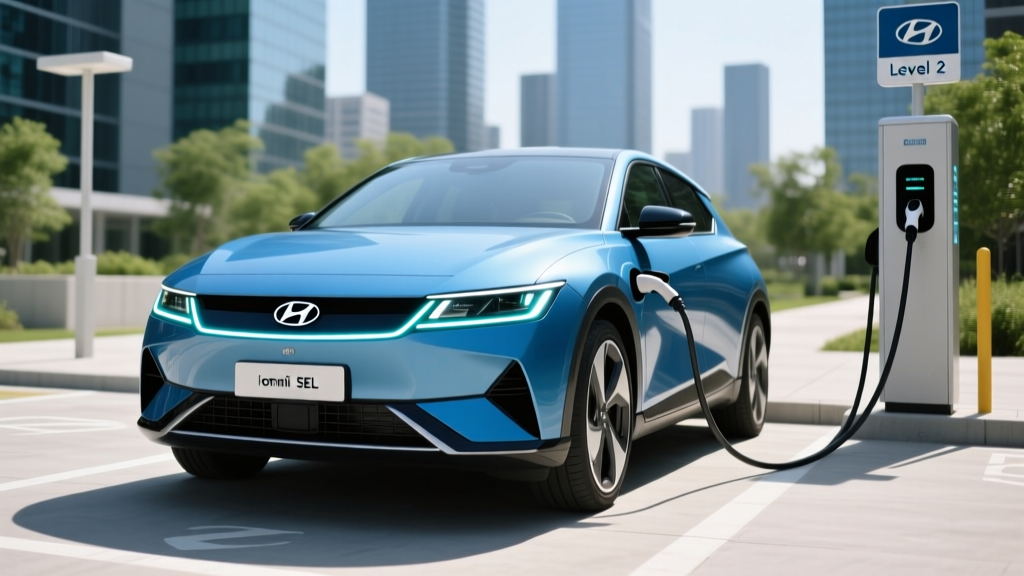
The 2022 Hyundai Ioniq 5 SEL was the launch trim that put Hyundai's E-GMP platform on the map, and in 2026 it remains a compelling used-EV purchase. With an EPA range of up to 303 miles (RWD), blistering 800V DC fast-charging architecture, and a spacious crossover cabin, the Ioniq 5 SEL competes directly with the Tesla Model Y, Ford Mustang Mach-E, and Kia EV6 — all of which share similar price brackets on the pre-owned market.
For buyers eyeing a 2022 Ioniq 5 SEL on a dealer lot or private sale, the critical questions are whether the battery has held up, what real-world range you can expect, and whether federal or state incentives still apply. This review covers every number you need.
Range, Battery, and Efficiency: What the Numbers Actually Mean
The 2022 Ioniq 5 SEL was offered in two drivetrain configurations, each with a distinct battery and range profile:
| Spec | RWD (Standard Range) | RWD (Long Range) | AWD (Long Range) |
|---|---|---|---|
| Usable Battery | 58 kWh | 77.4 kWh | 77.4 kWh |
| Chemistry | NMC (Nickel Manganese Cobalt) | NMC | NMC |
| EPA Range | 220 mi | 303 mi | 256 mi |
| MPGe (Combined) | 110 MPGe | 114 MPGe | 110 MPGe |
| kWh/100 mi | 30 | 29 | 30 |
| Horsepower | 168 hp | 225 hp | 320 hp |
| 0–60 mph | ~8.5 sec | ~7.0 sec | ~5.0 sec |
| Drivetrain | Rear-Wheel Drive | Rear-Wheel Drive | Dual-Motor AWD |
The EPA 303-mile sticker on the RWD Long Range is achievable in mild, city-heavy driving. In our experience and aggregated owner data, expect:
- Highway (70–75 mph, 70°F): ~260–275 miles
- Cold weather (30°F, mixed driving): ~210–240 miles (NMC chemistry loses 15–25% in freezing temps without preconditioning)
- Optimal conditions (55 mph, 60–75°F): Up to 290–303 miles
The AWD Long Range drops to 256 miles EPA, with real-world highway figures closer to 220–235 miles. The Standard Range RWD (220 mi EPA) is best suited for commuters with home charging and daily drives under 100 miles.
According to fueleconomy.gov, the Ioniq 5 RWD Long Range achieves 114 MPGe combined — competitive with the Tesla Model Y Long Range (122 MPGe) and slightly ahead of the Ford Mustang Mach-E Extended Range RWD (101 MPGe). Efficiency of 29 kWh/100 miles means you're consuming roughly $0.04–$0.06 per mile at average US residential electricity rates ($0.16/kWh), compared to $0.12–$0.15/mile for a 28 MPG gas crossover.
Charging Speed: The 800V Advantage in Practice
The Ioniq 5's headline feature is its 800V electrical architecture, which enables DC fast-charging speeds that most competitors (operating on 400V systems) cannot match without expensive boost converters. Here's what that means at the plug:
| Charging Level | Power | Speed / Time | Notes |
|---|---|---|---|
| Level 1 (120V household) | ~1.4 kW | ~4–5 mi/hr | Emergency/trickle only |
| Level 2 (240V, 48A) | 10.9 kW | ~36–40 mi/hr; full charge ~8 hr | Home or workplace |
| DC Fast (350 kW station) | Peak ~235 kW | 10–80% in ~18 min | Requires preconditioning |
| DC Fast (150 kW station) | Peak ~150 kW | 10–80% in ~25 min | More common station type |
| DC Fast (50 kW station) | 50 kW | 10–80% in ~65 min | Older CHAdeMO/CCS stations |
The 10–80% in 18 minutes figure is real — but only at a 350 kW-capable charger (Electrify America, select EVgo stations) and only if the battery is preconditioned. The Ioniq 5 does not have a dedicated "navigate to charger" preconditioning toggle like Tesla; instead, preconditioning activates when you set a DC fast-charger as your navigation destination. If you arrive at a charger cold-soaked (especially in winter), expect peak rates closer to 100–150 kW initially, ramping up as the battery warms.
Charge curve reality: The Ioniq 5 sustains roughly 180–235 kW from 10% to about 55% SoC, then tapers to ~120 kW through 70%, and drops sharply above 80%. This is typical of NMC batteries. For road trips, plan to charge from 10–80% and move on — the last 20% takes as long as the first 70%.
The 2022 Ioniq 5 uses a CCS1 (Combined Charging System) connector for DC fast charging and a J1772 connector for Level 2 AC. With the North American industry shifting toward NACS (Tesla's connector), Hyundai began offering NACS ports on the Ioniq 5 starting with the 2025 model year. For the 2022 model, you'll need a CCS-to-NACS adapter (sold by Tesla and third parties, typically $200–$250) to access Tesla Supercharger V2/V3 stations that support non-Tesla vehicles via the "Magic Dock" adapter or through Hyundai's included adapter program.
Pricing, Tax Credits, and Used-EV Economics in 2026
The 2022 Ioniq 5 SEL originally started at an MSRP of approximately $44,875 (RWD) and $48,525 (AWD), before destination charges. By 2026, these vehicles are available on the used market, where pricing typically ranges from $24,000 to $33,000 depending on mileage, condition, and trim.
| Item | Amount |
|---|---|
| Original MSRP (RWD SEL, 2022) | ~$44,875 |
| Typical Used Price (2026, 30–50k mi) | $26,000–$32,000 |
| Federal Used EV Credit (§25E) | Up to $4,000 (30% of sale price, capped) |
| Federal New EV Credit (§30D) | Not applicable (used vehicle) |
| Estimated Price After §25E Credit | ~$22,000–$28,000 |
Federal used-EV tax credit (§25E): If you purchase a qualifying used 2022 Ioniq 5 from a licensed dealer in 2026, you may be eligible for a federal tax credit of 30% of the sale price, up to a maximum of $4,000. Per IRS guidelines, eligibility requirements include:
- Sale price must be $25,000 or less
- Buyer adjusted gross income (AGI) must not exceed $75,000 (single), $112,500 (head of household), or $150,000 (joint)
- Vehicle must be at least 2 model years old (2022 qualifies in 2026)
- Vehicle must have a battery capacity of at least 7 kWh (all Ioniq 5 variants qualify)
- Credit can be transferred to the dealer at point of sale for an immediate price reduction
- You cannot have claimed the used-EV credit in the prior 3 years
This makes the 2022 Ioniq 5 SEL one of the best values in the used-EV market: a 300-mile-range crossover with 800V charging for potentially under $24,000 after the credit. However, note that the $25,000 sale-price cap means higher-mileage or lower-trim examples are the ones most likely to qualify. Always confirm eligibility with a tax professional before relying on the credit.
If you're comparing to a new 2026 Ioniq 5: The new model starts around $42,500 (SE Standard Range) and up, potentially qualifying for the $7,500 §30D new-vehicle credit (subject to MSRP caps of $80,000 for SUVs, buyer income limits, and battery-sourcing/critical-mineral requirements that have tightened significantly since 2024). A new Ioniq 5 with the full credit could net around $35,000 — but the used 2022 SEL at ~$24,000 after §25E represents substantial savings for buyers who don't need the latest tech.
Interior Space, Tech, and Daily Livability
The Ioniq 5's E-GMP platform gives it a flat floor and a 118.1-inch wheelbase — longer than a Toyota RAV4 — which translates to genuinely generous interior space:
- Front legroom: 41.7 inches
- Rear legroom: 39.4 inches (more than most midsize SUVs)
- Cargo behind rear seats: 27.2 cu ft
- Cargo with seats folded: 59.3 cu ft
- Front trunk (frunk): 0.85 cu ft (RWD) / 2.0 cu ft (AWD) — enough for a charging cable bag, not groceries
The SEL trim in 2022 came well-equipped: a 12.3-inch digital instrument cluster paired with a 12.3-inch touchscreen infotainment system, wireless Apple CarPlay and Android Auto (on the smaller screen — the dual-12.3 setup requires wired connection), heated front seats, a power-adjustable driver's seat, and Hyundai's Digital Key (NFC-based smartphone-as-key).
Driver assistance (ADAS): The 2022 Ioniq 5 SEL includes Hyundai SmartSense, which bundles:
- Adaptive cruise control with stop-and-go (SCC)
- Lane-keeping assist and lane-centering (LFA)
- Forward collision-avoidance assist with pedestrian/cyclist detection (FCA)
- Blind-spot collision-avoidance assist (BCA)
- Rear cross-traffic collision-avoidance assist (RCCA)
- Highway Driving Assist (HDA) — combines adaptive cruise + lane centering on divided highways
Highway Driving Assist and all Ioniq 5 driver-assist features are SAE Level 2 — the system can control steering and speed simultaneously, but the driver must remain fully engaged, hands on or near the wheel, and eyes on the road. This is not autonomous or "self-driving" capability. Hyundai's more advanced Highway Driving Assist 2 (with lane-change assist) was reserved for higher trims or later model years.
Notable drawbacks:
- No rear wiper: The 2022 Ioniq 5 lacks a rear windshield wiper, a widely criticized omission that affects visibility in rain and snow. Hyundai added one starting with the 2025 refresh.
- No front trunk (effectively): The RWD frunk is under 1 cu ft — functionally a cable storage cubby.
- Infotainment quirks: The touch-capacitive climate controls below the main screen are fiddly to use while driving, and the lack of physical volume/tune knobs frustrates some owners.
- Soft rear suspension: The 2022 model's suspension tuning leans comfort-oriented, which means noticeable body roll in corners and some floatiness over highway undulations. The 2025 refresh addressed this.
- CCS-only (no native NACS): Accessing Tesla Superchargers requires an adapter.
Pros and Cons at a Glance
Pros
- 800V DC fast charging — 10–80% in ~18 min at 350 kW stations
- Up to 303 miles EPA range (RWD Long Range)
- Spacious rear seat and flat floor architecture
- Vehicle-to-load (V2L) capability — power laptops, appliances, or campsite gear (up to 3.6 kW via interior outlet or external adapter)
- Strong safety ratings (IIHS Top Safety Pick+ for 2022)
- Competitive used pricing + potential $4,000 §25E federal credit
- 10-year/100,000-mile battery warranty (transferable to second owner with reduced coverage)
Cons
- No rear wiper (2022 model year)
- Tiny frunk — essentially unusable for cargo
- CCS connector requires adapter for Tesla Superchargers
- No battery preconditioning toggle — relies on navigation routing
- Soft suspension tuning causes body roll
- Touch-capacitive climate controls lack physical feedback
- AWD range drops to 256 miles EPA (real-world ~220 mi highway)
Battery Warranty, Degradation, and Longevity
Hyundai backs the 2022 Ioniq 5's battery with a 10-year/100,000-mile warranty for the original owner, covering defects and capacity loss below 70% of original capacity. For second owners, the warranty transfers but is reduced to 5 years/60,000 miles from the original in-service date — which means a 2022 model purchased used in 2026 would have roughly 4 years/60,000 miles of remaining transferred coverage (whichever comes first).
Hyundai's new-vehicle limited warranty (5-year/60,000-mile bumper-to-bumper) and powertrain warranty (10-year/100,000-mile) also apply, with the same second-owner transfer reduction on the powertrain side.
Degradation data: Early owner reports and fleet data suggest the Ioniq 5's NMC battery is holding up well. Most 2022 examples with 40,000–60,000 miles show 3–6% capacity loss (State of Health around 94–97%), which is within normal expectations for NMC chemistry with active thermal management. Hyundai's battery management system includes a buffer (the 77.4 kWh usable figure is drawn from a ~84 kWh gross pack), which helps protect long-term health by preventing the cells from operating at true 0% or 100%.
Longevity tips for used buyers:
- Request a State of Health (SoH) reading from a Hyundai dealer before purchase — this is a simple OBD diagnostic.
- Avoid routinely charging to 100% or discharging below 10% — set the charge limit to 80% for daily use.
- Use DC fast charging sparingly in extreme heat; the thermal management system is robust but repeated 350 kW sessions in 100°F+ weather accelerate wear.
- Precondition the battery (via navigation to a DC charger) before fast-charging in cold weather.
Who Should Buy the 2022 Ioniq 5 SEL?
Decision Framework
Choose the 2022 Ioniq 5 SEL if:
- You want a 300-mile EV crossover under $28,000 (after potential tax credit)
- You take regular road trips and value 18-minute DC fast-charging stops
- You need generous rear-seat space for child seats or adult passengers
- You have access to home Level 2 charging and can install a 48A/240V circuit
- You want V2L capability for camping, tailgating, or emergency backup power
Look elsewhere if:
- You need native NACS/Tesla Supercharger access without an adapter (consider a 2025+ Ioniq 5 or Tesla Model Y)
- You live in heavy rain/snow regions and the lack of a rear wiper is a dealbreaker
- You want sporty handling dynamics (the Kia EV6, which shares the E-GMP platform, has firmer tuning)
- You need more than 27.2 cu ft of cargo space (the Tesla Model Y offers 30.2 cu ft behind the rear seats)
- You require over 250 miles of real-world cold-weather range (the AWD variant falls short here)
How It Stacks Up Against Key Competitors
The 2022 Ioniq 5 SEL competes in a crowded used-EV crossover segment. Here's how it compares on the metrics that matter most:
| Spec | Hyundai Ioniq 5 SEL (RWD LR) | Tesla Model Y LR | Ford Mach-E ER RWD | Kia EV6 Wind (RWD LR) |
|---|---|---|---|---|
| EPA Range | 303 mi | 330 mi | 300 mi | 310 mi |
| Battery (usable) | 77.4 kWh (NMC) | ~75 kWh (NMC/NCA) | 91 kWh (NMC) | 77.4 kWh (NMC) |
| DC Fast Charge (10–80%) | ~18 min (350 kW) | ~25 min (250 kW) | ~38 min (150 kW) | ~18 min (350 kW) |
| Connector | CCS1 | NACS (native) | CCS1 | CCS1 |
| 0–60 mph | 7.0 sec | 4.8 sec | 6.1 sec | 7.2 sec |
| Cargo (behind rear) | 27.2 cu ft | 30.2 cu ft | 29.7 cu ft | 24.4 cu ft |
| Typical Used Price (2026) | $26K–$32K | $28K–$35K | $24K–$30K | $26K–$32K |
The Ioniq 5's primary advantage is its 800V charging speed, which ties the Kia EV6 and outpaces both the Model Y and Mach-E. The Tesla Model Y wins on range, Supercharger network access, and cargo space. The Mach-E offers slightly more cargo room but charges significantly slower. The EV6 is mechanically a twin to the Ioniq 5 but trades some rear-seat space for a sportier roofline and firmer ride.
Frequently Asked Questions
What is the real-world range of the 2022 Hyundai Ioniq 5 SEL?
The RWD Long Range (303 mi EPA) delivers approximately 260–275 miles on the highway in mild weather, dropping to 210–240 miles in freezing temperatures. The AWD Long Range (256 mi EPA) yields roughly 220–235 miles highway. The Standard Range RWD (220 mi EPA) is best for daily commutes under 100 miles with regular home charging.
How fast does the 2022 Ioniq 5 charge at home and on the road?
At home on a 240V Level 2 charger (48A), the Ioniq 5 charges at 10.9 kW, adding about 36–40 miles of range per hour and filling the 77.4 kWh battery in roughly 8 hours. On a 350 kW DC fast charger, it peaks at ~235 kW and charges from 10–80% in approximately 18 minutes — among the fastest in its class. On a more common 150 kW station, expect 10–80% in about 25 minutes.
Does the 2022 Ioniq 5 qualify for a federal EV tax credit in 2026?
As a used vehicle, the 2022 Ioniq 5 may qualify for the federal used clean vehicle credit (§25E), which provides 30% of the sale price up to $4,000. Requirements include a sale price of $25,000 or less, buyer AGI under $75K/$112.5K/$150K (single/HOH/joint), purchase from a licensed dealer, and not having claimed the credit in the prior 3 years. The §30D new-vehicle credit does not apply to used purchases. State incentives vary — check your local energy office or afdc.energy.gov for details.
Is the 2022 Ioniq 5 SEL worth buying vs. a Tesla Model Y or Kia EV6?
The Ioniq 5 SEL is worth buying if you prioritize fast DC charging, a comfortable ride, strong rear-seat space, and value pricing. Choose the Tesla Model Y if you want native Supercharger access, more range, and more cargo room. Choose the Kia EV6 if you prefer sportier handling and a more driver-focused cockpit, but can accept slightly less rear headroom and cargo space. All three share similar battery technology and charging architecture (Ioniq 5 and EV6 are platform twins).
What are the biggest pros and cons of the 2022 Ioniq 5 SEL?
Top pros: 800V fast charging (10–80% in ~18 min), up to 303 miles EPA range, spacious cabin, V2L capability, competitive used pricing, and strong safety ratings. Top cons: no rear wiper, tiny frunk, CCS connector requires an adapter for Tesla Superchargers, no manual battery preconditioning toggle, and soft suspension tuning that causes body roll in spirited driving.
How long will the 2022 Ioniq 5 battery last?
Hyundai warranties the battery for 10 years/100,000 miles (original owner) against capacity loss below 70%. Second owners receive a reduced 5-year/60,000-mile transfer warranty. Real-world data from 2022 models with 40,000–60,000 miles shows typical degradation of 3–6%, suggesting the battery should retain 85–90%+ capacity at 100,000 miles under normal use. Full battery replacement, if ever needed outside warranty, is estimated at $12,000–$18,000 based on current NMC pack pricing, though this cost is expected to decline through 2030.
Can the 2022 Ioniq 5 use Tesla Superchargers?
Yes, but not natively. The 2022 Ioniq 5 uses a CCS1 connector, while Tesla Superchargers use NACS. You'll need either a CCS-to-NACS adapter (available from third-party manufacturers for ~$200–$250) or access to a Supercharger station equipped with Tesla's "Magic Dock" built-in adapter. As of 2026, Tesla has opened many Supercharger stations to non-Tesla EVs via the Tesla app, but coverage is not universal. Check the Tesla app or Tesla's non-Tesla Supercharging page for station availability.